

Kingdom Guard:Tower Defense TD
- Reviews
- 4.2
- Version
- 1.0.486
- Installs
- 10,000,000+

Screenshots

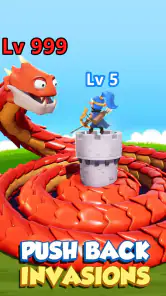
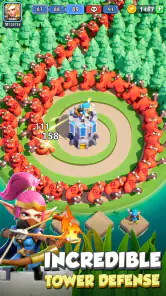


 Analysis by Frivlyz
Imagine a world where your strategic skills are put to the test as you command mighty warriors and powerful towers. Welcome to Kingdom Guard: Tower Defense TD, a game that’s sure to get your adrenaline pumping!
What the game asks of you
There is a useful distinction to keep in mind before settling in: despite its tower-defense label, Kingdom Guard is not simply a sequence of levels where I place defenses and then watch a wave approach. Its central promise combines soldier merging, hero recruitment, and protecting a kingdom, so it asks for both tactical choices and longer-term attention to progression. That blend is a better fit for players who enjoy building strength over repeated visits than for someone looking only for a compact, self-contained puzzle.
That difference also shapes how I would judge a session. A satisfying moment can come from responding to an immediate threat, but the wider appeal is in deciding what to improve and how to make limited attention count. I would approach it as a strategy game to dip into regularly, rather than assume every visit will deliver a complete campaign-style chapter with a clear ending. If you prefer a game that can be opened, solved, and closed with no ongoing development to track, a traditional level-based tower defense title may suit you better.
Setting the Stage
Right off the bat, I was drawn into the enchanting world of Kingdom Guard: Tower Defense TD. The game transports you to a magical realm where your primary goal is to defend your kingdom from waves of relentless enemies. The graphics are stunning, blending a delightful mix of fantasy elements with vibrant colors that make each battle scene a visual treat. Trust me, once you start playing, you’ll find it hard to put your phone down!
How the strategy feels in practice
The game is a strategy release from Tap4fun (Hong Kong) Limited, and its mix of defense and merging gives its decisions a different rhythm from a pure lane-defense game. In a classic tower-defense alternative, I expect the main question to be where to put a tower before a wave arrives. Here, the soldier-merging idea means that choices about combining units and recruiting heroes are part of the appeal too. That can make progression feel more tangible, but it also means success is not only about finding a clever position in one battle.
The most useful way to think about the core loop is to treat each upgrade or merge as a choice about where your next bit of strength will come from. I would avoid spending resources automatically just because an upgrade is available. Instead, I’d pause and ask whether I’m trying to get through a difficult encounter, make future defense more dependable, or strengthen a hero-led approach. Even without overcomplicating every decision, having a short-term goal helps prevent the game from becoming a string of taps with no plan.
That is also where patience matters. Merge-based progression can be satisfying because visible improvement is easy to understand: combine, strengthen, and prepare to face greater pressure. But players who dislike repeated progression steps may find that cadence less appealing than a tower-defense game where the challenge is concentrated in a single handcrafted map. I see the merge system as a reason to try this one, not a guarantee that everyone who enjoys the genre will like its pacing.
Gaming Stories You May Enjoy

Dancing Road Turns Short Breaks Into a Test of Rhythm and Timing

Super Stylist Makes Every Outfit a Test of Taste and Patience

Dominoes on Your Terms: Who Should Play and Who Should Pass

Pokémon GO Makes the Familiar World Feel New

Chess.com Turns Rematches Into Rivalries, but Community Has Its Costs

Archery Battle 3D Review: Sharp Aiming, Unclear Feedback
Gameplay and Mechanics
The gameplay is where this app truly shines. You’re tasked with strategically placing towers along the path to halt enemy advances. There’s a wide variety of towers, each with unique abilities, allowing you to customize your defense strategy. I found this aspect particularly engaging as it adds layers of strategy to the game. You can't just place towers randomly; you need to think like a commander.
And let’s talk about the heroes! The game allows you to deploy heroes with special skills to fight alongside your towers. I loved experimenting with different hero-tower combinations to find the most effective strategies. It’s this kind of depth that keeps the game fresh and exciting.
A smarter way to spend short sessions
For a realistic everyday routine, I’d use it in a few deliberate minutes between other tasks: check what the current bottleneck is, make one or two considered improvements, then try a battle or defense challenge if I have enough time to focus. That approach is more satisfying than opening the game without a purpose and spending resources on whatever button looks most inviting. It also helps keep a mobile strategy game from taking over a break that was meant to be brief.
If I were starting fresh, I’d make a habit of checking the result of a battle before changing several things at once. When a defense fails, adjust one part of the plan and see whether that change helps. If I alter the hero choice, tower arrangement, and upgrade priorities all together, I lose the chance to learn which decision mattered. This is a small discipline, but it makes the strategic side feel clearer and helps avoid treating every setback as a reason to spend or upgrade indiscriminately.
There is a trade-off between experimentation and efficiency. Trying combinations is part of the fun, especially when heroes and towers can complement one another, but changing everything on every attempt makes it difficult to build a reliable strategy. I’d keep a setup that works for ordinary pressure and reserve experiments for moments when the current approach stops being effective. That gives curiosity room without turning progress into guesswork.
Who will enjoy the blend
I’d recommend it most to players who like seeing a roster and defenses grow over time, enjoy trying combinations, and do not mind returning to a game rather than finishing it in one sitting. It may also work well for someone who has already played straightforward tower defense and wants another layer of collecting and merging alongside the battles. The store’s short description presents that core mixture plainly, and it is the combination—not a claim that every battle is radically different—that gives the game its identity.
On the other hand, I would steer a few people elsewhere. If you want a tactical game with no ongoing upgrade routine, a focused puzzle defense game is likely a cleaner fit. If you dislike games that include optional purchases, be aware that this title is free to download but offers in-app purchases, with items ranging from $0.99 to $99.99. You can make a decision about whether to spend for yourself, but I would not treat purchases as a substitute for learning the game’s systems or as a requirement for enjoying the basic premise.
It is also worth considering how you feel about mobile games that invite regular check-ins. Someone who wants a title that works equally well as an occasional, isolated play session may prefer a game with a more clearly bounded level structure. The blend here asks for interest in gradual growth; if that sounds like a chore rather than a reward, the fantasy setting and defense theme may not be enough to change your mind.
Progression and Challenges
As you progress, the game ramps up the difficulty, introducing tougher enemies and more complex waves. This progression keeps you on your toes, ensuring you’re constantly adapting and refining your strategies. However, the game’s learning curve is friendly, making it accessible to both newcomers and seasoned tower defense veterans.
The challenges are well balanced, and there’s a satisfying sense of accomplishment when you successfully fend off a difficult wave. Plus, the game offers plenty of rewards and upgrades, which are crucial for enhancing your towers and heroes. I found myself eagerly saving up in-game currency to unlock new features and strengthen my defenses.
Making progress without losing the plot
When progression slows, I would first look for a strategic adjustment rather than assume that more time or spending is the only answer. Revisit the way the defense is arranged, consider whether a different hero pairing suits the obstacle, and make upgrades with a specific purpose. This is especially useful in games where several systems contribute to strength: improving everything at once can feel productive, but it may leave the actual problem untouched.
A practical habit is to decide what a successful next session would mean before playing. It could be testing a different combination, getting past a wave that has stalled progress, or simply strengthening the part of the defense that seems most vulnerable. A small goal makes rewards easier to evaluate. If an upgrade supports that goal, it feels earned; if it does not, I can save the resource for a later choice rather than spend it just to clear a notification or menu prompt.
There is a limit to how much tactical variety a player should expect from any mobile strategy game. Familiar units and repeated progression can become routine once the novelty of merging and recruiting wears off. For me, the right question is whether the next decision still feels meaningful: does a new hero or stronger soldier change how I approach the defense, or am I simply repeating the same steps? Players who need every session to introduce a completely new kind of challenge may find the long-term rhythm less compelling.
What to expect from a free download
Kingdom Guard is free to download, and its audience is broad enough to include players trying the strategy genre without first committing to a purchase. It carries an Everyone 10+ age rating, so I would still check that rating against the preferences of the person who will play, especially if the device is shared with a younger family member. A free starting point is convenient, but the presence of paid items is a reason to make spending expectations clear before handing over a device or account.
The game has an average rating of 4.2 from around 338,000 ratings, alongside roughly 7,600 written reviews and over 10 million installs. Those figures suggest that it has reached a large mobile audience, but popularity cannot tell me whether its particular mix of merging, heroes, and tower defense fits your taste. I would use the scale as reassurance that it is an established game, not as a promise that every player will enjoy its progression or pace.
For a parent or anyone sharing a phone, I’d treat the free download and optional purchases as two separate things. The first makes it easy to try the game; the second means it is sensible to check purchase settings and agree on boundaries in advance. That is ordinary good practice for a mobile title with paid items, and it prevents a casual test from turning into an unwanted expense.
Current version and what may change
The game’s release date is March 25, 2020, and its current version is 1.0.486, with Android support beginning at version 6.0. Those details place it as an established title rather than a brand-new experiment. The version number is evidence of the build currently identified for the game; by itself, it does not tell me which features have changed over time or what the next update will include, so I would not use it to infer a particular roadmap.
For existing players, the practical point is to check that their device meets the minimum Android requirement and that the installed build is current when they troubleshoot an issue. If the game runs differently after an update, I would first separate a device or connection problem from a change in the game itself instead of assuming a specific mechanic has been altered. New players can simply regard the current version as the available state of the experience, while returning players should judge updates by what they actually encounter rather than by the version number alone.
What I would watch for over time is whether the game continues to make its central choices feel worthwhile: does recruiting a hero open a useful new approach, and do merges help players respond to tougher defenses rather than just increase a number? Those are expectations I would bring to future play, not confirmed promises about upcoming content. If you are already invested, the best measure is whether each new session gives you a meaningful reason to adjust your plan.
Final Thoughts
In a genre that’s often crowded with similar titles, Kingdom Guard: Tower Defense TD stands out with its engaging gameplay, stunning graphics, and strategic depth. Whether you’re a fan of tower defense games or a newcomer looking for a captivating mobile game, this app is definitely worth a download. The thrill of strategizing, the joy of victory, and the allure of its magical world make it a must-try for any gaming enthusiast.
So, if you’re ready to embark on an epic journey and prove your tactical prowess, dive into Kingdom Guard and defend your kingdom with all your might!
Kingdom Guard:Tower Defense TD Pros and Cons
Pros
- Engaging gameplay with strategic depth.
- Rich graphics and vibrant animations.
- Frequent updates with new content.
- User-friendly interface and controls.
- Multiplayer mode adds competitive fun.
Cons
- In-app purchases can be costly.
- Requires constant internet connection.
- Occasional bugs and glitches.
- Ads can be intrusive at times.
- Battery drain on prolonged play.
Frequently Asked Questions
What is Kingdom Guard: Tower Defense TD about?
Kingdom Guard: Tower Defense TD is a strategic mobile game where players are tasked with defending their kingdom from waves of invading enemies. The game combines elements of tower defense with strategic planning, requiring players to strategically place towers and upgrade them to fend off various enemy types. Each level presents unique challenges, making it both engaging and challenging for players.
Is Kingdom Guard: Tower Defense TD free to play?
Yes, Kingdom Guard: Tower Defense TD is free to download and play. However, like many mobile games, it offers in-app purchases that can enhance the gameplay experience. These purchases can provide players with additional resources, faster upgrades, or exclusive items that may aid in progressing through tougher levels more quickly.
What platforms is Kingdom Guard: Tower Defense TD available on?
Kingdom Guard: Tower Defense TD is available on both Android and iOS platforms. Players can download the game from the Google Play Store for Android devices or the Apple App Store for iOS devices. The game is optimized for mobile devices, ensuring smooth gameplay across different smartphone models.
Are there any multiplayer features in Kingdom Guard: Tower Defense TD?
Yes, Kingdom Guard: Tower Defense TD includes multiplayer features that allow players to team up with friends or compete against others in various challenges. Players can join alliances, participate in cooperative battles, or engage in player-vs-player (PvP) modes to test their strategic skills against real opponents, adding a social dimension to the game.
What are some tips for beginners in Kingdom Guard: Tower Defense TD?
Beginners in Kingdom Guard: Tower Defense TD should focus on understanding the strengths and weaknesses of different towers and enemies. It's crucial to upgrade towers strategically and manage resources efficiently. Players should also experiment with various tower placements and combinations to optimize their defense. Additionally, taking advantage of daily rewards and completing missions can provide useful bonuses for progression.


