

Kemono Mahjong
- Reviews
- 4.7
- Version
- 1.38.52
- Installs
- 10,000+

Screenshots
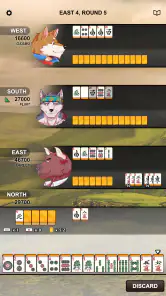
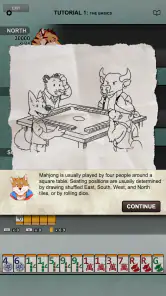
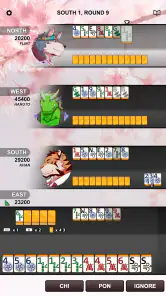
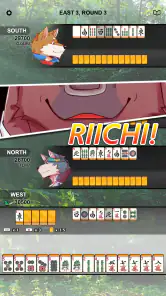

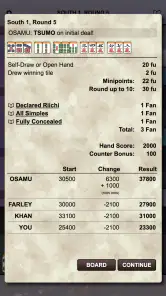
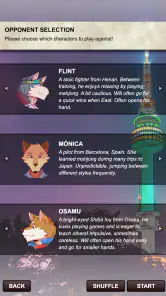
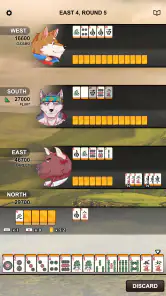
 Analysis by Frivlyz
Sharing a phone or tablet can make a turn-based card game an easy way to fill a quiet gap in the day, but it also raises practical questions: is the game comfortable to learn, can different people use it without confusion, and does its style suit the household? I find Kemono Mahjong most appealing when someone already has an interest in mahjong or is willing to learn its patterns at a relaxed pace. Its animal characters make the table feel welcoming, while the decisions still ask for attention rather than quick reflexes.
A good fit for passing a device around?
In a household, the most realistic use is not necessarily a group gathered around one screen. It is one person taking a turn or a session when the device is free, then handing it back. That suits a thoughtful card game better than a fast action title, though the app’s online multiplayer is a separate way to play against other people. I would treat shared use as a matter of taking turns with the device, not assume that the game provides family profiles or a special pass-and-play setup.
The game’s single-player option is useful when nobody else is available or when a new player wants room to think. It gives you a way to get familiar with the rhythm before facing online opponents. For a shared tablet, that can reduce the pressure on a beginner: one person can explore the rules alone, then explain what they have learned rather than turning the first match into a lesson for everyone.
Set expectations before starting
One thing I would make clear to anyone borrowing the device is that mahjong has a learning curve. The cheerful presentation helps, but it does not make every decision self-explanatory. A new player may need to pause, revisit the tutorial, and accept that the first few hands are about recognizing useful patterns, not playing brilliantly. That is a better expectation than promising an instant, no-learning-needed card game.
Because the game includes online multiplayer, I would also agree on who is using the device and when, especially if it is a shared family phone. This is ordinary device coordination rather than a claim about in-game account controls. If several people use one device, keeping track of whose session is active is a sensible habit for any game that connects players online. I would not choose this as a substitute for a simple offline game if the household specifically wants something with no online play.
Who will enjoy the pace—and who may not
This is best for someone who likes planning a hand, learning conventions, and improving through repeated play. The computer opponents make solo practice possible, while online matches offer a change of pace once the basics feel familiar. Compared with a casual matching game, the appeal here is depth and decision-making; compared with a physical mahjong set, it is the convenience of having a playable table on a mobile device. Neither comparison makes it a universal choice: people who want rapid rounds, very simple rules, or a purely social game with everyone physically at the table may prefer another option.
A useful way to approach a first session is to focus on one decision at a time. Rather than trying to memorize every possibility, notice which tiles are helping form a hand and which choices leave you with more flexibility. In a shared household, that also makes the game easier to introduce: a more experienced player can explain the thinking behind one move without overwhelming a newcomer with a lecture on every rule.
Gaming Stories You May Enjoy

Dancing Road Turns Short Breaks Into a Test of Rhythm and Timing

Super Stylist Makes Every Outfit a Test of Taste and Patience

Dominoes on Your Terms: Who Should Play and Who Should Pass

Pokémon GO Makes the Familiar World Feel New

Chess.com Turns Rematches Into Rivalries, but Community Has Its Costs

Archery Battle 3D Review: Sharp Aiming, Unclear Feedback
Age, cost, and practical expectations
The game is rated Everyone, which makes its presentation suitable for a broad age range, but age suitability is not the same as ease of learning. A younger player may enjoy the animal cast and still need help understanding mahjong’s decisions. I would judge readiness by whether the person enjoys taking time over a card game, rather than by the cute artwork alone. The developer is CyberDog Software, and the game has a 4.7 average from around 1,600 ratings, with over 10,000 installs.
It is a paid game at $2.99, with optional in-app purchases listed at $0.99 per item. That makes it worth deciding whether the household actually wants a mahjong game before buying, rather than treating it like a free puzzle to sample briefly. If you prefer to avoid extra spending, keep in mind that optional purchases exist and make your own choice about them. The current version is 1.38.52, and it requires Android 8.0 or later.
Where it sits among mahjong choices
For someone comparing mobile mahjong games, the key question is what kind of play they want. A tile-matching game built around clearing a layout is a different activity from Riichi mahjong, which is a strategic multiplayer card game. This title is aimed at the latter kind of interest. If you want to practice decision-making and eventually play other people, that focus is a reason to consider it; if you only want a quick solo matching puzzle, a tile-clearing game is likely the more direct choice.
It also differs from learning around a physical table: the app can make solo practice convenient, but it cannot replace the feel of sitting with friends and talking through a hand. I would use it as a way to build familiarity or enjoy a match when the table is unavailable, not as a promise that digital play will teach every social convention of in-person mahjong. That distinction helps set fair expectations before spending money or inviting a beginner to join.
The First Impressions
From the get-go, Kemono Mahjong impresses with its vibrant graphics and adorable character design. As someone who appreciates attention to detail, I was pleased to see how each character had its own distinct personality and style, adding a layer of fun to the gameplay. The app’s layout is intuitive, making it easy for newcomers to navigate through the menus and get started right away.
Gameplay Mechanics
Diving into the game, I found the gameplay mechanics to be both engaging and accessible. Whether you're a seasoned mahjong player or a newbie, the game offers a range of difficulty levels to suit all skill sets. The tutorial is comprehensive and does a great job of introducing the rules without overwhelming you. I appreciated how it eased me into more complex strategies as I progressed.
One of the standout features of the game is its single-player mode, which allows you to play against AI opponents. The AI is impressively smart, providing a challenge that keeps the game interesting without being frustrating. I also enjoyed the multiplayer mode, where I could test my skills against other players online. The matchmaking was quick, and I experienced minimal lag, which is always a plus in mobile gaming.
Visuals and Sound
Visually, the game is a treat. The colorful graphics and fluid animations make each game session a joy to watch. The developers have done a fantastic job in crafting a whimsical world that feels alive and inviting. The sound design complements the visuals perfectly. The background music is soothing, creating a relaxing atmosphere that’s perfect for unwinding after a long day.
Sound effects are crisp and well-timed, adding to the overall immersive experience. I found myself getting lost in the game, often playing longer than I intended, simply because of how much I was enjoying the audio-visual symphony the game offers.
Making room for a match in everyday life
One practical use case is a short break when you have enough time to concentrate but not enough time to set up a physical game. I would choose a solo match against the AI in that situation, especially if I wanted to practice without coordinating schedules. For online play, I would start when I could give the match proper attention rather than squeezing it into a moment when I might need to put the phone down unexpectedly. Mahjong rewards consideration, so interruptions can make the experience less satisfying.
Another useful routine is to treat the tutorial as a reference point, not a one-time hurdle. If a rule or choice still feels unclear after the first explanation, returning to the learning material is more productive than making random moves and hoping the logic becomes obvious. Once a hand is underway, pausing to think about what a discard does to your options can be more valuable than trying to play quickly. The game’s strategic appeal comes from that gradual improvement.
How I would introduce it to a newcomer
If I were showing the game to a friend or family member, I would begin with the simplest available solo experience and let them control the pace. I would explain the goal in plain language, then talk through only the current choice. That keeps the first encounter from becoming a pile of unfamiliar terms. A newcomer who enjoys card strategy may find the process satisfying; someone who wants immediate, obvious matches may decide it is not for them, and that is a useful distinction to discover early.
For a more experienced player, the appeal is different. They can spend less time learning the basic flow and more time weighing trade-offs against the AI or testing themselves online. I would not assume that cute character art means the game is strategically lightweight: the approachable look and the depth of a Riichi-style game serve different purposes. The presentation invites people in, but the decisions are what keep a mahjong fan engaged.
Online play and the limits of convenience
Online multiplayer is attractive when you want opponents beyond the computer, but it does mean the experience depends on being ready to play a connected match. My experience was that matchmaking felt quick and lag was minimal; still, I would not make a blanket promise that every connection or match will feel identical. If reliable offline play is your priority, the single-player mode is the safer choice. If the main reason you are considering the game is to play with a particular friend, check how you expect to meet up in the game before buying rather than assuming every multiplayer arrangement works the same way.
That distinction matters on a household device too. One player may be happy to practice alone while another wants online competition, and those are different use cases even though they share the same app. Agreeing on who gets the device for a match avoids the small but familiar annoyance of interrupting someone mid-game. I see this as a coordination issue, not a special feature the game solves for you.
What the purchase means for a household
At $2.99, I would think of this as a focused game purchase rather than a casual free download. The optional in-app purchases are $0.99 per item, so a family sharing a device may want to agree in advance about purchases and keep the distinction between the paid app and optional items clear. That is especially helpful when younger players use the same device. I would not infer from the age rating that spending decisions or online-play expectations manage themselves.
Its Everyone rating is reassuring for the game’s broad age suitability, but the strongest test is still whether the player can enjoy a rules-led game. For a younger mahjong enthusiast, a little help from an adult at the start may make the experience more rewarding. For a child looking for a very simple game to pick up without guidance, the strategic rules may be a barrier despite the friendly art. I would choose based on the child’s interest and patience, not the characters alone.
When I would choose something else
I would skip this one if my main goal were a quick tile-matching diversion, a game that needs no explanation, or a shared social activity around one table. It is also a less natural choice for someone who dislikes learning a rule system or prefers to play only in brief, interruption-prone moments. A simpler puzzle is better for casual tapping; a physical set is better for face-to-face play; this app makes most sense when the player specifically wants Riichi mahjong on a mobile device.
Its strongest everyday advantage is that solo practice and online matches sit within one game, so you can choose whether you want a quieter session or human competition. The trade-off is that the richer strategic focus asks more commitment than a disposable time-killer. I would recommend it to a curious beginner willing to work through the tutorial and to experienced players who want a convenient mobile table, while being candid that neither group should expect every match to be effortless.
Final Thoughts
In conclusion, Kemono Mahjong is much more than just a mahjong game; it's an experience. The combination of cute characters, engaging gameplay, and beautiful audio-visual presentation makes it a standout in the mobile gaming market. Whether you're a mahjong aficionado or just someone looking for a delightful new game to try, this app is worth your time.
So, if you're ready to embark on a fun and furry adventure in the world of mahjong, give Kemono Mahjong a download. Trust me, you won’t regret it!
Kemono Mahjong Pros and Cons
Pros
- Engaging traditional gameplay
- High-quality graphics
- Multiple difficulty levels
- Offline play available
- Regular updates
Cons
- Limited language options
- No real-time multiplayer
- Ads in free version
- Occasional bugs
- Large app size
Frequently Asked Questions
What is Kemono Mahjong and what makes it unique?
Kemono Mahjong is a digital adaptation of the traditional Japanese Mahjong game, featuring charming animal characters. What sets it apart is its delightful artwork, intuitive interface, and engaging gameplay that caters to both beginners and experienced players. The app provides a blend of strategic play and casual fun, making it a unique choice for Mahjong enthusiasts.
Is Kemono Mahjong suitable for beginners?
Yes, Kemono Mahjong is designed to be accessible for players of all skill levels. It includes comprehensive tutorials and a helpful hint system that guides new players through the basic rules and strategies. This makes it an excellent starting point for anyone interested in learning Mahjong, while also offering depth for seasoned players.
Does Kemono Mahjong require an internet connection to play?
Kemono Mahjong can be enjoyed both online and offline. While an internet connection is necessary for certain features like multiplayer mode and leaderboards, the game offers a robust single-player mode that can be played without any internet access, ensuring uninterrupted gaming even when you're offline.
Are there any in-app purchases in Kemono Mahjong?
Kemono Mahjong does offer in-app purchases, which allow players to enhance their gaming experience by unlocking additional features, themes, or characters. However, the game is fully playable without any purchases, and players can enjoy the complete Mahjong experience without spending money if they choose.
What platforms is Kemono Mahjong available on?
Kemono Mahjong is available on both Android and iOS platforms, providing a seamless gaming experience across different devices. Whether you're using a smartphone or a tablet, the game is optimized for various screen sizes, allowing players to enjoy Mahjong on the go, regardless of their preferred device.


