

Jumanji: Epic Run
- Reviews
- 3.9
- Version
- 1.9.9
- Installs
- 10,000,000+

Screenshots






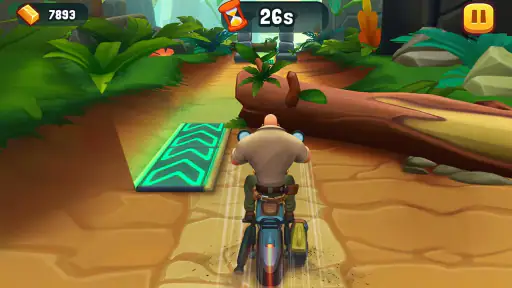

 Analysis by Frivlyz
When I want a quick arcade game that doesn’t ask me to learn a complicated control scheme, a runner is an easy choice. Jumanji: Epic Run puts that familiar pick-up-and-play idea in a jungle setting, with obstacles that call for quick reactions rather than a long tutorial. Its appeal is straightforward: start a run, read what is coming, and try to last a little longer. That makes it an approachable option for short breaks, though it is less suited to anyone looking for a deep, story-led adventure.
I’d think of it as a casual game to dip into, not a demanding challenge to schedule my day around. Coco Play By TabTale made it for players who enjoy arcade action and recognize the Jumanji world. It is free to download, rated Everyone 10+, and has a 3.9 average from around 119,000 ratings, alongside over 10 million installs. Those figures suggest a sizeable audience, but they don’t tell me whether its particular style will suit you; the important question is whether you enjoy repeating short runs and improving through practice.
Quick to start, built around quick reactions
The basic runner format is one of the easiest to understand on a phone. You don’t need to set aside time to follow a complex plot before playing: the focus is on responding to the path in front of you. That makes it a reasonable choice for a commute break or a few minutes while waiting for an appointment, provided you are somewhere you can comfortably pay attention to the screen. A runner still demands focus, so I wouldn’t treat it as a game to play while walking or doing something else that needs your eyes.
Speed expectations matter here. The game presents itself as a lively arcade experience, but I wouldn’t assume every phone will feel equally smooth or that a fast-looking game is automatically a resource-light one. How responsive it feels can depend on the device and what else is running. If a run feels less controlled than expected, I’d first close other active apps and try again before deciding the game itself is the problem. That small check is more useful than blaming your reactions immediately.
What a run asks of you
Obstacle-dodging runners are simple to pick up, but the pressure rises when several decisions arrive close together. The useful skill is not tapping constantly; it’s watching ahead enough to choose a response before the obstacle reaches you. I’d approach each attempt as practice in reading patterns and timing inputs, rather than expecting a power-up to rescue every mistake. That makes the action feel more intentional and gives short sessions a clear purpose.
Busy moments can also make touch controls feel less forgiving. If you are playing on a small screen, keep your grip steady and avoid covering the area where you need to react. A run that goes wrong during a crowded stretch may be a timing issue, a cramped hold, or a moment of distraction—not necessarily a sign that the controls are unreliable. Taking a brief pause between attempts can help more than immediately launching into another run while frustrated.
Reliability and the everyday trade-off
For a game meant to be played in short bursts, reliability is about more than whether it opens. I want the controls to feel predictable and a failed attempt to be easy to move on from. If the game slows down or behaves unexpectedly, restarting it and checking whether other apps are using the device are sensible first steps. I can’t promise that will fix every issue, but it helps separate a temporary device hiccup from a problem that happens repeatedly.
Gaming Stories You May Enjoy

Dancing Road Turns Short Breaks Into a Test of Rhythm and Timing

Super Stylist Makes Every Outfit a Test of Taste and Patience

Dominoes on Your Terms: Who Should Play and Who Should Pass

Pokémon GO Makes the Familiar World Feel New

Chess.com Turns Rematches Into Rivalries, but Community Has Its Costs

Archery Battle 3D Review: Sharp Aiming, Unclear Feedback
The trade-off with an arcade runner is repetition. Familiar actions make it easy to return, but anyone who wants a changing campaign, extensive exploration, or a story that keeps unfolding may find the loop thin. Compared with puzzle games, it offers less time to think through a move; compared with slower adventure games, it asks for more immediate reactions and gives less room to explore. I’d choose it when I want motion and quick decisions, not when I’m in the mood for a long, relaxed session.
Who I’d recommend it to
I’d recommend giving it a try if you like arcade runners, want a game you can understand quickly, or have a soft spot for Jumanji’s adventurous setting. It may also work for someone looking for an uncomplicated game to share with a younger player, while keeping its Everyone 10+ age rating in mind. If you strongly dislike repeating attempts, prefer slower controls, or want a game built around extended exploration, I’d look elsewhere instead.
There is also a practical reason to check your expectations before settling in: the game is free, but it includes in-app purchases priced from $2.99 to $99.99 per item. I’d treat spending as optional and decide in advance whether I’m comfortable with purchases on the device, especially if a child will be playing. The game’s appeal should be the running itself; I wouldn’t recommend spending just to make a short arcade session feel worthwhile.
Welcome to the Jungle
As soon as you fire up the game, you're met with vibrant visuals that are reminiscent of the movie's lush jungles. It's like stepping into a mini cinematic universe right on your phone. The game is essentially an endless runner, where you dodge obstacles, jump over traps, and slide under tricky vines. It's action-packed, and you'll find your fingers flying across the screen in no time.
Character Selection
One of the coolest features is the ability to choose from your favorite characters from the Jumanji universe. Whether it’s Dr. Smolder Bravestone or Ruby Roundhouse, each character has unique abilities that can help you tackle different challenges in the game. It's a nice touch that makes the experience feel personalized and engaging.
Gameplay and Features
Now, let's talk about the gameplay. The mechanics are pretty straightforward, which is great because it means you can just dive right in without a steep learning curve. The controls are intuitive, and the game does a fantastic job of keeping you on your toes, mixing up the obstacles and challenges as you progress. There’s also a variety of power-ups and boosts scattered throughout your run, which can be a real game-changer when you're in a tight spot.
The game also offers missions and daily challenges to keep things interesting. Completing these tasks earns you in-game currency and other rewards, which you can use to upgrade your characters and unlock new abilities. It's these little extras that keep you coming back for more.
Graphics and Sound
The graphics in Jumanji: Epic Run are top-notch for a mobile game. The developers have done a stellar job in making sure the game looks crisp and vibrant, with detailed environments that really pop. The sound effects and background music add to the immersive experience, making you feel like you're right there in the action.
One thing I particularly enjoyed is how the game occasionally throws in elements of surprise, keeping you engaged and making each run feel a little different. It’s not just about running endlessly; it’s about strategy and timing too.
Final Thoughts
All in all, Jumanji: Epic Run is a fantastic addition to any mobile gamer's library. It's a solid endless runner with enough unique elements to set it apart from others in the genre. Whether you're a fan of the movies or just looking for a fun game to pass the time, this app is definitely worth a download. So, gear up, choose your character, and get ready to run for your life in the wild world of Jumanji!
Getting more from short sessions
A useful way to approach the missions and daily challenges is to treat them as a goal for a session, rather than trying to grind through everything at once. I’d check what the current task asks me to do, then focus on that objective during a few attempts. This gives each run a purpose even when I’m not setting a personal distance target, and it can make the familiar runner loop feel less aimless.
Upgrades also create a choice between immediate convenience and saving rewards for later. Since the game lets you improve characters and unlock abilities with in-game currency, I’d avoid spending every reward as soon as it appears. First, notice which parts of a run tend to cause trouble; then use available upgrades with that weakness in mind. That is a more satisfying approach than upgrading randomly, although players who simply want to run without managing progression may find even this light planning unnecessary.
Choosing a character and setting expectations
Character choice gives the game a personal touch, but I wouldn’t assume that picking a favorite automatically makes every challenge easier. The useful question is whether a character’s abilities fit the way you play and the difficulties you encounter. If you are still learning the timing, stick with a character you enjoy and focus on reading the route; experiment with other choices when you want a change or have a clearer reason to do so. That keeps selection from becoming a distraction from the basic skill the game asks for.
The Jumanji theme is another part of the decision. It can make the jungle setting and familiar characters more inviting for fans, but a license alone won’t keep a player interested if they don’t enjoy the runner format. Someone who usually prefers arcade games with direct competition or a more varied set of activities may find this loop repetitive. I’d judge it by whether the moment-to-moment dodging is enjoyable, not by the brand name alone.
Device fit and sensible troubleshooting
The listed minimum operating-system requirement is Android 6.0, and the current version is 1.9.9. Those details are useful starting points when checking compatibility, but they don’t guarantee identical performance across devices. On an older or heavily used phone, I’d leave some free room for the game to run, close apps I don’t need, and avoid judging responsiveness while the device is already busy. If the game still feels unstable after a fresh launch, I’d stop and try again later rather than risk a purchase or assume a run will recover itself.
For a realistic everyday use, imagine having a few minutes before a bus arrives. I’d open the game only if I can stand safely and give the screen my attention, try a run or work toward one mission, then put the phone away when I need to move. That is where the format makes sense: short, self-contained bursts. It is a poor fit for a situation where interruptions are constant, because a sudden distraction can turn a fair obstacle into a failed attempt.
Where it sits among arcade choices
Against a simple tap-based arcade game, this one asks for more visual attention and timing, since you need to react to obstacles rather than repeat a single action. Against a puzzle game, it offers less pause for planning but more immediate momentum. And compared with a broad adventure game, it trades exploration and a sustained narrative for a familiar run-and-react rhythm. None of those formats is automatically better; the right choice depends on whether you want quick reflex play or room to think and wander.
One practical limitation is that a runner’s pace can be awkward when you have only one hand free or are using a device that is uncomfortable to hold securely. I’d save it for a moment when I can use both hands if needed and keep a clear view of the screen. Likewise, if visual motion tends to bother you, a calmer puzzle or turn-based game may be a more comfortable choice. Those are not flaws everyone will notice, but they matter more than the jungle theme when deciding whether it fits your habits.
Final performance verdict
My overall take is that this is an accessible, energetic arcade runner whose strongest case is convenience: it is easy to understand, gives short sessions a clear focus through missions, and adds character selection and upgrades for players who want a little progression. I would not choose it for deep storytelling or a low-attention background activity, and I’d keep the optional purchases in mind before handing the device to a child. If your phone meets the Android requirement and the controls feel comfortable in a brief test, it is a reasonable free game to try; if smooth performance or more varied play is your priority, another style of game may suit you better.
Jumanji: Epic Run Pros and Cons
Pros
- Stunning graphics and immersive environments.
- Engaging storyline with familiar characters.
- Diverse obstacles keep gameplay exciting.
- Multiple playable characters with unique skills.
- Frequent updates with new challenges.
Cons
- In-app purchases can be quite pricey.
- Requires constant internet connection.
- Some levels can be too difficult.
- Occasional lag on older devices.
- Advertisements can disrupt gameplay.
Frequently Asked Questions
What is Jumanji: Epic Run?
Jumanji: Epic Run is an adventurous endless runner game inspired by the Jumanji movie franchise. Players can explore thrilling locations, tackle various obstacles, and collect coins to unlock new characters and power-ups. The game is designed to be engaging and offers a combination of action and entertainment for fans of the series.
Is Jumanji: Epic Run free to play?
Yes, Jumanji: Epic Run is free to download and play. However, it includes in-app purchases and advertisements. Players can buy coins and other items to enhance their gaming experience or to progress faster in the game. It's important to manage in-app purchases carefully to avoid unexpected charges.
What are the system requirements for Jumanji: Epic Run?
Jumanji: Epic Run requires a device running Android 5.0 or iOS 10.0 or later. The game is optimized for both smartphones and tablets, providing a smooth and immersive experience. Ensure your device has sufficient storage and a stable internet connection to enjoy uninterrupted gameplay.
Can I play Jumanji: Epic Run offline?
Jumanji: Epic Run requires an internet connection for the initial download and for accessing certain features such as leaderboards and updates. However, once downloaded, the game can be played offline, allowing players to enjoy the game without an active internet connection, although some features may be limited.
How do I unlock new characters in Jumanji: Epic Run?
In Jumanji: Epic Run, new characters can be unlocked by collecting in-game currency or through in-app purchases. Each character has unique abilities that can aid in overcoming challenges. Players are encouraged to explore different characters to find the best fit for their playstyle and to enhance their gaming experience.


