

Ingress
- Reviews
- 4.0
- Version
- 3.4.1
- Installs
- 10,000,000+

Screenshots




 Analysis by Frivlyz
Starting Ingress can feel like being handed a map to a story that is already unfolding around you. I’d treat the first outing as a small experiment rather than a mission to master everything: walk somewhere familiar, learn what a portal interaction does, and see whether the mix of outdoor exploration and faction strategy clicks for you. The game is free to start, but its appeal depends less on collecting things quickly than on enjoying the places and routes it gives you a reason to notice.
What to expect from a real-world strategy game
Ingress is an adventure game from Niantic Spatial Inc, built around using your location as part of play. It has a 4.0 average from around 440,000 ratings, and more than 10 million installs, but those figures don’t tell you whether its central trade-off suits you: progress asks you to go out into the world. This isn’t a conventional adventure with a long sequence of levels you can finish on the sofa. The map and your choices about where to go are part of the experience.
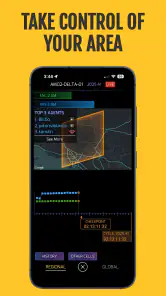
The basic loop revolves around portals associated with places in the real world. You can hack them for items, deploy resonators to claim them for your faction, and connect portals to make triangular fields. That makes a short walk potentially meaningful: you might collect resources at one stop, take control of another, then decide whether a nearby route gives you a useful opportunity to connect them. The satisfaction comes from seeing a local trip become part of a larger contest.
It helps to know that this is not just a solo sightseeing app. Faction play gives your actions a team context, and cooperation can make planning and linking more rewarding. At the same time, you can learn the basic interactions on your own before you know anyone else who plays. I’d begin by treating nearby portals as a way to understand the game, not as a test you have to pass or territory you must immediately dominate.
Welcome to the World of Ingress
Alright, so imagine this: you're out and about, walking through your neighborhood, and suddenly your phone alerts you to a hidden world full of mysterious energy and portals. That's the essence of Ingress, a game that transforms the real world into a virtual playground. Developed by Niantic, the same folks behind Pokémon GO, this game has been around for a while but still holds its charm.
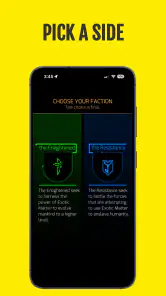
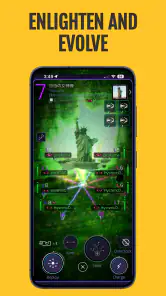
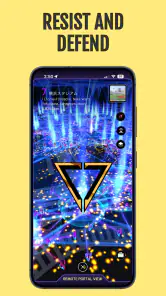
When you first launch the app, you're thrown into a sci-fi narrative where you must choose a side. Are you with the Enlightened, striving to embrace this mysterious energy called Exotic Matter (XM) for the evolution of mankind? Or do you side with the Resistance, aiming to protect humanity from being controlled? This decision sets the tone for your entire experience.
Getting set up without overthinking it
Ingress is free, so you can try its central idea without paying upfront. I’d first check that your phone meets its minimum operating system requirement of version 10, then install the current version, 3.4.1. The game is rated Everyone, though its real-world format still calls for sensible choices: stay aware of traffic and your surroundings, and don’t let a screen distract you while walking. The interface can wait until you’re safely stopped.
Gaming Stories You May Enjoy

Dancing Road Turns Short Breaks Into a Test of Rhythm and Timing

Super Stylist Makes Every Outfit a Test of Taste and Patience

Dominoes on Your Terms: Who Should Play and Who Should Pass

Pokémon GO Makes the Familiar World Feel New

Chess.com Turns Rematches Into Rivalries, but Community Has Its Costs

Archery Battle 3D Review: Sharp Aiming, Unclear Feedback
The faction choice is one of the first decisions that can feel bigger than it needs to. It gives your play a team identity, but you don’t need to understand every strategic consequence before choosing. Read the two descriptions, pick the outlook that appeals to you, and focus on learning how a portal works. If you’re playing with friends, checking which side they’re on may make shared play easier; if you’re on your own, choose based on your own preference rather than trying to predict the whole local map.
There are in-app purchases, with items priced from $0.99 to $99.99. I’d begin without spending. First work out whether you enjoy walking to portals, collecting items through hacks, and thinking about how locations connect. A purchase makes little sense if the basic loop isn’t already fun for you, and starting free gives you room to decide at your own pace.
Your first useful action and a practical route
So, how does it all work? As you move around in the real world, you'll encounter portals that are typically located at landmarks, monuments, or any notable locations. Your job? Hack these portals to gain items, deploy resonators to claim them for your faction, and link portals to create triangular fields that score points for your team.
For a first outing, I’d choose a familiar, walkable area with a few places you can reach safely, rather than setting out on a long trip to chase a distant target. Stop at a portal, try a hack, and take a moment to understand what you received before moving on. If you have what you need to deploy resonators, claiming a portal is a concrete first success. It teaches you that the game isn’t only about looking at a map: your location, available items, and faction all shape what you can do next.
A useful habit is to think in short loops instead of isolated stops. On a routine walk to a shop or transit stop, you can check whether a portal lies along the way, interact when you’re safely stationary, and continue without turning the errand into an aimless hunt. If you later have the right portals and items to make a link, planning a route that reaches them in a sensible order can be more satisfying than wandering and hoping a connection appears. This is a small but important difference between casual exploration and purposeful play.
It's not just about walking around aimlessly. Strategy is key here. You need to plan your paths, coordinate with fellow players, and sometimes even engage in epic battles to control key portals. The community aspect is huge, with players often organizing meetups and events to enhance their gaming experience.
Reading the map and avoiding early confusion
One early source of confusion is the difference between interacting with a portal and making a larger strategic move. Hacking gives you items; deploying resonators helps claim a portal; linking requires suitable portals and the resources and conditions to do so. Those actions fit together, but they aren’t interchangeable. If a planned link doesn’t work, I’d check the route and what you have available before assuming the game has ignored your action.
Another adjustment is remembering that a portal’s value isn’t simply how impressive its real-world location looks. A familiar landmark can matter because of where it sits relative to other portals and whether you can reach it safely. For a newcomer, a modest cluster you can visit on foot may be more useful than a famous destination that takes special planning. Don’t let a busy map pressure you into crossing roads carelessly or entering a place where you don’t belong.
Because play depends on moving around, conditions can change how enjoyable a session feels. A good route in daylight may be inconvenient in bad weather or when you’re short on time. I’d keep an easy stopping point in mind and treat the game as optional company for a walk, not a reason to take risks or trespass. If a location is inaccessible, respect that and move on; a virtual objective is never worth an unsafe detour.
How it differs from other location-based games
Now, let's geek out for a second. The technology driving Ingress is pretty fascinating. Using your phone's GPS and location services, the app overlays digital elements onto the real world, creating an immersive experience. The graphics might not blow you away compared to the latest console games, but the real genius is in how seamlessly it integrates with your surroundings.
Compared with a location-based collecting game, Ingress puts more emphasis on controlling portals, choosing a faction, and connecting locations into fields. If you mainly want a gentle reason to stroll and gather things, another game with a lighter strategic layer may suit you better. If you like examining a map, deciding which stops matter together, and contributing to a shared team effort, Ingress has a clearer purpose for each walk.
It also differs from a standard adventure game because you can’t rely on a fixed, indoor sequence of missions to carry you forward. Your available play depends on where you are and what you can reach. That makes it surprisingly good for discovering overlooked corners of your own area, but less suitable when you want a predictable session that works anywhere, regardless of surroundings. I wouldn’t choose it as a substitute for a story-driven game if a crafted plot and uninterrupted play are what you’re after.
Plus, the game constantly evolves. Niantic frequently updates it with new features and events that keep things fresh. Whether it's new portal locations or special in-game challenges, there's always something to lure you back in.
Who will enjoy it, and when I’d skip it
So, what makes Ingress special? For starters, it's a great way to explore your city. I've found myself wandering into parts of town I never knew existed, all thanks to the game. It's also a fantastic way to meet people. The community is vibrant and global, connecting players from all walks of life.
I’d recommend it to someone who already enjoys walking, likes light tactical planning, or wants a reason to look more closely at their neighborhood. It can also suit friends who enjoy being on the same faction and comparing routes or coordinating visits. You don’t need to turn every session into a group outing, though: a short solo walk can still teach you the basic rhythm and let you decide whether you want to invest more time.
I’d skip it if you want a game that makes steady progress while you remain indoors, dislike using a phone while navigating outside, or find location-based play more distracting than enjoyable. It may also frustrate someone who expects every outing to produce a dramatic result. Some walks are simply useful for learning the map or gathering what you need; the larger payoff can depend on planning and on how other players affect the area.
A realistic way to test that fit is to pair the game with an errand you already have. On a walk to pick up groceries, for example, take a safe route past a nearby portal, stop to interact, and see whether you enjoy making a small tactical choice before continuing. If the game makes an ordinary route more engaging without making you rush or detour too far, that’s a strong sign its core idea works for you.
Making the next session more rewarding
And let's not forget the physical aspect. Unlike traditional video games, Ingress encourages you to get up and move. It's a game that blends exercise and entertainment, which is a win-win in my book.
Once the first portal interaction makes sense, the next step is to notice relationships between locations. Before setting out, pick a compact route and consider which portals might be useful together. This helps you avoid spending a whole walk on scattered stops that don’t support your goal. If you’re short on time, hacking a convenient portal can still be worthwhile; save ambitious linking or coordinated play for a day when the route and your available resources make it practical.
For players who want to go beyond solo exploration, local conversation can add context to the map and help with coordination. You can start by asking other players how they approach a nearby area rather than assuming you need to join an organized event straight away. The team element is a strength when it creates shared plans, but it can feel like pressure if you treat every contested portal as an obligation. I enjoy it most when team play adds options instead of dictating my schedule.
One practical limitation is that this kind of game asks for attention in two places: the screen and the physical world. I’d stop walking before managing the map, keep an eye on changing surroundings, and avoid playing where phone use would be unsafe or unwelcome. It’s also worth accepting that your preferred route may not line up with the most useful in-game route. The best session is one that remains comfortable and sensible, even if that means leaving an objective for another time.
My verdict after trying the core loop
In conclusion, if you're looking for a game that gets you out of the house and into the world, Ingress is definitely worth checking out. It's a unique blend of strategy, exploration, and technology that offers a gaming experience like no other. Whether you're a casual player or a hardcore gamer, there's something here for everyone. So, what are you waiting for? Choose your side, and let's save – or control – the world!
My recommendation is more specific: give it a few low-pressure walks and judge it by whether you enjoy the process of visiting and connecting real places, not by how quickly you feel powerful. Ingress has been available since November 15, 2012, and its current version is 3.4.1; its long-running identity is part of the appeal, but it also means a newcomer may need patience while learning the terms and the strategic rhythm. If you want a location-based adventure with a faction choice and a reason to plan your path, it’s an unusually engaging option. If you want a polished, self-contained story you can play anywhere, I’d pick something else.
Ingress Pros and Cons
Pros
- Immersive AR gameplay enhances real-world exploration.
- Strong community features encourage social interaction.
- Regular global events keep the game fresh and exciting.
- Strategic gameplay offers deep tactical challenges.
- Cross-platform availability ensures accessibility to all players.
Cons
- Requires constant internet connection
- limiting offline play.
- Battery drain can be significant during extended sessions.
- Steep learning curve for new players unfamiliar with AR games.
- Limited in-game tutorials may confuse beginners.
- In-app purchases can be necessary for competitive advantage.
This Game in Other Languages
Frequently Asked Questions
What is Ingress and how does it work?
Ingress is an augmented reality mobile game developed by Niantic that transforms the world around you into a virtual battlefield. Players choose between two factions, the Enlightened and the Resistance, and collaborate with others to capture and control 'portals,' which are often located at landmarks or public art. By physically moving to these locations, players can engage in strategic gameplay, making it a highly interactive and social experience.
Is Ingress free to play?
Yes, Ingress is free to download and play. However, like many mobile games, it offers in-app purchases that can enhance gameplay. These purchases include items such as portal keys and inventory expansions. While purchasing items can provide advantages, players can enjoy the full experience of Ingress without spending money, as all core features are accessible for free.
What are the system requirements for Ingress?
To play Ingress on Android, a device running Android 5.0 or higher is required. For iOS users, the game is compatible with devices running iOS 12.0 or later. A stable internet connection and GPS functionality are necessary for optimal gameplay, as the game relies heavily on real-world location data to function effectively.
Can I play Ingress solo, or is it necessary to join a team?
While it's possible to play Ingress solo and enjoy capturing portals independently, the game is designed to be more rewarding when played as part of a team. Joining a faction allows players to collaborate on larger strategies and participate in events, which can greatly enhance the gaming experience. Teamwork is often crucial for capturing and controlling key areas.
Are there any safety concerns while playing Ingress?
As Ingress requires players to move around in the real world, safety should be a priority. Players should always be aware of their surroundings, avoid private property, and never engage in gameplay while driving. It's recommended to play in well-lit, safe areas and to inform friends or family of your location if you're playing alone. Niantic provides guidelines to ensure players can enjoy the game safely.


