

Infinite Craft by Neal
- Reviews
- 4.7
- Version
- 12
- Installs
- 1,000,000+

Screenshots
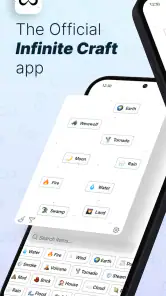
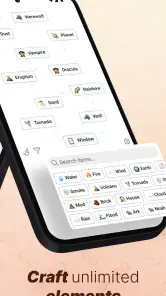
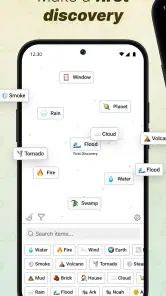
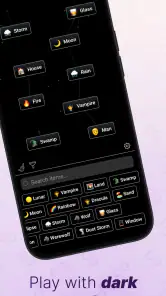
 Analysis by Frivlyz
Have you ever found yourself daydreaming about creating your own world, block by block, with endless possibilities at your fingertips? If that sounds like a dream come true, then let me introduce you to Infinite Craft by Neal. This game is like a giant playground for your imagination, and boy, does it deliver on its promise!
What the name promises, and what the game actually offers
There is an important distinction to make before you download: despite its name, this is not a block-building sandbox. Infinite Craft is a word game from neal.fun, released on May 21, 2024. Its central pleasure is experimenting with combinations and seeing what new ideas emerge, rather than placing materials, exploring a world, or constructing buildings. The store description calls it an endless crafting game, but I’d think of it as a playful idea generator with words as its building blocks.
That difference is useful to know because the opening paragraph of this review imagines a very different kind of game. There are no pickaxes, structures, day-and-night building sessions, weather changes, or multiplayer servers to explore here. The appeal is much quieter: I try combinations, follow an unexpected result into another experiment, and enjoy the moment when two familiar concepts produce something surprising. It can feel inventive without asking me to master a complicated set of rules.
Unleash Your Creativity
At its core, Infinite Craft by Neal is all about creativity. From the moment you dive into the game, you’re given a blank canvas, and what you do with it is entirely up to you. The game offers a plethora of building blocks and materials, each with its own unique texture and properties. You can build towering skyscrapers, intricate labyrinths, or even recreate your favorite fictional worlds. The only limit here is your imagination.
How the word-play loop feels
Read as a description of this word game, “blank canvas” is a fair metaphor, but the materials are concepts rather than physical blocks. I enjoy approaching a session with a loose question—what might happen if I combine two ideas that do not seem related?—instead of trying to complete a fixed campaign. That makes the game easy to dip into, though it also means that players who want a clear goal, a story, or a steadily increasing challenge may find the open-endedness less satisfying.
Gameplay Mechanics
The gameplay is straightforward yet thoroughly engaging. You start with basic materials and, as you progress, unlock more advanced tools and blocks. The controls are intuitive, making it easy even for beginners to jump right in and start building. I spent hours just experimenting with different structures and designs, and I must say, the satisfaction of seeing your creations come to life is unparalleled.
What I found particularly captivating is the game’s night and day cycle. Building under the stars or in the warm glow of a sunrise adds a whole new level of immersion. Plus, the dynamic weather system keeps you on your toes, ensuring you’re always adapting your strategies to the changing environment.
Gaming Stories You May Enjoy

Dancing Road Turns Short Breaks Into a Test of Rhythm and Timing

Super Stylist Makes Every Outfit a Test of Taste and Patience

Dominoes on Your Terms: Who Should Play and Who Should Pass

Pokémon GO Makes the Familiar World Feel New

Chess.com Turns Rematches Into Rivalries, but Community Has Its Costs

Archery Battle 3D Review: Sharp Aiming, Unclear Feedback
Readable play, with a different kind of navigation
For the actual word-crafting experience, the main accessibility question is less about navigating a sprawling world and more about comfortably reading and handling a growing set of ideas. I find it works best when I focus on a small experiment at a time instead of treating every result as something I must immediately track. A short session can be enough to test a hunch; if I keep going, I benefit from pausing to decide which line of thought is still interesting rather than scattering my attention across too many possibilities.
That approach also helps when playing in a busy setting. On a commute or during a quiet break, I can treat each combination as a self-contained bit of curiosity, rather than needing a long uninterrupted stretch. If I’m tired, distracted, or having difficulty reading small text on my device, though, a word-based game is not automatically an easy choice: the pleasure depends on being able to inspect and compare concepts. I would adjust the device’s own display settings if needed, but I wouldn’t assume the game has specific accessibility controls.
Visuals and Sound
Now, let’s talk about the visuals. While the game opts for a blocky aesthetic, reminiscent of other sandbox games, it manages to stand out with its vibrant color palette and attention to detail. Each block feels distinct, and the overall visual cohesion is superb. The sound design complements the visuals perfectly, with calming background music and satisfying sound effects that enhance the overall gaming experience.
One of my favorite moments was hearing the gentle rustle of leaves as I walked through a forest I’d crafted myself. It’s these little touches that make the game feel alive and truly immersive.
Small experiments work better than frantic tapping
In practice, I recommend slowing down enough to form a guess before trying a combination. It turns random tapping into a tiny reasoning game: I can ask what two ideas have in common, or what unexpected connection might be worth testing. When a result leads somewhere amusing, I follow that thread; when it doesn’t, I change direction rather than repeating the same kind of guess. This is a simple way to make a free-form experience feel more intentional without imposing a personal checklist on it.
It is also a useful distinction for motor and sensory comfort. The game’s basic premise does not require fast reflexes or action-game timing, which makes it a gentler option than many games built around rapid inputs. Still, word play can become mentally tiring, and repeated screen interaction may not suit every player. I would choose it for relaxed, self-paced curiosity, not for a hands-free activity or a session where I need to avoid looking at the display.
Who will enjoy it, and when another game fits better
I’d recommend it to people who like language, lateral thinking, and the odd surprise more than they like scores or competitive progress. It can work well as a brief solo pastime while waiting for an appointment, or as a conversation starter when a friend and I take turns suggesting combinations and arguing about what to try next. That informal shared play is different from online multiplayer: the fun comes from discussing ideas together, not visiting another player’s world.
If you usually play word games for crosswords, anagrams, or a definite answer, this may feel too loose. Those alternatives give you clear constraints and a satisfying finish; here, the point is exploration, so there may be no natural moment when a run feels “complete.” Likewise, players looking for a construction sandbox, a rich visual environment, or a team-based game should choose something designed around those activities instead. The choice comes down to whether you want to solve a defined puzzle or make your own path through a chain of associations.
Community and Multiplayer
What’s a sandbox game without a thriving community? Infinite Craft by Neal doesn’t disappoint in this department. The game offers robust multiplayer options, allowing you to collaborate with friends or join public servers to see what other players are building. The community is welcoming and filled with talented creators who are more than willing to share tips and tricks.
In my time exploring multiplayer servers, I was blown away by the creativity on display. From massive castles to intricate redstone contraptions, the possibilities are truly infinite. There’s something incredibly inspiring about seeing what others have accomplished, and it pushes you to elevate your own creations.
Practical details and a fair expectation
The game is free, with in-app purchases priced at $2.99 per item. It has a Mature 17+ age rating, so it is not a game I would casually hand to a younger player without first considering that rating. It has a 4.7 average from around 19,000 ratings, and has been installed over a million times; those figures suggest broad interest, but they don’t guarantee that its open-ended style will suit you. Version 12 requires Android 5.1 or later.
One question I’d ask before installing is whether I want a game with a destination or simply a prompt to keep experimenting. If it’s the latter, the low-pressure format makes sense; if I’m hoping for a campaign, competitive ranking, or carefully staged puzzles, I would look elsewhere. Another is whether I want to spend money: the game is free to start, while optional purchases are offered. I’d decide whether the basic experience holds my interest before considering any purchase, rather than treating an endless premise as a reason to buy more.
A more inclusive fit depends on the player and the moment
As an inclusive choice, I see a real advantage in the lack of a demanding action loop: players who prefer thoughtful, self-paced play may find that more comfortable than games built around speed. But that is not the same as saying it works equally well for every ability or context. Reading and comparing words is central, and the experience may be less suitable for someone who finds sustained screen reading difficult, needs audio-led play, or cannot comfortably make repeated touch inputs. I would not describe it as universally accessible; I’d describe it as a calm concept-driven game whose fit depends on how you interact with a screen.
The everyday setting matters too. A quiet break gives me room to think, while a noisy or interrupted moment can make it harder to follow a chain of ideas. If I’m sharing the device, I can still make the activity social by inviting someone nearby to suggest a pair, but I wouldn’t expect the game itself to supply a collaborative world or public community experience. Keeping those distinctions in mind prevents the word “craft” from setting the wrong expectations.
In conclusion, Infinite Craft by Neal is a must-try for anyone with a creative itch. Whether you’re a seasoned builder or a newcomer looking to explore a vibrant virtual world, this game has something for everyone. So grab your pickaxe, let your imagination run wild, and start crafting your own infinite world today!
My verdict after setting the right expectations
I like the idea at the heart of this game most when I treat it as a relaxed invitation to test connections, not as a conventional word puzzle or a building adventure. Its strongest use case is a short, curious session: think of a pairing, see where it leads, and stop when the trail loses its charm. That makes it a good fit for imaginative players who enjoy open-ended discovery, but a weaker choice for anyone who needs firm objectives, rich action, or a clearly defined finish.
The main thing I would change about the original description is its picture of what play looks like. There are no crafted forests to walk through or public servers to tour; the craft is conceptual. Once that is clear, the appeal is easier to judge honestly. If experimenting with words sounds more inviting than solving a fixed puzzle, I think it is worth trying. If you came for blocks, weather, or multiplayer building, this is not the game you were looking for.
Infinite Craft by Neal Pros and Cons
Pros
- User-friendly interface for all ages.
- Extensive world-building possibilities.
- Frequent updates add new features.
- Supports offline gameplay mode.
- Engaging multiplayer experience.
Cons
- In-app purchases can be costly.
- Occasional lag in multiplayer mode.
- Limited character customization.
- Music can become repetitive.
- Heavy battery usage on mobile devices.
Frequently Asked Questions
What is Infinite Craft and how does it differ from other crafting games?
Infinite Craft by Neal is a sandbox crafting game that allows players to build, explore, and survive in an infinite voxel-based world. Unlike other crafting games, Infinite Craft offers unique features such as customizable terrain, a wide range of crafting materials, and extensive multiplayer capabilities, making it a versatile and engaging experience for players of all ages.
Is Infinite Craft free to play or does it require in-game purchases?
Infinite Craft is free to download and play, offering a wealth of content without any initial cost. However, the game does offer in-game purchases for cosmetic items and additional features. These purchases are entirely optional and are designed to enhance the gaming experience without providing any competitive advantage.
What platforms is Infinite Craft available on?
Infinite Craft is available on both Android and iOS platforms, allowing players to enjoy the game on a wide range of mobile devices. The game is optimized for both smartphones and tablets, providing a seamless gaming experience with intuitive touch controls and immersive graphics.
Does Infinite Craft have a multiplayer mode?
Yes, Infinite Craft features a robust multiplayer mode that allows players to connect with friends or join public servers to collaborate or compete in the expansive game world. The multiplayer mode is designed to support a large number of players, enabling community building and cooperative gameplay.
What age group is Infinite Craft suitable for?
Infinite Craft is suitable for a wide range of age groups, from children to adults. The game includes safety features and parental controls to ensure a secure environment for younger players. Its creative and non-violent gameplay makes it a family-friendly option, encouraging creativity and collaboration among players.


