

Idle Outpost: Upgrade Games
- Reviews
- 3.8
- Version
- 1.21.1
- Installs
- 10,000,000+

Screenshots




 Analysis by Frivlyz
Have you ever found yourself looking for a game that perfectly marries strategy with relaxation? Well, look no further, because Idle Outpost: Upgrade Games might just be your perfect match. This game is a delightful mix of strategic planning and idle gameplay that keeps you engaged without demanding all of your attention. Let's dive into what makes this game a must-try for mobile gamers.
A first impression built around small decisions
That light-touch promise is also the first thing I would consider before installing it: this is a simulation game built around tending an outpost, not a sprawling tactical campaign that needs constant attention. AppQuantum is the developer, and the game’s post-apocalyptic premise gives its upgrade loop a clear purpose. You are shaping a place meant to endure, so even routine improvements feel connected to the setting rather than like numbers changing on a screen.
In practice, I’d treat it as a game for short visits. A quick check during a break gives you room to see what has changed and decide what to improve, while a longer session is better suited to comparing priorities and watching the base develop. That distinction matters: idle games can be pleasant when progress continues between visits, but they are less satisfying if you expect every minute to offer a new, hands-on challenge.
The game is free to download, which makes trying its basic rhythm an easy decision. It is rated for Everyone, and it has reached over ten million installs. Its average rating is 3.8 from around ninety-eight thousand ratings, a mixed-enough signal to set sensible expectations: plenty of players have given it a chance, but popularity alone does not make its pacing right for everyone.
Engaging Gameplay That's Easy to Pick Up
The premise of Idle Outpost: Upgrade Games is simple yet addictive. You start with a humble outpost, and your mission, should you choose to accept it, is to transform it into a thriving fortress. The game mechanics are straightforward, making it easy for anyone to jump right in. You can upgrade various aspects of your outpost, from the defenses to resource production, all of which contribute to your overall goal of building a powerful empire.
Reading the world through its upgrades
What makes the outpost idea work for me is the contrast between the harsh backdrop and the incremental nature of play. The setting suggests scarcity and danger, while the actual routine is about improving a settlement piece by piece. That gives upgrades a more legible role than a generic stream of rewards: production helps sustain growth, while defenses suggest preparation. I would not mistake that premise for a deep survival simulation, though. The appeal is in managing the outpost’s development, not in making every decision feel like a life-or-death emergency.
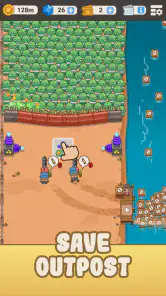
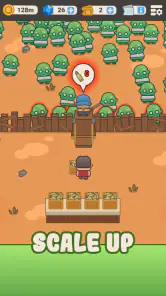
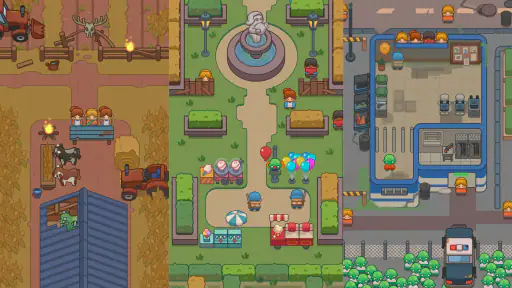
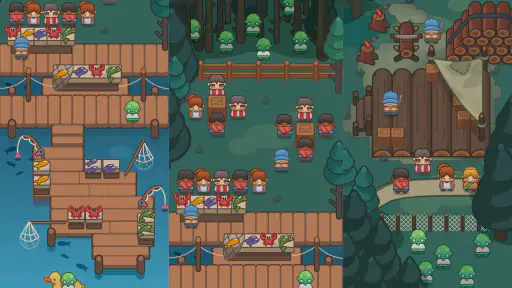
The art direction supports that readable approach. A colorful, clear presentation makes it easy to notice the settlement changing as it grows, which is useful in a game where much of the satisfaction comes from seeing progress. The interface is intuitive enough that I can focus on choosing what to build up rather than learning a complicated control scheme. That is a practical strength on a phone, especially when I only have a few minutes to play.
Gaming Stories You May Enjoy

Dancing Road Turns Short Breaks Into a Test of Rhythm and Timing

Super Stylist Makes Every Outfit a Test of Taste and Patience

Dominoes on Your Terms: Who Should Play and Who Should Pass

Pokémon GO Makes the Familiar World Feel New

Chess.com Turns Rematches Into Rivalries, but Community Has Its Costs

Archery Battle 3D Review: Sharp Aiming, Unclear Feedback
There is a trade-off in that clarity. Players who want a grim, realistic vision of a ruined world may find the presentation too bright, while players who like a visually accessible base-building loop may appreciate that the scene stays approachable. For me, mood and mechanics fit best when the post-apocalyptic theme adds context without making routine management feel heavy.
Strategic Depth Meets Casual Play
One of the most appealing aspects of this game is its balance between strategy and idle play. You don't have to be glued to your device to make progress, which is a refreshing change from more demanding strategy games. The idle nature of the game means you can set your upgrades, close the app, and return later to find your outpost has flourished in your absence. It's like watching your garden grow without having to water it constantly.
The strategic depth comes into play as you decide which upgrades to prioritize. Do you bolster your defenses to ward off potential threats, or do you focus on resource generation to ensure a steady stream of income? These choices keep the gameplay interesting and give you the freedom to tailor your strategy as you see fit.
Making short sessions work for you
A useful way to approach those choices is to decide what you want from the next visit before leaving the game. If you know you will only check in briefly, prioritize a clear next step rather than opening the game and tapping through upgrades without a plan. When you have more time, look at the relationship between production and protection and choose the area that best supports your immediate goal. This small habit makes the idle loop feel deliberate instead of automatic.
For a realistic everyday example, imagine opening the game while waiting for a coffee or taking a short break between tasks. You can check the outpost, make one or two considered improvements, and put the phone away without needing to settle in for a long session. Later, you can return and decide whether your next move should support growth or resilience. That is the kind of low-pressure routine this design suits; it is not ideal if you want a game that demands full attention during every spare moment.
Compared with more hands-on strategy games, the main draw here is convenience rather than constant tactical control. A conventional strategy title may offer more active planning and moment-to-moment pressure, but it asks for longer stretches of focus. Compared with simpler idle clickers, the outpost framing and the choice between defenses and resource production give your decisions a clearer theme. The compromise is that players seeking complex combat systems or a detailed survival sandbox may want a different kind of game.
Sound and rhythm in a quiet management loop
The sound design complements the visuals perfectly, with ambient sounds that make the game environment feel more immersive. Whether it's the clinking of coins or the subtle hum of machinery, every sound adds to the experience without being overwhelming.
That understated approach suits the pacing. Sound can make an upgrade or a returning visit feel satisfying without turning the game into a noisy spectacle. I find that this kind of restrained audio works best when I am playing in short bursts: it gives the outpost a sense of activity but does not compete with whatever else I am doing. If you prefer to play mobile games with sound off, the visual growth and upgrade choices still provide the main reasons to check in.
The central rhythm is less about reacting quickly and more about setting a direction, leaving the game, and coming back to assess progress. That creates a pleasant fit for people who enjoy gradual development. It can also feel slow if you want a steady stream of fresh challenges during a single sitting. I would go in expecting a measured management loop rather than an action game dressed up with a base.
What to expect from spending and updates
Although the game is free, it includes optional in-app purchases ranging from $0.99 to $250.00 per item. That is a wide range, so I would treat purchases as optional rather than as a necessary part of starting out. Before spending, it is worth deciding whether the game’s ordinary pace is enjoyable for you; paying to move faster cannot make an idle loop more engaging if its basic rhythm is not a match.
The current version is 1.21.1, and the minimum operating system requirement is Android 5.0. The version detail is useful when checking compatibility, particularly if you are installing on an older device. I would also keep expectations focused on the experience itself rather than assuming that every update changes the way the game is played.
Its store history begins on March 30, 2023, and it has around three thousand two hundred written reviews. Those figures offer context for how established the game is, but the best test remains whether you enjoy returning to a base and making incremental decisions. For me, the clearest way to judge that is to try the free experience without treating a purchase as the price of admission.
Visually Appealing and Intuitive Interface
Idle games often face the challenge of keeping players visually engaged, and Idle Outpost: Upgrade Games rises to the occasion beautifully. The graphics are crisp and colorful, making your outpost feel vibrant and alive. The interface is intuitive, ensuring that even the newest players can navigate with ease. Plus, there's something incredibly satisfying about watching your outpost evolve from a small settlement into a bustling hub of activity.
That visual change also helps with a common idle-game problem: returning after a while and having little sense of what has happened. A recognizable base gives progress a visible form, so the appeal is not solely in checking a balance. I would still suggest paying attention to which improvement you chose last time, rather than tapping through everything immediately. Keeping a simple goal in mind makes each visit feel like part of a plan.
This is especially suited to players who like seeing a small project become more established over time. It is less suited to anyone who finds repeated upgrade screens tedious or wants every session to introduce a new setting or objective. The interface may be easy to understand, but ease of use cannot remove the repetition that comes with an idle structure.
Who will enjoy the outpost, and who may not
I would recommend giving it a try if you enjoy casual base management, visible progression, and strategic choices that do not require constant supervision. It can fit into a commute, a lunch break, or a quiet moment at home because you can check in without planning a long play session. It is also a reasonable choice for someone curious about idle games who wants a setting more concrete than an abstract pile of counters.
I would steer away if you want a tense survival game, a story-led adventure, or competitive strategy that rewards continuous attention. The post-apocalyptic backdrop may set up expectations of danger, but the core attraction is the outpost-upgrade routine. Likewise, if you dislike waiting for progress between visits, an active strategy or action game will probably feel more rewarding.
One practical trade-off is that convenience can blur into repetition. Since the loop is designed to let you leave and return, the most satisfying moments are the decisions around development rather than constant interaction. I would not recommend opening it expecting a fresh surprise every time; I would recommend it when the pleasure of steady, visible improvement is enough.
The Final Verdict
In conclusion, Idle Outpost: Upgrade Games is a standout in the idle gaming genre. It provides a perfect blend of strategic depth and casual play, making it a great choice for both hardcore strategy enthusiasts and casual gamers looking for something engaging. The visual and audio elements enhance the overall experience, ensuring that you remain hooked from the moment you start playing.
My enthusiasm comes with a qualification: I see it as a relaxed management game with strategic choices, not as a substitute for a demanding strategy campaign. Its accessible interface and colorful outpost make quick visits easy, while the choice between strengthening defenses and supporting production gives those visits a little purpose. The more you enjoy incremental growth, the more likely the pace will work for you.
If you're on the hunt for a game that lets you flex your strategic muscles without demanding all of your time, give Idle Outpost: Upgrade Games a try. Trust me, your future outpost will thank you!
Idle Outpost: Upgrade Games Pros and Cons
Pros
- Engaging gameplay with resource management.
- Regular updates with new content.
- Offline play available.
- Easy to learn for beginners.
- Attractive graphics and design.
Cons
- Progress slows down after initial levels.
- In-app purchases can be pricey.
- Requires frequent internet connection for updates.
- Limited social features.
- Repetitive tasks may become tedious.
This Game in Other Languages
Frequently Asked Questions
What is Idle Outpost: Upgrade Games about?
Idle Outpost: Upgrade Games is a strategic idle game where players focus on building and upgrading outposts to gather resources and expand their territories. The game involves strategic planning to optimize resource collection, manage upgrades, and expand your empire effectively. It combines elements of strategy and idle gameplay, making it engaging for players who enjoy both genres.
How do upgrades work in Idle Outpost: Upgrade Games?
In Idle Outpost: Upgrade Games, upgrades are crucial for advancing in the game. Players can upgrade their outposts to increase resource production and efficiency. Each upgrade enhances various aspects of the outpost, such as speed, capacity, and resource types. Strategically choosing which upgrades to prioritize can significantly impact your progress and success in the game.
Are there any in-app purchases in Idle Outpost: Upgrade Games?
Yes, Idle Outpost: Upgrade Games offers in-app purchases that allow players to accelerate their progress. These purchases can include resource packs, special boosters, or exclusive upgrades that enhance gameplay. While in-app purchases can provide an advantage, the game is designed to be enjoyable and playable without spending money, allowing players to progress at their own pace.
Is an internet connection required to play Idle Outpost: Upgrade Games?
Idle Outpost: Upgrade Games can be played both online and offline, offering flexibility for players. While an internet connection is not required for basic gameplay, certain features like leaderboards, events, and updates may require connectivity. Playing online also ensures that your progress is saved and synced across devices, providing a seamless gaming experience.
What platforms is Idle Outpost: Upgrade Games available on?
Idle Outpost: Upgrade Games is available on both Android and iOS platforms. Players can download the game from the Google Play Store for Android devices or the Apple App Store for iOS devices. The game is optimized for mobile play, providing an intuitive and engaging experience across different screen sizes and devices.


