

Idle Mafia - Tycoon Manager
- Reviews
- 4.5
- Version
- 12.0.0
- Installs
- 10,000,000+

Screenshots



 Analysis by Frivlyz
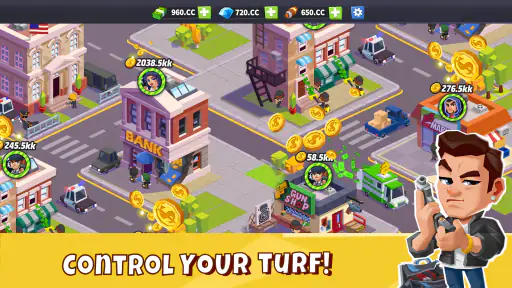
Idle Mafia - Tycoon Manager is the kind of mobile simulation game I can open for a few minutes, make several decisions, and leave feeling that my criminal organization has still moved forward. It puts me in charge of building a Mafia empire, recruiting and improving characters, expanding influence, and balancing progress with the temptation to spend for faster results. The theme is deliberately dramatic, but the actual appeal is its simple management loop rather than deep realism.
After spending time with it, I see the game as a good fit for players who enjoy incremental growth, character collection, and short sessions with a light strategy layer. It is less suitable if you want a fully hands-on city builder, a serious tactical crime game, or a progression system that never pressures you toward optional purchases. My experience was strongest when I treated it as a relaxed background game instead of expecting every action to require my attention.
How the current version feels to play
The current release is version 12.0.0, and that matters because Idle Mafia has had time to settle into its central identity. Developed by Century Games PTE. LTD., it is a free simulation game with a Teen content rating. The basic rhythm is easy to understand: collect resources, strengthen your crew, unlock more opportunities, and return later to claim the benefits of the work that continued while I was away.
That idle structure is the first thing a new player should understand. This is not a game built around constant movement or long battles that demand perfect control. Instead, I make progress through a chain of upgrades and timed rewards, then decide where the next investment will have the greatest effect. The satisfaction comes from watching several small improvements combine into a stronger organization.
The Mafia setting gives those familiar systems a more memorable personality. Characters, rival groups, and criminal ambitions make the numbers feel connected to a world, even though the underlying design is still about managing resources and upgrading a roster. I enjoyed the presentation most when it gave a clear reason for my next objective rather than simply showing another button with a larger number.
A normal weekday session illustrates the game well. I might open it during a coffee break, collect accumulated earnings, improve a useful character, check an available activity, and leave before my break ends. Later, I can return to see whether that upgrade has changed my earning pace. This makes it convenient for people who want a game that fits around work, study, or commuting rather than taking over an entire evening.
The trade-off is that short sessions can become repetitive. Once the initial discovery period passes, many actions follow the same pattern: claim, upgrade, unlock, repeat. I found the game more enjoyable when I set a small goal for each visit, such as improving one part of my crew or preparing for a difficult encounter, instead of tapping through every available reward without thinking.
Gaming Stories You May Enjoy

Dancing Road Turns Short Breaks Into a Test of Rhythm and Timing

Super Stylist Makes Every Outfit a Test of Taste and Patience

Dominoes on Your Terms: Who Should Play and Who Should Pass

Pokémon GO Makes the Familiar World Feel New

Chess.com Turns Rematches Into Rivalries, but Community Has Its Costs

Archery Battle 3D Review: Sharp Aiming, Unclear Feedback
Where the strategy actually matters
Although the game is accessible, it is not completely mindless. The important choices usually involve deciding which improvement deserves scarce resources first. A stronger individual may help immediately, while a broader upgrade can improve the whole organization over time. I recommend resisting the urge to upgrade whichever option is highlighted most prominently. Looking at the next obstacle and investing around that obstacle usually feels more efficient.
One useful habit is to separate progress into short-term and long-term spending. I use immediate upgrades when they help me clear a current roadblock, but I keep some resources available for a more meaningful unlock instead of emptying everything on the first attractive improvement. That approach reduces the feeling of being stuck after an enthusiastic spending spree.
The character side also benefits from patience. A new recruit can look exciting, but a well-developed member of the existing crew may contribute more reliably than an unprepared newcomer. I would not automatically replace a familiar team every time a new option appears. First I compare the cost of bringing that character up to a useful level with the benefit they offer right now.
This is one of the less obvious strengths of the game: it rewards players who think in terms of timing, not just accumulation. Saving for a meaningful breakpoint can be better than spreading every resource across several average improvements. The game remains forgiving enough for casual play, but this small layer of planning gives experienced players something to optimize.
What the latest stage means for returning players
For someone returning after time away, version 12.0.0 is best approached as a current snapshot rather than a promise about what comes next. The important question is whether the established idle-management loop still suits you. If you previously enjoyed checking in, upgrading a crew, and watching your operation expand, the familiar structure remains the reason to come back.
Returning players should avoid trying to rebuild everything at once. I would begin by reviewing the strongest existing members, identifying the next progression barrier, and deciding whether stored resources are better spent on immediate power or saved for a larger improvement. This is also a good moment to reconsider old habits: automatic spending may have been convenient early on, but later progress benefits more from deliberate priorities.
The game’s long-term audience is reflected in its scale. It has passed ten million installs, carries an average rating of 4.5 from around 305 thousand ratings, and has about 7.4 thousand written reviews. Those figures suggest that the basic formula has broad appeal, especially among people who like casual progression with a crime-themed wrapper. They do not guarantee that every player will enjoy the monetization or repetition, so I would treat the popularity as a sign of reach rather than a substitute for personal preference.
Existing users should also remember that idle games can make progress feel slower when the novelty fades. In the beginning, every unlock feels significant. Later, the same reward may only move one part of the organization forward. I found that setting personal milestones helped: reaching a new area, making one character noticeably stronger, or completing a particular improvement gave each session a clearer purpose.
Free access and the pressure to accelerate
The game is free to download and play, which makes it easy to test without committing money. However, optional purchases range from $0.99 to $149.99 per item. That wide range is important for anyone deciding whether this is a comfortable free-to-play experience. I could enjoy the core loop without paying, but the design naturally makes faster progress appealing when waiting or resource shortages interrupt momentum.
My advice is to decide your spending rule before you begin. If you are happy to play at the intended pace, treat premium offers as conveniences rather than necessities. If you dislike seeing expensive options in a free game, or if you tend to buy impulsively when progress slows, this may become frustrating. The highest-priced items are especially easy to ignore when I focus on the next achievable objective instead of comparing my progress with an imagined faster route.
A practical approach is to play for several sessions before buying anything. That gives you enough time to learn whether the setting and repetition genuinely hold your attention. It also shows whether the normal progression pace works for you. Spending to solve a problem before understanding the system can turn a minor delay into a recurring expectation that every obstacle should be bypassed.
This is where Idle Mafia differs from a traditional premium simulation game. A paid, self-contained alternative may offer more predictable pacing and fewer prompts to accelerate, while a deeper strategy game may give you more direct control over every decision. Idle Mafia answers with convenience and a low entry barrier. I would choose it when I want a game that keeps moving between sessions, not when I want a carefully balanced campaign with a fixed ending.
Limits that become clearer over time
The biggest limitation is repetition. The opening hours are effective because the game keeps introducing goals and rewards, but the underlying actions remain familiar. Players who need constant mechanical variety may find the loop too narrow. I sometimes felt that I was managing the rhythm of rewards more than actively running a complex underworld.
Another limitation is the gap between the theme and the depth of the simulation. The Mafia presentation adds flavor, but this is not a detailed economic model of organized crime. You are not likely to spend most of your time negotiating intricate alliances, designing a realistic supply network, or solving open-ended strategic problems. The game uses the theme to frame accessible progression rather than to deliver a serious simulation.
There is also a difference between being busy and making meaningful decisions. The interface can offer many things to collect or improve, yet not every tap represents an important choice. I recommend slowing down when several upgrades appear at once and asking which one changes your immediate situation. That simple pause makes the management side feel more substantial and prevents resources from disappearing into low-impact improvements.
Players who prefer direct control should be cautious. Idle Mafia is designed around waiting, returning, and managing accumulated progress. If your favorite mobile games are action titles where every second depends on your input, this may feel passive. A conventional strategy game with active battles or a city builder with more construction freedom would probably be a better match.
Who should play and who should skip it
I would recommend it to someone who enjoys collection systems, gradual upgrades, and a strong sense of accumulating power. It works particularly well for a player who wants one main game to check several times during the day without needing a long uninterrupted session. The criminal setting is also more distinctive than the usual farm or generic business theme, even though the management principles are familiar.
It is a reasonable choice for a newcomer to simulation games because the basic goals are easy to read. You can learn by following the early objectives, then gradually become more selective about upgrades. The game does not require you to understand a complicated economy before making progress, which makes it approachable on a small screen.
I would skip it if you want a one-time purchase with no in-app economy, a realistic crime simulation, or constant strategic novelty. I would also hesitate to recommend it to anyone who finds idle timers and repeated collection cycles irritating. In those cases, a premium management game or a more active strategy title will likely provide a better experience, even if it demands more attention.
For families, the Teen rating is worth taking seriously. The setting and presentation are built around Mafia themes, so it is not a child-focused management game. I would not hand it to a younger player simply because the controls are simple; the tone and subject matter are part of the experience.
How I would approach the first sessions
My first recommendation is to follow the early objectives, but not blindly. They teach the basic rhythm and help reveal which actions contribute to progress. Once the game starts presenting several possible improvements, stop treating every highlighted option as equally urgent. Pick one main development path and use the others only when they solve a clear problem.
Second, check the game at a schedule that feels natural instead of opening it compulsively. The idle design is most useful when it fits into your day. A morning collection, a midday adjustment, and an evening review can be enough to maintain momentum without turning the game into another obligation.
Third, keep a simple mental record of what is slowing you down. Is the issue a weak character, a lack of general resources, or a particular progression requirement? Identifying the bottleneck prevents wasteful upgrades. This is more valuable than trying to improve everything evenly, because not every part of the organization contributes equally to your next step.
Finally, judge purchases by time saved rather than by the size of the offer. A small convenience may be easier to justify than a large bundle, but only if you already know you will continue playing. If the game has not earned a place in your daily routine, buying acceleration will not fix that basic problem.
What I would watch as the game continues
The most important thing to watch is whether future development adds meaningful decisions or simply adds more layers to the same collection-and-upgrade cycle. New content is valuable when it changes how I prioritize my crew, resources, or timing. More rewards alone may extend the routine without making it deeper.
I would also pay attention to how the balance between free progress and optional acceleration develops. The game is at its best when patient players can keep moving while paying users receive convenience rather than an overwhelming advantage. That balance determines whether the long-term experience feels like management or like waiting for an offer to appear.
For current players, the practical test is simple: does the next goal still make you curious? If yes, the established loop is doing its job. If every session feels like collecting the same rewards with no interesting decision, taking a break may be wiser than forcing progress. Idle games are easy to keep installed, but they are only enjoyable when the routine still feels rewarding.
After reviewing it, I see Idle Mafia - Tycoon Manager as a polished, approachable simulation for people who like slow-burn progression and a theatrical criminal theme. Its free entry, compact sessions, and upgrade planning are genuine strengths. Its repeated structure, idle pacing, and broad purchase range are equally real drawbacks. My honest recommendation is to try it as a no-spend, short-session game first; if the crew-building loop keeps you interested without constant acceleration, it can become a pleasant daily companion. If you need deeper control or a fixed, interruption-free experience, another kind of strategy game will serve you better.
Idle Mafia - Tycoon Manager Pros and Cons
Pros
- Easy-to-learn idle gameplay suitable for short sessions
- Many characters with distinct skills and upgrade paths
- Regular events add variety beyond the main progression
- Offline earnings let progress continue while you are away
- Stylish crime-themed art and humorous character designs
Cons
- Progress slows noticeably without frequent upgrades and resource planning
- Random recruitment can make building a strong team frustrating
- Multiple currencies and systems may feel overwhelming at first
- Competitive features can favor players who spend money
- The game requires a stable connection for many online features
This Game in Other Languages
Frequently Asked Questions
What is Idle Mafia - Tycoon Manager about?
Idle Mafia - Tycoon Manager is a casual strategy game where you build and expand a criminal empire. You recruit gangsters, upgrade businesses, collect idle income, and compete against rival factions. The game combines management, character collection, and light role-playing elements, so progress continues even when you are offline. It is designed for short play sessions, although regular check-ins help you advance faster.
Can I play Idle Mafia - Tycoon Manager offline?
The game supports idle progress, meaning your businesses can continue generating rewards while you are away. However, a permanent internet connection may still be required for several features, including account synchronization, events, advertisements, purchases, leaderboards, and online competitions. If you are traveling or have limited data, it is best to launch the game beforehand and check which activities remain available without an active connection.
Is Idle Mafia - Tycoon Manager free to download and play?
Idle Mafia - Tycoon Manager is generally free to download, but it includes optional in-app purchases. You can progress without spending money by completing missions, collecting idle rewards, and participating in events, although upgrades and character development may take longer. Purchases can provide premium currency, resource bundles, or other advantages. Parents should review device payment settings if children may access the game.
Does the game contain advertisements or mature content?
The game may offer optional advertisements in exchange for bonuses, such as extra resources or accelerated progress. It also presents a stylized mafia theme with cartoon violence, criminal storylines, weapons, gambling-related references, and occasional suggestive character designs. The presentation is not realistic, but the subject matter may still be unsuitable for younger players. Check the store age rating and your local content guidelines before installing.
What can I do in Idle Mafia - Tycoon Manager besides collecting idle income?
Beyond managing automatic earnings, you can recruit and upgrade different mafia characters, improve businesses, complete missions, unlock new areas, and take part in competitive or limited-time activities. Character abilities and team combinations add a strategic layer to battles and progression. The experience is approachable for casual players, but those who enjoy optimizing teams and resources will find more depth in long-term management.


