

Idle Egg Factory
- Reviews
- 4.6
- Version
- 2.9.7
- Installs
- 50,000,000+

Screenshots

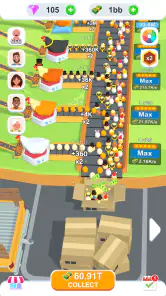
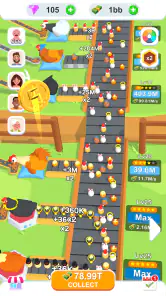


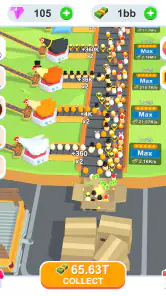

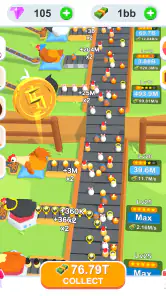
 Analysis by Frivlyz
I usually enjoy idle games when they give me a small routine to return to rather than demanding constant attention, and Idle Egg Factory fits that mood. Its central idea is simple: build up egg production and keep improving the operation. That makes it easy to understand at a glance, but there is still a satisfying little rhythm to deciding what to grow next. I’d recommend it to someone who likes checking in on a simulation for a few minutes at a time, not to someone looking for a deep business-management game.
A repeatable routine, not a complicated shift
My most comfortable way to play is to open the factory, collect what is ready, and look for the next useful improvement before putting the phone down. The game’s idle structure suits short breaks because progress is framed around production rather than a long sequence of levels that must be completed in one sitting. When I have more time, I can stay and make a few decisions; when I do not, I can leave without feeling that I have abandoned a complicated plan.
That routine is also where the game’s main appeal becomes clear. The pleasure comes from seeing a small operation develop, then choosing how to support its growth. I would not treat every visit as a test of perfect efficiency. Instead, I find it more enjoyable to pick one practical next step, make it, and let the factory’s broader progression provide the longer-term goal.
What to check before settling into a habit
Because the experience combines active interaction with idle progress, it is worth noticing which parts of a session actually need your attention. I suggest taking a moment to see what the current screen emphasizes before tapping quickly: a visible upgrade or production choice may matter more than simply repeating the same action. This is a useful habit in any incremental game, but it is especially helpful here because the central loop can otherwise become automatic in the less interesting sense of the word.
I also recommend deciding in advance how often you want to check in. If you open the game every spare minute, the repeated collection-and-upgrade loop may start to feel like a chore. A few deliberate visits during the day can make progress feel more noticeable and keep the game in its intended role as a casual diversion. There is no need to turn an egg-producing simulation into another notification-driven obligation.
One practical question is whether you need to stay online and actively play for the game to suit you. Its idle framing is aimed at people who enjoy gradual progress and brief management sessions, so I would approach it as something to revisit rather than a game that requires a continuous stretch of attention. If you prefer every reward to come from active skill or moment-to-moment decisions, a hands-on arcade game will probably be a better match.
Small decisions that make sessions feel less repetitive
A helpful pattern is to give each visit a purpose. For example, I might focus on one improvement, then pause to see how that choice affects the factory instead of tapping around without a plan. This keeps the session readable: I can tell what I changed and whether I enjoyed the result. It also makes short play periods feel more satisfying, even when the overall pace remains incremental.
Gaming Stories You May Enjoy

Dancing Road Turns Short Breaks Into a Test of Rhythm and Timing

Super Stylist Makes Every Outfit a Test of Taste and Patience

Dominoes on Your Terms: Who Should Play and Who Should Pass

Pokémon GO Makes the Familiar World Feel New

Chess.com Turns Rematches Into Rivalries, but Community Has Its Costs

Archery Battle 3D Review: Sharp Aiming, Unclear Feedback
Another useful approach is to alternate between quick check-ins and longer sessions. A short visit can handle the obvious next action, while a longer one gives me time to explore the available progression at a calmer pace. That distinction matters because idle games can blur together when every visit becomes the same sequence. Setting a different intention for each session helps me notice the game’s development without pretending that every moment needs a new strategic breakthrough.
For an everyday example, imagine opening the game during a lunch break. I would check the factory, choose a sensible improvement, and close it once I had a clear next goal. Later, with more free time, I could return and spend longer considering how I want to develop production. That is a better fit for this title than trying to keep it open beside every other task; the factory is most enjoyable as a light routine, not as a demand for constant supervision.
Getting Your Hands Dirty: The Basics
When I first opened Idle Egg Factory, I was greeted by a colorful and vibrant interface. The game doesn’t waste any time throwing you into the action. You start small, managing just a few chickens and collecting their eggs. The initial pace is perfect for newbies, allowing you to get the hang of things without feeling overwhelmed.
Eggs-traordinary Gameplay Mechanics
As you progress, you can upgrade your facilities, buy more chickens, and even hire managers to automate tasks. I found the automation feature particularly satisfying. It’s like having your own little factory running in your pocket! Watching the production line grow and the eggs pile up is surprisingly rewarding.
One thing I noticed is how the game cleverly balances between manual tapping and automation. There's always something to do, whether it’s upgrading equipment or optimizing production lines. The developers did a fantastic job keeping players engaged without making it feel like a grind.
Choosing the right kind of idle game
Compared with the usual alternatives in the simulation and idle-game space, this one puts its theme right at the center: chickens, eggs, and an expanding factory. That gives it a more playful feel than a sober management simulator, while the automation makes it less demanding than a game built around constant manual input. The trade-off is that players who want detailed supply chains, complex staffing choices, or precise economic planning may find this loop too light. I would choose it for relaxed incremental progress, not for a serious tycoon challenge.
The game is a good fit if you like watching a modest operation become more productive and enjoy making simple improvement choices along the way. It is less suitable if repetition quickly bothers you, or if you need every session to offer a new puzzle. I would also steer someone toward a more active strategy or management title if they want to control every stage of production rather than letting automation take over some tasks.
One question people often have about idle games is whether automation removes the reason to play. Here, I see it as a change in emphasis: automation makes the factory feel as if it has a life beyond each tap, while the player still has a reason to return and decide how to develop it. If your favourite part is performing every action yourself, that shift may feel like a loss. If you enjoy setting up progress and checking on it later, it is the feature that makes the format work.
Visuals and Sounds That Crack You Up
Visually, the game is a treat. The animations are smooth, and the art style is charming. Each chicken and piece of equipment is designed with attention to detail, making the game aesthetically pleasing. The sound effects add to the immersion, with clucking chickens and the whirr of machinery giving life to your bustling factory.
I especially enjoyed the little touches, like the quirky designs of the chickens and the humorous descriptions of the upgrades. It’s clear that a lot of thought went into making this game entertaining on multiple levels.
What the long-term loop asks of you
The progression is best approached patiently. I would resist treating every available improvement as equally urgent and instead focus on what seems to move the current factory forward. That is not a secret strategy or a guaranteed shortcut; it is simply a way to make the choices easier to follow. When an idle game presents a familiar cycle, being able to explain your next move to yourself is often more rewarding than tapping through every option.
There is also a personal limit to consider: the more you rely on routine, the more important it is to notice when the routine stops being fun. If checking production becomes something you do out of obligation, take a break. The game’s lightweight premise works best when returning to the factory feels pleasant. It does not need to become a daily target to justify playing it.
An Egg-citing Progression System
One of the highlights for me was the progression system. As you level up, new features and challenges unlock, keeping the gameplay fresh. The game also includes seasonal events, which are a great way to earn extra rewards. These events are time-limited, adding a sense of urgency and excitement.
While the game is free to play, there are in-app purchases available, ranging from $0.99 to $99.99 per item. I would treat those as optional rather than as part of the basic routine: the appeal is the gradual development, so there is no need to spend just to enjoy the core idea. If you are cautious about purchases, check the available options carefully and make sure the game’s pace suits you before deciding whether any optional spending is worthwhile.
For anyone wondering whether it is approachable, the game is rated Everyone, and its simple premise makes it easy to understand without prior experience with management games. Solid Games developed it, and it is a free simulation game with a 4.6 average from around 188 thousand ratings. It has passed 50 million installs, which suggests that this straightforward factory concept has found a broad audience, though popularity alone cannot tell you whether its relaxed loop will suit your taste.
The current version is 2.9.7, and it requires Android 5.1 or later. Those details matter most if you are checking compatibility on an older device; otherwise, I would make the decision based on the play style. It is a casual, incremental game, not a detailed factory planner, and that distinction is more important than its technical basics for most players deciding whether to try it.
In conclusion, if you’re looking for a fun, addictive idle game to pass the time, Idle Egg Factory is worth checking out. It’s a delightful blend of strategy and humor that keeps you coming back for more. So, are you ready to hatch some plans and build your egg empire? Give it a try, and let me know how many eggs you can crack!
Idle Egg Factory Pros and Cons
Pros
- Easy to understand gameplay.
- Visually appealing graphics.
- Suitable for all age groups.
- Regular updates with new features.
- Offline play available.
Cons
- Repetitive after a while.
- Contains in-app purchases.
- Limited strategic depth.
- Ads can be intrusive.
- Requires frequent tapping.
Frequently Asked Questions
What is the main objective of Idle Egg Factory?
Idle Egg Factory is a simulation game where players manage an egg production facility. The primary goal is to produce as many eggs as possible by upgrading machinery, hiring efficient staff, and optimizing production lines. Players can earn money through egg sales, which can be reinvested into the factory to expand operations and increase productivity.
How can I increase my earnings in Idle Egg Factory?
To maximize earnings in Idle Egg Factory, players should focus on upgrading equipment and machinery to boost production speed and egg quality. Hiring skilled workers and strategically managing resources also play a crucial role. Additionally, participating in special events and completing missions can provide significant bonuses and rewards to enhance your overall income.
Are there any in-app purchases in Idle Egg Factory?
Yes, Idle Egg Factory offers in-app purchases that allow players to buy in-game currency and other resources. These purchases can help speed up progress and provide various advantages, such as removing ads or gaining exclusive bonuses. However, all game features are accessible without spending money, making it possible to enjoy the full experience through regular gameplay.
Can I play Idle Egg Factory offline?
Idle Egg Factory requires an internet connection for certain features, such as events and leaderboards. However, the core gameplay can be enjoyed offline, allowing players to continue managing their egg factory without an active internet connection. Progress made offline will sync once the device reconnects to the internet.
What platforms are supported by Idle Egg Factory?
Idle Egg Factory is available on both Android and iOS platforms, ensuring a broad reach for mobile gamers. Users can download the app from the Google Play Store for Android devices and the Apple App Store for iOS devices, making it accessible to a wide audience looking to enjoy this engaging simulation game.


