

I, The One — Fun Fighting Game
- Reviews
- 4.4
- Version
- 3.71.06
- Installs
- 100,000,000+

Screenshots
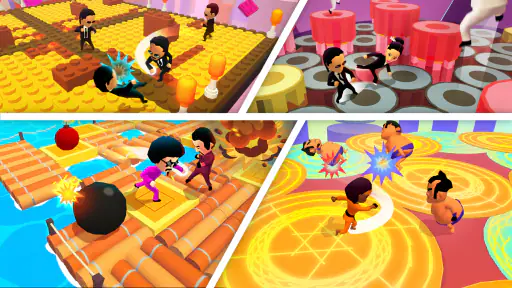
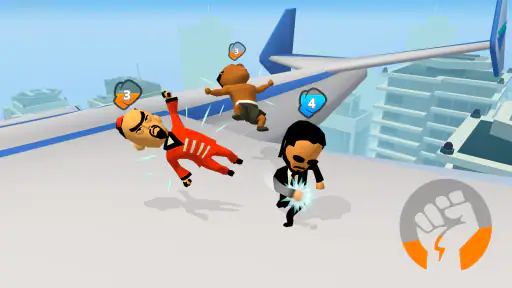
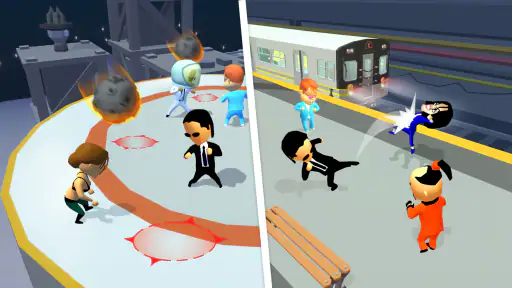
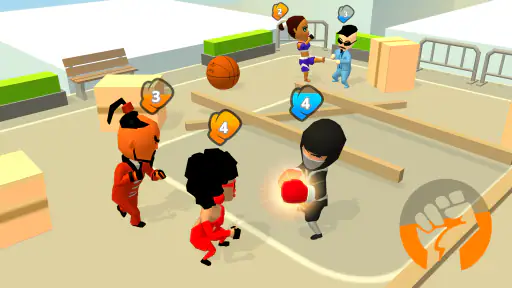
 Analysis by Frivlyz
I tend to enjoy action games most when they give me a clear reason to try another round without asking me to learn a pile of rules first. I, The One aims for exactly that kind of quick, direct appeal: enter an arena, keep your footing, and send rival fighters off the platform. Its appeal is less about following a long story and more about the small, immediate goal in front of you. When I have a few spare minutes and want something livelier than a puzzle, that simple objective is easy to understand and satisfying to chase.
Small goals that make the first rounds click
The opening idea is easy to grasp, but the arena gives each encounter a practical focus: positioning matters because a hit is most useful when it pushes someone toward the edge. I find that this makes the basic aim more interesting than simply tapping as fast as possible. A useful habit is to watch where you are standing before committing to an attack; rushing straight at every opponent can leave you exposed or poorly placed. That little pause to read the space gives the action a bit of thought without making it feel like a technical fighting game.
This is a good fit for someone who wants to start playing immediately, including casual players who do not want to memorize elaborate combos. It also works as a short between-tasks game: I can finish a round, put my phone down, and return later without needing to remember a plot or a complicated build. On a commute or while waiting for a friend, the clear win condition makes it easy to get into the action quickly. The trade-off is that players who prefer a carefully paced campaign, deep character stories, or a long-term competitive structure may find the format too focused on repeat bouts.
Progress that gives each session a nudge
Unlocking characters as you level up gives the game a visible reason to keep playing beyond winning the current arena. I like that kind of progress when it supplies a modest next target rather than turning every session into a checklist. Trying a different fighter can also make a familiar goal feel fresh: I can pay attention to how a character feels instead of treating every match as exactly the same task. Still, unlocking content is not automatically the same as meaningful strategic depth. If you mainly want a roster where every option demands extensive practice, this lighter approach may not satisfy you.
The game is free to download, and its in-app purchases range from $0.99 to $99.99 per item. That makes it sensible to decide what you want from the game before spending: if the basic arena loop already gives you enough short bursts of fun, there is no need to treat a purchase as a requirement for enjoying it. I would also keep an eye on the difference between a tempting unlock and something that genuinely changes how I want to play. For a casual game, being comfortable with the free experience is a useful way to avoid paying for progress I might not value after a few sessions.
Welcome to the Arena
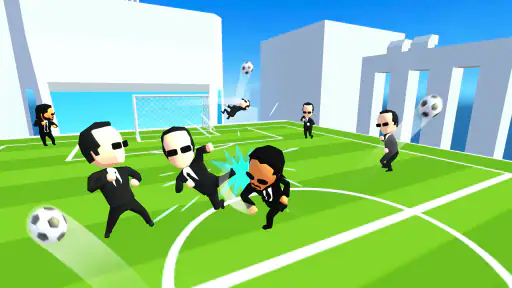
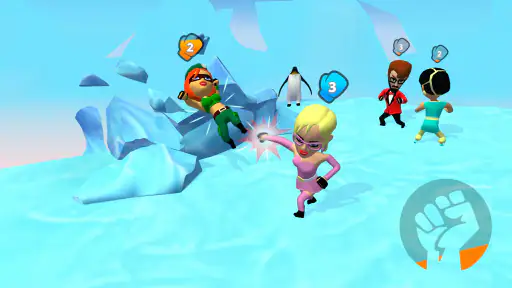
First off, the premise of I, The One is simple yet addictive. You jump into different arenas where your main goal is to knock your opponents off the platform. It sounds straightforward, but as you progress, you quickly realize it’s all about strategy and timing. The arenas are quirky and varied, adding to the replayability factor. Trust me; you’ll find yourself saying, "just one more match" more times than you’d like to admit.
Gameplay Mechanics
Now, let’s talk about the controls. Unlike other fighting games that might require you to perform complex button combinations, this game keeps it casual and fun. The controls are intuitive, meaning you can jump right in and start brawling without having to read a manual. Swipe to move, tap to punch, and use the environment to your advantage. It’s the perfect blend of skill and fun, and even if you’re not a seasoned gamer, you’ll pick it up in no time.
Gaming Stories You May Enjoy

Dancing Road Turns Short Breaks Into a Test of Rhythm and Timing

Super Stylist Makes Every Outfit a Test of Taste and Patience

Dominoes on Your Terms: Who Should Play and Who Should Pass

Pokémon GO Makes the Familiar World Feel New

Chess.com Turns Rematches Into Rivalries, but Community Has Its Costs

Archery Battle 3D Review: Sharp Aiming, Unclear Feedback
That simple control scheme also shapes who will enjoy it most. Compared with the usual mobile fighting game built around memorizing strings of attacks, this is easier to approach when I only have one hand free or do not want to study a tutorial before playing. The compromise is that the action can feel less precise than a game designed around deliberate combos and defensive inputs. If you want a serious test of execution, I would choose a more technical fighter; if you want readable, physical chaos, this is the more relaxed option.
One practical tip is to treat movement as part of the attack rather than as a way to chase every opponent. Since the objective is to remove fighters from the platform, a well-timed push near an edge is more valuable than trading blows in the middle. I try to keep enough room to recover my position instead of lunging whenever someone comes close. It is a small adjustment, but it makes the matches feel less random and gives me a clearer reason to pay attention between punches.
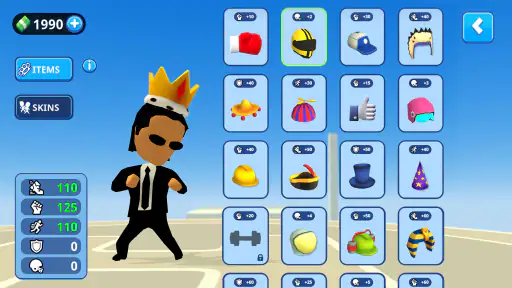
What I really enjoy about the game is its variety of characters. Each fighter comes with unique abilities and styles, so there’s always something new to explore. Whether you want to be a ninja or a boxer, the choice is yours. And yes, there’s that sweet satisfaction of unlocking new characters as you level up.
For me, that roster works best as a reason to experiment, not as a promise that every fighter will transform the game. When I unlock someone new, I can use a few rounds to see whether the character’s feel suits my instincts, then switch back if it does not. That is more useful than assuming the latest option must be the strongest. If you prefer to settle on one favorite and learn it deeply, the character variety can still add a little curiosity without forcing you to constantly change your approach.
Difficulty that comes from staying upright
The challenge here is tied to timing, spacing, and the risk of being knocked out of the arena, rather than to memorizing long move lists. Early success can make the game seem effortless, but opponents and positioning can make later rounds less forgiving. I find that the most helpful response to a rough stretch is not simply to attack faster. I slow down, watch how close I am to the boundary, and choose safer moments to engage. That shift turns a frustrating run into a small test of judgement.
The pacing suits players who enjoy compact rounds and immediate feedback. It is less suited to someone who wants a carefully staged difficulty curve with lengthy missions or extensive preparation between fights. If a match goes badly, the basic goal remains understandable, so I can try again without relearning a complex system. But repetition is part of the design’s appeal, and it can also become its limit: players who need each session to introduce a new mode or a substantially different objective may tire of the arena loop.
Graphics and Sound
The visuals in I, The One are bright and colorful, which perfectly suits the game’s lighthearted tone. While it might not boast hyper-realistic graphics, it doesn’t need to. The cartoony style is engaging and helps keep the gameplay exciting. Plus, the sound effects and background music are spot on, enhancing the overall experience without being overwhelming.
That presentation helps make hits and movement easy to follow amid the crowd, which matters when the action gets busy and I need to notice who is near an edge. It also keeps the mood playful rather than harsh. I would not choose it for a cinematic showcase or a realistic combat atmosphere; the visual style is clearly aimed at quick, colorful action. If I am playing somewhere quiet, I can still focus on what is happening without treating the soundtrack as the main attraction.
Who should keep it installed
In an ordinary day, I can picture opening the game while waiting for food to arrive, playing a couple of rounds, then closing it when the doorbell rings. That is where its short-match rhythm has real value: it does not ask me to reserve an evening or keep track of a long chain of events. It is also a reasonable choice for someone looking for a free action game to sample before deciding whether the repeat-play loop suits them. The game is rated Everyone 10+, so it is aimed at a broad audience while still carrying that age guidance.
On the other hand, I would skip it if I were looking for a story-led adventure, a realistic martial-arts simulator, or a highly competitive fighter where every input can be practiced and refined. The arena objective is deliberately easy to read, but that means players who want complex systems may reach the limits sooner. Its popularity is substantial, with over 100 million installs and an average rating of 4.4 from around 300,000 ratings, yet those figures do not change the central question: do you enjoy repeating quick knock-off-the-platform matches? That is what should decide whether it belongs on your phone.
How the game holds attention—and where it can press too hard
Progression has a useful, modest rhythm: a win is satisfying in the moment, while leveling and character unlocks create a next target. I like that these goals can sit in the background rather than requiring a player to plan a long session. The risk is that any progression track can make a simple game feel like a chore if I start playing only to reach the next unlock. My advice is to treat progress as a bonus to the arena fun, not as a reason to keep going when the matches have stopped being enjoyable.
Because the game includes optional purchases, it is worth deciding on a personal spending limit before browsing them, especially if a new character or other item catches your eye. A free game can be enjoyable without turning every unlock into a purchase decision, and the listed item prices span a wide range. I would avoid spending simply to hurry through a stretch that feels repetitive; if the core loop is not working for me, paying is unlikely to fix that. The better test is whether I still enjoy the next match when I ignore the progress bar.
For practical expectations, this is a mobile action game from CASUAL AZUR GAMES, and the current version is 3.71.06. It runs on Android 6.0 or later, which is useful to check before installing on an older device. Those details matter less than the play style, but they answer two sensible questions before a download: whether the device meets the minimum system requirement and whether the game’s lightweight, accessible approach matches what I want from a fighting game.
My progression verdict
If I wanted one mobile game for deep competitive practice, I would look elsewhere. If I wanted a colorful action game with a clear early goal, character unlocks to work toward, and rounds that fit into spare moments, I would give this one a try. The progression is best understood as gentle encouragement rather than a rich campaign, and that is both its strength and its boundary. I can recommend it to friends who like quick bouts and simple controls, while being honest that its repeated arena structure will not suit everyone.
Why You’ll Love It
If you’re looking for a game that’s easy to pick up, hard to master, and incredibly satisfying, then this is it. The quick matches make it perfect for a short break, while the depth of gameplay promises hours of entertainment. It’s the kind of game that doesn’t take itself too seriously, allowing you to just enjoy the moment and have some fun.
To wrap it up, I, The One delivers a knockout punch in the world of mobile gaming. It’s fun, challenging, and a great way to blow off some steam. So go ahead, give it a try, and become the champion you were meant to be!
I, The One — Fun Fighting Game Pros and Cons
Pros
- Engaging and dynamic fight mechanics.
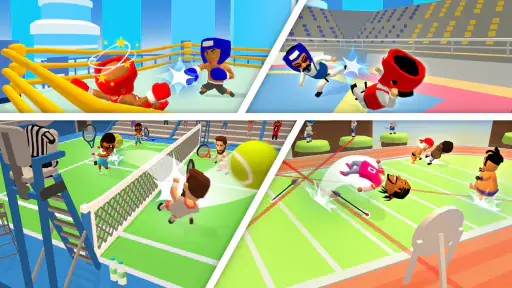
- Wide variety of arenas and settings.
- Easy to learn for beginners.
- Smooth and responsive controls.
- Regular updates with new content.
Cons
- In-app purchases can be expensive.
- Requires internet for most features.
- Ads can interrupt gameplay.
- Limited character customization.
- May drain battery quickly.
This Game in Other Languages
Frequently Asked Questions
What is the main objective of I, The One — Fun Fighting Game?
In I, The One — Fun Fighting Game, the main objective is to become the last person standing in a series of dynamic fighting matches. Players must use strategic moves, quick reflexes, and special skills to knock out opponents. The game is set in various arenas where players face off against multiple opponents, making it both challenging and engaging.
Is I, The One — Fun Fighting Game free to play, and are there in-app purchases?
Yes, I, The One — Fun Fighting Game is free to download and play on both Android and iOS devices. However, the game does offer in-app purchases that allow players to buy in-game currency, new characters, special skills, and cosmetic items. These purchases are optional and not necessary to enjoy the full experience of the game.
What kind of characters and skills can players expect in the game?
Players can choose from a variety of characters, each with unique abilities and appearances. The game offers a diverse roster that includes fighters with different fighting styles, such as boxing, martial arts, and street fighting. Players can also unlock and upgrade special skills and power-ups, which provide advantages in battles and add depth to the gameplay.
Does I, The One — Fun Fighting Game require an internet connection to play?
Yes, I, The One — Fun Fighting Game requires an internet connection to play. The game features online multiplayer modes where players can compete against each other in real-time. An active internet connection ensures smooth gameplay, access to updates, and the ability to participate in global leaderboards and events.
Are there any age restrictions for playing I, The One — Fun Fighting Game?
I, The One — Fun Fighting Game is rated for players aged 12 and up due to its cartoon-style violence and competitive nature. The game involves combat scenarios that, while not graphic, might not be suitable for younger children. Parents are advised to review the game content and settings to ensure it aligns with their expectations for appropriate gaming experiences.


