

Hello Kitty: Kids Hospital
- Reviews
- 4.7
- Version
- 1.3.0
- Installs
- 5,000,000+

Screenshots
 Analysis by Frivlyz
When a child is curious about what happens at a hospital, I find that a gentle pretend-play game can be an easier starting point than a detailed explanation. Hello Kitty: Kids Hospital turns that curiosity into a series of caring tasks, with Hello Kitty as a familiar guide. I’d approach it as a cheerful activity to share or let a child explore, rather than as a lesson in real medicine: its appeal is the chance to look after patients in a reassuring, playful setting.
What to expect from this little hospital
This is an educational game from Hippo Kids Games, built around looking after patients in a children’s hospital. Its tone is aimed at young players, and its Everyone age rating reflects that broad, family-friendly positioning. The game is free to start, with optional in-app purchases priced from $0.99 to $7.99 per item, so I’d make that possibility part of the conversation before handing a device to a child. It has a 4.7 average from around 14,000 ratings and over 5 million installs, which suggests that many families have tried it, though popularity alone can’t tell you whether its style suits your child.
The important expectation is scale: this is light, character-led pretend play, not a medical simulator or a substitute for books and conversations about health. A child can enjoy the idea of helping someone feel better without being asked to understand real diagnoses or procedures. I like that distinction because it lets an adult keep the mood playful and answer questions in simple, accurate language rather than treating the game as a source of medical instruction.
Getting started without turning it into a project
For a first visit, I’d keep the setup simple. The game is free, runs on Android 5.1 or later, and is currently at version 1.3.0. After installing, sit with the child for a few minutes and let them look around before explaining every control. Young players often learn a touch-based game more readily by trying one obvious action than by listening to a long set of directions. If you’re setting it up for independent play, check the purchase settings on the device beforehand and agree on what to do if a purchase prompt appears.
A useful first-session goal is not to finish everything; it is to help one patient through one activity and notice what the child enjoys. That small target makes it easier to tell whether the pace, characters, and interactions hold their attention. It also gives you a natural opening to ask what they think a patient might need, without turning play into a quiz. If they would rather tap around and tell a story, that can be a perfectly good first encounter too.
The first satisfying moment—and what it can teach
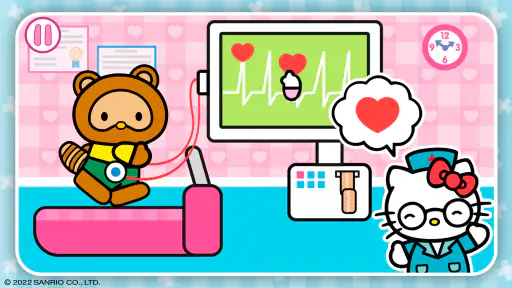
The game’s central loop is straightforward: help Hello Kitty and her friends care for patients through hospital-themed mini-games. In my experience, simple drag-and-drop interactions are a good fit for early play because the child can connect an action on screen with a visible response. When a task goes well, the positive feedback can make the little success feel clear. I’d use that moment to praise patience and helpfulness, not just speed or getting a step “right.”
That small change in how an adult responds matters. If a child hesitates, offer a choice—such as asking what they want to try next—rather than taking over the controls. If they make a surprising choice, ask them to explain their idea. The value here is less about memorizing medical terms and more about practicing attention, sequencing, and concern for another character. It can also give a child a low-pressure way to talk about check-ups, especially when a real appointment is coming up, while making clear that the game’s pretend care is not how every real visit works.
Gaming Stories You May Enjoy

Dancing Road Turns Short Breaks Into a Test of Rhythm and Timing

Super Stylist Makes Every Outfit a Test of Taste and Patience

Dominoes on Your Terms: Who Should Play and Who Should Pass

Pokémon GO Makes the Familiar World Feel New

Chess.com Turns Rematches Into Rivalries, but Community Has Its Costs

Archery Battle 3D Review: Sharp Aiming, Unclear Feedback
Exploring the Magical World of Hello Kitty
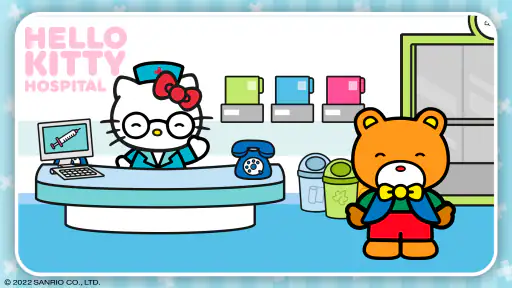
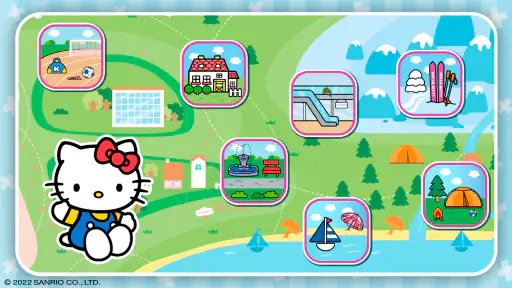
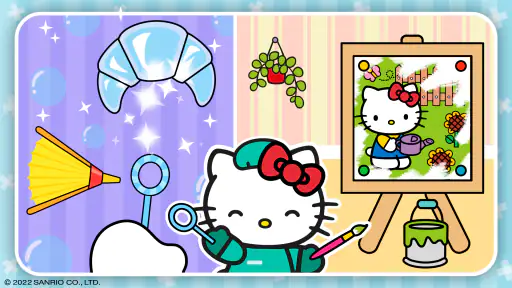
From the moment I launched Hello Kitty: Kids Hospital, I was greeted by the familiar, friendly face of Hello Kitty herself. The graphics are vibrant and colorful, making it super appealing to kids. It's like stepping into a pastel wonderland where everything is designed to put a smile on your face. The app does a stellar job of capturing the essence of Hello Kitty, with its adorable animations and cheerful music that plays in the background.
Gameplay and Features
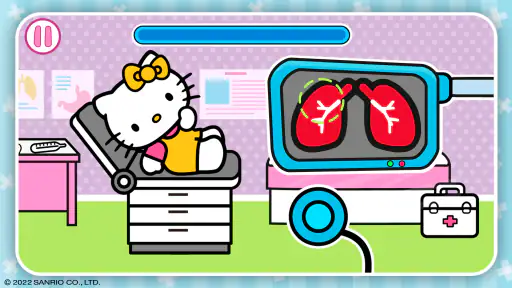
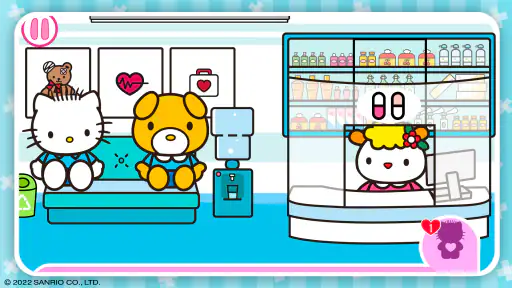
The main premise of the game is simple yet engaging: you help Hello Kitty and her friends run a hospital and take care of adorable patients. As you navigate through the app, you get to play various mini-games that simulate different hospital activities. This includes diagnosing patients, conducting check-ups, and even performing surgeries, all in a very kid-friendly manner.
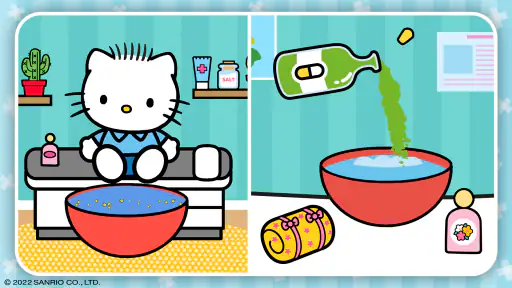
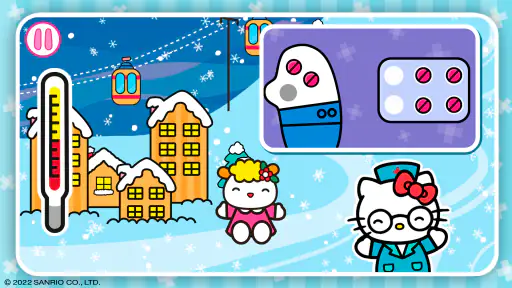
One of the standout features is the variety of mini-games available. Each game is intuitive and designed to be educational, teaching kids about basic medical procedures. I found the drag-and-drop mechanics particularly engaging, making it easy for young children to understand and enjoy. Not to mention, the positive reinforcement after each task makes the kids feel like real doctors, boosting their confidence and learning.
Learning Through Play
As a parent or guardian, you might wonder about the educational value of such apps. Well, Hello Kitty: Kids Hospital does not disappoint in this regard. It cleverly combines entertainment with learning, allowing kids to grasp basic medical concepts while having a blast. The app encourages problem-solving, critical thinking, and empathy as kids learn to care for their virtual patients.
I particularly appreciate how the app introduces children to medical terminology in a playful manner. It's a fantastic way to spark an interest in healthcare and medicine from a young age. Plus, the app is designed to be user-friendly, so children can navigate it independently, giving them a sense of accomplishment and independence.
When another kind of activity is a better fit
I would choose this over a workbook or a more structured learning app when the goal is a relaxed, character-driven activity that invites a child to act out caring for someone. It is also a better fit than a hospital-themed video if the child wants to make choices and interact rather than simply watch. On the other hand, a child who wants open-ended building, a long story, or accurate explanations of real medical care may be happier with a different kind of game or an age-appropriate book alongside an adult. The hospital theme is the hook; it doesn’t make the game a comprehensive health curriculum.
Small practical choices that improve a session
One useful approach is to let the child take the role of helper while you narrate only when asked. That leaves room for independent discovery without assuming they can read every instruction. Another is to stop after a task when attention fades instead of pushing through: short, upbeat play is a better match for this kind of activity than insisting on a long session. If a child becomes anxious about hospitals, watch their reaction and switch to something else; a cute presentation can soften the theme, but it won’t suit every child or every mood.
For families comparing children’s games, the choice is less about which title teaches the most and more about what kind of play works at that moment. Hello Kitty’s familiar world and hands-on hospital theme make it a specific pick for children drawn to caregiving and pretend roles. A puzzle game may be better for practicing a clearly defined challenge, while a drawing or building app can offer more room for unrestricted creativity. I’d choose this one when the child is interested in patients and helping, and avoid expecting it to cover those other needs as well.
Common questions that come up during play
Parents often wonder whether a child can get started without constant help. The touch-based activities are approachable, but younger children may still need an adult nearby at first, particularly if they are not yet comfortable following on-screen cues. Rather than assume full independence from the first minute, I’d treat the opening session as a chance to learn the controls together and then see which parts the child can repeat on their own.
Another practical question is whether the game is a good choice for a quick wait-room distraction. It can be, provided the child is already comfortable with the hospital theme and the device is ready to use; I wouldn’t introduce it for the first time when everyone is rushed. At home, a calm moment after school is easier for exploring. If the child asks whether a real doctor will do exactly what Hello Kitty does, explain that the game is make-believe and that real care depends on the person and situation.
The purchase model is worth thinking about before play, too. Although the game is free, optional items cost from $0.99 to $7.99 each. I’d tell a child that purchases require an adult’s permission and make sure the device’s purchase controls fit your household. This is a practical way to prevent an enjoyable session from being interrupted by a request the child does not understand, and it gives you a chance to decide in advance whether you want to spend anything at all.
Who I’d recommend it to
I’d recommend giving it a try if your child likes Hello Kitty, enjoys caring-for-others pretend play, or is curious about a clinic but responds best to gentle, colorful activities. It can work as a short shared activity, a quiet diversion at home, or a conversation starter before a check-up. The game is free, and its Everyone rating makes it broadly accessible, while the optional purchases are the main cost consideration for families.
I’d skip it if your child dislikes hospital settings, is looking for an especially deep game, or needs precise health education rather than playful exposure to the idea of care. It also may not be the best choice when you need a completely hands-off activity for a very young player who cannot yet follow touch prompts or handle purchase screens. Those are not reasons to dismiss it; they are simply useful boundaries that help match the game to the child.
My overall take
All in all, Hello Kitty: Kids Hospital is a delightful app that delivers a perfect blend of fun and learning. It's a colorful, engaging, and educational experience that will keep children entertained while subtly teaching them about the world of healthcare. Whether you're a fan of Hello Kitty or just looking for a quality educational app for your child, this one is definitely worth checking out. So, grab your stethoscope and get ready to explore the whimsical world of Hello Kitty!
For me, its strongest use is modest and clear: it gives a child a friendly setting to practice choosing, noticing, and caring, one small hospital task at a time. I’d begin alongside them, keep expectations playful, and let their interest decide whether to continue. With that approach, it can be an enjoyable first step into medical-themed play rather than a promise of lessons it was never meant to replace.
Hello Kitty: Kids Hospital Pros and Cons
Pros
- Engaging and colorful interface for kids.
- Educational content about healthcare.
- Interactive mini-games to enhance learning.
- Easy navigation for young users.
- Voice guidance for non-readers.
Cons
- Limited content after initial levels.
- In-app purchases can be expensive.
- Requires constant internet connection.
- Ads may interrupt gameplay.
- Not challenging for older kids.
Frequently Asked Questions
What is the main objective of Hello Kitty: Kids Hospital?
Hello Kitty: Kids Hospital is a fun and educational game aimed at young children. The main objective is to engage kids in the world of healthcare by allowing them to play as doctors and nurses, taking care of cute patients. The game focuses on teaching empathy, medical knowledge, and problem-solving skills in a playful and interactive environment.
Is Hello Kitty: Kids Hospital suitable for all age groups?
Hello Kitty: Kids Hospital is primarily designed for children aged 4 to 8 years old. However, it's not just limited to this age group. Older kids who enjoy role-playing games and fans of the Hello Kitty franchise might also find it entertaining. Parents should review the content to ensure it aligns with their child's maturity and interests.
Does Hello Kitty: Kids Hospital contain in-app purchases?
Yes, Hello Kitty: Kids Hospital does include in-app purchases. While the game is free to download and play, certain features, characters, or tools may require purchase to unlock. Parents should be aware of this to manage spending and consider setting up parental controls to prevent unauthorized purchases by children.
Can Hello Kitty: Kids Hospital be played offline?
Hello Kitty: Kids Hospital requires an internet connection for initial download and some features, such as updates and accessing certain content. However, basic gameplay can be enjoyed offline. This makes it a convenient option for children to play in places without a stable internet connection, like during travel.
What educational benefits does Hello Kitty: Kids Hospital provide?
Hello Kitty: Kids Hospital offers numerous educational benefits. It helps children learn about healthcare, body parts, and basic medical procedures in a safe and friendly setting. The game also promotes critical thinking and decision-making as kids diagnose and treat their virtual patients, fostering a sense of responsibility and care.


