

HELLO KITTY HAPPINESS PARADE
- Reviews
- 3.5
- Version
- 1.1.1
- Installs
- 1,000,000+

Screenshots
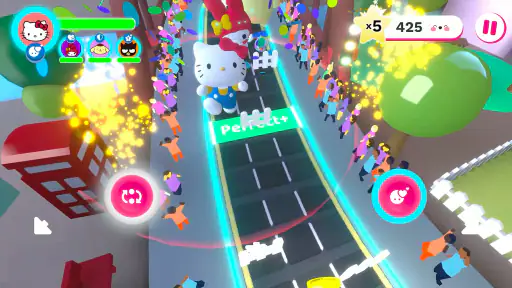
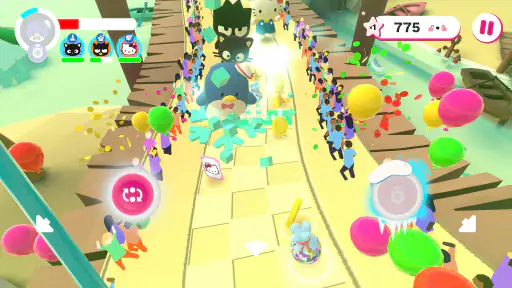
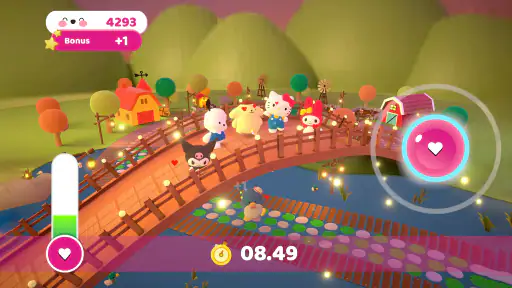
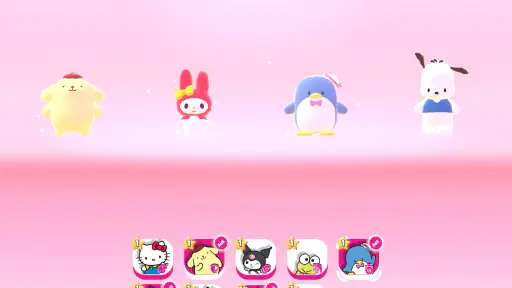
 Analysis by Frivlyz
I judge a rhythm game not only by whether its songs are catchy, but by how comfortably I can read the screen, follow the action, and enjoy a session in the circumstances of an ordinary day. Hello Kitty Happiness Parade has an inviting Sanrio look and straightforward tap-based play, so it can be approachable for casual players. Its cheerful presentation does not automatically make every part easy for every player, though: timing demands, visual motion, and the need to interact with a screen all matter. I’d consider it a friendly option for someone curious about music games, with a few practical questions worth thinking through before settling in.
Finding your way through the parade
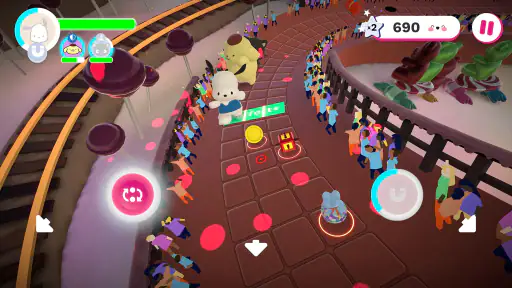
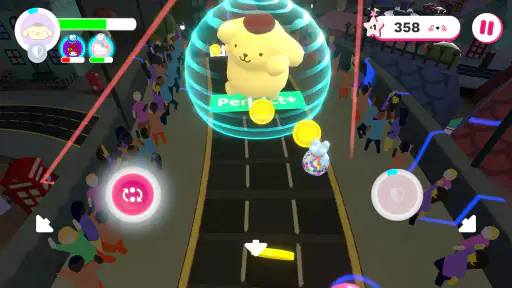
At a glance, the game’s bright, colorful interface suits its characters and parade theme. The controls are described through play rather than a complicated menu of commands: you tap along to the music, collect coins, and work toward unlocking characters. That simplicity gives newcomers a fairly clear starting point. I would still take a moment at the beginning of a session to notice how the on-screen cues appear and where the important information sits, rather than assuming the cheerful art alone makes every detail easy to spot.
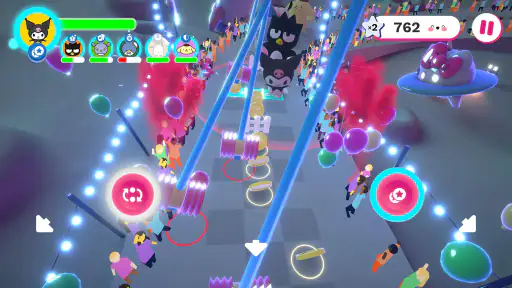
That distinction matters for readability. Strong colors and lively character designs can make a game feel welcoming, but they can also compete with small prompts or moving action. If you find a particular screen busy, try focusing on the rhythm cues rather than tracking every animation and collectible at once. The game’s appeal is partly in watching a parade unfold, but a player aiming for accurate taps may have a better time treating the background activity as decoration and giving the beat their attention.
Navigation should feel most comfortable for people who are happy exploring a colorful mobile game at their own pace. I would not assume that every option is immediately obvious just because the core action is simple; take a little time to learn how the game moves between play, character choices, and other activities. That small orientation period can prevent a first session from turning into aimless tapping, especially if you are handing the device to someone who has not played a rhythm game before.
Keeping the action comfortable
Because play centers on tapping in time, hand control and reaction speed shape the experience more than they would in a game that relies mainly on slow decisions. Players who enjoy short, responsive touch interactions may find that satisfying. If repeated taps are tiring, uncomfortable, or difficult to coordinate, the same central mechanic may become a barrier rather than a challenge. I would try a brief session first and pay attention to comfort, instead of pushing through simply to improve a score.
The parade’s animated, upbeat presentation is part of its personality, but a lively screen and energetic music are not ideal for every sensory preference. A quieter moment, lower device volume, or a less visually distracting setting may make a session easier to enjoy. These are practical ways to shape the environment, not assurances about particular in-game controls. If you are sensitive to rapid visual activity or prefer very calm games, the overall style may simply be too busy for you.
It can also help to separate “keeping up” from “having fun.” Rhythm games often reward precise timing, but there is no need to treat every missed beat as a failure. I would let a new player watch the flow for a moment, then try tapping when ready. That makes the first attempt less pressured and offers a quick sense of whether the timing feels comfortable. For a younger player, a short shared session can be more useful than leaving them to work out the pace alone.
Gaming Stories You May Enjoy

Dancing Road Turns Short Breaks Into a Test of Rhythm and Timing

Super Stylist Makes Every Outfit a Test of Taste and Patience

Dominoes on Your Terms: Who Should Play and Who Should Pass

Pokémon GO Makes the Familiar World Feel New

Chess.com Turns Rematches Into Rivalries, but Community Has Its Costs

Archery Battle 3D Review: Sharp Aiming, Unclear Feedback
Choosing the right moment to play
This is best suited to a setting where you can look at the screen and hear the music well enough to follow its rhythm. It can fit a relaxed break at home or a short wait when you have a stable place to hold your device. It is less convenient while walking, juggling bags, or trying to keep an eye on something else: the taps ask for attention, and splitting that attention can make the music game feel frustrating. I would treat it as a sit-down diversion, not a hands-free background activity.
For families, the all-ages content rating makes the game a plausible option to explore together, but an age label is not a substitute for checking whether a particular child enjoys timing-based play and animated screens. Let them try the basic rhythm action before promising that the character collection will hold their interest. If they would rather watch the parade than tap in time, another kind of character game may suit them better.
On a typical evening, I can picture opening it for a few minutes while taking a break from reading or watching something. I would keep the sound at a comfortable level, play while seated, and stop when my attention starts wandering. That kind of use matches the game better than expecting it to fill a long commute or provide a quiet, low-stimulation pastime. The short-session approach also gives you a chance to see whether its visual and musical energy remains enjoyable after the initial novelty.
It is a music game from Netflix, Inc., and it is free to play. The game has an average rating of 3.5 from around 2,400 ratings, with over a million installs. Those figures suggest that plenty of people have tried it, while the middling average is a useful reminder that its cheerful theme will not make the rhythm format a universal fit. It is rated for everyone, was released on November 18, 2022, and version 1.1.1 requires Android 8.0 or later.
What to expect from the rhythm-game format
Compared with a music-streaming app, this is about interacting with a beat, not choosing a playlist to accompany another task. Compared with a general casual game, its central appeal is timing your taps to music rather than simply browsing characters or making slow choices. That focus is a strength if you want a playful, music-led activity; it is a drawback if you want songs to play passively, a broad range of non-rhythm challenges, or a game that remains comfortable without quick reactions.
The progression gives the tapping a purpose: coins and unlockable characters provide goals beyond finishing a single stretch of music. I would use those rewards as a reason to revisit the game, not as a promise that every session will feel different. Character collecting can be motivating for Sanrio fans, while someone who cares only about testing rhythm skills may find that the surrounding parade theme matters less. Think about which part you actually enjoy before expecting the collection loop to carry the whole experience.
One practical tip is to make your first session an evaluation rather than a score chase. Notice whether you can follow the cues while the characters and parade are moving, whether the tap timing feels natural, and whether the sound is pleasant at a comfortable volume. If one element is getting in the way, adjust your surroundings before deciding the game itself is not for you. If the basic interaction still feels awkward, though, there is little reason to force it; another music game with a calmer presentation or different controls may be a better match.
The game mentions different difficulty levels, which can help make the challenge more approachable for players with different experience. I would start at the gentler end if available and move up only when the rhythm feels familiar. A higher difficulty is not automatically a better experience: for a relaxed player, the fun may be in following the music and seeing the parade, not in chasing perfect timing. If you are used to rhythm games, greater difficulty may be the more engaging route, but the same fast interaction can be tiring during a long session.
Where the fit may fall short
The biggest limitation is also the game’s defining choice: tapping in time is not an optional side activity but the point of the experience. If you have difficulty with quick touch input, want to play without looking closely, or prefer not to respond to music cues, the parade theme cannot remove that mismatch. I would not recommend it as a general solution for accessible play; its suitability depends on how its particular screen activity and timing feel to you.
There is a similar trade-off for sensory comfort. Bright visuals and upbeat music help establish a distinctive mood, but they may be tiring in a noisy room, late at night, or for someone who prefers subdued games. Playing in a calmer place and choosing a comfortable volume can help, yet those changes do not alter the game’s underlying energetic style. If you want a reliably quiet experience, a slower puzzle game or a music app without active visual play is likely the safer choice.
Device compatibility is worth checking before you plan a session: on Android, the stated minimum is version 8.0. The game is also available on iOS, but I would check the relevant store for your device before downloading rather than assume every model will run it the same way. Since it is free, trying it does not require an upfront purchase, but that alone does not make it the right use of your time. A quick first play is the most useful test of whether its particular mix of music, taps, and character collecting suits you.
Who I would recommend it to
I would point a Hello Kitty or Sanrio fan toward it if they also enjoy rhythm games and want a colorful way to spend a short break. It may also work for someone introducing a friend or child to music games, provided they can comfortably follow the action and are happy with energetic visuals. The best match is a player who enjoys the parade’s character-driven presentation as much as the task of tapping along.
I would steer away from it if you mainly want uninterrupted music, a low-motion screen, or a game that can be played while your attention is elsewhere. It is also not the first option I would choose for someone who finds repeated touch input uncomfortable. In those situations, a playlist, a slower casual game, or a rhythm title with a presentation and control style that better suits the player would be more sensible than choosing this one based on its cute cast alone.
My overall impression is that this is a cheerful, focused music game whose accessibility depends less on its welcoming theme than on whether its timing and presentation work for you. I like the straightforward premise and the character-collection motivation, but I would recommend a short, low-pressure trial before committing to repeated play. If you can comfortably follow the beat and enjoy the lively parade, it has a clear place as a casual diversion. If not, there is no need to force a fit: the right alternative is the one that lets you enjoy music or play at your own pace.
Imagine a world where you can join Hello Kitty and her friends in a colorful parade full of music and fun. That’s exactly what this game offers. As you play, you'll tap along to catchy tunes, collect coins, and unlock new characters. The mechanics are simple yet engaging, making it easy to lose track of time as you strive to hit every beat perfectly.
The game’s user interface is intuitive, with a bright and cheerful design that perfectly captures the essence of Hello Kitty. The animations are smooth, and the music is upbeat, ensuring that every moment is a joy. Plus, the app runs seamlessly on both Android and iOS, which is a big win in my book.
Characters and Customization
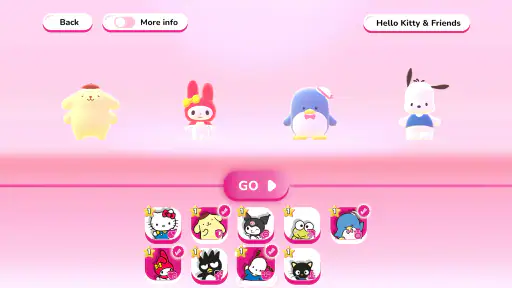
One of the standout features of Hello Kitty Happiness Parade is the variety of characters you can unlock. From classic Sanrio icons to new friends, there’s always someone new to meet. Each character comes with its own special abilities, adding a layer of strategy as you decide who to bring along on your parade.
Customization doesn’t stop at characters, though. You can also personalize your parade floats, adding a touch of creativity to your gameplay. This feature keeps things fresh and encourages players to keep coming back to see what new items they can collect.
Music and Challenges
The heartbeat of any rhythm game is its music, and this app does not disappoint. With a range of songs from various genres, there’s always something to tap your toes to. The game also offers different levels of difficulty, so whether you’re a newbie or a rhythm game veteran, there’s a challenge waiting for you.
I also appreciate the inclusion of special events and challenges that pop up regularly. These events not only provide an opportunity to earn extra rewards but also keep the gameplay exciting and dynamic.
Final Thoughts: A Parade of Joy
Overall, Hello Kitty Happiness Parade is a delightful app that brings joy and entertainment to players of all ages. Its combination of charming visuals, catchy music, and engaging gameplay makes it a standout in the mobile gaming world. Whether you’re a die-hard Hello Kitty fan or just someone looking for a fun way to pass the time, this app is sure to bring a smile to your face. So, why not join the parade and see for yourself?
HELLO KITTY HAPPINESS PARADE Pros and Cons
Pros
- Charming graphics and animations.
- Engaging and simple gameplay.
- Suitable for all age groups.
- Regular updates with new content.
- Offline mode available.
Cons
- Limited character customization.
- In-app purchases required for faster progress.
- Repetitive music tracks.
- Some levels can be too easy.
- Occasional ads can disrupt gameplay.
Frequently Asked Questions
What is Hello Kitty Happiness Parade about?
Hello Kitty Happiness Parade is an engaging mobile game that invites players to join Hello Kitty and her friends in a vibrant parade through a colorful world. The game is designed for all ages, featuring cute graphics, fun challenges, and interactive elements that capture the charm of the Hello Kitty universe. Players can collect accessories and costumes to customize their characters, making each parade unique and enjoyable.
Is Hello Kitty Happiness Parade suitable for young children?
Yes, Hello Kitty Happiness Parade is designed to be child-friendly, with simple controls and age-appropriate content. The game focuses on creativity and fun, allowing children to explore and interact with their favorite characters in a safe environment. Additionally, it includes educational elements that encourage problem-solving and teamwork, making it a suitable choice for young players.
Does Hello Kitty Happiness Parade require an internet connection to play?
Hello Kitty Happiness Parade can be played offline, but certain features may require an internet connection. For instance, accessing new updates, participating in special events, or connecting with friends online will need internet access. However, the core gameplay experience is available without needing to be online, providing flexibility for players on the go.
Are there in-app purchases in Hello Kitty Happiness Parade?
Yes, Hello Kitty Happiness Parade offers in-app purchases that allow players to buy additional costumes, accessories, and other enhancements to enrich their gaming experience. While these purchases can enhance gameplay, they are optional, and players can enjoy the game without spending money. Parental controls can be set to manage or restrict in-app purchasing for younger users.
What platforms is Hello Kitty Happiness Parade available on?
Hello Kitty Happiness Parade is available for download on both Android and iOS devices. Players can easily find the game on the Google Play Store for Android users and the Apple App Store for iOS users. The game is optimized to run smoothly on a wide range of devices, ensuring a pleasant gaming experience for all players.


