

Hearthstone
- Reviews
- 4.2
- Version
- 34.6.235290
- Installs
- 50,000,000+

Screenshots
 Analysis by Frivlyz
I like Hearthstone most when I have a little time to think rather than a whole evening to spare. A match gives me a focused strategy puzzle: weigh the cards in hand, predict what the other player might do, then decide whether to press an advantage or hold back. Blizzard Entertainment made this card game approachable on the surface, but there is plenty to learn once the basic turns feel familiar. Its long-running presence is easy to understand: the presentation is inviting, while small decisions can still make a match turn around.
Who will enjoy its pace
The game suits players who enjoy planning in short bursts and don’t mind learning through losses. If you already like collectible card games, you’ll recognize the appeal of building a plan from a limited hand; if you’re new, the turn-based format gives you room to consider each play. I wouldn’t recommend it as a reflex test or as a game to open when you need to be completely uninterrupted. Opponents take turns, but a match still asks you to follow the board and think ahead, so it works better during a quiet break than while juggling other tasks.
For a realistic everyday use, I might play a match while waiting for an appointment, provided I have enough time to finish without rushing. A useful habit is to decide before queueing whether I’m in the mood for relaxed experimentation or a more serious contest. That simple choice helps me avoid treating every loss as a reason to change my entire approach. The game has casual and ranked options, so I can choose a lower-pressure setting when I want to try an unfamiliar idea and save competitive play for when I’m ready to focus.
Our Stories on Hearthstone
Mastering the Art of Strategy in Thief Puzzle
NewsHow Woodoku Thrives with Android and iOS Updates
NewsZynga Poker's Strategic Dominance in Mobile Gaming
NewsWhy Zynga Poker- Texas Holdem Game is a Must-Have for Card Enthusiasts
NewsThe Cultural Impact of Paint by Number: A Digital Escape
NewsDancing Road Turns Short Breaks Into a Test of Rhythm and Timing
NewsWhat a match asks of you
On a first visit, the basic rhythm is clear: draw, spend resources to play cards, and respond to what the opponent puts on the board. The challenge is not just choosing a powerful card. I have to consider what it costs me now, what options it leaves for a later turn, and whether my opponent may have a response. That makes even straightforward turns feel like small decisions rather than a sequence of automatic moves. The clean interface helps me inspect the board, but it cannot make the strategic trade-offs for me.
One practical tip is to pause before using a card simply because it is playable. I try to ask whether it advances my immediate plan or whether keeping it could answer a threat later. This is especially useful while learning, because it turns a loss into something I can review: did I spend too much early, overlook a board danger, or commit to a plan that stopped working? I also find it easier to learn one style of play at a time than to change decks and tactics after every disappointing result.
Choosing modes and managing expectations
Different modes are useful for different moods. Casual play is a comfortable place to test an idea without making every result feel like a verdict, while ranked matches give players a more competitive goal. Wild and Tavern Brawls add alternatives when I want a change of pace. Having those choices within one game is a strength, though it can also leave a newcomer unsure where to begin. I’d start with the mode that feels least intimidating, learn the turn flow, and only then explore the options that ask for more commitment or familiarity.
Compared with a simpler head-to-head card game, Hearthstone has more room for collection-building and changing strategies, which can make it more rewarding over time but also less immediately tidy. A small, fixed card game may be better if you want everyone to begin with the same tools and avoid thinking about a growing collection. Hearthstone is the better fit when collecting, adapting, and revisiting different play styles are part of the fun. That distinction matters: the strategic appeal is real, but it is tied to a game that keeps evolving rather than a single self-contained deck duel.
Gaming Stories You May Enjoy

Super Stylist Makes Every Outfit a Test of Taste and Patience

Dominoes on Your Terms: Who Should Play and Who Should Pass

Pokémon GO Makes the Familiar World Feel New

Chess.com Turns Rematches Into Rivalries, but Community Has Its Costs

Archery Battle 3D Review: Sharp Aiming, Unclear Feedback

Should You Switch to Geometry Dash Meltdown? A Test of Timing and Patience
The Magic of Cards
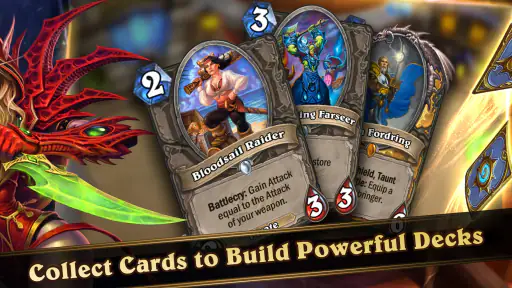
At its core, Hearthstone is all about cards. You’ll start with a basic set, but as you play, you’ll unlock new ones, each with unique abilities and stats. The beauty here is the endless combinations and strategies you can come up with. Whether you want to go all-in with aggressive plays or take a more defensive approach, the choice is yours. The game’s design ensures that no two matches are ever the same, keeping things fresh and exciting.
Gameplay and Mechanics
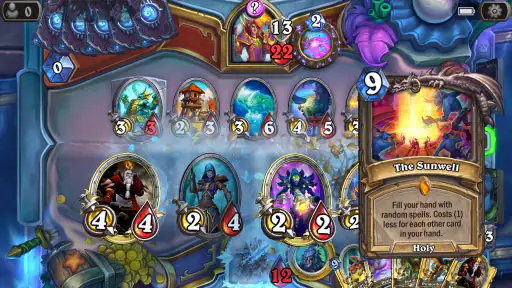
The gameplay in Hearthstone is straightforward enough for beginners to grasp, yet complex enough to keep seasoned players on their toes. Each player takes turns drawing cards and playing them from their hand, aiming to reduce their opponent's health to zero. The game’s mechanics are intuitive, with a well-designed interface that makes it easy to drag and drop cards and activate special abilities.
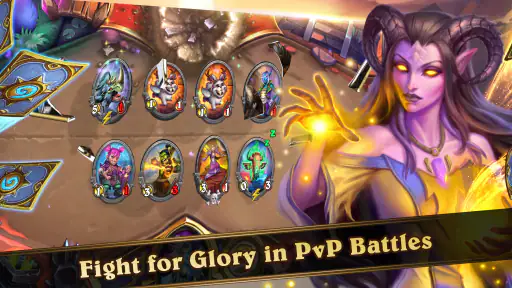
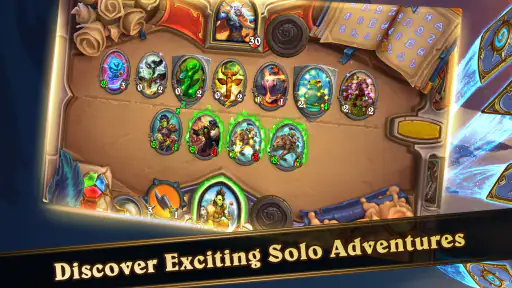
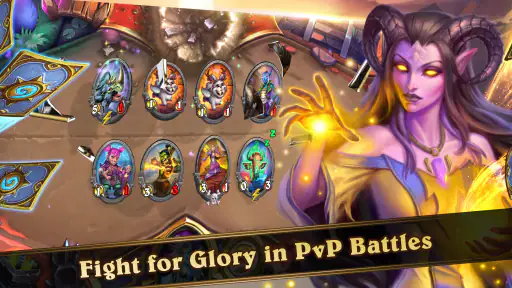
One of the things I love most is the variety of game modes. From casual play to ranked matches, and even wild and tavern brawls, there’s something for every mood. It’s like having multiple games in one app, and I’ve spent countless hours exploring them all.
Visuals and Sound
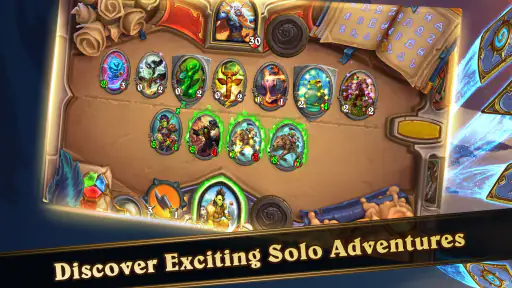
Visually, Hearthstone is a treat. The artwork on the cards is stunning, with each one bringing a piece of the Warcraft universe to life. The game boards are equally impressive, with interactive elements that provide a little distraction while you wait for your opponent to make their move. And let’s not forget the sound design—every card played, every attack, comes with satisfying audio that enhances the experience.
Community and Updates
The Hearthstone community is vibrant and active, which adds a whole new layer to the game. Whether you’re looking for tips, deck ideas, or just want to share your latest victories, there’s no shortage of forums and groups to join. Plus, Blizzard keeps things interesting with regular updates and expansions. New cards and mechanics are introduced frequently, ensuring the meta remains dynamic and challenging.
Accessibility and Monetization
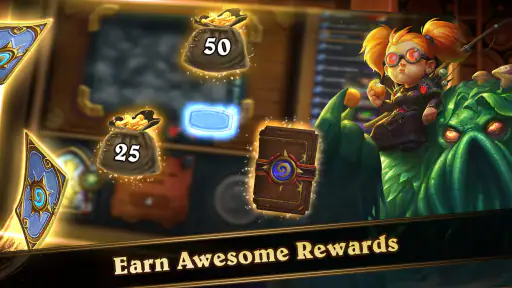
Downloading and starting with Hearthstone is free, which is great if you’re just looking to test the waters. However, like many free-to-play games, there are in-app purchases available. You can buy card packs or even the latest expansions if you’re keen on expanding your collection quickly. The nice thing is, you don’t have to spend a dime to enjoy the game fully. With time and skill, you can earn cards and climb the ranks without spending any real money.
In practice, the free entry makes it easy to see whether the turn-by-turn style suits you before deciding whether to spend. Purchases range from around fifty cents to about two hundred dollars per item, so I’d set a personal limit before browsing them. Spending can speed up collection growth, but it doesn’t remove the need to understand matchups and make good decisions. If you prefer a game where every card is available from the start, this collection-focused model may feel like friction; if gradual collecting is part of the appeal, it can give regular play another goal.
Speed, stability, and device fit
As a turn-based card game, Hearthstone doesn’t depend on rapid inputs in the way an action game does. That makes it easier to play at a measured pace, but I still wouldn’t assume every session is effortless: a weak or interrupted connection can be especially frustrating when a match is in progress. If a session is disrupted, I would first check the connection and reopen the game before assuming a deck or account problem. Avoid starting a match when you know you’ll need to leave in a moment; the turn structure gives you time to think, not a guarantee that a game can be paused at any point.
The lively board effects and detailed card art are part of the charm, but they also make this feel more substantial than a bare-bones card app. On an older or constrained device, I’d close other demanding apps and keep some free storage available before installing a large game. The minimum operating-system requirement is version 9, and the current version is 34.6.235290. Those details are useful when checking compatibility, but the experience can still vary with a device’s available resources and connection. If your phone struggles with other visually rich games, a lighter card title may be the safer choice.
At a glance, and the trade-offs
Hearthstone is free to play, rated Teen, and has an average rating of 4.2 from about two million ratings, with more than fifty million installs. It first arrived on December 16, 2014, and its scale is reflected in a large player community. Those figures suggest a well-established game, not that every new player will immediately enjoy its collection and competitive layers. I’d treat the rating as context, then judge the game by whether its pacing and ongoing card-based decisions fit what I want from a mobile game.
Its biggest drawback for me is the combination of a changing environment and a collection that takes time to build. New cards and mechanics keep strategies moving, which gives experienced players reasons to return, but can make it harder for newcomers to know what they are facing. Looking up deck ideas can help, yet copying a list without understanding why its cards work is a poor shortcut. I get more value from trying to identify the purpose of each card and making a few deliberate adjustments than from chasing every new strategy I see discussed.
That is also why this won’t be my recommendation for everyone. If you dislike collecting cards, don’t want optional purchases in a free game, or prefer a fixed ruleset that stays unchanged, a smaller traditional card game is likely a better match. If you enjoy learning interactions and adapting as the available strategies shift, those same qualities can become the reason to stick around. The game rewards patience more than constant play: a focused match and a little reflection can be more useful than queueing repeatedly while frustrated.
Overall, Hearthstone remains an appealing choice when I want a polished, thoughtful card battle rather than a quick reflex challenge. It is free to try, broad enough to offer different moods, and deep enough to reward players who like improving their decisions. I’d begin casually, watch how the collection develops, and spend only if a purchase genuinely suits my budget and interest. For someone who enjoys strategic turns and doesn’t mind a game that keeps changing, it’s easy to recommend; for someone seeking a fixed, fully open card set or interruption-proof play, I’d point elsewhere.
Hearthstone Pros and Cons
Pros
- Engaging strategic gameplay.
- Regular content updates.
- Cross-platform availability.
- Vibrant graphics and sound.
- Free-to-play with optional purchases.
Cons
- Can be pay-to-win at times.
- Requires constant internet connection.
- Steep learning curve for beginners.
- Occasional balance issues.
- Consumes significant device storage.
This Game in Other Languages
Frequently Asked Questions
What is Hearthstone and how does it work?
Hearthstone is a free-to-play online digital collectible card game developed by Blizzard Entertainment. Players build decks from a vast collection of cards featuring characters and spells from the Warcraft universe. The objective is to strategically play cards to reduce the opponent's health to zero, using a combination of minions, spells, and hero powers.
Is Hearthstone free to play, and are there in-app purchases?
Yes, Hearthstone is free to download and play on both Android and iOS devices. However, it offers in-app purchases for card packs, adventure expansions, and cosmetic items. While purchases can enhance your gameplay experience, they are not required to progress, as players can earn cards and rewards through regular play.
What are the system requirements for Hearthstone on mobile devices?
Hearthstone requires Android OS 7.0 or later or iOS 12.0 or later. It is recommended to have at least 2 GB of RAM for optimal performance. Ensure you have enough storage space for the initial download and potential updates, as the game regularly receives new content and patches.
Can I play Hearthstone offline or is an internet connection required?
Hearthstone requires a stable internet connection to play, as it is an online multiplayer game. You need to connect to Blizzard’s servers to access your card collection, participate in matches, and receive updates. Offline play is not supported, so ensure you have reliable Wi-Fi or mobile data.
How does the matchmaking work in Hearthstone?
Hearthstone uses a matchmaking system that pairs players of similar skill levels. The system considers your rank, win-loss record, and matchmaking rating (MMR) to ensure balanced matches. As you play and improve, you'll face opponents with comparable skill, providing a challenging and rewarding experience.


