

Harry Potter: Hogwarts Mystery
- Reviews
- 4.6
- Version
- 6.5.1
- Installs
- 50,000,000+

Screenshots
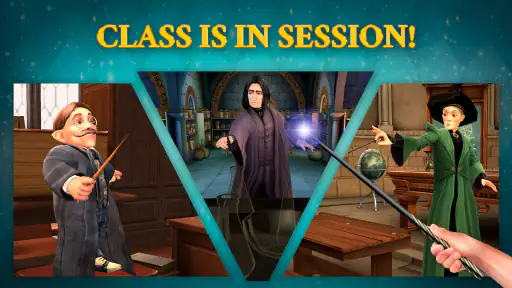

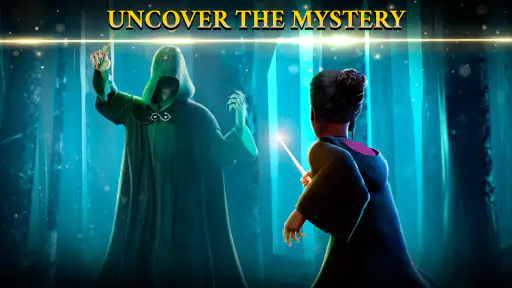
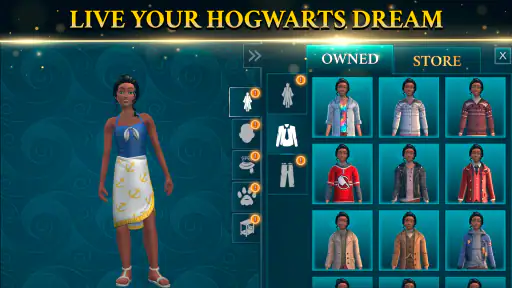

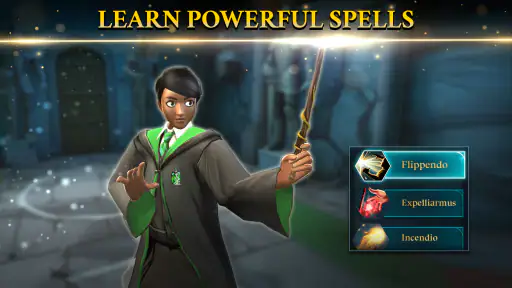

 Analysis by Frivlyz
I came to Harry Potter: Hogwarts Mystery for the pleasure of stepping into Hogwarts, but what kept me playing was its small, repeatable rhythm: choose an activity, take part in it, see a bit of story or progress, then decide whether to spend more time there or come back later. It is a free adventure game from Jam City, Inc., and I think that structure suits players who enjoy visiting a familiar magical setting in short bursts more than those looking for nonstop action.
What a first visit feels like
The opening invitation is personal: you create a witch or wizard and begin life as a Hogwarts student. I found that character-making helped the story feel like my own, even though the appeal is less about building a highly customized avatar and more about imagining how I would fit into the school. If you like a game to establish its setting quickly, the castle, classes, and student life give you a clear reason to keep exploring.
The game is aimed at a Teen audience, and its fantasy-school premise makes it an easy recommendation for older children and adults who enjoy the books or films. It can also work for someone who knows the broad outlines of the wizarding world but wants a character-led adventure rather than a retelling of Harry’s own journey. If you are choosing it for a younger player, I would still look at the age guidance and the in-app purchase options together, rather than assuming that a free download means there is nothing to consider.
How the play loop earns another session
Most of the satisfaction comes from turning a simple action into visible progress. You attend a class or take part in a story activity, follow the prompts with taps or swipes, and receive feedback that makes the task feel complete. Then a new objective gives you a reason to return. That sequence is the game’s real engine: the action is approachable, the response is immediate, and the next piece of school life or mystery becomes the reward.
I would not approach it like a console-style adventure where I expect long stretches of uninterrupted control. Its activities are broken into guided steps, so the pleasure comes from checking in, making a choice, and seeing the narrative move along. That is handy during a quiet break or while relaxing at home, but less satisfying if I have only a few minutes and want a full mission with a dramatic beginning and end every time I open the game.
Useful ways to pace classes and story
One practical habit is to decide what I want from a session before tapping into an activity: am I here to advance the mystery, or do I want the feeling of attending Hogwarts and practicing magic? That small choice makes the game’s guided structure feel less like a list of chores. It also helps me stop when I have made the progress I wanted, rather than continuing just because another prompt has appeared.
When a task involves following on-screen instructions, I treat it as a short interactive scene rather than a test of reflexes. The spells and potion-making use simple gestures, which keeps the barrier to entry low; the trade-off is that players seeking deep, skill-based combat or complex crafting may find the interaction lightweight. If you enjoy the ritual of tapping through a magical lesson and seeing the result, it works. If you want precise action controls, another adventure game will likely suit you better.
Gaming Stories You May Enjoy

Dancing Road Turns Short Breaks Into a Test of Rhythm and Timing

Super Stylist Makes Every Outfit a Test of Taste and Patience

Dominoes on Your Terms: Who Should Play and Who Should Pass

Pokémon GO Makes the Familiar World Feel New

Chess.com Turns Rematches Into Rivalries, but Community Has Its Costs

Archery Battle 3D Review: Sharp Aiming, Unclear Feedback
Who will enjoy it—and who may not
I would recommend it most to Harry Potter fans who want to inhabit the school, meet its familiar routines, and follow an original student’s path. It is also a reasonable fit for casual players who like narrative progress in manageable pieces. The game has a 4.6 average from around 2.9 million ratings, and it has passed 50 million installs, which suggests that its mix of story and accessible play has found a large audience; those figures are context, not a promise that the pacing will suit everyone.
Players who prefer open exploration, constant action, or a story that never pauses for guided activities should be cautious. The adventure format is more structured than a broad role-playing game, and the repeated class-and-objective rhythm can feel routine if you are not invested in the setting. I also think it is a weaker choice for someone who wants a purely offline, self-contained experience or who dislikes games that offer purchases inside the app. It is free to start, while optional in-app items range from $0.99 to $299.99 per item, so I would check purchase settings before handing a device to a child.
A Journey into the Wizarding World
From the moment I launched Harry Potter: Hogwarts Mystery, I was whisked away into a realm filled with spells, potions, and mystical creatures. The game kicks off with a personalized character creation, letting you design your own witch or wizard. I spent a good chunk of time perfecting my avatar—it’s not every day you get to attend Hogwarts, after all!
Immersive Storyline
The storyline is what truly sets this game apart. Set in the 1980s, you find yourself as a student at Hogwarts, years before Harry Potter’s time. The mystery component is intriguing; you're tasked with solving the disappearance of your brother while navigating the challenges of a magical education. The plot unfolds with each decision you make, which kept me on the edge of my seat. I felt like I was part of a novel, crafting my own story with every choice.
That story focus is also what separates it from many action-first adventure games. I am not coming here for a large battlefield or a difficult platforming challenge; I am coming to spend time in a recognizable school and learn what happens next. The sibling mystery gives the school routine a personal thread, so ordinary lessons have context beyond simply practicing a spell. If you are deciding between this and a more open-ended fantasy RPG, ask yourself whether you would rather follow a directed plot with Hogwarts as its center or roam a larger world with more freedom. For me, the former is the draw, but it is a genuine preference, not a universal advantage.
Interactive Learning and Spell Casting
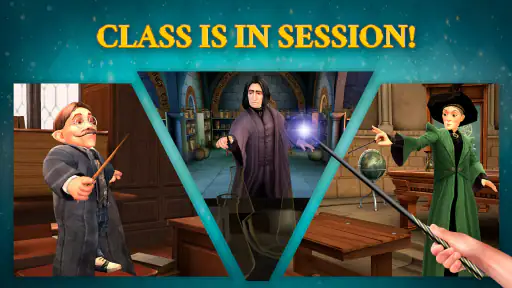
Attending classes in Hogwarts feels incredibly interactive. I loved the charm of learning spells and brewing potions, where the game uses a swipe-and-tap mechanic to mimic wand movements and ingredient mixing. The excitement of casting my first Lumos spell was palpable, and the mechanics make it feel like you're genuinely learning alongside your classmates. It's educational, engaging, and most importantly, it's fun!
There is a useful pacing trick here: I try not to treat every lesson as something I must finish immediately. When I have a proper stretch of downtime, I can settle into a class or story sequence; when I only have a brief pause, I choose a smaller interaction and leave the longer narrative beat for later. That keeps the experience from becoming a hurried checklist. The lessons are charming because they echo the fantasy of being taught magic, but their guided input is intentionally simple. Players who want to master a demanding control system may find the gestures too light, while fans who mainly want the feeling of practicing magic are more likely to enjoy them.
Graphics and Sound
The graphics are nothing short of magical. The developers have done a fantastic job recreating the Hogwarts castle and its surroundings. Every detail, from the Great Hall to the Forbidden Forest, is crafted with precision, making exploration a visual treat. Pair this with a beautifully composed soundtrack, and you have an atmosphere that truly embodies the essence of the wizarding world.
The setting works best when I let it provide the mood rather than expect every visit to reveal a new place. Familiar locations make the school feel coherent, and the audiovisual presentation supports the fantasy of returning to a lived-in environment. A practical trade-off is that atmosphere cannot replace variety in the underlying actions: if repeated visits to classes and story prompts stop feeling appealing, polished scenery alone may not change your mind. I would give the game a chance if Hogwarts itself is part of the attraction, but not choose it solely for exploration.
Social Features and Community
One of the features I appreciate is the ability to interact with fellow players. You can form friendships, compete in house challenges, and even duel with others. This social aspect adds another layer of immersion, making you feel like an actual student within the bustling school of witchcraft and wizardry.
For me, those activities are best treated as an extra flavor rather than the sole reason to install the game. The main appeal remains the personal school story, while friendships, house challenges, and duels give the student-life idea more texture. If you are comparing it with a multiplayer-first game, this is not the same kind of commitment: I would come for the setting and narrative, then use the social side when it sounds fun. Someone who needs every session to revolve around competition with other players may be happier with a game built around that from the start.
Everyday play, purchases, and version details
A realistic routine for me would be opening the game during a calm break, checking what objective feels worthwhile, completing a short piece of a lesson or story, and putting it away once that small payoff lands. Later, I can return because the next prompt has renewed my curiosity. That is a gentler pattern than sitting down for a marathon, and it makes the game easier to fit around ordinary life. The key is to see the pause as part of the design’s rhythm rather than as a failure to make progress quickly.
There is a cost trade-off to keep in mind even though the game is free to download. Optional in-app purchases are available, with individual items ranging from $0.99 to $299.99. I would not assume that spending is necessary just because purchase options appear, but I would make a deliberate choice before buying anything and set appropriate purchase controls on a shared device. If you prefer games with one clear upfront price and no store inside the experience, this arrangement may be a reason to choose another title.
The current version is 6.5.1, and it supports Android 5.0 and later. Those details are useful when checking an older device, but compatibility alone does not say whether the game’s pace or purchase model will suit you. The more important question is what kind of evening or spare-minute game you want: a directed Hogwarts story with familiar rituals, or a broader adventure built around exploration and action.
In conclusion, Harry Potter: Hogwarts Mystery is a spellbinding experience for anyone who has ever dreamed of attending Hogwarts. It combines an engaging storyline with interactive gameplay, offering both fans and newcomers a chance to dive into the magical world J.K. Rowling created. So, grab your wand and get ready to unravel the mysteries of Hogwarts—your journey awaits!
My verdict on the return loop
What makes me come back is not a single dramatic mechanic but the link between a small action, clear feedback, and another piece of the student story. I finish a task, see that I have moved forward, and have a reason to check in again when I want more Hogwarts. The drawback is the same structure viewed from the other side: if the guided routine feels repetitive, the reward may not be strong enough to pull you back.
Jam City, Inc. released the game on April 24, 2018, and it carries a Teen content rating. I would recommend it to fans who want a character-led visit to Hogwarts and casual players who are comfortable with steady, guided progress. I would skip it if I were looking for free-roaming fantasy, demanding action, or a game whose main pleasure is mastering intricate controls. For the right player, the loop is inviting; for everyone else, the school setting may not be enough to overcome its deliberate pace.
Harry Potter: Hogwarts Mystery Pros and Cons
Pros
- Immersive Hogwarts experience
- Engaging storyline
- Character customization options
- Frequent updates with new content
- Interactive spellcasting
Cons
- Energy system limits gameplay
- In-app purchases can be costly
- Requires internet connection
- Repetitive tasks
- Slow progression without spending
This Game in Other Languages
Frequently Asked Questions
What is Harry Potter: Hogwarts Mystery?
Harry Potter: Hogwarts Mystery is an interactive role-playing mobile game that allows players to experience life as a student at Hogwarts School of Witchcraft and Wizardry. Players can attend classes, learn magical skills, and uncover the mysteries of Hogwarts. The game offers a unique storyline set in the Harry Potter universe, allowing players to make choices that affect the outcome of the story.
Is Harry Potter: Hogwarts Mystery free to play?
Yes, Harry Potter: Hogwarts Mystery is free to download and play. However, the game offers in-app purchases that can enhance gameplay, such as energy packs, gems, and special items. While these purchases are optional, they can accelerate progress and unlock additional features. Players can enjoy the game fully without spending money, but patience may be required due to energy limits.
What are the system requirements for Harry Potter: Hogwarts Mystery?
To play Harry Potter: Hogwarts Mystery on Android, you need a device running Android 5.0 and up, with at least 2GB of RAM. For iOS users, the game requires iOS 10.0 or later. It's compatible with iPhone, iPad, and iPod touch. Adequate storage space is also necessary, as the game frequently updates to include new content and features.
Can I play Harry Potter: Hogwarts Mystery offline?
No, Harry Potter: Hogwarts Mystery requires an internet connection to play. The game is designed to be an online experience, allowing for regular updates, special events, and interactions with other players. This connectivity ensures that you have access to the latest game content and can participate in time-limited events that enhance the overall gameplay experience.
How does the energy system work in Harry Potter: Hogwarts Mystery?
In Harry Potter: Hogwarts Mystery, energy is a crucial resource used to perform actions within the game, such as attending classes and completing tasks. Energy replenishes over time, but players often find themselves waiting for it to refill. Alternatively, energy can be replenished instantly through in-app purchases or by completing certain in-game activities. Managing energy efficiently is key to progressing smoothly through the game.


