

Going Balls
- Reviews
- 4.3
- Version
- 2.20
- Installs
- 100,000,000+

Screenshots




 Analysis by Frivlyz
I like Going Balls most when I treat it as a quick, hands-on challenge rather than a game I need to master in one sitting. Its rolling-ball courses ask for small steering corrections and careful timing, so even a short play can feel engaging. The appeal is easy to understand: you watch the path, judge the next obstacle, and try to keep your ball moving without letting a narrow turn or sudden gap catch you out.
A free game, with purchases to weigh
This is a casual game from Supersonic Studios LTD. It is free to download, with optional in-app purchases priced from $0.99 to $19.99 per item. That range is useful to know before playing, but it does not tell me what each purchase contains or whether it changes progress, appearance, or convenience. I would start without spending and decide only after seeing what the game actually offers in the shop. Free to try does not mean every part of the experience is purchase-free, so anyone managing a budget should keep that distinction in mind.
The game is rated Everyone, and its audience is broad: the basic idea is easy to grasp, while the obstacles provide a reason to pay attention. Its current version is 2.20 and it requires Android 6.0 or later. The release date was February 2, 2021. On the store, it has a 4.3 average from around 876,000 ratings, with over 100 million installs and about 11,000 written reviews. Those figures show that it has reached a large audience, though popularity alone cannot tell you whether its particular style of steering will suit you.
Progress feels best when you slow down
The main challenge is not simply rolling forward; it is judging how much direction to apply and when to ease off. My practical advice is to make small adjustments near edges instead of dragging hard across the screen. A long swipe can feel tempting when a section looks urgent, but a measured correction gives you more control over the ball’s line. When a run goes wrong, I find it more useful to notice the point where the ball drifted than to repeat the same hurried movement.
That makes the game a good fit for brief breaks when you want something more involved than tapping through a passive distraction. It can also suit players who enjoy learning a course through retries: the satisfaction comes from handling a tricky stretch more cleanly, not from a complicated rule set. If you prefer relaxed play, pause between attempts rather than turning every miss into a reason to rush. The pressure is most enjoyable when you choose your own pace.
Fairness, limits, and who should choose something else
For competitive fairness, I would separate the skill test from assumptions about purchases. The confirmed purchase range tells me that items can be bought, but it does not establish what they do or whether any purchase affects a run. I therefore would not call the game pay-to-win, nor would I promise that spending is irrelevant to progression. If fair competition is your priority, approach it as a personal obstacle-course challenge unless you have checked the purchase options yourself. That cautious distinction is more useful than guessing at the effect of an item.
The format also has clear limits. Repeatedly steering a ball through courses may feel repetitive if you want a story, deep strategy, or a long-form campaign. And because success depends on precise movement, a player looking for an entirely hands-off way to unwind may find the retries more irritating than relaxing. I would choose a puzzle game for deliberate problem-solving, or a more open-ended casual game for variety, rather than expecting this one to provide either. The best reason to stay is that you enjoy the feel of guiding a rolling object through a course.
Gaming Stories You May Enjoy

Dancing Road Turns Short Breaks Into a Test of Rhythm and Timing

Super Stylist Makes Every Outfit a Test of Taste and Patience

Dominoes on Your Terms: Who Should Play and Who Should Pass

Pokémon GO Makes the Familiar World Feel New

Chess.com Turns Rematches Into Rivalries, but Community Has Its Costs

Archery Battle 3D Review: Sharp Aiming, Unclear Feedback
If you're on the hunt for a game that's both thrilling and slightly addictive, then let me introduce you to Going Balls. This little gem of a game has been making waves in the mobile gaming community, and after spending some time with it, I can totally see why.
Rolling into the Gameplay
The premise of Going Balls is deceptively simple: guide a ball through a series of increasingly challenging obstacle courses. But don't be fooled—what starts off as a leisurely roll quickly transforms into a nail-biting, edge-of-your-seat experience. The controls are straightforward; a simple swipe on your screen directs the ball in your desired path. It's all about timing, precision, and a bit of luck!
An Adventure in Every Level
Each level presents a new set of challenges and obstacles. From narrow ledges to moving platforms, and even the occasional unexpected gap, there's always something that keeps you on your toes. The real charm lies in its unpredictability. Just when you think you've mastered a level, bam! There's a new twist. It's this dynamic nature that keeps players coming back for more.
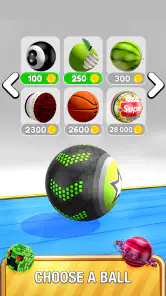
Moreover, the game offers a variety of balls you can unlock as you progress. Each ball comes with its own set of unique characteristics and designs, which adds a fun layer of customization to your gaming experience. Whether you're rolling with a plain ol' sphere or a fancy, sparkly orb, the choice is yours!
Visuals and Soundtrack
Visually, the game is a treat. The graphics are crisp and vibrant, making each level a visual delight. The developers have done a fantastic job in ensuring that the aesthetics are both engaging and easy on the eyes. The soundtrack, too, complements the gameplay beautifully, with upbeat tunes that keep your adrenaline pumping as you guide your ball to victory.
What's more, the game runs smoothly without any noticeable lags, which is crucial for a game that demands precision and timing. It's one thing to have a challenging game, but it's a whole other story if the game's performance hinders progress. Thankfully, it delivers on all fronts.
What I would check before settling in
The simple controls make it tempting to open the game whenever a spare minute appears, but I get more from it when I give each attempt a little attention. On a commute, for example, I would play only when I can look at the screen continuously and keep my hands free; trying to steer while distracted is a poor match for a game built around narrow paths. At home, a short session after a task works better for me than promising myself an extended run, because a succession of retries can make a small break stretch longer than intended.
One useful habit is to treat a failed attempt as feedback about a specific section. If I veer off at a turn, I focus on that turn next time rather than changing my approach everywhere. This is a modest but practical way to make retries feel purposeful. The game’s obstacle-course format rewards attention to the path ahead, so looking a little beyond the ball can help me prepare for a bend or gap instead of reacting only when it is already under me.
The unlockable balls add a personal touch, but I would not assume that a different appearance makes a difficult course easier. The appeal I can safely take from them is customization and a sense of progress; their distinct characteristics are part of the experience, yet I would test any ball myself before building a strategy around it. If you care mainly about mastering the course, focus first on steering consistently. If you enjoy collecting and changing the look of a game object, the unlocks provide another reason to keep playing.
How it compares with other casual games
Compared with casual games built around matching, stacking, or quick taps, this one asks for more continuous attention. You are guiding motion rather than solving a static board, which makes it feel more physical and immediate. That difference is a strength when I want a direct test of coordination, but it is not automatically better: a match-style puzzle can be easier to pause mentally, while a rolling course keeps asking me to react as the ball moves.
It also occupies a different space from open-ended runners. The focus here is on negotiating a designed path and its obstacles, not simply staying in motion for as long as possible. Players who like route control and careful corrections are more likely to enjoy that emphasis. If you usually prefer slow, turn-based decisions, or dislike repeating a section after a mistake, a puzzle or low-pressure builder may be a more comfortable everyday choice.
For a family looking for an accessible game to try together, the Everyone rating is reassuring about its intended audience, and the basic goal is easy to explain. I would still set expectations around individual patience: younger or less practiced players may enjoy the colorful rolling action but become frustrated by precision sections. Taking turns and treating a miss as part of learning can make it a more pleasant shared activity than turning every course into a score contest.
What the purchase details do and do not settle
A common question with a free mobile game is whether paying is necessary. The confirmed facts establish that there are in-app purchases in the stated range, but they do not explain which items are offered or what they change. I would therefore begin as a non-spending player and inspect each purchase in context before deciding. If an item is optional and appealing to you, that is a personal choice; if you are looking for a game with no purchases at all, this is not the safest assumption to make.
The same caution applies to competitive fairness. I cannot infer from the presence of purchases that they give an advantage, and I cannot infer that they never do. For casual play focused on beating your own course challenges, that uncertainty may matter less than whether steering feels satisfying. For a player who wants a clearly level competitive environment, it is reasonable to check how the available items work before investing time or money, and to skip spending until that is clear.
Another sensible question is whether the game suits short sessions. Its simple premise makes it easy to pick up, and the course-by-course challenge lends itself to brief play, but precision still needs your attention. I would not open it while walking, carrying something, or needing to respond to another task immediately. A quiet few minutes with the screen in view is a better fit than distracted play, especially when a narrow ledge demands a small correction at just the right moment.
My trust verdict
My recommendation is straightforward: try it if you enjoy steering challenges, quick retries, and the small satisfaction of getting a tricky stretch right. Its large audience—over 100 million installs—shows how widely it has been picked up, while its 4.3 average across around 876,000 ratings offers a useful, though not decisive, signal of reception. I would not treat either number as proof that every player will enjoy the controls or the pace.
I would be more cautious if you want a story-led game, a deeply strategic experience, or certainty that optional purchases have no effect on progress or competition. The purchase range is clear, but the role of individual items is not something I would guess at. That leaves a practical choice: enjoy the game as a free casual challenge first, and only consider buying something once you understand exactly what it offers and feel that the cost is worthwhile.
Final Thoughts
All in all, Going Balls is a delightful mix of challenge and fun. It's a game that doesn't take itself too seriously, yet offers enough depth to keep you engaged for hours. Whether you're looking for a quick way to pass the time or a game to sink your teeth into, this one is definitely worth a download.
If you're ready to embark on this rolling adventure, you can find it on both Android and iOS platforms. So go ahead, give it a spin, and see if you can conquer the course!
Going Balls Pros and Cons
Pros
- Smooth and intuitive controls.
- Engaging and addictive gameplay.
- Variety of challenging levels.
- Visually appealing graphics.
- Suitable for all ages.
Cons
- Contains in-app purchases.
- Occasional ads disrupt flow.
- Some levels feel repetitive.
- Requires active internet connection.
- Limited customization options.
This Game in Other Languages
Frequently Asked Questions
What is the main objective of the Going Balls game?
Going Balls is a mobile game where the primary objective is to guide a ball through various obstacle-filled paths to reach the end of each level. Players must skillfully navigate the ball by swiping left or right, all while avoiding pitfalls, traps, and other challenges that increase in difficulty as the game progresses.
Is Going Balls free to play, or does it involve any in-app purchases?
Going Balls is free to download and play, offering a fun experience without any initial cost. However, the game includes in-app purchases that allow players to buy additional features, such as special balls, power-ups, or removing ads. These purchases are optional and not necessary to enjoy the core gameplay.
What are the system requirements for installing Going Balls on Android and iOS devices?
Going Balls is designed to run smoothly on most modern smartphones. For Android devices, it typically requires Android 5.0 or higher, and for iOS devices, iOS 10.0 or later is recommended. These requirements ensure that the game performs optimally, providing a seamless gaming experience without lag or crashes.
Does Going Balls require an internet connection to play?
Going Balls can be played offline, making it a great choice for gaming without an internet connection. This feature is particularly useful for players who want to enjoy the game during travel or in areas where connectivity is unreliable. However, some features, like leaderboards and updates, may need an internet connection.
How does the game handle user data and privacy?
Going Balls prioritizes user privacy and handles data with care. The game collects minimal data necessary for gameplay and performance improvements. Players can review the privacy policy within the app to understand what data is collected and how it is used. Ensuring transparency, the game adheres to standard data protection regulations.


