

Gin Rummy Extra - Online Rummy
- Reviews
- 4.5
- Version
- 4.02.4
- Installs
- 1,000,000+

Screenshots

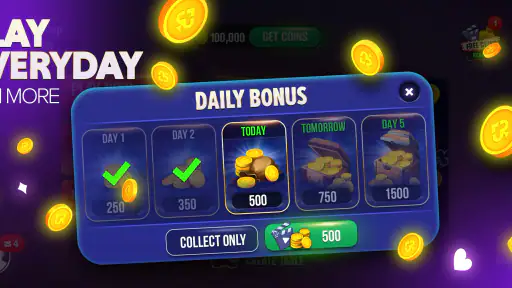






 Analysis by Frivlyz
I spent time with Gin Rummy Extra - Online Rummy as a mobile card game, and the feature that defines the whole experience is its online multiplayer focus. This is not simply a digital deck for playing alone; it is built around sitting down for a game of gin rummy against another person. That choice gives every hand more tension, but it also means the quality of the experience depends on whether you want live competition rather than a quiet solo card session.
Developed by Bro3 Games, the game presents gin rummy in a compact format that is easy to pick up if you already know the basic goal: arrange your cards into useful groups and runs, reduce unmatched cards, and decide when to end the hand. I found the appeal strongest in short breaks, when I wanted something more thoughtful than a luck-only card game but less demanding than a large strategy title. It is free to download, carries a Teen content rating, and includes optional purchases ranging from less than a dollar to considerably higher amounts per item.
Why online multiplayer changes the feel of gin rummy
The online element matters because gin rummy is a game of incomplete information. You can see your own hand and the cards that have been discarded, but you do not know exactly what the other player is building. Against a computer, I often find myself learning a predictable rhythm. Against a person, even a familiar discard can feel like a deliberate message. That uncertainty makes ordinary decisions more interesting.
In a typical hand, I have to balance two competing instincts. One is to hold cards that might complete a promising combination. The other is to discard quickly enough that I do not carry too many unmatched cards if the opponent finishes first. Playing online makes this tradeoff feel immediate. A card that looks harmless may be exactly what the other player needs, while keeping it can block my own hand from improving.
This is the most important practical strength of the game: the opponent turns card management into a conversation without words. The discard pile becomes a record of choices, and I have to read it carefully instead of treating each draw as an isolated event. For players who enjoy noticing patterns, this is more rewarding than a basic matching game.
At the same time, online play is not automatically better for everyone. If I want to practice rules at my own speed, pause frequently, or play while distracted, a conventional offline card app can be more comfortable. Gin Rummy Extra is at its best when I am ready to give a hand my attention and accept that another player may not behave in a predictable way.
What a beginner needs to understand before playing
The central rules of gin rummy are approachable, but the first few hands can still feel confusing if you have never played. The useful groups are usually sets of matching ranks and runs of consecutive cards in the same suit. Cards that do not fit into those arrangements are deadwood, and reducing that deadwood is often more important than chasing an attractive combination that may never arrive.
Gaming Stories You May Enjoy

Dancing Road Turns Short Breaks Into a Test of Rhythm and Timing

Super Stylist Makes Every Outfit a Test of Taste and Patience

Dominoes on Your Terms: Who Should Play and Who Should Pass

Pokémon GO Makes the Familiar World Feel New

Chess.com Turns Rematches Into Rivalries, but Community Has Its Costs

Archery Battle 3D Review: Sharp Aiming, Unclear Feedback
I recommend starting with a simple objective: watch what is being discarded before trying to make clever plays. If a player repeatedly ignores a suit, that may tell you something about the hand they are shaping. It is not proof, but it is a useful clue. Likewise, picking up from the discard pile reveals that a card has some value to the opponent, even if you cannot tell exactly why.
The game becomes easier once I stop judging every draw as good or bad. A card can be useful because it completes a group, because it keeps two possible runs alive, or because it prevents me from exposing what I am collecting. That last point is especially important online: the visible choices I make can influence what the other player believes about my hand.
For a new player, the best early habit is to avoid holding too many disconnected high-value cards. They may be tempting to keep while waiting for a combination, but they can become expensive deadwood. I also try not to pick up every card that appears remotely useful. A clean hand with fewer possibilities is sometimes safer than a complicated hand that depends on several unlikely draws.
How the online format works in everyday use
The practical rhythm is straightforward: start a hand, examine the cards, draw from the available options, discard one, and repeat while adjusting to the opponent. What takes practice is not the sequence of actions but the timing of decisions. I may have a playable hand early, yet ending the hand too soon could leave a better arrangement unexplored. Waiting too long, however, gives the other player more chances to improve.
That tension makes the game suitable for short sessions, but “short” does not always mean effortless. I can begin a hand during a break and discover that I am more invested than expected because the opponent has created a close contest. This is enjoyable when I have a few uninterrupted minutes. It is less convenient when I am walking, switching between tasks, or likely to abandon the phone suddenly.
The online focus also changes how I think about mistakes. In a solo game, a poor discard can be corrected by restarting or simply treated as practice. In a live match, the decision has consequences that unfold immediately. I found that this creates a useful learning loop: after losing a hand, I can look back at the moment when I kept a risky card, revealed too much information, or ignored the shape of the discard pile.
One non-obvious tip is to separate “cards I want” from “cards I can safely reveal.” These are not always the same. A card may improve my own possible combinations but also make my plan obvious if I take it from the discard pile. When I already have several ways to improve, drawing discreetly can be more valuable than grabbing the most obvious option.
Another useful habit is to count the structure of the hand rather than focusing only on individual cards. If I have two connected cards in one suit and a pair elsewhere, I have choices. If I have several isolated cards, I should usually prioritize reducing risk instead of imagining an ideal final hand. This way of thinking is more reliable than waiting for a lucky draw.
The best scenario: a focused break with a competitive friend
The strongest use case for me is a relaxed break when I want a match that feels personal but does not require learning a large rulebook. It works well after dinner, during a quiet commute when I am seated, or in a casual session with someone who already enjoys traditional card games. The online format gives the game a social edge without demanding the preparation of a physical deck and table.
Imagine having ten or fifteen minutes before an appointment. A large multiplayer game may be too much to start, while a simple solitaire round can feel repetitive. A gin rummy hand offers a middle ground: enough decision-making to stay interesting, but a familiar card structure that does not require a long tutorial. If the match becomes close, that small gap of free time can feel surprisingly engaging.
This is also a good choice for someone who wants to improve at reading an opponent rather than merely testing luck. I can pay attention to which cards are accepted, which are rejected, and how quickly the other player changes direction. Over several sessions, those observations make the game feel less like random drawing and more like disciplined risk management.
However, I would not choose it for a group gathering where several people want to play together at once. The core appeal is the individual contest, so it is better suited to one-to-one attention than to a room full of players looking for a shared party game. Someone seeking a broad collection of card variants may also prefer a larger card-game package instead of a title centered on gin rummy.
Tradeoffs behind the free-to-play model
Being free makes it easy to try without committing money at the start. That is valuable for a card game because personal preference matters so much: some players enjoy online gin rummy immediately, while others discover that they would rather play solitaire, a trick-taking game, or a board game with more variety.
The tradeoff is the presence of in-app purchases. Individual items are listed from $0.99 up to $199.99, so I would treat the purchase system carefully rather than assuming that free installation means a completely cost-free experience. Anyone handing the phone to a child should pay attention to purchase controls, especially because the game is rated Teen and is not presented as a children’s-only title.
I also think the purchase range affects how I approach the game psychologically. If I am playing casually, I want the match itself to remain the reason I return, not the pressure to buy something to keep pace or feel invested. Setting a personal spending limit before experimenting with optional items is sensible. The game is easiest to enjoy when I judge each hand on its decisions, not on what I might unlock or purchase.
Another tradeoff comes from the online format itself. A real opponent provides variety, but it also removes some control. I cannot guarantee that every match will have the same pace, level of patience, or style of play. That unpredictability is part of competition, yet it can frustrate players who prefer a perfectly consistent computer opponent.
Device compatibility is fairly broad: the current version is 4.02.4 and requires Android 7.0 or later. That makes it accessible to many older Android phones, although the exact feel will still depend on the device’s screen, responsiveness, and connection. I would keep the game updated where possible, but I would not choose it as a substitute for a physical deck when connectivity or phone access is unreliable.
Where it stands beside traditional and digital alternatives
Compared with a physical gin rummy deck, the mobile version is more convenient. I do not need another player in the same room, I do not have to shuffle, and I can start a hand quickly. The cost of that convenience is the loss of the tactile experience: handling cards, reading a friend’s reactions, and setting the pace together around a table.
Compared with solitaire, this game gives me more uncertainty and more reason to study the other side’s decisions. Solitaire is often better when I want a calm, private puzzle. Gin Rummy Extra is better when I want my choices tested by another person. Neither is universally superior; they serve different moods.
Compared with broad multiplayer card collections, the focused design can be an advantage. I do not have to jump between many unrelated rule sets, and I can concentrate on improving one familiar game. The downside is obvious for players who become bored with repetition or want poker, blackjack, trick-taking games, and rummy variants in the same app.
The game also differs from a purely offline gin rummy app in an important way: it makes the opponent central rather than optional. That can produce more memorable hands, but it makes the experience less suitable for practice sessions where I want to stop, review a move, or experiment without consequence.
Small decisions that make a noticeable difference
My first practical tip is to avoid treating the discard pile as a shopping list. Taking a card because it completes one attractive pair may reveal too much about my plan and leave the rest of the hand awkward. Before picking it up, I ask whether it improves the hand immediately or merely creates another possibility I may never complete.
Second, I try to notice what the opponent refuses to take. Repeatedly discarded cards can narrow the possibilities, but I use that information cautiously. A player may reject a card for tactical reasons rather than because the entire suit or rank is useless. The insight is not to guess the exact hand; it is to stop making decisions as if the other player has no preferences.
Third, I keep an eye on the cost of waiting. Holding a high card while hoping for a perfect run can feel clever, but every extra turn gives the opponent time too. When my hand has several weak cards and no clear improvement route, I favor a safer discard instead of protecting an attractive fantasy combination.
A fourth lesson is to review the turning point after each hand. I do not need a formal notebook. I simply ask which card I held too long, which discard I misunderstood, and whether I had enough information to act differently. This turns online matches into deliberate practice and helps prevent the same mistake from becoming a habit.
These approaches are especially useful because the game’s appeal is not just forming combinations. It is managing information. The best move is often the one that improves my hand while giving the opponent the least useful clue.
Who will get the most from this particular game
I think the best audience is someone who already likes card puzzles and wants the pressure of a human opponent. Traditional gin rummy players should understand the basic appeal quickly, while beginners can learn by starting conservatively and observing the discard flow. People who enjoy short competitive sessions may find it more satisfying than a passive time-killer.
It is also a reasonable option for players who want a free entry point before deciding whether online gin rummy is worth making part of their regular routine. The game has an average rating of 4.5 from around 26 thousand ratings, and it has passed one million installs, which suggests that it has found a substantial audience. I would treat that popularity as a reason to try it, not as proof that every player will enjoy its pace or purchase model.
I would steer away from it if my priority were offline access, absolute control over session length, or a large variety of card games in one place. I would also skip it when I wanted a completely relaxed experience with no competitive pressure. In those situations, solitaire or a traditional deck with a patient friend may fit better.
For everyone else, the key question is simple: do you want gin rummy to feel like a private puzzle or a live contest? If the answer is the second option, this game’s online multiplayer capability is meaningful rather than decorative. It turns each draw and discard into a small decision against another person, which is exactly why I found the matches more involving than ordinary solo card play.
My overall impression is positive, with sensible reservations. Bro3 Games has focused the experience on a recognizable card game and given it a competitive online setting that rewards attention, memory, and restraint. The free installation lowers the barrier to trying it, while the Teen rating and optional purchase range are reminders to use it thoughtfully. I would recommend it to a friend who enjoys gin rummy and wants quick one-to-one matches, but I would not recommend it as a universal card app. Its value comes from that narrow focus, and if that focus matches your mood, the live opponent is what makes each hand worth returning to.
Gin Rummy Extra - Online Rummy Pros and Cons
Pros
- Smooth online matches with quick matchmaking.
- Clear card layout makes hands easy to follow.
- Practice mode helps new players learn the rules.
- Short games fit well into quick breaks.
- Multiple table options add variety to gameplay.
Cons
- Some features may require in-app purchases.
- Online play depends on a stable internet connection.
- Match difficulty can feel uneven for newer players.
- Ads may interrupt the experience between games.
- The interface can feel dated on some devices.
Frequently Asked Questions
What is Gin Rummy Extra - Online Rummy?
Gin Rummy Extra - Online Rummy is a digital card game based on the classic Gin Rummy rules. It lets you create melds, reduce deadwood, and try to knock before your opponent. The app is designed for both casual and competitive play, with online matches that let you challenge other players and practice your strategy in a convenient mobile format.
Can I play Gin Rummy Extra - Online Rummy offline?
Availability of offline play may depend on the version and features offered by the developer. Online matchmaking and multiplayer games require an internet connection, while some versions may provide practice games against computer-controlled opponents. Before downloading, check the current store description to confirm whether offline modes are included and which features remain available without a connection.
Is Gin Rummy Extra - Online Rummy free to download?
The game can generally be downloaded without an upfront purchase, but free access may include advertising, optional in-app purchases, or other limits. Purchases could be used for virtual currency, cosmetic items, extra features, or faster progression. Review the app-store listing and your device’s purchase settings carefully, especially if children may use the device.
How does multiplayer work in Gin Rummy Extra - Online Rummy?
Multiplayer is typically based on online matchmaking, allowing you to play against other users rather than only computer opponents. You may need an account, a stable internet connection, and access to the game’s online services. Match times and opponent availability can vary, and connection problems may affect a game, so reliable Wi-Fi or mobile data is recommended.
Is Gin Rummy Extra - Online Rummy suitable for beginners?
Yes, the game can be suitable for beginners who are learning Gin Rummy, particularly if it includes tutorials, practice rounds, or matches against artificial intelligence. New players should first learn how to form sets and runs, manage unmatched cards, and decide when to knock. Competitive online games may be more challenging, so practicing before entering ranked or higher-stakes modes is advisable.


