

Geometry Dash
- Reviews
- 4.8
- Version
- 2.2.143
- Installs
- 5,000,000+

Screenshots
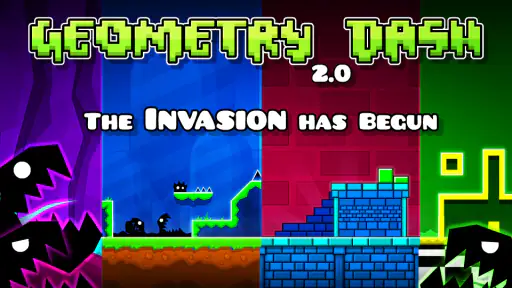
 Analysis by Frivlyz
My first impression of Geometry Dash was that it would be a quick rhythm game I could dip into for a few minutes. That part is true, but it undersells the hook: a small timing mistake can send you back to the beginning, and suddenly I’m replaying a section to understand exactly where my reaction slipped. The appeal is immediate, while the question of whether it deserves a regular spot on my phone depends on how much I enjoy learning through repetition.
Why the first sessions are so compelling
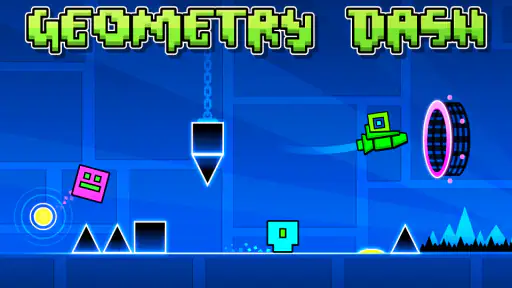
As an arcade game from RobTop Games, it puts the focus on a simple interaction: guide a geometric character through hazards by timing taps and holds. The controls are easy to grasp, so I can start without studying a long tutorial. The challenge comes from the courses themselves: the scenery moves quickly, and safe-looking moments can turn into jumps that demand a precise response.
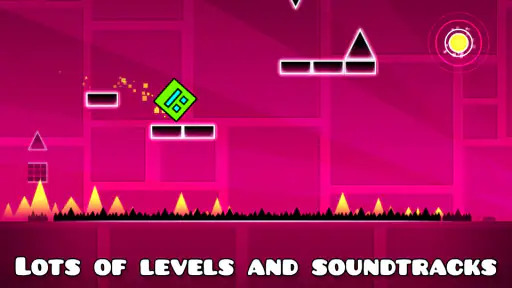
The rhythm gives each attempt a useful framework. Instead of reacting to every obstacle as a surprise, I start to associate a jump with a beat or a short sequence in the music. That doesn’t make the course effortless, but it can turn a frustrating stretch into a pattern I can practice. When I finally clear a section that had been stopping me, the satisfaction feels earned rather than handed out.
That learning curve also explains who is likely to enjoy it. If you like arcade games that reward focus, quick reactions, and repeated attempts, this is an appealing fit. If you mainly want to relax without restarting or prefer exploration over precision, its central loop may feel more demanding than fun. I’d approach it as a focused challenge, not as a soothing game to play while half-watching something else.
The Pulse-Pounding World of Geometry Dash
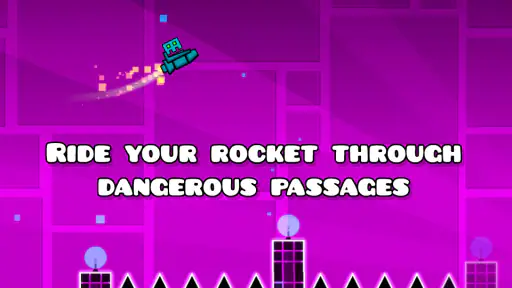
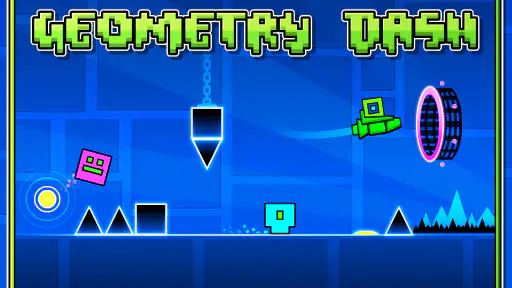
Imagine a game where you’re the pilot of a tiny geometric shape, navigating through a vibrant and rhythmic landscape. Geometry Dash is all about timing, precision, and a whole lot of patience. This game is not just about speed; it's a test of your reflexes, coordination, and determination.
Gameplay Mechanics
At first glance, the game seems straightforward – tap to jump, hold to keep jumping – but don’t be fooled. The levels are designed to challenge your skills and keep you on your toes. As you progress, the obstacles get trickier, and the pace quickens. The key is to get into a rhythm and become one with the game’s electrifying soundtrack. Trust me; you'll be hooked once you hit that perfect beat.
Each level introduces new mechanics and obstacles, from spikes and pits to moving platforms and gravity shifts. It’s like a dance, where each step must be perfectly timed. But here’s the kicker – you can’t just wing it. Each level requires memorization and practice. There’s something incredibly satisfying about finally nailing that tricky section you’ve been stuck on for ages.
Gaming Stories You May Enjoy

Dancing Road Turns Short Breaks Into a Test of Rhythm and Timing

Super Stylist Makes Every Outfit a Test of Taste and Patience

Dominoes on Your Terms: Who Should Play and Who Should Pass

Pokémon GO Makes the Familiar World Feel New

Chess.com Turns Rematches Into Rivalries, but Community Has Its Costs

Archery Battle 3D Review: Sharp Aiming, Unclear Feedback
Making repeat sessions work for you
Replaying a difficult course is more useful when I treat each attempt as practice rather than a fresh test of patience. I pay attention to the point where my run breaks down and focus on the timing leading into it. If I keep tapping harder or faster out of frustration, I’m usually making the same mistake with more energy. A short pause can be more productive than another dozen rushed tries.
This is also where the game’s rhythm can help without becoming a guarantee. Music can cue an approaching action, but I still need to learn the visual pattern and respond accurately. If a section feels inconsistent, I try to notice whether I’m reacting to the beat alone instead of the obstacle. That small distinction matters: the soundtrack supports the timing, but the screen remains the thing I have to read.
For an everyday session, I can imagine playing during a short wait or taking a break between other tasks. The quick restart makes it easy to return to the same challenge, but it also makes it easy to lose track of time while chasing one more clean run. I’d set a stopping point before starting if I only have a few minutes; otherwise, the game’s tight loop can turn a brief break into a longer session.
Customization and Creativity
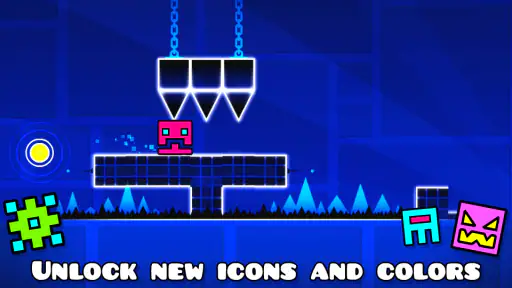
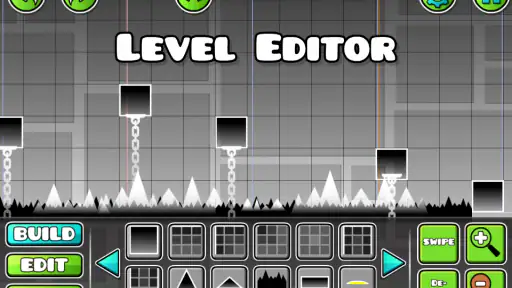
Another feature that makes Geometry Dash stand out is its customization options. You can personalize your character with different colors and icons, giving the game a personal touch. But the fun doesn’t stop there. The game also offers a level editor, allowing you to create your own challenges and share them with the community. It’s fascinating to see the creativity flowing in the user-generated content, where the possibilities are virtually endless.
The editor gives the game a different kind of staying power from a typical one-and-done arcade challenge. I can switch from trying to master a course to thinking about how a playable sequence is put together. Building something is a different task from clearing something: it rewards patience and experimentation rather than quick reactions. For someone who enjoys making and refining, that shift can keep the game interesting after the first burst of novelty.
There is a trade-off, though. A level editor is most valuable to a player who wants to create, test, and revise, and less so to someone who only wants a tidy sequence of short stages. User-created content can also vary in style and difficulty, so browsing it is not the same as choosing a carefully paced campaign. I’d treat the creative side as an optional second reason to stay, rather than assuming it will suit every player.
How it compares with other arcade games
Compared with an endless runner, this is less about surviving for as long as possible and more about learning a defined sequence. That makes progress feel clearer when I’m improving at a particular obstacle, but it can be less forgiving when I want a casual run that doesn’t punish one mistimed input. Compared with a platform game built around exploration, it gives less room to stop and look around; the emphasis is on reading the route at speed and acting at the right instant.
That distinction helps me decide when to reach for it. If I have a quiet moment and want a compact test of concentration, its directness is a strength. If I’m tired, distracted, or hoping to wander through a game world at my own pace, a more relaxed platformer is probably a better choice. The game’s identity is unusually focused, and that focus is both its clearest advantage and the reason it won’t be everyone’s everyday pick.
Soundtrack and Graphics
The game’s soundtrack deserves a spotlight of its own. Each track is meticulously crafted to match the level's theme, creating an immersive experience that keeps you coming back for more. The graphics, on the other hand, are simple yet effective. The vibrant colors and smooth animations make the game visually appealing without being overly complex.
The clean visual style matters for practical reasons, not just appearance. With hazards and timing competing for attention, a readable screen helps me focus on the next move instead of sorting through decorative detail. The music adds momentum, but I wouldn’t recommend relying on it as the only cue. Playing somewhere noisy can make the rhythm less useful, so I’d keep my eyes on the obstacle pattern and treat the soundtrack as support.
What keeps it on my phone—and what wears me down
The lasting value comes from having more than one way to engage: I can practice a challenging sequence, revisit the rhythm, personalize my character, or spend time making a course. Those activities suit different moods, which gives the game a better chance of surviving past the first week than a single short-lived gimmick. Still, the central challenge remains demanding. If repeated failure stops feeling motivating, the creative options may not be enough to make the core play satisfying.
Its large audience is reflected in an average rating of 4.8 from around 997,000 ratings, with more than 5 million installs. That popularity is useful context, but it doesn’t change the personal fit test: liking precise, repeatable challenges matters more than whether the game is widely played. The age rating is Everyone, yet the difficulty can still frustrate younger players or anyone who dislikes having to learn a section through multiple attempts.
The game costs $2.99, so I’d think of it as a paid arcade experience rather than a free distraction. That makes sense if I expect to return for both the main challenges and the editor; it is harder to justify if I only want a casual game to open once in a while. It was released on August 12, 2013, and the current version is 2.2.143, with Android 5.0 as the minimum OS. Before buying, I’d check that my device meets that requirement and consider whether its focused style matches the kind of play I actually enjoy.
Maintenance is light in the everyday sense: this is not a game that asks me to manage a collection of routines or keep up with a stream of chores to enjoy a session. Its ongoing cost is attention. I have to remember patterns, stay patient when a run fails, and decide when I’ve practiced enough for one sitting. For a player who likes that kind of mastery, it can remain rewarding; for someone who wants progress to arrive without repetition, the same design can feel like work.
So I’d recommend it to a friend who enjoys rhythm-led precision, short attempts, and the satisfaction of gradually getting better. I’d steer a friend who wants a forgiving, story-driven, or hands-off game toward a different kind of arcade or platform experience. For me, the best reason to keep it installed is not that every session is relaxing, but that I can return with a clear goal and feel the difference when my timing improves. If that sounds satisfying rather than exhausting, the price is easier to accept and the game has a good chance of lasting beyond its novelty.
Soundtrack and Graphics
The game’s soundtrack deserves a spotlight of its own. Each track is meticulously crafted to match the level's theme, creating an immersive experience that keeps you coming back for more. The graphics, on the other hand, are simple yet effective. The vibrant colors and smooth animations make the game visually appealing without being overly complex.
In a nutshell, Geometry Dash is not just a game; it’s a rhythmic journey that challenges both your reflexes and creativity. Whether you’re a seasoned gamer or a casual player, this game offers a unique experience that’s hard to put down. So, if you’re up for a challenge and love a good beat, give Geometry Dash a whirl. Just remember, persistence is key, and every failed attempt is just a step closer to victory!
Geometry Dash Pros and Cons
Pros
- Highly addictive gameplay
- Challenging levels enhance skills
- Simple yet engaging graphics
- Great soundtrack complements action
- Offers frequent updates
Cons
- Can be frustratingly difficult
- Limited customization options
- Ads in free version
- Requires internet for some features
- Occasional lag on older devices
This Game in Other Languages
Frequently Asked Questions
What is Geometry Dash and how does it work?
Geometry Dash is a rhythm-based action platformer game where players control a square icon through various levels filled with obstacles and challenges. The game requires players to time their jumps and movements in sync with the music to successfully navigate through each stage. It offers a mix of platforming and rhythm gameplay, making it both challenging and addictively fun.
Is Geometry Dash available on both Android and iOS?
Yes, Geometry Dash is available for both Android and iOS platforms. Players can download it from the Google Play Store for Android devices and the Apple App Store for iOS devices. The game has gained popularity across both platforms due to its engaging gameplay and vibrant graphics.
Are there different versions of Geometry Dash available?
Yes, there are multiple versions of Geometry Dash available. The main game is the full version, which offers numerous levels and features. Additionally, there are free versions like 'Geometry Dash Lite' that provide a limited number of levels for players to try before purchasing the full version. Other spin-offs include Geometry Dash Meltdown, Geometry Dash World, and Geometry Dash SubZero, each with unique levels and music.
Do I need an internet connection to play Geometry Dash?
No, Geometry Dash does not require an internet connection to play. Once downloaded, players can enjoy the game offline, making it a great option for those who want to play without worrying about data usage or connectivity issues. However, an internet connection might be needed to access certain features like leaderboards or downloading custom levels.
Can I create my own levels in Geometry Dash?
Yes, one of the standout features of Geometry Dash is the ability for players to create their own custom levels using the in-game level editor. This feature allows for endless creativity as players can design unique levels and share them with the community. The level editor includes a variety of tools and options to customize the gameplay experience, making it a favorite among players who enjoy creating and sharing content.


