

Game of Words: Word Puzzles
- Reviews
- 4.7
- Version
- 1.9.72
- Installs
- 1,000,000+

Screenshots
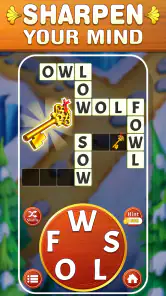
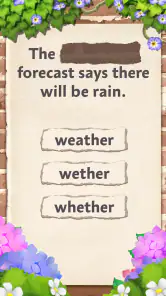
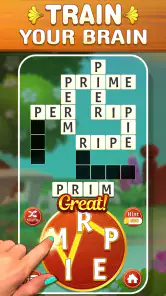
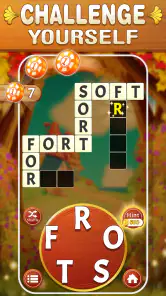
 Analysis by Frivlyz
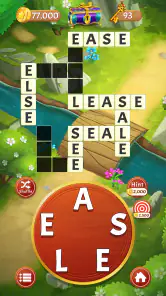
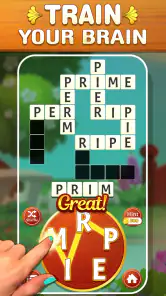
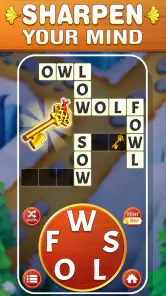
When I want a word game that asks for a little attention without demanding a whole evening, I reach for Game of Words: Word Puzzles. Its central appeal is easy to understand: you work with a group of letters, connect them into words, and gradually take on harder puzzles. That small, repeatable task is what makes it useful in the gaps of an ordinary day. I can play a little, pause, and come back when I have the patience for another round.
First Impressions
Upon launching Game of Words: Word Puzzles, I was immediately struck by its vibrant and inviting interface. The colors are easy on the eyes, and navigating through the app is as smooth as butter. It’s like they knew exactly what a word puzzle enthusiast like me would want – no frills, just pure puzzling fun.
That straightforward feel matters more than it might sound. A word puzzle is most enjoyable when the task itself is the focus, rather than a maze of menus or instructions. Here, the basic idea is clear quickly: look at the letters, try a combination, and see whether it forms a word the puzzle accepts. I don’t need to set aside time to learn a complicated rule system before I can enjoy a short session.
The game is free to download, and its age rating is Everyone, which makes it approachable for a broad range of players. DreamLoft is the developer, and the game has reached over one million installs. Its average rating is 4.7 from around 198,000 ratings, with roughly 17,000 written reviews. Those figures suggest that many people have found the format appealing, though what matters most to me is whether the play loop suits the way I like to relax.
Gameplay and Features
What I absolutely love about this app is its simplicity. The game provides a series of letters, and your task is to swipe and connect them to form words. Sounds easy, right? But don’t let its simplicity fool you. As you progress, the levels get trickier, and I found myself scratching my head more than once.
The useful distinction is between knowing plenty of words and spotting them under a small constraint. When the available letters are in front of me, I have to stop relying on the first obvious answer and test different arrangements. A familiar word can hide behind a less familiar sequence of letters, and that makes a level feel like a quick exercise in flexible thinking rather than a vocabulary quiz with a single obvious route.
My practical tip is to scan the letters in more than one way before swiping. I look for short combinations first, then try changing the starting point instead of repeatedly chasing the same guess. If I get stuck, a brief pause often helps more than frantic attempts: returning with fresh eyes can make a combination stand out. That approach is especially handy when I’m playing in a noisy place or between other tasks, because it gives me a simple way to reset without turning a short game into a frustrating grind.
Gaming Stories You May Enjoy

Dancing Road Turns Short Breaks Into a Test of Rhythm and Timing

Super Stylist Makes Every Outfit a Test of Taste and Patience

Dominoes on Your Terms: Who Should Play and Who Should Pass

Pokémon GO Makes the Familiar World Feel New

Chess.com Turns Rematches Into Rivalries, but Community Has Its Costs

Archery Battle 3D Review: Sharp Aiming, Unclear Feedback
One of the standout features is the daily challenges. Every day, there’s a new puzzle waiting to be solved, and completing these challenges can earn you some sweet rewards. It’s a fantastic way to keep the game fresh and engaging day after day.
I find the daily puzzle works best as an optional routine, not an obligation. It gives me a specific reason to open the game when I don’t feel like choosing what to play, but I wouldn’t let a streak or a reward dictate my schedule. If I have a few quiet minutes after lunch, I can try the day’s challenge; if I’m busy, the game is still there later. That balance keeps the small daily prompt enjoyable rather than another task on a to-do list.
There is also a practical way to use the challenges as a warm-up. I can start with one short puzzle to get into the habit of examining the letter set, then move on to other levels only if I’m in the mood. The reverse works too: after a longer stretch of play, a daily challenge can feel like a neat stopping point. This is a modest feature, but it gives a casual player a natural entry and exit instead of requiring a long session.
Another cool aspect is the storyline. Yes, you read that right. The game isn’t just about finding words. There’s a whole narrative woven into it, which adds an extra layer of depth to the gameplay. I found myself not only eager to solve the puzzles but also curious about what happens next in the story.
That narrative gives progress a different flavor from a plain sequence of disconnected word boards. If I enjoy a sense of continuation, I have something to follow alongside the puzzle solving. If I’m mainly interested in the letter challenge, I can still treat the story as background motivation rather than the reason to play. I see that as a useful middle ground: it adds context without changing the basic action of connecting letters.
How the Letter Puzzles Fit into a Day
The best everyday use is a short break that needs a little mental engagement but not a heavy commitment. I might open the game while waiting for someone, during a quiet moment at home, or when I want something more active than scrolling but less involved than starting a long game. A level gives that pause a clear focus: I’m looking for words, not trying to keep track of a complicated plan.
For example, imagine having ten minutes before an appointment. I could play a few puzzles, stop when it is time to leave, and return later without needing to remember a deep strategy. The letter set is right there when I resume, and the central task is easy to pick up again. That makes the game more convenient for fragmented schedules than a word game that depends on a long uninterrupted session or a sustained match against another player.
It can also work as a low-pressure shared activity. A friend or family member can look at the same letters and suggest a word, even if only one person is holding the phone. That is different from the built-in social competition: it turns a solo puzzle into a casual conversation without requiring everyone to coordinate a formal match. I wouldn’t expect this to replace a dedicated multiplayer word game, but it can make a spare moment together more engaging.
There is a trade-off in playing when attention is divided. The simple controls make it easy to begin, but actually spotting words still takes concentration. If I’m trying to follow a conversation, cross a busy street, or do another task that needs my attention, I’d rather put the game away. It’s relaxing when I can focus on it; it is not something I need to squeeze into every spare second.
Why You Might Love It
If you’re a word game aficionado, this app is a treasure trove. It brings together the thrill of solving puzzles with the satisfaction of progressing through a story. Plus, the app doesn’t bombard you with ads, which is a huge plus in my book. It gives you the freedom to immerse yourself completely without interruptions.
For me, the strongest reason to choose this particular style of word game is that the challenge stays personal. I can work through the letters at my own pace rather than racing an opponent or worrying about a timer. Players who enjoy quiet pattern-finding may prefer that to competitive word games, where speed and pressure can matter as much as vocabulary. Someone who wants the energy of a head-to-head match, however, may find a more explicitly competitive alternative a better fit.
It also sits between a crossword and a word search, without being the same as either. A crossword usually asks me to interpret clues and fit answers into a grid; a word search asks me to locate words already hidden in a field of letters. Here, I’m forming words from a supplied set of letters. That makes it a good choice when I want a direct, tactile puzzle, but not when I specifically want clue-solving, a large grid to explore, or the richer vocabulary study that a dictionary-focused tool can provide.
The social aspect offers another reason some players may stick with it. You can connect with friends and compete with them, which adds a fun and competitive edge to the game. It’s always exciting to see who can climb the leaderboard the fastest!
I’d treat that competition as a bonus rather than the main event. It can give friends a reason to compare progress, but people who prefer to play entirely alone can focus on the letter puzzles and story. Conversely, if your favorite part of a word game is direct turn-taking, detailed chat, or carefully balanced match strategy, this is not the same experience as a dedicated multiplayer title. Its central pleasure remains solving the next puzzle yourself.
Small Trade-Offs Worth Knowing
The simplicity that makes the game approachable can also limit its appeal. If you want a broad toolkit of puzzle formats, a deep language-learning course, or a serious competitive ladder, this is not the app I would choose first. Its core loop is specific: connect letters to make words, work through increasingly tricky levels, and enjoy the surrounding progression. That focus is a strength for casual play, but it means the game is not a substitute for every kind of word entertainment.
Difficulty is another matter of taste. A harder level can be satisfying when I have time to think, but the same obstacle can feel irritating if I open the game while tired and expect effortless relaxation. I’ve found it helps to decide what I want before starting: if I’m looking for a tiny brain workout, a challenge is welcome; if I need something completely passive, a non-puzzle activity may serve me better. The game is calming in its pace, but it still asks me to solve something.
The presence of in-app purchases is worth keeping in mind even though the game is free to download. Optional purchases range from $0.99 to $69.99 per item, so I would check carefully before confirming any transaction, particularly if a child is playing. A purchase is not necessary simply to understand the basic premise, and I would start by playing at no cost to see whether the repeated word-searching suits me before spending anything.
That price range also changes how I think about rewards and progression. I enjoy earning something through a challenge, but I try not to confuse a reward with proof that I need to keep playing or buy something. My practical advice is to treat the daily puzzle and story as invitations, not pressure. If a level stops being fun, taking a break is a better solution than spending money just to push through a moment of frustration.
For device compatibility, the game requires Android 7.0 or later. The current version is 1.9.72. Those details are useful if you’re checking an older phone before installing; I’d compare the Android version on the device with that minimum first. On iOS, I would check the relevant store page for compatibility before downloading, rather than assuming that an Android requirement applies there.
Another useful question is whether the game suits a player who wants to improve vocabulary. It can encourage attention to words and letter combinations, but I would treat it as a puzzle game, not a structured language course. It doesn’t replace lessons, definitions, pronunciation practice, or a dictionary when the goal is systematic learning. For someone who already enjoys English wordplay, though, it can be a pleasant way to exercise recognition in short bursts.
Who Gets the Most from It
I’d recommend it most to casual players who enjoy word puzzles but don’t want every session to feel like a test. The swipe-and-connect mechanic is easy to grasp, while the rising difficulty gives returning players a reason to keep thinking. The daily challenges help people who like a small, repeatable prompt, and the story can appeal to anyone who wants a thread of progress alongside the puzzles.
It’s also a sensible pick for someone who plays in short intervals. You don’t need to arrange a match before starting, and a compact puzzle is easier to fit around errands or breaks than a long-form game. If you already enjoy searching for words in letter combinations, this format can turn an idle moment into something focused. If you mostly want to relax without making decisions, though, a simple visual or audio experience may be more soothing.
I’d suggest skipping it if your main goal is a rigorous vocabulary curriculum, crossword-style clues, or highly strategic multiplayer. Those alternatives do a better job of meeting those specific needs. I’d also be cautious if in-app purchases are a concern in your household: the free entry point is convenient, but purchases are available, so it makes sense to use device-level purchase controls where appropriate and to set expectations with younger players.
For families, the Everyone rating makes the game broadly accessible, and the letter puzzle itself is easy to explain. Still, I would not assume that every child will find the same levels equally comfortable or that the purchase options are irrelevant. A parent can try a puzzle together, see whether the child enjoys experimenting with letters, and decide how to handle purchases before handing over the device. That is more useful than judging the game by its simple premise alone.
Final Thoughts
At the end of the day, Game of Words: Word Puzzles is a charming and engaging game that’s perfect for anyone looking to sharpen their vocabulary skills while having a blast. Its combination of simple mechanics, daily challenges, and an intriguing storyline makes it a standout in the crowded world of mobile games.
So, if you’re ready to embark on a word-filled adventure, give it a try. You might find yourself hooked, just like I did!
Game of Words: Word Puzzles Pros and Cons
Pros
- Engaging word puzzles
- Variety of levels
- Offline play available
- Rewards for progress
- Interactive graphics
Cons
- In-app purchases needed
- Ads can be intrusive
- Limited free hints
- No multiplayer mode
- Requires regular updates
Frequently Asked Questions
What is Game of Words: Word Puzzles and how does it work?
Game of Words: Word Puzzles is an engaging mobile game that challenges players to form words from a set of given letters. Players advance through increasingly difficult levels by solving puzzles, each designed to test vocabulary and spelling skills. The game is designed to be both educational and entertaining, making it a great way to improve your language skills while having fun.
Can I play Game of Words: Word Puzzles offline?
Yes, Game of Words: Word Puzzles can be played offline, allowing users to enjoy the game without an internet connection. This feature is particularly useful for those who want to play while traveling or in areas with limited connectivity. However, some features, such as in-game purchases or leaderboards, may require an internet connection.
Are there any in-app purchases in Game of Words: Word Puzzles?
Game of Words: Word Puzzles offers in-app purchases that enhance the gaming experience. Players can buy coins or special power-ups to help them advance through challenging levels more easily. While the game can be played fully without making any purchases, these options are available for those who wish to progress faster or want additional help.
What age group is Game of Words: Word Puzzles suitable for?
Game of Words: Word Puzzles is designed for a wide audience, from young children to adults, making it a family-friendly game. The puzzles range in difficulty, catering to different skill levels and providing an enjoyable experience for everyone. Parents can feel confident knowing that the game is both educational and appropriate for all ages.
How often does Game of Words: Word Puzzles get updated with new content?
The developers of Game of Words: Word Puzzles regularly update the game with new levels and features to keep the experience fresh and engaging. These updates often include bug fixes, new puzzles, and enhancements that improve gameplay. Players can expect a steady stream of new content to keep them entertained and challenged.


