

Foundation: Galactic Frontier
- Reviews
- 4.1
- Version
- 1.0.88.201786
- Installs
- 1,000,000+

Screenshots


 Analysis by Frivlyz
When I first opened Foundation: Galactic Frontier, I wanted to know whether it would be a space game I could enjoy in short visits or one that demanded a long, uninterrupted session. My experience is that it suits players who like returning to a developing strategy game, taking stock of a growing empire, and deciding what deserves attention next. Its space setting gives those decisions a sense of scale, but the appeal is less about a quick burst of action than about following a longer-running plan.
That distinction matters if you are choosing between this and a compact puzzle or arcade game. Foundation is a strategy game from FunPlus International AG, and it is free to start. It has a Teen content rating, so it is aimed at older children and adults rather than very young players. Its average rating is 4.1 from around 29,000 ratings, and it has passed one million installs. Those figures suggest a sizable audience, but they do not tell you whether its pace will fit your routine; that depends on how much you enjoy managing a project over repeated visits.
What the space-strategy format asks of you
The premise is best approached as an ongoing commitment to decisions rather than a story you finish in one sitting. The game’s store summary points toward exploration and a galactic saga, while its short description names Foundation. I would go in expecting a science-fiction strategy experience, not a purely hands-off storybook or a straightforward action shooter. If you like the idea of gradually getting oriented in a larger setting, that is a promising starting point.
For a first-time player, the most reassuring goal is not to master every system at once. I would focus on understanding what the game puts in front of me, then make one useful choice and see what it teaches me. That approach is especially helpful in strategy games, where unfamiliar labels and several simultaneous objectives can make an opening session feel busier than it really is.
The current version is 1.0.88.201786, and the minimum operating-system requirement is Android 7.0. The game is free to download, with in-app purchases priced from $0.99 to $99.99 per item. I would treat those purchases as optional spending to think through, not as a necessary part of getting started. If you prefer games with no paid extras at all, that difference is worth weighing before you settle in.
Making the first session count
My practical advice for the first session is to follow the opening guidance at a comfortable pace instead of tapping through simply to reach later content. Pay attention to the game’s own prompts and notice which actions it asks you to repeat or prioritize. That gives you a basic sense of the expected rhythm without requiring you to remember every detail immediately.
A small, concrete goal makes the beginning feel more rewarding: learn how the interface presents your current objective, complete a step the game clearly guides you through, and check what has changed afterward. That first loop—understand a prompt, act on it, then inspect the result—is a better measure of whether the game clicks for you than trying to judge the entire experience from its opening visuals.
Gaming Stories You May Enjoy

Dancing Road Turns Short Breaks Into a Test of Rhythm and Timing

Super Stylist Makes Every Outfit a Test of Taste and Patience

Dominoes on Your Terms: Who Should Play and Who Should Pass

Pokémon GO Makes the Familiar World Feel New

Chess.com Turns Rematches Into Rivalries, but Community Has Its Costs

Archery Battle 3D Review: Sharp Aiming, Unclear Feedback
If you are playing during a short break, it helps to stop at a natural pause rather than beginning a new chain of decisions when you know you have only a minute. I would also avoid spending money while still learning what the game asks of you. First establish whether you enjoy its regular pace; only then can you decide whether an optional purchase would genuinely improve your own experience.
Where new players can lose their bearings
One common source of confusion in strategy games is treating every visible objective as equally urgent. I would look for the task the game is actively guiding me toward and use that as my anchor, rather than trying to investigate every screen at once. This is a simple way to reduce the feeling of being pulled in several directions, especially during the first few visits.
Another useful habit is to pause after a meaningful action and check the result before choosing the next one. If something seems unclear, retrace the prompt that led you there instead of making several guesses in a row. This keeps experimentation manageable and helps you learn the game’s own vocabulary, without turning the session into a checklist of unexplained systems.
That cautious approach will not appeal to everyone. Players who want immediate, self-contained matches or a game that explains every strategic consequence in detail may find a slower, evolving space game less satisfying. If your preference is a quick round with a clear finish, a compact tactics game may be a better fit than an experience built around returning to a larger setting.
Exploring the Galactic Frontier
The first thing that struck me about Foundation: Galactic Frontier was its stunning visual design. The graphics are out of this world—literally! As soon as you open the app, you’re greeted with a galaxy full of vibrant colors and meticulously crafted planets. It feels like you’re truly stepping into a new dimension.
Navigating through the game is a breeze, thanks to its intuitive interface. Whether you’re a seasoned gamer or a newbie, you’ll find it easy to get started. The tutorial is succinct, providing just enough guidance to get you on your feet without overwhelming you with information.
Building Your Galactic Empire
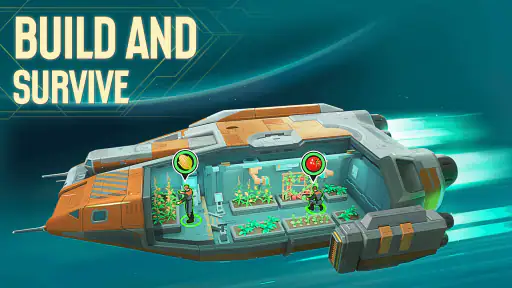
One of the most exciting aspects of the game is the ability to build and expand your own galactic empire. You start with a small base on a distant planet, but as you progress, you can colonize new worlds and develop a sprawling interstellar network.
Resource management is key here. You’ll need to gather materials, produce goods, and trade strategically. It’s a delicate balance, but incredibly satisfying when you see your empire thrive. I found myself eagerly logging in daily to check on my progress and make sure everything was running smoothly.
That ongoing management is where I would make a deliberate choice about when to check in. A glance at progress can be satisfying, but it is easy to turn a quick visit into a longer session if you start chasing every possible improvement. I find it more useful to decide on one priority before opening a strategy game like this: check the state of the empire, address the most pressing need, and leave the rest for another visit. It keeps play from taking over a spare moment.
For an everyday example, imagine opening the game after dinner with only a little free time. Instead of trying to explore every option, you can use the session to review your current position, take care of one clear management task, and stop once you have a sensible next step. That routine is a better match for players who enjoy gradual progress than for anyone expecting every session to provide a complete, self-contained victory.
Strategic Combat and Alliances
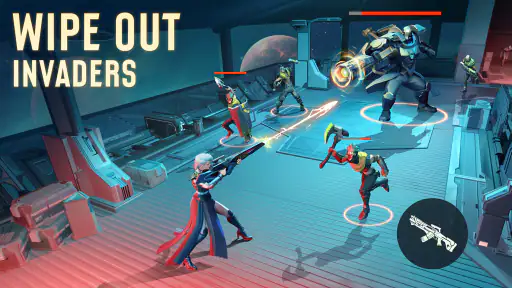
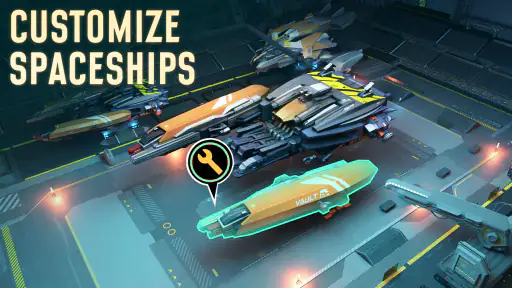
What’s a space game without some epic battles? Foundation: Galactic Frontier doesn’t disappoint in this department. The combat system is robust, offering a mix of skill and strategy. You can customize your fleet with different ships and weapons, tailoring your approach to each encounter.
But it’s not just about going it alone. The game encourages you to form alliances with other players. Teaming up can provide significant advantages, especially during large-scale conflicts. I found the social aspect of the game to be a pleasant surprise—it’s always fun to strategize with friends and take on challenges together.
The social side is a real consideration before you commit. If coordinating with other people sounds enjoyable, alliances can make the experience feel less solitary and give shared objectives more weight. If you would rather play entirely at your own pace, think about whether that kind of cooperation is appealing to you before making it central to your plans. I would treat communication and coordination as part of the game’s potential appeal, not as something every player must enjoy equally.
There is also a trade-off between planning for yourself and following a group’s priorities. Joining in can create a stronger sense of occasion around a conflict, while solo play gives you more freedom to choose when to engage. A newcomer may find it easier to understand the basic rhythm first, then decide whether the social layer adds enjoyment or pressure. That way, you are not agreeing to a style of play before you know what you want from it.
Engaging Storylines and Missions
Beyond the mechanics, the game also offers a rich narrative experience. As you explore the galaxy, you’ll encounter a variety of missions and storylines. These quests add depth to the game, making it more than just a series of tasks. The stories are well-written and keep you invested in the fate of your empire.
Each mission felt unique and added layers to the overarching plot. Whether it was negotiating with alien species or defending my territory from invaders, I was always eager to see what the next chapter would bring.
The story and management elements serve different moods. Missions give you a reason to care about what is happening in the wider setting, while resource decisions ask you to think about the practical state of your empire. If you mainly want a narrative you can follow without pausing to manage anything, a linear science-fiction adventure may suit you better. If you like having a plot alongside strategic choices, the combination here is more likely to hold your attention.
For someone deciding whether to keep playing after the opening, I would use a simple test: do the missions make you curious about what comes next, and do the strategic tasks feel like decisions rather than chores? If both answers are yes, the mix is doing its job. If you enjoy the story but resent the management, or enjoy the planning but skip the narrative, your preference may point toward a more specialized game in either direction.
Final Thoughts
Overall, Foundation: Galactic Frontier is a stellar addition to the mobile gaming world. It combines beautiful graphics, engaging gameplay, and a compelling narrative to create an experience that’s hard to put down. If you’re looking for a game that offers both depth and entertainment, this is definitely worth a download.
So, what are you waiting for? Embark on your own adventure in the vastness of space. Trust me, you won’t regret it!
My recommendation is strongest for players who like a continuing strategy project, enjoy science-fiction settings, and are comfortable learning through guided play. It is less suited to someone who wants a quick match with no ongoing decisions, dislikes optional in-app purchases on principle, or prefers a story that never asks them to manage an empire. Those are not flaws for every player, but they are useful filters before you install.
If you are still unsure, I would start with the free experience and judge it by the first few sessions rather than by the size of its setting. Notice whether the interface makes your next action understandable, whether checking back feels satisfying, and whether the missions give you a reason to continue. If those parts work for you, the game has a clear place in a mobile strategy rotation; if they do not, a shorter, match-based alternative will probably respect your time better.
Foundation: Galactic Frontier Pros and Cons
Pros
- Intuitive controls enhance the gameplay experience.
- Stunning graphics with detailed space environments.
- Engaging storyline keeps players invested.
- Regular updates add new missions and features.
- Multiplayer mode offers cooperative quests.
Cons
- Occasional lag in high-traffic areas.
- In-app purchases can be quite expensive.
- Requires a constant internet connection.
- Some missions feel repetitive over time.
- Limited character customization options.
This Game in Other Languages
Frequently Asked Questions
What is the main objective of Foundation: Galactic Frontier?
Foundation: Galactic Frontier is a strategic space exploration game where players establish and expand their own galactic empire. The main objective is to explore uncharted territories, gather resources, build advanced technologies, and defend against alien threats. Players must strategize to ensure their empire thrives amidst intergalactic challenges.
Is Foundation: Galactic Frontier available on both Android and iOS platforms?
Yes, Foundation: Galactic Frontier is available for download on both Android and iOS devices. Users can find the game on the Google Play Store and the Apple App Store. It is optimized for various devices, ensuring a smooth gaming experience across different platforms.
Does Foundation: Galactic Frontier require an internet connection to play?
Foundation: Galactic Frontier primarily functions as an online game, requiring a stable internet connection to access all features, including multiplayer modes and leaderboard rankings. However, there are offline components that allow players to enjoy certain aspects of the game without internet access.
Are there in-app purchases in Foundation: Galactic Frontier?
Yes, Foundation: Galactic Frontier includes in-app purchases that offer players the option to buy additional resources, exclusive items, and premium upgrades. These purchases are designed to enhance the gaming experience but are not essential for progressing in the game. Players can still enjoy the game fully without spending money.
What age group is Foundation: Galactic Frontier suitable for?
Foundation: Galactic Frontier is suitable for players aged 12 and above. The game includes strategic thinking, resource management, and mild fantasy violence. It is ideal for teenagers and adults who enjoy complex strategy games with a focus on exploration and empire-building in a sci-fi setting.


