

Football Coach '25
- Reviews
- 4.4
- Version
- 0.43
- Installs
- 100+

Screenshots
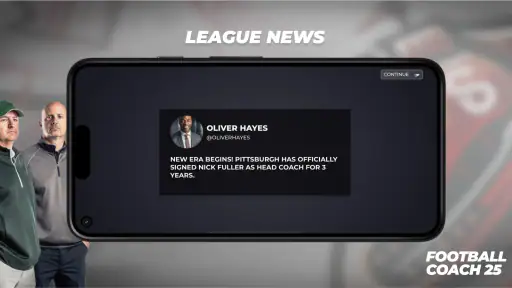
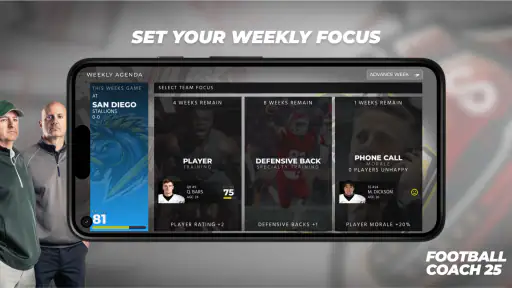
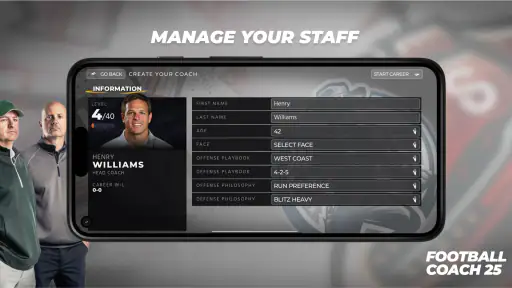
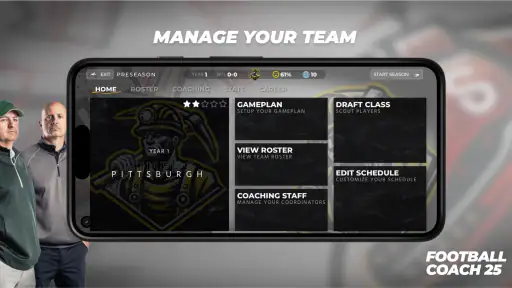
 Analysis by Frivlyz
I like football management games most when they make a decision feel consequential without demanding that I spend an entire evening on it. Football Coach '25 aims for that sweet spot: I take responsibility for shaping a team, then get to see how those choices play out on the virtual field. It is a paid sports game from On Paper Sports, LLC, and its appeal is less about watching football passively than about having a hand in the plans behind it.
That distinction matters when choosing what to play. A fantasy football app usually asks me to manage a roster around real-world performances, while an arcade football game puts the emphasis on controlling the action directly. This game sits in the management-simulation lane instead. I find the fun in assembling a squad, weighing player decisions, and testing a plan through simulated games. If you want to run every play yourself, or follow live matches and make predictions, a different kind of football app will suit you better.
Start with the decisions, not the spectacle
The first satisfying step is thinking about what kind of team I want to build. The game’s management focus gives player choices a purpose beyond collecting names: I’m considering how the roster and the approach fit together. A useful way to play is to make one clear team-building priority at a time. If I change several things at once, it becomes harder to tell which choice helped when the next game unfolds.
That’s also why I would approach development and strategy as connected tasks rather than separate checkboxes. A promising player is only part of a plan; I want to think about what role that player might serve and whether my approach supports it. This makes the process more engaging than simply chasing the most impressive-looking option. The trade-off is that players who dislike comparing choices or thinking several steps ahead may find the managerial work slower than the match itself.
On a normal day, I can imagine opening it during a quiet break, making a focused roster or strategy decision, and leaving the match simulation for when I have a few more minutes to pay attention. That rhythm is more appealing to me than a game that expects constant input. I would avoid starting a session when I only want a quick burst of hands-on action, though: the pleasure here comes from setting up the conditions and then seeing what they produce.
Watch for useful feedback in the match
When the game reaches the field, the important question is not simply whether the team wins. I pay attention to whether the approach I chose seems to be working and whether the result gives me a reason to rethink the roster or plan. That feedback loop is the core pleasure: decide, watch, interpret, and adjust. A win can feel rewarding, but a loss can be useful if it reveals that my choices did not fit together as well as I thought.
For a more satisfying session, I’d resist changing the whole setup immediately after one disappointing result. Keeping most decisions steady makes it easier to judge whether a specific adjustment is worth keeping. This is a small but useful management-game habit: treat a match as information, not just a verdict. It also helps prevent the common frustration of making several reactive changes and then not knowing what actually improved the next performance.
Gaming Stories You May Enjoy

Dancing Road Turns Short Breaks Into a Test of Rhythm and Timing

Super Stylist Makes Every Outfit a Test of Taste and Patience

Dominoes on Your Terms: Who Should Play and Who Should Pass

Pokémon GO Makes the Familiar World Feel New

Chess.com Turns Rematches Into Rivalries, but Community Has Its Costs

Archery Battle 3D Review: Sharp Aiming, Unclear Feedback
What the loop rewards—and what it asks of you
The reward is the feeling that a team’s progress reflects decisions I made, rather than a reflex test alone. The game is best for football fans who enjoy roster building and strategic tinkering, especially those who like imagining how a plan might translate into a result. It is less suited to someone looking for a licensed real-world management database, a deep social league, or direct on-field controls; I would choose a game built specifically around those priorities instead.
It also helps to set expectations around the format. The management premise gives the game room to be thoughtful, but that same focus can make progress feel measured rather than explosive. I would not treat it as a substitute for watching a real match or playing a fast arcade title. Its more modest pleasure is returning to a team, making a considered adjustment, and seeing whether the next simulation rewards patience.
The Virtual Sideline Experience
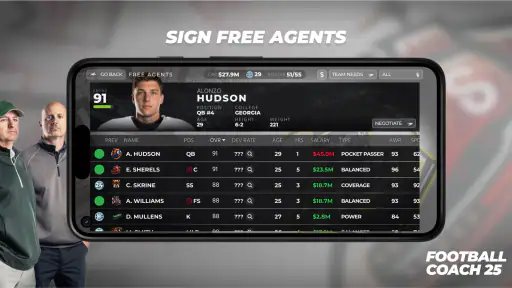
From the get-go, Football Coach '25 immerses you in the role of a head coach. You’re not just a spectator; you’re the brains behind the team. The app offers a plethora of features that make you feel like you’re standing on the sidelines, headset on, calling the shots. You get to draft, trade, and develop players. The interface is slick, making navigation a breeze, even if you’re new to football management games.
Building Your Dream Team
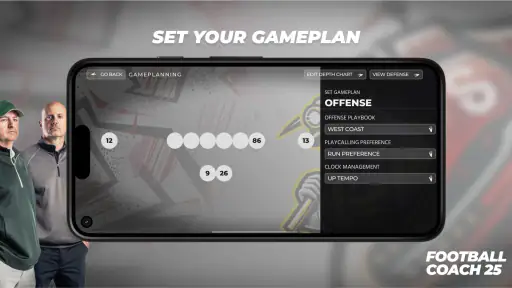
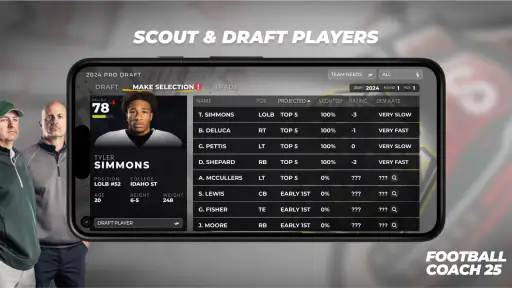
The player development aspect is where the game truly shines. You’ll be scouting players, analyzing stats, and making those tough calls that can make or break your season. The depth of this feature is impressive – it feels like you’re part of an actual NFL draft room, minus the pressure of making a million-dollar mistake! The ability to customize playbooks and strategies adds a layer of realism that keeps you coming back for more. It’s like putting together a puzzle, and when the pieces fit, it’s incredibly satisfying.
For me, roster building is most interesting when I set a simple rule before I start: decide what weakness I’m trying to address, then compare candidates against that need instead of getting distracted by a single attractive stat. It is a practical way to make scouting feel purposeful. I would also keep track mentally of the decisions I want to evaluate after a game, rather than trying to judge every player and tactic at once. That turns a broad management screen into a more manageable sequence of questions.
The trade-off is that this kind of detail can ask for patience. If I want a football game to deliver immediate action with minimal planning, time spent weighing development choices may feel like a barrier rather than depth. But for a player who enjoys building a coherent roster, the slower decisions are precisely what make a later result feel earned. I’d recommend approaching the team as a project that develops over sessions, not expecting every individual choice to produce an obvious payoff right away.
Game Day Thrills
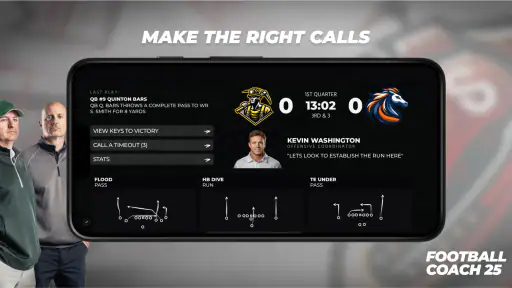
Once you’ve got your team set up, it’s time for game day. The simulation aspect is both tense and exciting. Watching your strategies unfold in real-time is incredibly rewarding. The animations are smooth, and the play-by-play commentary adds an extra level of immersion. You’ll find yourself on the edge of your seat, cheering for your virtual team as if they were the real deal. It’s a rollercoaster of emotions, and honestly, that’s part of the fun!
That match is also the point where I’d decide whether to continue immediately or leave the next adjustment for later. If the result has made one problem stand out, I can return with a focused question in mind instead of randomly tinkering. This makes the loop feel natural: make a plan, get a result, take away one lesson, then reset with a new objective. The next session begins because I want to test an idea, not because the game has to keep me clicking.
There is a useful difference between watching a simulation and controlling every moment. I enjoy having room to anticipate how my choices might play out, but anyone who wants to intervene constantly should know that a management-led format will not scratch the same itch as direct-action football. The match is satisfying when I’m invested in the decisions that led to it; without that interest in preparation, its slower pace may not hold my attention.
And let’s not forget the community aspect. Football Coach '25 connects you with other aspiring coaches. You can share tips, strategies, and even engage in friendly competitions. It’s a fantastic way to test your skills against fellow enthusiasts and learn new ways to dominate the field.
Price, audience, and a sensible first session
The game costs $3.99, so I’d think of it as a paid, focused hobby rather than a free football companion to dip into without commitment. It has an Everyone age rating, and its 4.4 average comes from around a dozen ratings, with a small number of written reviews. The audience is still relatively small, with over a hundred installs, so I would not choose it expecting the broad player base or constant buzz of a major sports franchise.
It was released on October 9, 2024, and version 0.43 requires Android 6.0 or later. Those details make it easier to judge fit before paying: the price makes sense if you already enjoy management sims and expect to return for multiple rounds of decisions, but it is a less convincing purchase if you only want a quick football diversion. I’d also check that my device meets the minimum system requirement before installing.
For a first session, I’d avoid trying to optimize everything. I’d build a team with one or two priorities in mind, choose an approach I can explain to myself, and watch what happens before making major changes. That gives me a baseline and keeps early experimentation from turning into guesswork. If I enjoy that process, the game has a clear reason to earn another visit; if I mainly want to control a player on the field, I’ll know quickly that I should pick another style of football game.
Final Whistle
In conclusion, if you’re a football aficionado or just someone who loves a good strategy game, Football Coach '25 is a must-have. It combines the thrill of football with the strategic depth of a management sim, all wrapped up in a user-friendly package. So, if you’re ready to channel your inner Bill Belichick and lead your team to victory, give this app a shot. It’s not just a game; it’s an experience. Who knows, maybe you’ll discover your new favorite pastime!
Football Coach '25 Pros and Cons
Pros
- Realistic player statistics
- Deep tactical customization
- Engaging career mode
- Frequent updates
- User-friendly interface
Cons
- Limited free version
- In-app purchases
- Requires constant internet
- High battery usage
- Steep learning curve
Frequently Asked Questions
What platforms is Football Coach '25 available on?
Football Coach '25 is available for download on both Android and iOS platforms. Users can find the app on the Google Play Store for Android devices and the Apple App Store for iOS devices. Ensure your device meets the minimum system requirements for a smooth gaming experience.
Does Football Coach '25 require an internet connection to play?
Football Coach '25 primarily offers an offline gaming experience where users can enjoy coaching their team without an internet connection. However, certain features, such as multiplayer modes or in-game purchases, might require an active internet connection to function properly.
Are there in-app purchases in Football Coach '25?
Yes, Football Coach '25 includes in-app purchases. Players can buy various items to enhance their gaming experience, such as premium content, team upgrades, and special coaching tools. While these purchases can enhance gameplay, they are not mandatory to fully enjoy the game.
What age group is Football Coach '25 suitable for?
Football Coach '25 is designed for players aged 12 and above. The game contains strategic elements and sports content that is suitable for teenagers and adults who enjoy managing and coaching football teams. Parents can rest assured that the content is appropriate for this age group.
How often is Football Coach '25 updated?
The developers of Football Coach '25 are committed to providing regular updates to enhance the user experience. Updates may include bug fixes, new features, or seasonal events. Players are encouraged to keep the app updated to enjoy the latest content and improvements.


