

Flashback: Tricky Fun Riddles
- Reviews
- 4.8
- Version
- 1.8.8
- Installs
- 10,000,000+

Screenshots







 Analysis by Frivlyz
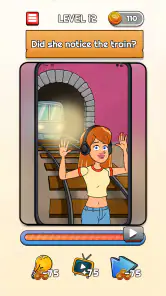
When I have a few minutes to fill and want something more engaging than another scroll through my phone, I look for a puzzle that gets me thinking without demanding a long setup. Flashback: Tricky Fun Riddles is built around that quick mental challenge: read a puzzle, work out what it is really asking, and try a different angle when the obvious answer fails. I find that format especially handy in a waiting room or between errands, when I want a small, satisfying task rather than a game that needs my full attention for an hour.
Engaging Gameplay
One of the first things that struck me about Flashback: Tricky Fun Riddles is its engaging gameplay. The app offers a plethora of riddles that range from simple to downright perplexing, ensuring that there’s something for everyone. As someone who relishes a good mental workout, I found the variety refreshing. The riddles are cleverly crafted, requiring you to think outside the box, and often, the solutions were delightfully unexpected. It’s an excellent way to keep your brain sharp and entertained.
The early goal is refreshingly clear: solve the puzzle in front of you and keep moving. That gives each short session a natural shape, even if I only have time for one or two riddles. A useful habit is to read a question twice before tapping an answer. The wording may be doing more work than it first appears, and noticing a qualifier or an unusual assumption can be more valuable than rushing to respond.
I also get more out of a tricky puzzle when I pause before using any help the game makes available. I try to name the assumptions I am making, then test one at a time: am I taking a word literally, imagining a familiar situation, or overlooking a simpler interpretation? This little routine makes the solution feel earned rather than lucky. If I am still stuck, stepping away for a minute can be better than repeatedly guessing; returning with fresh eyes often changes what I notice.
That approach makes the game a good fit for people who enjoy wordplay, lateral thinking, and compact challenges. It is less suitable if you mainly want a long story, elaborate controls, or a puzzle game built around arranging pieces on a board. The pleasure here depends on interpreting a prompt, so anyone who dislikes riddles or finds ambiguous wording irritating may prefer a more visual, rule-driven puzzle instead.
User-Friendly Interface
Another aspect I appreciated was the app’s user-friendly interface. Navigating through the different levels and sections is a breeze, even for those who might not be tech-savvy. The design is clean and colorful, offering just the right amount of visual stimulation without being overwhelming. The developers have clearly put thought into making the app accessible to a wide audience, which is a big plus in my book.
That straightforward presentation helps in ordinary moments when I do not want to learn a complicated control scheme before starting. For example, if I am waiting for a friend who is running late, I can open a puzzle, focus on its wording, and put the phone away when they arrive. It works better as a pocket-sized diversion than as a game I need to schedule time for. The trade-off is that the simple interface does not itself add much depth; most of the variety has to come from the riddles and how I interpret them.
Gaming Stories You May Enjoy

Dancing Road Turns Short Breaks Into a Test of Rhythm and Timing

Super Stylist Makes Every Outfit a Test of Taste and Patience

Dominoes on Your Terms: Who Should Play and Who Should Pass

Pokémon GO Makes the Familiar World Feel New

Chess.com Turns Rematches Into Rivalries, but Community Has Its Costs

Archery Battle 3D Review: Sharp Aiming, Unclear Feedback
Compared with familiar alternatives, this is a different kind of mental break from a match-three game, a number-placement puzzle, or a crossword. Those formats usually ask me to recognize patterns across a board, fill a grid, or build answers from clues. Here, the central task is to question my first interpretation. I would choose a grid puzzle when I want steady, methodical progress, but reach for this when I want a quick surprise and a chance to test flexible thinking.
Challenging Levels
As you progress through the game, the riddles become increasingly challenging, which I found to be both exciting and motivating. It’s not just about solving the riddles; it’s about doing so in the shortest time possible, which adds a layer of competition. Whether you’re competing against yourself or trying to beat a friend’s score, the app provides a satisfying sense of accomplishment every time you master a tricky riddle.
The gradual rise in difficulty gives me a reason to keep going, but it also means the game is not equally relaxing at every point. An easy puzzle can be a pleasant warm-up; a stubborn one can turn a spare minute into a longer bout of trial and error. I would not treat speed as the only measure of success. Reading carefully and arriving at the answer with a sound explanation is more satisfying to me than tapping quickly and hoping a guess lands.
Progress feels most rewarding when I notice a change in my own approach: I become less attached to the first answer that comes to mind and more willing to inspect the phrasing. That is a more useful signal than simply counting how many puzzles I have cleared. If I am playing with another person, I like asking each of us to explain the reasoning, not just call out an answer. It turns a solo-style riddle into a brief conversation without requiring a separate game mode.
There is a limit to that appeal. Riddle difficulty can feel subjective: one puzzle may click immediately for one player and seem oddly phrased to another. When I hit that point, I would rather take a break than assume I am missing something obvious. The game suits short, focused bursts, but players who need every challenge to have a transparent, step-by-step logic may find the occasional leap in interpretation less satisfying.
“It’s not just a game; it’s a workout for your brain!”
Community and Updates
One of the standout features is the active community that surrounds the app. You can share riddles, solutions, and even create your own puzzles to challenge others. This social aspect adds an extra layer of fun and keeps the game fresh. Plus, the developers are committed to regularly updating the app with new content, ensuring that players always have something new to look forward to.
The social side is best treated as an optional extension of the core puzzle-solving, rather than a reason to expect every session to be competitive. Sharing a riddle can be a simple way to compare interpretations with a friend: I can ask what they think the wording means before revealing the answer. That works particularly well when one of us is stuck, because hearing another person’s first impression can expose the assumption we both took for granted.
There is also a practical trade-off in making a puzzle for someone else. A riddle that seems clever in my head may be confusing on the screen if its wording depends on context I forgot to include. I would keep a homemade challenge short, read it aloud, and check that the intended answer follows from the actual words rather than from information only I know. That small editing test makes sharing more enjoyable and avoids turning a playful challenge into an argument about unclear phrasing.
For anyone wondering whether this is a good game to keep returning to, the appeal is the steady supply of small reasoning tasks and the satisfaction of recognizing a trick in the wording. It is not the right choice if what keeps you interested is a deep campaign, a complex collection system, or a detailed narrative arc. Its retention comes from wanting to solve the next riddle, so my advice is to play in short sessions and stop when the questions start feeling like chores. That keeps the challenge enjoyable rather than making progress feel like an obligation.
The game is free to download, with optional in-app purchases priced from $0.99 to $7.99 per item. I would think of those purchases as a personal choice, not a requirement for enjoying riddles: if I am happy to work through a puzzle at my own pace, I can begin without paying. It is also rated Teen, so I would keep that age guidance in mind when choosing a game for a younger player. Radiant Cat Studio is the developer, and the game’s current version is 1.8.8, with Android 7.0 or later required.
Its reach suggests that this style has found plenty of puzzle fans: it has an average rating of 4.8 from around 403,000 ratings, with over 10 million installs and around 3,000 written reviews. Those figures are useful context, but I would not use popularity as a substitute for fit. What matters more is whether you enjoy pausing over a sentence and testing a less obvious reading. If that sounds satisfying, the format has a clear reason to earn a place on your phone.
The pacing works best when I let a solved riddle be a stopping point rather than feeling compelled to continue indefinitely. A commute with a few interruptions is a natural use case: I can tackle a puzzle while seated, close the game when my stop arrives, and pick it up again when I have another quiet moment. I would not choose it for a situation where I need to keep one eye on a fast-moving event or where interruptions would make it hard to think through a clue.
For people deciding between this and another puzzle app, my dividing line is simple. Pick a visual or number-based game if you want clear board states and a more predictable chain of moves. Pick this one if you like language, surprise answers, and the small thrill of realizing that a question was not asking what you assumed. Neither style is automatically better; they serve different moods, and this one is strongest when I am curious rather than looking for a long, structured challenge.
In conclusion, Flashback: Tricky Fun Riddles is a fantastic app for anyone looking to engage their brain in a fun and challenging way. Its combination of clever riddles, a user-friendly interface, and a vibrant community makes it a must-try for puzzle enthusiasts. So, if you’re in the mood for a mental workout that’s both entertaining and rewarding, give it a try. Trust me; your brain will thank you!
Flashback: Tricky Fun Riddles Pros and Cons
Pros
- Engaging riddles that challenge your intellect.
- Visually appealing and intuitive interface.
- Regular updates with new riddles and puzzles.
- Suitable for all ages
- making it family-friendly.
- Helps improve problem-solving and critical thinking.
Cons
- Some riddles may be too difficult for beginners.
- Limited hints can lead to frustration.
- Occasional in-app purchases for extra features.
- Ads can be intrusive during gameplay.
- Requires internet connection for the latest updates.
Frequently Asked Questions
What is the main objective of Flashback: Tricky Fun Riddles?
Flashback: Tricky Fun Riddles is designed to challenge your brain with a series of intriguing and mind-bending puzzles. The main objective is to solve these riddles and puzzles by thinking outside the box. Each level presents a unique challenge that encourages players to use logical reasoning and creativity to uncover the solution, making it both educational and entertaining.
Is Flashback: Tricky Fun Riddles suitable for all age groups?
Yes, Flashback: Tricky Fun Riddles is designed to be suitable for a wide range of age groups. The puzzles are crafted in a way that they can be enjoyed by both younger audiences and adults. However, younger children may need some assistance due to the complexity of certain riddles. It is a great game for family entertainment and educational purposes.
Does Flashback: Tricky Fun Riddles require an internet connection?
No, Flashback: Tricky Fun Riddles does not require a constant internet connection to play. This makes it convenient for users who wish to enjoy the game on the go without worrying about their data usage or connecting to Wi-Fi. However, some features like updates or additional content might require internet access.
Are there any in-app purchases in Flashback: Tricky Fun Riddles?
Yes, Flashback: Tricky Fun Riddles does offer in-app purchases. These typically include hints or solutions for players who might be stuck on a particularly challenging puzzle. While the game is free to download and play, purchasing hints can enhance the gaming experience, especially for those who wish to progress faster through difficult levels.
How does Flashback: Tricky Fun Riddles enhance cognitive skills?
Flashback: Tricky Fun Riddles enhances cognitive skills by stimulating critical thinking and problem-solving abilities. The game encourages players to analyze situations, identify patterns, and apply logic, which can significantly improve mental agility. Additionally, it fosters creativity and lateral thinking, making it a valuable tool for cognitive development in both children and adults.


