

Five Nights at Freddy's 3
- Reviews
- 4.5
- Version
- 2.0.3
- Installs
- 500,000+

Screenshots
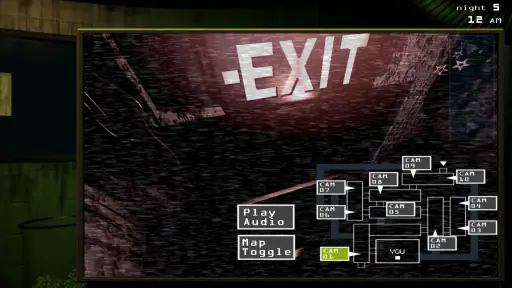
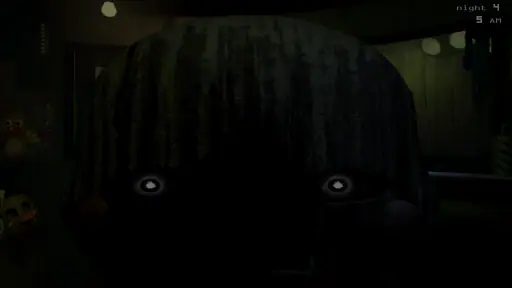
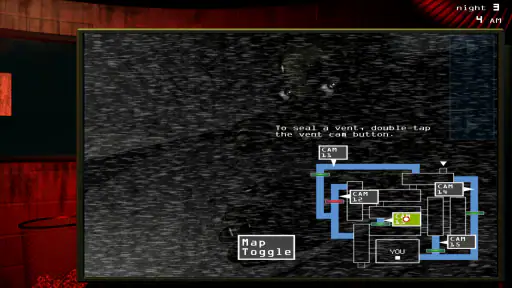
 Analysis by Frivlyz
I came to Five Nights at Freddy's 3 expecting a familiar set of jump scares, but what kept me playing was the way each small decision changes the pressure of a night. This is an action-focused horror game from Clickteam USA LLC, built around watching, reacting, and trying to stay calm while the room’s systems become harder to manage. Its appeal is less about roaming through a large world and more about making a few tense choices under constant threat.
The game suits players who enjoy learning a horror game through careful observation rather than quick reflexes alone. I found that the best moments came when I stopped treating every camera check as routine and started asking what information I needed right now. That shift makes a short session feel involving, though it also means the game can feel stressful if you would rather explore freely or take breaks from high-pressure play.
How a Night Turns into a Loop
I frame each night as a small decision cycle: check what matters, respond to the immediate problem, then see whether that choice gives me enough breathing room to continue. What makes the loop worth repeating is not simply reaching the end, but recognizing which part of my attention slipped and carrying that lesson into the next attempt. That perspective makes the feedback easier to use, even when a reset still feels tense.
The first action: look, locate, and decide
Set 30 years after the closure of the infamous Freddy Fazbear's Pizza, the game places you in a horror-themed attraction called Fazbear's Fright. Your job, as always, is to survive five nights, but this time, it’s in a place that’s designed to be haunted. The developers have done an incredible job at recreating the chilling atmosphere that made the previous games so successful, while also introducing new elements to keep players on their toes.
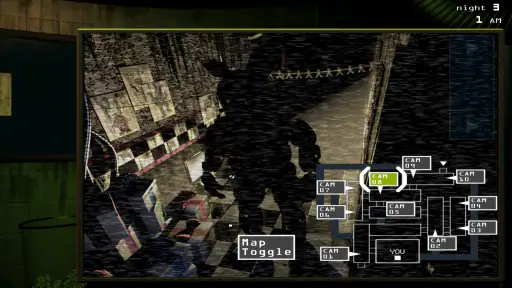
The first useful habit is to make each camera visit purposeful. Rather than flicking through views simply because the room feels quiet, I try to check where the immediate danger is and then return to the controls that help me respond. That keeps the screen-watching from becoming aimless and makes the next action feel like a choice rather than a reflex. If you are new to the series, expect a learning period: the interface asks you to divide your attention, and the tension can make simple decisions feel less obvious than they are.
A practical way to approach a difficult stretch is to prioritize the threat you can actually track, then deal with a system problem when it becomes relevant. Trying to do everything at once is a tempting mistake; it can leave you clicking around without a clear plan. I had a better time when I treated every camera check as a quick question with a purpose, not as a full inspection of every room. This is a small adjustment, but it gives the night a rhythm and makes losses easier to understand.
Feedback comes as clues, not comfort
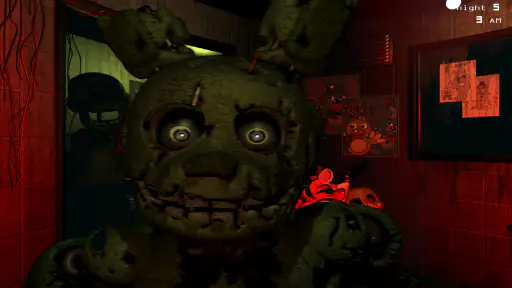
What I love about Five Nights at Freddy's 3 is its unique approach to gameplay. You’re not just sitting and waiting; you’re actively managing systems, sealing vents, and keeping a watchful eye on the cameras. The game introduces a new animatronic, Springtrap, who is as creepy as they come. Your task is to monitor his movements and ensure he doesn’t get too close. The game also introduces phantom animatronics, which are hallucinations that can cause system malfunctions. It’s a clever twist that adds another layer of complexity to the game.
Gaming Stories You May Enjoy

Dancing Road Turns Short Breaks Into a Test of Rhythm and Timing

Super Stylist Makes Every Outfit a Test of Taste and Patience

Dominoes on Your Terms: Who Should Play and Who Should Pass

Pokémon GO Makes the Familiar World Feel New

Chess.com Turns Rematches Into Rivalries, but Community Has Its Costs

Archery Battle 3D Review: Sharp Aiming, Unclear Feedback
That combination creates a useful distinction between information and interruption. Springtrap’s movement is the problem to read; phantom encounters are pressure that can disrupt the tools you rely on. When something goes wrong, I find it more helpful to identify which part of my routine has been interrupted than to mash through every available control. The game rewards composure: a brief pause to decide what needs attention can be better than reacting to every sound as if it were the same warning.
The feedback is intentionally uneasy rather than reassuring. Cameras and audio cues help you form a picture, but they do not remove uncertainty, and that is where much of the suspense comes from. I would play with sound available if you can, since the audio is part of how the game communicates tension. At the same time, players who need a quiet, low-stimulation game should know that sudden cues and a dark presentation are central to the experience, not incidental details that can be ignored.
Reward: understanding the pattern
The graphics have a distinct style that complements the horror theme perfectly. The dim lighting and eerie sounds create an immersive experience that keeps you on the edge of your seat. The sound design is particularly effective, with unsettling noises and sudden audio cues that are sure to make you jump. It’s this combination of visuals and sound that makes the game so terrifying yet addictive.
The reward I value most is not a collectible or a long list of upgrades; it is noticing that a failure had a cause I can learn from. A camera check at the right moment, a more deliberate response to a malfunction, or simply keeping track of what I last saw can turn a chaotic attempt into a more informed one. That makes the game a good fit for players who enjoy improving through observation. If you prefer a clear stream of rewards and steady power growth, this is a more austere kind of progression: the satisfaction comes from surviving and understanding, not from building a stronger character.
For an everyday use case, I would pick it up when I have a quiet stretch and want a focused horror session, rather than trying to play while chatting, commuting, or splitting attention between other tasks. A short break after a tense attempt can help, too; returning with a fresh head makes it easier to remember what you were trying to monitor. That is a more useful approach than repeatedly restarting in frustration, especially when the previous loss has already taught you something about your habits.
When a reset feels fair—and when it doesn’t
Failure is part of the loop, but not every reset feels equally satisfying. When I can connect a mistake to a missed cue or a poor priority, starting again has a purpose: I have a specific adjustment to test. When a night becomes a blur of scares and system trouble, a loss can feel harsher because it is harder to tell what I should change. I recommend making one deliberate adjustment at a time instead of changing your whole routine after every failure; otherwise, it becomes difficult to tell which decision helped.
The game’s repeated night structure makes it easy to understand why another attempt begins: you want to see whether you can keep your plan together for longer. That is compelling for someone who likes tense, repeatable challenges, but it can also make the experience feel demanding if you are looking for a story you can absorb without setbacks. I would not choose it for a relaxed wind-down if jump scares leave you keyed up. Its Teen age rating is worth considering for younger players and for anyone sensitive to frightening imagery or abrupt sounds.
Compared with action games that emphasize movement, combat, and large environments, this one is deliberately constrained. The focus is on surveillance and managing threats from a fixed workplace, so players who enjoy tactical attention may prefer it to a more frantic horror game. On the other hand, if you want to explore rooms directly, fight enemies head-on, or feel powerful as you progress, another action-horror title will likely suit you better. The tension here comes from limited control and imperfect information, not from mastering a wide set of attacks.
Practical fit and value
The game costs $2.99, and I would judge that value by whether its particular kind of replayable pressure appeals to you. It has an average rating of 4.5 from around 39,000 ratings, with roughly 7,500 written reviews, and more than 500,000 installs. Those figures suggest an established audience, but they cannot tell you whether you personally enjoy camera-based survival. The game was released on March 6, 2015; the current version is 2.0.3 and it requires Android 6.0 or later. It is rated Teen, so I would check that fit before handing it to a younger player.
It is also worth setting expectations about the format: this is a compact, focused horror game, not a broad action adventure. I would recommend it to series fans, players who like monitoring several things at once, and anyone who finds satisfaction in learning a tense routine. I would skip it if you dislike jump scares, want a forgiving pace, or prefer games where exploration and direct combat are the main attractions. The strongest reason to choose it is its specific mix of surveillance, system management, and uncertainty; the same narrow focus is also its clearest limitation.
The loop verdict
In conclusion, if you’re into horror games, Five Nights at Freddy's 3 is a must-play. It’s a game that really tests your nerves and keeps you engaged with its strategic gameplay and chilling atmosphere. Whether you’re a returning fan or a newcomer to the series, you’re bound to appreciate the fresh twists and the familiar frights. Just remember to keep your cool and try not to scream too loud!
My recommendation comes with one qualification: go in for the tension and the mental routine, not for a relaxed horror story or a constantly expanding set of abilities. I enjoyed the way each attempt asks me to read the situation, act with purpose, and learn from the result. If that cycle sounds satisfying, this is an easy game to return to for another nerve-testing night; if it sounds exhausting, its focused design will not magically become a different kind of experience.
Five Nights at Freddy's 3 Pros and Cons
Pros
- Immersive horror experience with intense atmosphere.
- Unique story continuation from previous games.
- Strategic gameplay with resource management.
- Challenging puzzles to solve throughout the game.
- Detailed graphics enhancing the eerie setting.
Cons
- Limited replay value after completing the story.
- Complexity may overwhelm new players.
- Jumpscares can be too intense for some.
- Requires patience and attention to detail.
- Lacks multiplayer or social features.
This Game in Other Languages
Frequently Asked Questions
What is the main objective of Five Nights at Freddy's 3?
In Five Nights at Freddy's 3, the main objective is to survive the night shifts as the newly hired security guard at Fazbear's Fright, a horror attraction based on the infamous Freddy Fazbear's Pizza franchise. Players must monitor security cameras and manage various systems to protect themselves from the animatronic Springtrap and phantom animatronics that haunt the facility over five terrifying nights.
How does the gameplay in Five Nights at Freddy's 3 differ from previous versions?
Unlike previous iterations, Five Nights at Freddy's 3 introduces a single animatronic, Springtrap, along with several phantom animatronics that cannot physically harm the player but can cause system malfunctions. The gameplay revolves around maintaining systems like audio, ventilation, and cameras to prevent Springtrap from reaching the player's security office. This version emphasizes strategic management over quick reflexes, adding a new layer of challenge.
What are the system requirements for playing Five Nights at Freddy's 3 on mobile devices?
Five Nights at Freddy's 3 is optimized for both Android and iOS devices. For Android, it requires a minimum of Android version 4.1 and about 100 MB of free storage space. For iOS users, the game requires iOS 8.0 or later and is compatible with iPhone, iPad, and iPod touch. A stable internet connection is recommended for downloading and updating the game.
Is Five Nights at Freddy's 3 suitable for younger audiences?
Five Nights at Freddy's 3 is rated for players aged 12 and above due to its horror-themed content, including jump scares and a tense atmosphere. It may not be suitable for younger children or those who are easily frightened. Parents are advised to consider the game's themes and content before allowing younger players to engage with it.
Are there any in-app purchases or additional content available in Five Nights at Freddy's 3?
Five Nights at Freddy's 3 does not feature in-app purchases, and the game provides the full experience upon purchase. Players can enjoy the complete storyline and content without the need for further financial investment. However, fans of the series may wish to explore additional games and merchandise related to the Five Nights at Freddy's universe for a broader experience.


