

FarmVille 2: Country Escape
- Reviews
- 4.5
- Version
- 29.4.108
- Installs
- 50,000,000+

Screenshots


 Analysis by Frivlyz
I like farming games best when they give me something satisfying to check on without turning every spare moment into a chore. That is the appeal of FarmVille 2: Country Escape: it turns a little patch of countryside into a project you can revisit, with crops, animals, crafted goods, and gradual expansion. I’d consider it for a shared household device too, but I’d set expectations early: this is a personal, ongoing game, not a family planner or a game designed around taking turns.
A small routine that works around a busy day
A useful way to approach the farm is to treat each visit as a short planning session rather than trying to clear every available task. Before planting, I’d check what I’m currently trying to make or complete, then choose crops and animal goods that support that goal. That simple habit helps avoid a farm full of unrelated items and gives each return visit a clear purpose.
For example, after school or work, a player might collect what is ready, start a new batch of crops, feed the animals, and leave a longer task for later. The game’s relaxed pace suits this kind of stop-and-return routine better than a game that demands a long uninterrupted session. It can be a pleasant little break, though players who want a self-contained activity with a definite finish may find its ongoing progression less satisfying.
One farm, one clear player
On a household tablet or phone, I would decide who the main player is before starting. The farm develops through repeated choices, so several people sharing one play space can easily end up planting for different goals, spending resources in different ways, or rearranging the layout without realizing what the other person had planned. That is not a serious problem if everyone enjoys improvising, but it can be frustrating for someone who likes a carefully organized farm.
I’d make a simple household rule: ask before changing a layout or using something another player is saving for a particular task. If different family members want separate progress, separate play spaces are a better fit than trying to make one farm serve everyone. I would not assume that a shared device automatically means shared progress or that the game provides family-specific account boundaries; it is worth checking the device and account setup before anyone invests time in a farm they expect to keep distinct.
Cooperation without turning it into an obligation
The social side is best treated as optional. Joining a co-op and trading can add a reason to coordinate, but I would not make a household member’s enjoyment depend on everyone being online together. A good arrangement is to agree on a modest shared aim—such as helping with a task when convenient—rather than making daily participation feel like a duty. That keeps the community features friendly instead of adding another responsibility to a busy schedule.
This also helps answer a common practical question: can someone enjoy the game alone? The farm’s core loop of growing, raising, crafting, and expanding does not require a household group. Social play is an extra route for people who like exchanging help, not a prerequisite for someone who simply wants a quiet farming game.
Gaming Stories You May Enjoy

Dancing Road Turns Short Breaks Into a Test of Rhythm and Timing

Super Stylist Makes Every Outfit a Test of Taste and Patience

Dominoes on Your Terms: Who Should Play and Who Should Pass

Pokémon GO Makes the Familiar World Feel New

Chess.com Turns Rematches Into Rivalries, but Community Has Its Costs

Archery Battle 3D Review: Sharp Aiming, Unclear Feedback
Age, spending, and realistic expectations
The game is rated Everyone, so its general presentation is suitable for a broad audience. Still, an age label is not a substitute for a conversation about purchases. The game is free to start, but it includes optional in-app purchases, with listed item prices ranging from $0.49 to $374.99. In a family setting, I’d agree on a purchase rule before handing over a shared device, and make sure the adult responsible for the store account understands how purchases are handled on that device.
That matters because progression games can make convenience appealing when a player is eager to finish a task or move ahead. I’d treat spending as a deliberate choice rather than part of the basic farming routine. Someone who wants a completely purchase-free experience may still try the game, but should be comfortable ignoring optional offers and progressing at a more patient pace.
Getting Started on the Farm
So, you’ve decided to roll up your sleeves and get farming. Starting out in FarmVille 2: Country Escape is a breeze. The game kicks off with a cozy little tutorial that walks you through the basics. You’ll be planting crops, feeding animals, and building your farm in no time. Trust me, it’s as easy as pie!
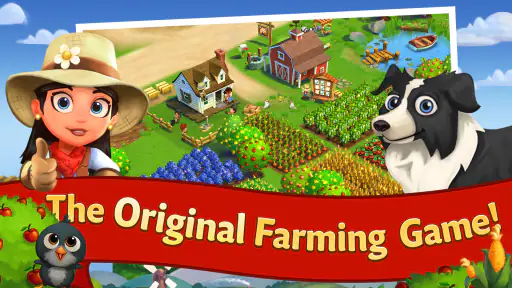
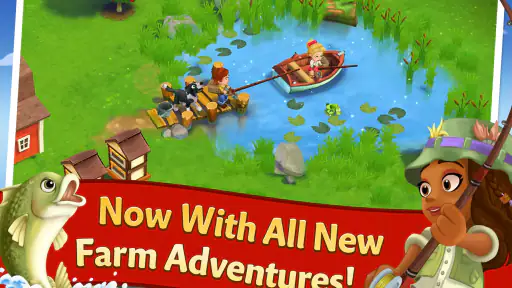
The first thing I noticed was the vibrant graphics. The colors are so lush and inviting, it’s like stepping into a painting. The game’s art style really captures the essence of country life, and it’s a treat for the eyes.
The Joy of Farming
Once you’re up and running, the real fun begins. The game offers a plethora of tasks to keep you busy. From planting and harvesting crops to crafting goods and trading with neighbors, there’s always something to do. And let’s not forget about the adorable animals! Raising chickens, cows, and even goats is both a challenge and a joy.
One of the things I love most about this game is its flexibility. You can play at your own pace, which is perfect for those of us who like to take it slow and steady. Plus, the game doesn’t penalize you for taking a break. Your crops won’t wither away if you step away for a while, so it’s stress-free farming at its finest.
Building and Expanding
As your farm grows, you’ll have the opportunity to expand and build new structures. This is where the game really shines in terms of creativity. You can customize your farm to suit your style, whether you prefer a tidy, organized layout or a more whimsical, eclectic approach.
Expansion isn’t just about aesthetics, though. Each new building unlocks more possibilities, like new crops to plant or products to craft. It’s incredibly satisfying to see your farm evolve from a simple plot of land to a bustling hub of activity.
Community and Social Features
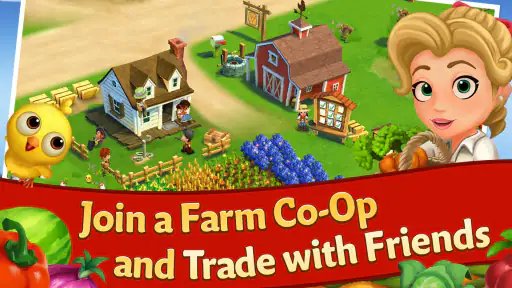
What’s a farming game without a little community spirit? FarmVille 2: Country Escape encourages you to connect with friends and other players. You can join a co-op, trade goods, and even work together to complete special events. It adds a layer of social interaction that makes the game even more engaging.
And don’t worry if you’re more of a lone wolf – the game is perfectly enjoyable solo. But if you do choose to engage with the community, you’ll find it’s a friendly and welcoming place.
Events and Challenges
Speaking of events, there’s always something happening in the world of FarmVille 2: Country Escape. Whether it’s seasonal events or limited-time challenges, there’s always a reason to log in and check out what’s new. These events are a great way to earn special rewards and keep the game feeling fresh and exciting.
One of my favorite events was the Country Fair, where you could showcase your farming prowess and compete against other players. It’s a fun way to test your skills and earn some bragging rights!
Choosing it over other casual games
Among casual games, this one is a better match for players who enjoy building a long-running project than for people who want quick rounds with a clear endpoint. Compared with a simple puzzle game, it asks you to keep track of a farm’s changing needs and to decide what to grow or produce next. In return, it offers a stronger sense of ownership: the land gradually becomes your own arrangement of crops, animals, and buildings.
That ongoing structure is also the main trade-off. If you prefer a game that feels complete after a short session, a puzzle or arcade-style alternative may be more satisfying. If you like checking a plan, making a few decisions, then returning later to see the result, the farm loop makes more sense. I’d choose based on whether you enjoy slow accumulation, not just on whether the country setting looks appealing.
Practical choices that make the farm easier to manage
One non-obvious improvement is to give the farm a functional layout before decorating it heavily. Keeping related activity in an easy-to-scan arrangement makes it simpler to spot what needs attention, especially once you have several buildings and animal areas. Decoration can come later; early on, clarity is more useful than a perfect-looking screenshot.
I’d also resist starting every available production chain at once. A focused approach—choosing one immediate goal, checking which inputs it needs, and working backward from there—reduces the feeling of being pulled in several directions. When an event or challenge is active, decide whether its rewards are actually worth diverting your normal routine. Treating every limited-time activity as mandatory can make a relaxing game feel like homework.
Another useful trade-off is to think of spare goods as flexibility, not clutter. Keeping a modest reserve of items you often need can make the next task smoother, but hoarding everything can make it harder to see what your farm is really short of. I’d use a quick check before committing resources: what is the next thing I want to build or craft, and which ingredients matter for it? That question is more helpful than producing goods simply because a building is available.
What to expect before installing
Zynga’s casual farming game is free to play, has an average rating of 4.5 from around 3.2 million ratings, and has been installed over 50 million times. It first appeared on April 16, 2014, and the current version is 29.4.108, with Android 6.0 as the minimum operating system. Those details make it a well-established option, but they do not change the basic question: do you enjoy incremental farm management enough to return to the same project over time?
I’d recommend it to someone who likes gentle goals, visual customization, and the satisfaction of turning raw farm goods into more useful products. I’d be more cautious if you dislike waiting between steps, feel pressured by timed activities, or want every session to deliver a neat ending. It is also not my first choice for a household that expects one shared farm to behave like separate profiles; decide who owns the progress before making it a communal project.
Final Thoughts
In conclusion, FarmVille 2: Country Escape is a delightful escape into the world of farming. Its vibrant graphics, flexible gameplay, and engaging community features make it a standout in the genre. Whether you’re looking for a relaxing way to unwind or a bustling farm to manage, this game has you covered.
So, if you’re ready to embrace the simple life and get your hands dirty, give FarmVille 2: Country Escape a try. It’s a charming adventure that’s sure to grow on you like a well-tended crop.
FarmVille 2: Country Escape Pros and Cons
Pros
- Great graphics and animations.
- Offline mode available.
- Engaging social features.
- Frequent updates and events.
- Easy to learn for beginners.
Cons
- In-app purchases can be pricey.
- Requires stable internet for online features.
- Repetitive tasks over time.
- Limited energy restricts playtime.
- Advertisements can be intrusive.
Frequently Asked Questions
What is FarmVille 2: Country Escape?
FarmVille 2: Country Escape is a popular farming simulation game available on both Android and iOS devices. Players can build and manage their own farms, grow crops, and raise animals. The game offers a blend of single-player and social features, allowing users to connect and trade with friends.
Do I need an internet connection to play FarmVille 2: Country Escape?
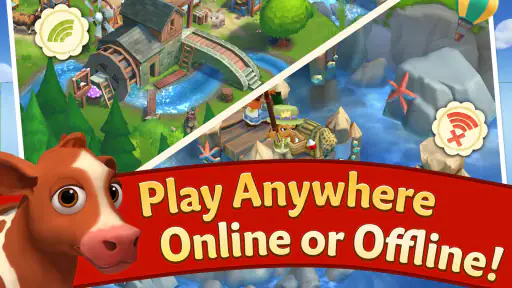
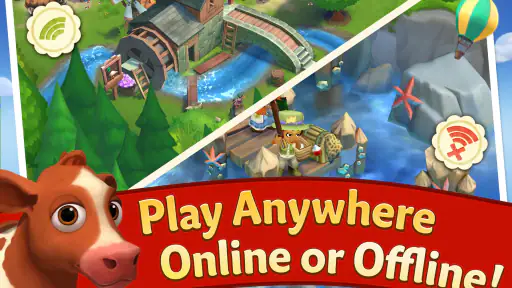
FarmVille 2: Country Escape can be played offline, which is a great feature for those who want to continue farming without an internet connection. However, certain features, like trading and social interactions, require an internet connection to access fully.
Are there in-app purchases in FarmVille 2: Country Escape?
Yes, FarmVille 2: Country Escape offers in-app purchases. Players can buy keys and coins to speed up processes or acquire special items. While the game is free to download and play, these optional purchases can enhance the gaming experience but are not necessary to progress.
How does FarmVille 2: Country Escape differ from the original FarmVille?
FarmVille 2: Country Escape is designed for mobile devices, offering a more flexible and portable farming experience compared to the original FarmVille. It includes new features like offline play, crafting, and a more interactive storyline, providing a fresh take on the classic farming game.
Can I connect FarmVille 2: Country Escape to my social media accounts?
Yes, players can connect FarmVille 2: Country Escape to their Facebook accounts. This allows them to sync their progress across devices, invite friends to play, and participate in social features like co-op farming, enhancing the communal aspect of the game.


