

Farkle Dice Game: Online 10000
- Reviews
- 4.3
- Version
- 2.14.1.27
- Installs
- 500,000+

Screenshots

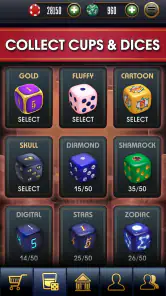





 Analysis by Frivlyz
I picked up Farkle Dice Game: Online 10000 expecting a quick dice diversion, and that is exactly where it makes its best first impression. It takes the familiar push-your-luck idea of Farkle and puts it into a board-game-style mobile format, with online matches, tournaments, and games with friends. After spending time with it, my opinion is fairly clear: it is easy to start, satisfying in short sessions, and more social than a solo dice app, but its long-term place on your phone depends heavily on whether you enjoy repeating the same risk-and-reward decision many times.
The game comes from AppForge Interactive Entertainment FZ-LLC and is free to install. It is listed for Everyone, so the basic concept is approachable for families and casual players rather than aimed at a specialist audience. The current version is 2.14.1.27, and it supports devices running Android 6.0 or later. Those details matter less than the actual question I kept asking while playing: once the initial novelty wears off, does rolling dice against other people still feel worth returning to?
Why the first week feels so inviting
The opening appeal is the clarity of the central choice. You roll dice, collect scoring combinations, and decide whether to bank what you have or risk another roll. That decision is simple to understand but emotionally effective. A modest score can feel safe, while a promising roll tempts me to continue. The possibility of losing an unbanked turn gives every extra roll a little tension without requiring a complicated rulebook.
That makes the game particularly comfortable for short breaks. I can play while waiting for an appointment or during a quiet part of an evening without needing to remember a large collection of abilities, cards, or board positions. The interface is built around the dice and the current score, so the important information is close at hand. For someone who has never played Farkle, the basic rhythm becomes readable quickly: roll, identify the scoring dice, set them aside, and judge whether the next attempt is worth the danger.
Playing with friends gives the first sessions more personality. A familiar opponent changes the meaning of a lucky roll, and a risky decision becomes something to discuss afterward. Online multiplayer also gives the game a stronger reason to exist than a purely offline dice simulator. I do not need a large group gathered around the same table, yet I still get the feeling that another person is reacting to my choices rather than simply watching an automated score counter.
The tournament element adds another layer for players who want more structure than an occasional private match. I found that this is useful when I need a reason to return, because a single game can otherwise feel self-contained. At the same time, the tournament format is not automatically a benefit for everyone. If you prefer relaxed play with no pressure to keep up, a friendly match is likely to suit you better than treating every session as a competition.
The free entry point is sensible for this kind of game. I can understand the appeal before deciding whether it deserves regular attention, and the low learning curve means that friends do not need to study the rules before joining. The trade-off is that optional purchases range from $0.99 to $99.99 per item. I would approach those purchases carefully. A dice game is most enjoyable when decisions feel like decisions, not when spending starts to feel connected to progress or competitive comfort.
Gaming Stories You May Enjoy

Dancing Road Turns Short Breaks Into a Test of Rhythm and Timing

Super Stylist Makes Every Outfit a Test of Taste and Patience

Dominoes on Your Terms: Who Should Play and Who Should Pass

Pokémon GO Makes the Familiar World Feel New

Chess.com Turns Rematches Into Rivalries, but Community Has Its Costs

Archery Battle 3D Review: Sharp Aiming, Unclear Feedback
The small decisions that separate luck from judgment
One of the more useful habits I developed was to stop treating every scoring roll as an invitation to continue. Early in a match, I may accept a smaller banked score if the alternative is built on a narrow chance. Later, when I am behind, the calculation changes. I might take a risk that I would reject while leading. This makes the game more interesting than simply hoping for high rolls, because the same result can be correct or foolish depending on the score situation.
Another practical tip is to decide what kind of session I want before starting. If I have only a few minutes, I play with the goal of making clean, conservative choices rather than chasing a dramatic comeback. If I am playing with a friend, I am more willing to let the match develop and accept a few bad turns. That distinction prevents the game from feeling frustrating when I am not in the mood for a tense contest.
I also learned to pay attention to the emotional effect of a lost turn. Farkle is designed around that sting, and it can be entertaining in moderation. However, if I have already had several unlucky turns, continuing immediately can turn a light game into a repetition of irritation. Taking a break is not just general advice; it is especially relevant here because the core loop does not change to compensate for a bad run.
What keeps it useful after the novelty fades
After the first week, the question becomes whether online competition and social play are enough to support a habit. For me, the answer is conditional. The game has recurring value when I have friends who are willing to play, or when I enjoy the tournament side and want a compact competitive routine. Without either of those motivations, the basic dice loop can start to feel familiar very quickly.
That is not necessarily a flaw. Board games often depend on the people around them, and Farkle is a particularly clear example. The rules are light enough to leave room for conversation, teasing, and rematches. If I treat it as a social game rather than a deep strategy title, its repetition feels more acceptable. It works well as a shared activity that happens to fit on a phone.
The online format is also useful for people whose friends are not in the same place. A traditional physical dice set requires everyone to be present and someone to manage the score. Here, the app handles the rolling and scoring presentation, while the players focus on decisions and competition. That convenience is the strongest reason I would recommend it over carrying a physical set for an impromptu match.
Still, I would not choose it as my main board-game app if I wanted a wide variety of mechanics. A digital collection with word games, strategy games, card games, and puzzles will provide more long-term variety. A physical Farkle set may also be better for a family gathering, especially when people want to talk across the table and share the same screen-free space. This particular game wins on accessibility and remote play, not on breadth or complexity.
The public response suggests that the game has found a substantial casual audience: it has a 4.3 average from around 9.8 thousand ratings, with over 500 thousand installs. I read those figures as evidence of a healthy level of interest rather than proof that every player will enjoy it indefinitely. A dice game can be broadly appealing while still being a poor match for someone who needs constant new content or a deep strategic system.
Who is most likely to keep returning
I think it earns a regular place for three types of players. First are people who already enjoy Farkle and want a convenient online version. Second are friends or relatives looking for a low-pressure competitive game that can be played in short sessions. Third are casual board-game fans who like risk management but do not want to learn a complex ruleset every time they open an app.
It is less suitable for players who dislike luck having a visible effect on the result. Even good decisions can end in a disappointing roll, and a cautious player can still be overtaken by a fortunate opponent. That uncertainty is the identity of Farkle, not a technical problem to be fixed, but it may feel unfair if you prefer games where careful planning usually dominates.
I would also hesitate to recommend it to someone seeking a solo game with a long progression arc. The strongest moments come from the push-and-pull of a match, especially against friends or online opponents. If my ideal mobile game is a story, a puzzle campaign, or a strategy experience with evolving systems, this will probably become a brief side app rather than a lasting favorite.
Maintenance, friction, and the reasons fatigue appears
The maintenance burden is relatively light in terms of mental effort. I do not need to rebuild a deck, learn a new character, or manage a complicated collection before playing. The main upkeep is social: keeping opponents interested, choosing when to enter a match, and deciding whether tournaments fit my schedule. That can be a strength because the game does not demand a large time commitment, but it also means the app relies on my own willingness to create continuity.
There is a subtle difference between a game that is easy to maintain and one that is easy to keep exciting. Farkle is certainly easy to maintain. I can return after a break and understand what I am doing immediately. Yet that same familiarity can make a long session feel repetitive. The core decision remains the same, and the game does not need to become complicated to be good, but players looking for constant surprise may run out of reasons to continue sooner than expected.
Risk fatigue is the biggest issue I noticed. The first few times I lose a large unbanked score, the result feels dramatic. After enough similar turns, the emotional response can flatten. I may still understand the decision, but I no longer feel the same excitement about making it. This is why I prefer several short matches to one extended stretch of repeated play.
Competitive fatigue can appear too. Tournaments are appealing when I want a goal, but they can change a relaxed dice game into something that feels like an obligation. If I start checking the app only because I feel I should protect a position or keep pace, the entertainment value drops. My advice is to use the competitive features as an option, not as a duty. The game is healthier in my routine when I can walk away after a poor result.
Purchasing pressure is another point worth considering. Because the game is free to start but includes in-app purchases, I would set a personal limit before spending anything. For me, the sensible test is whether I would still enjoy the match if I removed the possibility of buying extras. If the answer is no, I would rather move to a different board-game app or play with physical dice. The basic pleasure should come from the decisions, not from feeling pushed to improve the experience through payment.
Device compatibility is straightforward for older Android users because the minimum requirement is Android 6.0. I would still keep the application updated when practical, particularly because online games benefit from running the current release. The listed release date is March 27, 2020, so this is not a brand-new concept trying to prove itself. Its appeal comes from a familiar format that has had time to settle into a simple mobile presentation.
How I would fit it into an ordinary day
Imagine finishing dinner and wanting something more interactive than scrolling, but not enough to start a long game. I would invite a friend to a match, play a few turns, and use the score situation to decide whether to be cautious or chase a comeback. That is the ideal use case: a small shared activity with enough tension to hold attention, but not so much complexity that the evening disappears into rules and setup.
For a family, I would use it differently. I would introduce the basic risk choice first, then let younger players make their own decisions instead of telling them when to stop rolling. The Everyone rating fits that approachable tone, although an adult may still want to explain that a high roll is not always the best move. The game can teach patience and risk evaluation naturally, but it should remain a game rather than a lesson.
For commuting or waiting alone, I would be more selective. A quick match can fill a gap, but if I am looking for a dependable solo habit, I might choose a puzzle game with more varied challenges. This one becomes more compelling when another person is part of the experience. That distinction is important because the store summary highlights multiplayer, and in my view that is not just an extra mode; it is central to the reason to keep playing.
My long-term verdict after the first excitement
My honest recommendation is to treat it as a social dice game, not as an endlessly expanding mobile hobby. In that role, it does its job well. The rules are approachable, the push-your-luck decisions create genuine tension, and online matches make a traditional tabletop idea convenient for people who are apart. I can see myself returning when a friend is available or when I want a short tournament-style challenge.
I would not keep it installed solely because it is free. The absence of an upfront cost makes trying it easy, but lasting value comes from the people and situations that surround the game. If I regularly play with friends, the installation earns its space. If I mostly play alone and need constant novelty, the familiar dice loop will probably lose its pull, and a broader board-game collection would be a better choice.
The developer, AppForge Interactive Entertainment FZ-LLC, has positioned this as a straightforward version of a recognizable game rather than an elaborate reinvention. That restraint works in its favor during the first sessions, because I can focus on the central choice immediately. It also creates the main limitation: there are only so many ways to refresh a repeated roll-and-bank cycle without changing what makes Farkle recognizable.
For me, the deciding test is simple. I would install it before a trip, send it to a friend who enjoys casual competition, and use it for short matches rather than expecting a complete board-game library. I would be cautious with the optional purchases, take breaks when unlucky turns start to feel personal, and choose private or friendly play when I want relaxation. Under those conditions, Farkle Dice Game: Online 10000 earns a modest but legitimate place on my phone: not a daily necessity, but a dependable way to turn a few spare minutes into a shared contest.
Farkle Dice Game: Online 10000 Pros and Cons
Pros
- Simple rules make it easy for beginners to start playing.
- Online matches provide quick competition against other players.
- Dice rolls and scoring create a good balance of luck and strategy.
- Short rounds make it suitable for casual gaming sessions.
- The classic Farkle format offers familiar entertainment for fans.
Cons
- Luck can heavily influence results
- even when decisions are sensible.
- Online play may be less enjoyable with an unstable internet connection.
- Repeated matches can feel similar after extended play.
- Some features or rewards may encourage optional in-app purchases.
- New players may need time to learn when to stop rolling safely.
Frequently Asked Questions
What is Farkle Dice Game: Online 10000?
Farkle Dice Game: Online 10000 is a dice-based strategy game built around the classic Farkle rules. You roll six dice, choose scoring combinations, and decide whether to bank your points or risk rolling again. The goal is to reach 10,000 points before your opponents. Its simple rules make it accessible, while the risk-and-reward decisions give each round plenty of tension.
How do you play Farkle Dice Game: Online 10000?
During each turn, you roll the available dice and select scoring dice from the result. You can then bank your accumulated points or continue rolling to increase your score. However, rolling without producing a scoring combination causes a Farkle and usually removes all unbanked points from that turn. Because of this, knowing when to stop is just as important as getting lucky with the dice.
Can I play Farkle Dice Game: Online 10000 with other players?
The game is designed around competitive Farkle matches, allowing players to challenge opponents rather than playing only for a personal high score. Depending on the version and available modes, matches may include online competition, local play, or games against computer-controlled opponents. Before downloading, check the current store listing because multiplayer options, matchmaking features, and account requirements can change with updates.
Is Farkle Dice Game: Online 10000 free to download?
Farkle Dice Game: Online 10000 may be available as a free download, but the exact business model depends on the Android or iOS version. Free editions commonly include advertising, optional purchases, or paid features such as cosmetic items and additional content. It is worth reviewing the store page for in-app purchase details and checking whether an internet connection is needed for advertisements or online matches.
Does Farkle Dice Game: Online 10000 require an internet connection?
An internet connection may be required for online multiplayer, matchmaking, account synchronization, advertisements, and certain game services. Some versions can still offer offline play against bots or allow practice rounds without a connection, but this is not guaranteed across every device or platform. If you plan to play while traveling, confirm the offline features in the latest store description before installing the game.


