

Energy: Anti-Stress Loops
- Reviews
- 4.5
- Version
- Varies with device
- Installs
- 10,000,000+

Screenshots






 Analysis by Frivlyz
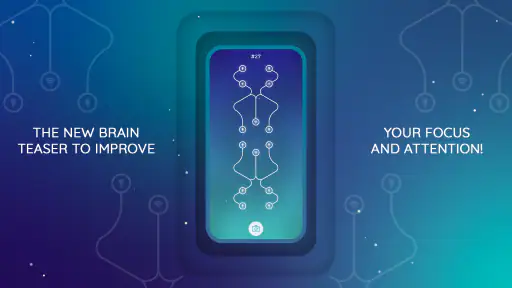
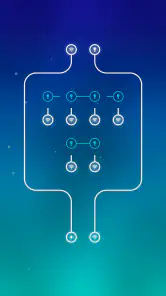
When I have a few spare minutes and want a puzzle that asks for attention without demanding a whole evening, I reach for Energy: Anti-Stress Loops. Its central idea is easy to grasp: turn connected lines and loops into a complete, glowing arrangement. That gives me an immediate little goal, and the pleasure comes from seeing a tangled-looking pattern resolve into something orderly. It works best as a small pause in the day, rather than as a game I need to plan around.
Discovering the Zen in Loops
At first glance, Energy: Anti-Stress Loops might seem like just another puzzle game, but don’t let its simplicity fool you. The game effortlessly blends art and logic, challenging you to connect loops and lines to form complete shapes. Each level is like a mini zen garden, meticulously designed to offer a sense of accomplishment and peace.
The beauty of the game lies in its serene graphics and soothing sounds. As I played, the gentle hums and clicks of connecting loops transported me to a place where deadlines and emails ceased to exist. It’s a rare gem in the app world that truly lives up to its anti-stress promise.
The Gameplay Experience
One of the first things I noticed about this game is its intuitive design. You don’t need a manual to figure things out—just dive right in. The controls are as smooth as butter, allowing you to focus entirely on solving the puzzles without any technical hiccups. The initial levels ease you into the gameplay, perfect for beginners and seasoned puzzle solvers alike.
As you progress, the levels become more complex, introducing new challenges that require a bit more thought and strategy. It’s this gradual increase in difficulty that keeps the game engaging without being overwhelming. Trust me, you’ll find yourself saying, "Just one more level," until you realize it's already past midnight!
A Small Puzzle That Fits Between Tasks
The best way I’ve found to use this game is to treat a level as a deliberate break, not as background entertainment. If I’m waiting for a kettle to boil or have a few minutes before a call, I can focus on one arrangement, make a couple of moves, and get a clear sense of progress. That makes the puzzle feel more satisfying than endlessly scrolling through a feed: there is a specific problem in front of me, and I can leave it once I’ve solved it.
It also suits people who like spatial puzzles but don’t want a lot of rules to remember. The challenge is in understanding how the lines fit together, rather than learning a long set of mechanics before play becomes enjoyable. I’d recommend it to casual puzzle fans, commuters with short stretches of downtime, or anyone who finds a neat visual task more calming than a fast game. It’s less suited to someone looking for a competitive score chase, a story to follow, or a demanding strategic system.
Gaming Stories You May Enjoy

Dancing Road Turns Short Breaks Into a Test of Rhythm and Timing

Super Stylist Makes Every Outfit a Test of Taste and Patience

Dominoes on Your Terms: Who Should Play and Who Should Pass

Pokémon GO Makes the Familiar World Feel New

Chess.com Turns Rematches Into Rivalries, but Community Has Its Costs

Archery Battle 3D Review: Sharp Aiming, Unclear Feedback
For a realistic example, I might open it during a quiet lunch break, solve a puzzle, then put the phone away when a colleague returns. The visual logic makes it easy to settle into the task quickly, while the sense of completion gives the break a natural ending. I wouldn’t rely on it as a substitute for rest when I’m exhausted, though; it still asks me to look closely and think, so a genuinely screen-free pause may be better when my attention is already worn out.
Short Sessions, with Room to Pause
Its clearest strength is how little preparation a session needs. There’s no need to remember a plot or rebuild a complicated plan after opening the game. I can look at the current puzzle, work out what the lines need to do, and decide whether I have time to finish it. That low commitment is a meaningful advantage over puzzle games built around long levels or a sequence that feels awkward to interrupt.
It is also forgiving in the everyday sense that the basic idea remains easy to pick up after stepping away. If I’m interrupted, I can return to the visual arrangement and reorient myself without needing to recall a chain of story events. Still, I wouldn’t claim every pause feels identical: if I leave halfway through thinking through a tricky layout, I may need a moment to inspect it again. A practical habit is to stop after completing a puzzle when possible; that gives the next session a clean starting point without turning a casual game into a schedule.
The sound and visual calm are part of the appeal, but they are not a guarantee that every setting or moment will feel relaxing. A quiet environment helps me notice the soft audio, while in a noisy place the visual puzzle carries more of the experience. If I’m playing somewhere I need to stay alert, I keep the session short and avoid treating the game as something to do automatically while handling another task. Its soothing mood works best when I give it a little attention.
Repetition, Difficulty, and the Right Expectations
Energy’s loop-based approach gives it a distinct visual identity, but the same basic pleasure can become repetitive if I play for too long at once. The satisfaction is about resolving a pattern, and players who want every level to introduce a radically different kind of interaction may find that less varied than they prefer. I enjoy the consistency in brief visits; over a longer stretch, I’m more likely to notice that I’m returning to the same broad kind of thinking.
The gradual rise in challenge helps, though it doesn’t turn the game into a high-pressure test. When a puzzle takes longer, I can try to reason through the connections rather than rushing. One useful approach is to scan the whole arrangement before making changes, looking for lines or loops that seem to constrain the possible solution. That small pause can prevent aimless tapping and makes a solved level feel earned. If I get stuck, stepping away for a while is often more pleasant than forcing a solution when the point of playing is to unwind.
Compared with word puzzles, this is a better fit for someone who wants visual reasoning without needing vocabulary or trivia knowledge. Compared with match-style games, it offers a quieter kind of attention: the pleasure is in making the arrangement work, not in reacting quickly to a cascade of changing pieces. And compared with a large logic game that asks for sustained concentration, it feels easier to approach in small portions. Those are trade-offs, not universal advantages; if I want competition, fast feedback, or a wider range of puzzle formats, I’d choose a different kind of game.
Who It Suits—and When I’d Choose Something Else
Infinity Games, Lda is the developer behind this free puzzle game. It has a 4.5 average from around 849,000 ratings and more than 10 million installs, which suggests that its simple loop idea has found a broad audience. The game is rated for Everyone, so its calm visual puzzle format is approachable for a wide range of players. Optional in-app purchases range from $0.99 to $19.99 per item; I’d think of those as a reason to check the purchase details before spending, rather than as something that changes what makes the core puzzle appealing.
The game is a strong match if I want a low-friction activity that feels more purposeful than passive phone use. It may also suit someone who likes to wind down with a small, solvable task before moving on to something else. I’d skip it if I need a game with a strong narrative, regular social interaction built into play, or a deep sense of progression through many different mechanics. The original release was on Nov 14, 2017, and the game’s appeal here is its straightforward loop puzzle, not novelty for its own sake.
People often wonder whether a calming puzzle can still be engaging. In my experience, yes, as long as the expectation is modest: the game offers gentle problem-solving and a satisfying finish, not a dramatic rush. If the question is whether it works for very short visits, its clear objective makes that a natural way to play. If the concern is whether repeated sessions stay fresh indefinitely, I’d be more cautious; the core interaction may lose its charm for players who need constant variation. It’s worth trying if that kind of repetition feels meditative to you, and less compelling if it feels like doing the same exercise again.
Why You'll Keep Coming Back
Besides the obvious stress-busting benefits, Energy: Anti-Stress Loops has an addictive quality that’s hard to resist. Maybe it’s the satisfying feeling of seeing all those loops light up or perhaps it’s the minimalist design that makes it easy on the eyes. Whatever it is, it hooks you in and keeps you coming back for more.
There’s also a sense of community among players. Many share their experiences and strategies online, which adds a social dimension to what is essentially a solo game. It's always fun to see how others tackle the same puzzles and pick up a few tips and tricks along the way.
In conclusion, if you’re on the hunt for a game that not only entertains but also calms your mind, look no further than Energy: Anti-Stress Loops. It’s a delightful escape from the hustle and bustle of everyday life, offering a perfect blend of challenge and relaxation in a beautifully designed package. So, go ahead, give it a try and let those loops work their magic!
Energy: Anti-Stress Loops Pros and Cons
Pros
- Simple and intuitive interface
- Variety of puzzles for relaxing
- No time limits or pressure
- Offline mode available
- Supports multiple languages
Cons
- Limited free puzzles available
- Ads can be intrusive
- No daily challenges
- Some puzzles may seem repetitive
- Requires in-app purchases for more content
Frequently Asked Questions
What is Energy: Anti-Stress Loops and how does it work?
Energy: Anti-Stress Loops is a relaxing puzzle game designed to help users unwind and reduce stress. The game works by presenting players with a series of unconnected loops, which they must rotate to create a continuous path or pattern. As players progress through the levels, the complexity increases, providing a satisfying and calming experience. The soothing background music and simple interface make it easy for anyone to pick up and play, offering a perfect escape from daily stress.
Is Energy: Anti-Stress Loops free to download and play?
Yes, Energy: Anti-Stress Loops is free to download and play on both Android and iOS devices. While the core game is available at no cost, there are optional in-app purchases that players can choose to buy. These purchases may include additional levels, ad removal, or other premium features to enhance the gameplay experience. However, the free version is fully functional and enjoyable on its own.
What are the main features of Energy: Anti-Stress Loops?
Energy: Anti-Stress Loops offers several key features that make it a popular choice among puzzle enthusiasts. These include a wide variety of levels with increasing difficulty, a visually appealing interface with calming colors, and soothing background music to enhance relaxation. The game also allows for offline play, making it accessible anytime, anywhere. Additionally, the intuitive controls and simple mechanics ensure that players of all ages can enjoy the game.
Can Energy: Anti-Stress Loops help with stress relief?
Yes, Energy: Anti-Stress Loops is specifically designed to aid in stress relief. The game’s calming visuals, gentle music, and simple yet engaging puzzles work together to create a serene environment where players can focus and relax. By concentrating on solving the puzzles, players can temporarily escape from daily pressures and find a moment of peace. Many users have reported feeling more relaxed and less stressed after playing.
Are there any ads in Energy: Anti-Stress Loops?
Energy: Anti-Stress Loops does contain ads, as it is a free-to-play game. These ads help support the developers and keep the game accessible to a wide audience. However, players have the option to remove ads through an in-app purchase, which enhances the overall gaming experience by providing uninterrupted gameplay. The presence of ads is generally minimal and not overly intrusive to the user experience.


