

Earn to Die Rogue
- Reviews
- 4.4
- Version
- 1.12.168
- Installs
- 10,000,000+

Screenshots
 Analysis by Frivlyz
Have you ever dreamt of escaping a zombie apocalypse while driving a beat-up car? Well, Earn to Die Rogue gives you exactly that thrill! This game is a wild mix of action, strategy, and a whole lot of fun as you find yourself behind the wheel, navigating through hordes of zombies in a post-apocalyptic world.
What makes the premise work for me is that progress has a visible, practical shape: a struggling vehicle gradually becomes more capable, and the next attempt can feel different because of the changes I have made. That gives each run an immediate purpose, even when the bigger goal is still some distance away. I enjoy games that let me see a small improvement without requiring a long session, and this one’s driving-and-upgrading loop is easy to understand from the outset.
In everyday use, I can imagine opening it for a short break, trying to get a little farther, then putting it down when I have reached a natural stopping point. It is also a good fit for someone who likes arcade action but wants a reason to think between runs, rather than simply repeating the same drive with no decisions. The appeal is less about carefully simulating a car and more about making a battered ride increasingly useful against a hostile route.
Gameplay that Keeps You Hooked
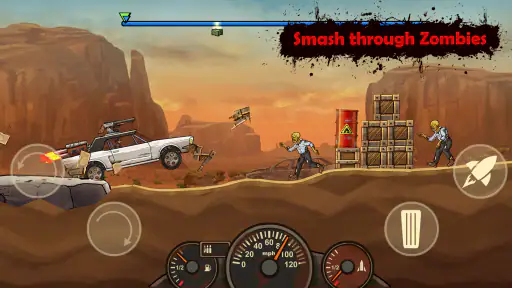
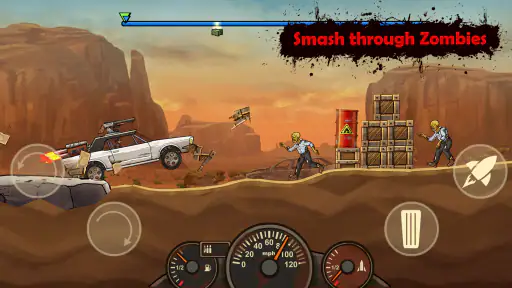
Right off the bat, the gameplay in Earn to Die Rogue is super engaging. You start with a basic vehicle and a dream: to survive and make your way through the zombie-infested landscape. The controls are intuitive, making it easy to get into the game and start smashing through undead obstacles. As you progress, you earn cash to upgrade your ride, adding everything from bigger engines to zombie-smashing bumpers. Trust me, there's something incredibly satisfying about watching zombies fly off your windshield!
The early goals are refreshingly easy to grasp: keep moving, make the most of the vehicle you have, and build toward a stronger next attempt. I like that this gives a new player a clear first priority instead of asking them to learn several unrelated systems at once. If a drive ends sooner than I hoped, it still gives me a reason to consider what change might help next time. That short feedback loop is the game’s most useful pacing tool.
For a more deliberate approach, I would treat each run as a small test rather than expect one upgrade to solve everything. If I am struggling to make progress, I would first think about what the vehicle seems to need most: more ability to keep moving, or more capacity to deal with what blocks the way. That simple question makes spending feel less random. It also helps avoid the common trap of choosing an upgrade just because it sounds exciting, then being disappointed when it does not address the actual problem.
Customization and Upgrades
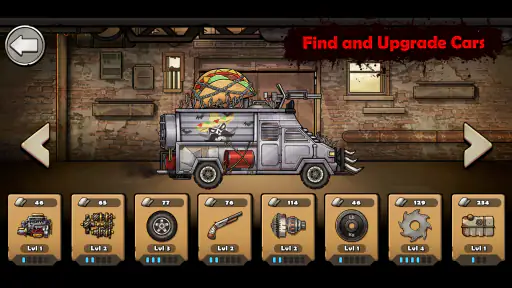
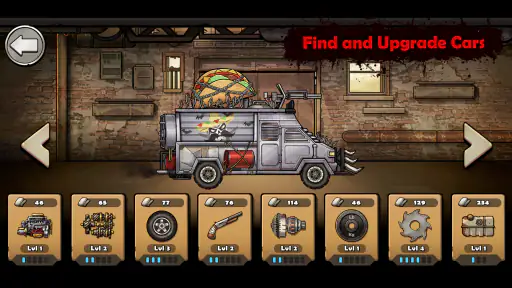
One of the coolest aspects of this game is the customization. The more zombies you plow through, the more money you earn, allowing you to transform your humble vehicle into a monstrous machine. There are tons of upgrades available, so you can fine-tune your car to suit your playstyle. Whether you want speed, armor, or even a gun mounted on top, the choice is yours. It's this level of customization that keeps the gameplay fresh and exciting.
Gaming Stories You May Enjoy

Dancing Road Turns Short Breaks Into a Test of Rhythm and Timing

Super Stylist Makes Every Outfit a Test of Taste and Patience

Dominoes on Your Terms: Who Should Play and Who Should Pass

Pokémon GO Makes the Familiar World Feel New

Chess.com Turns Rematches Into Rivalries, but Community Has Its Costs

Archery Battle 3D Review: Sharp Aiming, Unclear Feedback
The satisfying part is not simply collecting improvements; it is noticing how a choice changes the feel of a future drive. I would avoid spreading resources across every option just to make the car look broadly improved. A focused plan can make it easier to understand which change helped and which one did not, particularly when an attempt falls short. The trade-off is that experimentation can take patience: not every purchase gives an instant, dramatic payoff, so players who want constant new rewards may find the gradual tuning less exciting.
There is also a useful distinction between upgrades that sound powerful and upgrades that suit the obstacle I am currently facing. I would pay attention to the moments where momentum fades or progress becomes awkward, then choose accordingly instead of automatically buying the most obvious weapon or the largest engine improvement. That kind of observation turns the upgrade loop into a small strategy exercise without making it feel like homework. It is one reason the game can suit casual players who enjoy making a few meaningful choices.
Graphics and Sound
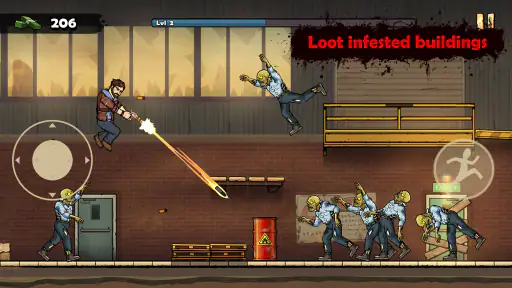
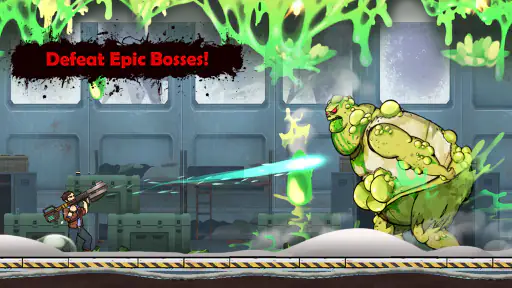
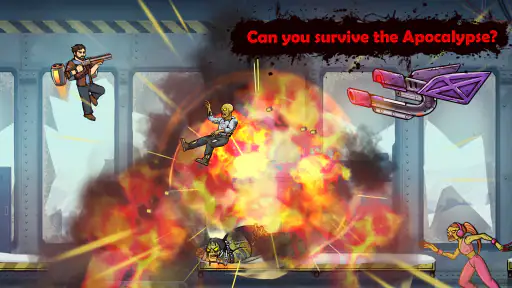
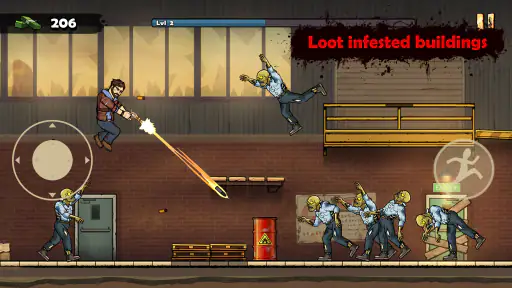
The graphics in Earn to Die Rogue are vibrant and detailed, perfectly capturing the gritty, chaotic world you're driving through. The zombies are varied in appearance, adding to the overall challenge and excitement. The sound design is also top-notch, with the growls of zombies, revving engines, and the satisfying thud of impact all contributing to an immersive experience. It's like a blockbuster action movie, but you're the star!
The presentation supports the simple pleasure of the loop: the action is easy to read, and the impact of pushing through a crowd has a clear audiovisual payoff. That matters in a game where a run can be brief, because each attempt needs to feel lively rather than like a spreadsheet of upgrade choices. At the same time, the noisy, hectic style will not suit everyone. If I wanted a quiet game to play while listening closely to something else, I would probably choose a calmer puzzle or casual title instead.
A practical way to enjoy it is to play with sound when I want the full arcade feel, then lower or mute it when I am in a shared space. The visual action still gives the drive its energy, but the engines and impacts are part of the game’s personality. It is a small consideration, but useful for anyone deciding whether this is a quick commute-break game, a late-night session, or something to play around other people.
Progress, Challenge, and Replayability
Even after you've completed the main campaign, Earn to Die Rogue keeps you coming back for more. The game features multiple modes and challenges that test your skills and keep the adrenaline pumping. Whether it's time trials, survival modes, or unlocking all achievements, there's plenty to do. Plus, the leaderboards add an extra layer of competition, pushing you to improve your scores and show off to friends.
Progress feels strongest when I can connect an improved result to a choice I made, rather than merely waiting for the next reward. A little extra distance or a smoother attempt can be a useful signal that a build is moving in the right direction. If a run feels no better, I would change one part of my approach at a time instead of rebuilding everything at once. That makes it easier to learn what is helping and gives repeated attempts a purpose beyond chasing a bigger number.
The challenge is part of the attraction, but it can also create friction. A player hoping to breeze through without retries may find the gradual climb less satisfying, especially if they dislike returning to a familiar stretch while building up their vehicle. I see that repetition as acceptable when each attempt offers a chance to test a different setup; it is less compelling if all I want is a linear story that moves forward without asking me to tune my approach.
Compared with many racing games, this is not chiefly about clean laps, realistic handling, or competing on a conventional track. The fun comes from surviving a rough route and making a vehicle more capable between efforts. Compared with straightforward zombie action games, the car and its upgrades give the player a longer-term goal instead of making every encounter the whole point. That blend makes it a better choice for someone who likes both arcade driving and incremental progression than for a racing fan seeking precise controls or a zombie fan looking for a deep narrative.
It is worth keeping expectations grounded around the word “Rogue” in the title: the core attraction here is the combination of driving through danger and building up your ride, not a promise that every run will feel radically different. I would recommend it to players who enjoy trying again with a clearer plan, and to anyone who likes seeing a modest starting point become a more capable machine. I would steer away from it if repeated attempts, upgrade decisions, or the cartoonish collision-focused action sound tiring rather than rewarding.
Who It Suits and What to Expect
Not Doppler’s racing game is free to start, and it has an average rating of 4.4 from around 76 thousand ratings, with over 10 million installs. It is rated Teen, and the current version is 1.12.168. In-app purchases range from $0.99 to $99.99 per item, so I would treat optional spending as a personal choice rather than assume it is necessary to enjoy the basic loop. I would first see whether the drive-and-upgrade rhythm holds my attention before considering any purchase.
That pricing structure is especially worth considering for younger players or anyone sharing a device with a family member: the game is free to download, but optional items can cost substantially more than a small impulse purchase. I would make sure the person playing understands that distinction and set a clear spending boundary if needed. For players who prefer games with no in-app purchases at all, that may be a reason to choose a paid alternative instead.
The game was released on May 7, 2024, and it requires Android 6.0 or later. Those details make it easier to decide whether an existing Android device can run it, while the Teen rating helps families judge whether its zombie action fits their preferences. I would also consider the style of play before installing: this is most appealing when I have the patience for short attempts and incremental improvement, not when I want a one-and-done experience.
A realistic session might be a few minutes between errands: I make a run, notice where the vehicle loses momentum, invest in an upgrade that addresses that weakness, and try again when I have time. Another player might prefer settling in for a longer stretch to compare changes and chase better results. Both approaches make sense, but the game’s strongest use case is the flexible one: each attempt offers a manageable goal, while a longer session lets those small steps add up.
One question I would ask before choosing it is whether it can replace a traditional racer. For me, it cannot, because its pleasure is not centered on lap precision or realistic driving technique. Another is whether it works for someone who dislikes grinding. That depends on how they view repetition: if they enjoy using each attempt to refine a build, it can be satisfying; if they see retries as wasted time, the progression may feel slow. The same loop is a strength for one kind of player and a drawback for another.
I would also recommend not judging the game by the first vehicle alone. Starting with something modest is part of the appeal, and the sense of progress depends on seeing how upgrades change what the car can do. Conversely, if the first few runs already feel like a chore, it is reasonable to move on rather than assume the game will become enjoyable only after a long investment. A good progression loop should make the next attempt tempting, not obligatory.
In conclusion, if you're looking for a game that combines fast-paced action with strategic upgrades and a dash of humor, Earn to Die Rogue is a must-try. It's the perfect escape for those moments when you just need to blow off some steam and mow down some zombies. So, buckle up, rev that engine, and get ready for one hell of a ride!
My recommendation comes with one qualification: it is best for players who enjoy gradual improvement and do not mind repeating a route while working out a better approach. The free entry makes it easy to try, but the optional purchases and retry-focused progression are worth keeping in mind. If that balance sounds appealing, I think its mix of zombie chaos and vehicle tuning makes for a distinctive arcade diversion. If you want a realistic racer, a quiet game, or a campaign that never asks you to repeat a challenge, another genre will probably suit you better.
Earn to Die Rogue Pros and Cons
Pros
- Intuitive controls for easy gameplay.
- Engaging storyline keeps players hooked.
- Diverse vehicles to unlock and upgrade.
- Smooth graphics enhance the experience.
- Offline mode available for uninterrupted play.
Cons
- Repetitive levels can get boring.
- In-app purchases may be required.
- Occasional ads disrupt gameplay.
- Limited customization options.
- Requires frequent updates for bug fixes.
This Game in Other Languages
Frequently Asked Questions
What is the main objective of Earn to Die Rogue?
Earn to Die Rogue is an action-packed driving game where the primary objective is to navigate through a post-apocalyptic world overrun by zombies. Players must drive their vehicle through hordes of zombies, upgrading their ride along the way to reach safety. The game combines strategic planning with action elements, ensuring players stay engaged as they make their way through increasingly challenging levels.
Can I play Earn to Die Rogue offline?
Yes, Earn to Die Rogue can be played offline, making it a great option for users who want to enjoy gaming without a constant internet connection. This feature allows players to experience the full gameplay without interruptions, whether they're commuting, traveling, or simply in an area with poor connectivity.
What platforms is Earn to Die Rogue available on?
Earn to Die Rogue is available on both Android and iOS platforms. This ensures that a wide range of users can enjoy the game, regardless of their device preference. The app is designed to provide a smooth and engaging experience on both operating systems, taking advantage of each platform's unique features to enhance gameplay.
Are there in-app purchases in Earn to Die Rogue?
Yes, Earn to Die Rogue offers in-app purchases that allow players to enhance their gaming experience. These purchases can include vehicle upgrades, new weapons, and other features that can help players progress more quickly through the game. While the game is designed to be enjoyable without spending money, these options provide an additional layer of customization and strategy for players who choose to invest.
How does Earn to Die Rogue differ from other zombie games?
Earn to Die Rogue sets itself apart from other zombie games through its unique blend of driving mechanics and strategic gameplay. Unlike traditional zombie shooters, this game focuses on vehicular combat, where players must upgrade and customize their vehicles to overcome obstacles and defeat zombie hordes. The combination of fast-paced action and strategic planning offers a fresh take on the zombie genre, appealing to fans of both driving games and action-packed adventures.


