

Dungeon Clawler
- Reviews
- 5.0
- Version
- 0.5.301
- Installs
- 5,000+

Screenshots
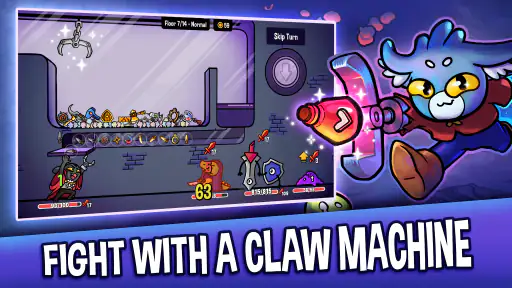
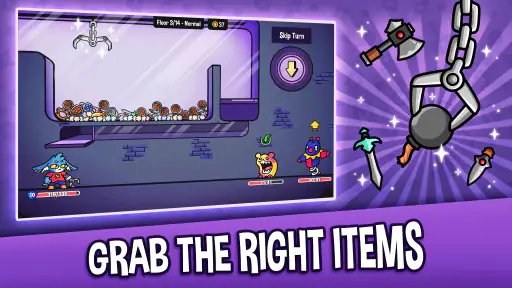
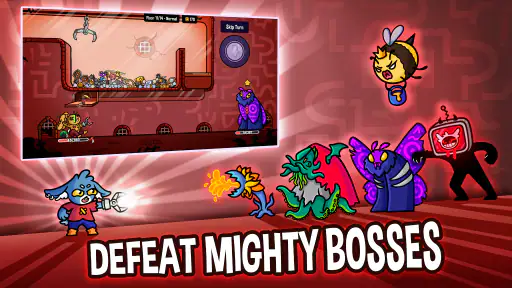
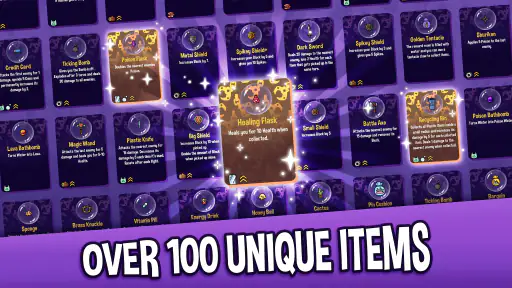
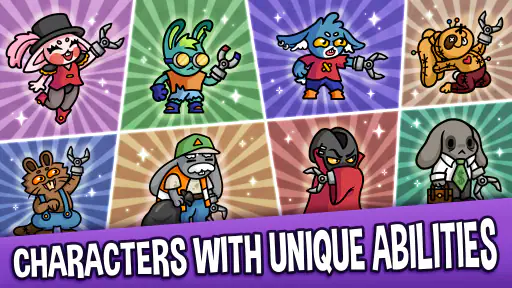
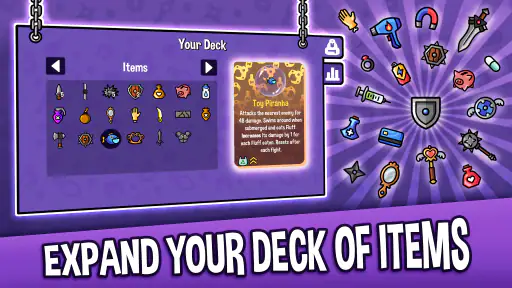
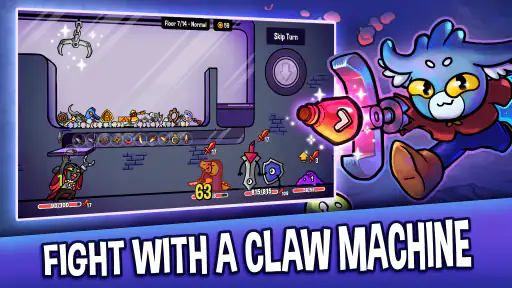
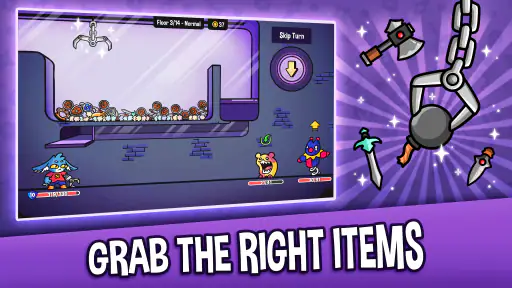
 Analysis by Frivlyz
I judge a roguelike by what happens after the first burst of curiosity: does it give me a reason to return, or does the central trick wear thin? Dungeon Clawler has an immediately unusual hook, bringing together role-playing, deckbuilding, and dungeon-crawling ideas. That mix makes its first sessions easy to approach, but its lasting appeal depends on whether you enjoy learning from runs that do not go as planned.
Why the first sessions catch your attention
Dungeon Clawler is a paid role-playing game from Stray Fawn Studio, priced at $4.99. It arrived on November 21, 2024, and its current version is 0.5.301. The game has an Everyone age rating and requires Android 5.1 or later. Those details matter most if you are checking whether it fits your device or whether you prefer paying once for a game rather than choosing a free download.
The appeal is less about settling into a familiar fantasy routine and more about seeing how its different systems work together. A deckbuilder asks you to think about the tools available in a run; a roguelike encourages decisions under uncertainty; and a dungeon crawler supplies the promise of advancing through a dangerous place. The interesting question is how you respond when those pressures meet, not simply how quickly you can clear a room.
I would give the opening sessions room to teach you its rhythm. When a game combines several genres, it can take a little time to understand which choices matter most. Rather than judging a run only by whether it ends in success, notice what led to trouble: a choice made too early, a plan that depended on the wrong cards, or a risk that seemed attractive until it narrowed your options. That kind of post-run reflection is where a roguelike can begin to feel rewarding instead of merely punishing.
What gives a run its own shape
The game’s strongest long-term prospect is the tension between planning and improvisation. Deckbuilding naturally rewards thinking ahead, while a roguelike run asks you to work with what turns up. I find that combination most satisfying when I treat a deck as a plan with room for adjustment, not as a checklist of ideal cards. A useful habit is to ask whether a new option supports the approach I am already building or gives me a needed answer to a weakness. Taking every appealing option can make a run feel less coherent.
That also makes the game a better fit for players who enjoy making decisions than for anyone looking for a passive way to fill time. If I have only a short break, I can still value the feeling of weighing a choice, but I would not choose it when I need something that asks almost nothing of me. Its central loop expects attention: the satisfaction comes from understanding why a choice worked or failed, not from leaving the game running in the background.
For a practical routine, I would use a run as a small, self-contained play session. On a commute or during a quiet evening, I could focus on one attempt, then stop at a natural pause and remember what I want to try differently next time. That is a more useful approach than playing on autopilot. It turns a disappointing outcome into a specific lesson and makes the next session feel purposeful without requiring a long-term schedule.
Gaming Stories You May Enjoy

Dancing Road Turns Short Breaks Into a Test of Rhythm and Timing

Super Stylist Makes Every Outfit a Test of Taste and Patience

Dominoes on Your Terms: Who Should Play and Who Should Pass

Pokémon GO Makes the Familiar World Feel New

Chess.com Turns Rematches Into Rivalries, but Community Has Its Costs

Archery Battle 3D Review: Sharp Aiming, Unclear Feedback
How it compares with familiar role-playing games
Compared with a conventional role-playing game built around a long story and steady character growth, this is a more run-focused proposition. If what you want is a persistent world to revisit, a cast to follow, or a large narrative to unwind at your own pace, a story-led RPG is probably the better choice. Here, the attraction lies in the repeated process of assembling a plan and testing it in a dungeon rather than in following a familiar quest structure.
It also differs from a straightforward deckbuilder. A pure card game can put nearly all its emphasis on refining a deck and calculating combinations. Dungeon Clawler’s dungeon-crawling and roguelike framing gives decisions a broader context: you are not only asking whether an option improves your deck, but whether it suits the risks of the run you are trying to manage. Players who love tight card puzzles may enjoy that extra layer; players who want a clean, predictable puzzle might find the blend less controlled.
There is a trade-off in that variety. Genre combinations can make a game feel distinctive, but they can also make it harder to identify the one system you want to master. I would recommend it most readily to someone who likes switching between tactical thinking and adapting to changing circumstances. If you dislike uncertainty, prefer consistent outcomes, or want a simple action game with little planning, the same qualities may become friction rather than charm.
Making progress without turning play into homework
My best general tip is to keep a mental note of one decision per run, rather than trying to remember every detail. Maybe a risky choice left too few answers later, or a modest option turned out to support the plan better than a flashy one. Focusing on a single lesson makes experimentation manageable. It also stops each attempt from becoming a test of whether you can make a perfect build from the start.
A second useful approach is to decide what you want to learn before beginning. You might test whether a more cautious plan feels reliable, or whether a run built around a particular kind of opportunity can recover from setbacks. The point is not to assume that one approach is universally best. It is to make choices with a question in mind, so even a run that ends badly gives you a reason to return.
There is a limit to how much I would expect from this kind of replay. A changing run can make repeated attempts feel fresh, but variation alone cannot guarantee that every session will feel meaningful. If you find yourself making the same choices without learning anything new, take a break instead of forcing another run. The game’s recurring value is strongest when you still have an idea you want to test.
For someone deciding whether to buy, that is the key distinction: the price is not paying for a single novelty moment, but for a game whose appeal comes from returning to its central loop. Its average rating is 5.0 from around 1,200 ratings, with around 90 reviews, and it has over 5,000 installs. Those figures give a useful snapshot of its reception and reach, but they cannot tell you whether you personally enjoy run-based experimentation. The best guide is whether that style of play sounds inviting.
Where fatigue can set in
Roguelikes can lose their pull when repeated attempts start to feel like repetition without discovery. That is a risk here, particularly if you prefer a steady story or a clear sense of permanent progress. A run-based structure asks you to accept setbacks and begin again; even a well-designed attempt can feel frustrating if you wanted every session to move a continuous adventure forward.
The deckbuilding side may also ask for patience. If you are new to the genre, it can be tempting to judge cards or options by how impressive they seem in isolation. A choice is only as useful as its fit with the rest of your plan. I would slow down enough to consider what an option helps you do and what it leaves uncovered. That small pause can make the difference between deliberate experimentation and feeling that the game simply gave you bad luck.
There is also a simple expectation to set before buying: this is not the right pick if you want a broad, conventional RPG experience or an effortless game for distracted moments. Its appeal depends on engaging with decisions and accepting that not every attempt will go your way. If those conditions sound like chores, a more direct action game or a narrative RPG would probably make better use of your time.
Does it earn a place in a regular rotation?
For me, the strongest case for keeping Dungeon Clawler installed is that it can turn a short session into a small strategic challenge. I would reach for it when I want to focus on a run, test an idea, and make sense of the outcome—not when I need a story to carry me or a game that can be played without attention. That makes its habit-forming potential personal: it depends on whether you enjoy refining your decisions from one attempt to the next.
Stray Fawn Studio has made a role-playing game with a distinctive combination of systems, and that gives it a clearer identity than a familiar dungeon romp. Still, a clever premise is only the beginning. Its month-to-month value rests on whether the changing decisions continue to give you something to think about after the initial surprise fades. I would recommend it to curious players who like deckbuilding and roguelike uncertainty, while advising story-first RPG fans and people who dislike repeated setbacks to look elsewhere.
A considered recommendation
If you’ve ever been captivated by the idea of exploring dark, mysterious dungeons teeming with danger and treasure, then Dungeon Clawler might just be the game for you. I spent some time diving into its depths, and let me tell you, it's a wild ride!
Getting Started with Dungeon Clawler
The moment you launch Dungeon Clawler, you're greeted with an atmospheric soundtrack that immediately sets the tone for the adventure ahead. The graphics are a blend of retro pixel art and modern design, giving it a unique charm that stands out from the crowd. Navigating the menus is straightforward, and it doesn't take long before you're dropped into your first dungeon, ready to face whatever lurks in the shadows.
The Gameplay Experience
Gameplay in Dungeon Clawler is both challenging and rewarding. You start off with a basic set of weapons and skills, but as you progress, you unlock a plethora of upgrades and abilities. Each dungeon is procedurally generated, which means no two runs are ever the same. This keeps things fresh and ensures that the thrill of exploration never wanes.
Combat is strategic and requires a good deal of planning. You can't just rush into a room swinging your sword wildly; you need to think about your approach, make use of your skills, and sometimes even retreat to fight another day. It's this level of strategy that makes victories feel truly earned.
What Makes It Stand Out?
One of the aspects I absolutely love about Dungeon Clawler is its character progression system. You're not just upgrading weapons and armor; you're also evolving your character's skills and abilities. This adds layers to the gameplay and allows for a more personalized experience. Whether you prefer a stealthy approach or a full-on assault, the game accommodates various playstyles.
The community around Dungeon Clawler is also worth mentioning. There are forums and fan sites where players share tips, strategies, and even fan art. It's a testament to the game's appeal and the passionate following it has garnered.
Final Thoughts
In conclusion, if you're a fan of dungeon crawlers or just looking for a new game to sink your teeth into, Dungeon Clawler is worth checking out. It combines challenging gameplay with rewarding progression, all wrapped up in a visually appealing package. While it may not be for everyone, those who appreciate a good challenge and the thrill of exploration will find much to love here.
And there you have it! Grab your gear, ready your spells, and dive into the dungeons. Who knows what treasures await?
Dungeon Clawler Pros and Cons
Pros
- Engaging storyline with unexpected twists.
- Varied character classes offer replay value.
- Smooth and intuitive user interface.
- Challenging yet rewarding gameplay mechanics.
- Rich graphics enhance the immersive experience.
Cons
- Requires constant internet connection.
- In-app purchases can be quite expensive.
- Some levels feel repetitively designed.
- Occasional lag on older devices.
- Limited customer support availability.
This Game in Other Languages
Frequently Asked Questions
What is Dungeon Clawler, and how does it work?
Dungeon Clawler is an engaging role-playing game (RPG) that takes players on a thrilling adventure through various dungeons filled with monsters, traps, and treasures. In this game, players assume the role of a hero tasked with navigating these dungeons, battling enemies, solving puzzles, and collecting valuable loot. The game offers a rich storyline and a variety of characters to enhance the gameplay experience.
What are the main features of Dungeon Clawler?
Dungeon Clawler boasts an array of exciting features, including procedurally generated dungeons, which ensure a unique experience every time you play. The game also offers diverse character classes with distinct abilities and skill trees, allowing for personalized gameplay strategies. Additionally, the game includes multiplayer modes, enabling players to team up with friends for cooperative dungeon crawling adventures.
Is Dungeon Clawler free to play, or does it require in-app purchases?
Dungeon Clawler is free to download and play, offering a comprehensive gaming experience without any upfront cost. However, the game does include optional in-app purchases that allow players to buy cosmetic items, additional character customization options, and game-enhancing boosts. These purchases are entirely optional and not necessary for progressing through the game.
What kind of devices support Dungeon Clawler?
Dungeon Clawler is available for both Android and iOS devices, ensuring a wide reach for mobile gamers. The game is optimized for performance on most modern smartphones and tablets, although players are recommended to check the specific device compatibility and system requirements on the app store to ensure smooth gameplay without any technical issues.
How frequently does Dungeon Clawler receive updates and new content?
The developers of Dungeon Clawler are committed to providing a dynamic gaming experience by regularly releasing updates and new content. Players can expect frequent patches that improve gameplay mechanics, fix bugs, and introduce fresh challenges. Additionally, seasonal events and expansions are launched periodically, offering new storylines, dungeons, and exclusive rewards to keep the game engaging and exciting.


