

Duet Tiles - Rhythm Music Game
- Reviews
- 3.8
- Version
- 1.9.15
- Installs
- 10,000,000+

Screenshots







 Analysis by Frivlyz
I tend to enjoy rhythm games most when they’re quick to understand but still give me a reason to pay attention, and that’s the appeal I see in Duet Tiles - Rhythm Music Game. It turns listening into an active little challenge: instead of letting a song run in the background, I have to watch, listen, and respond together. That makes it an easy game to pick up during a spare moment, though it’s less suited to anyone who wants a deep music-making tool or a hands-off playlist experience.
What the rhythm loop asks of you
The central appeal is the close link between the beat and your taps. I find that kind of play satisfying because a successful run feels tied to listening, not just reacting to a visual prompt. It also means the game asks for more attention than a casual music app: even a short session works best when I can focus on the screen and the sound at the same time.
A practical tip is to begin with a song or pace that feels comfortable rather than treating every attempt as a score chase. Paying attention to the beat before trying to move quickly can make the controls feel more natural. If the music is unfamiliar, I’d give myself a moment to settle into its rhythm before expecting my fingers to follow it cleanly.
Speed, focus, and busy moments
Rhythm play can feel brisk because the music sets the pace, but I wouldn’t assume that every song or session has the same intensity. The challenge is most enjoyable when I’m alert enough to follow the cues; if I’m distracted, rushing, or trying to play while doing something else, missed taps become part of the experience. That makes this a better fit for a deliberate break than for use while walking, working, or carrying on a conversation.
For an everyday scenario, I can picture opening it while waiting for a friend or taking a short break between tasks. I’d choose one attempt, keep the volume at a comfortable level, and stop when I need to return my attention elsewhere. That small boundary matters: a rhythm game can make “one more try” tempting, but it’s still best enjoyed when the phone and the music have my full attention.
Longer play sessions may feel different from a quick round. Repeating a demanding passage can be tiring for the hands and attention, and the visual movement may be a lot to process when I’m already tired. I’d use brief pauses rather than pushing through frustration. If a song feels difficult, slowing down mentally—listening for the pulse instead of chasing every visual detail—can be a more useful adjustment than simply tapping harder.
Reliability and what to expect from a session
I can judge the appeal of the play pattern, but I wouldn’t promise a particular loading speed, battery use, or uninterrupted performance across every phone. Those depend on the device and its condition. A sensible first check is simply whether the game opens and responds comfortably on your own device, then whether the audio and taps feel aligned enough for you to enjoy a full attempt.
Gaming Stories You May Enjoy

Dancing Road Turns Short Breaks Into a Test of Rhythm and Timing

Super Stylist Makes Every Outfit a Test of Taste and Patience

Dominoes on Your Terms: Who Should Play and Who Should Pass

Pokémon GO Makes the Familiar World Feel New

Chess.com Turns Rematches Into Rivalries, but Community Has Its Costs

Archery Battle 3D Review: Sharp Aiming, Unclear Feedback
If a session is interrupted, I’d treat recovery as a practical question rather than assume the game will resume exactly where I left off. Before starting a song, it helps to be somewhere I can finish without needing to switch apps or lock the screen. That is especially useful when I’m trying a more demanding run, where an interruption can break concentration even if the game itself is working normally.
For steadier play, I’d close distractions, set the phone down securely, and use a comfortable volume. Headphones can help me focus on the beat in a noisy place, while playing quietly through the speaker may be more considerate around other people. Neither choice changes the basic need to keep the sound and on-screen cues easy to follow.
Who will enjoy it—and who may prefer another music game
This is a good match for someone who likes pop-oriented rhythm challenges and wants an uncomplicated way to engage with music through touch. It can also suit a casual player who enjoys improving through repeated attempts but doesn’t need a large set of tools or a complicated progression system. The developer is AMANOTES PTE. LTD., and the game sits in the music category rather than trying to be a general-purpose audio app.
If you mainly want to discover albums, build playlists, or listen without concentrating, a streaming or radio app is a better choice. If you want a rhythm game built around detailed instrument simulation or precise practice, a more specialized music game may suit you better. The useful distinction is that this experience is about responding to songs, not learning an instrument or editing music.
Compared with a standard tap-to-the-beat game, the duet framing suggests a musical back-and-forth, but I’d still choose it for its accessible rhythm challenge rather than expect a full musical collaboration tool. Before committing to a long session, I’d sample the available play experience and see whether its song selection and challenge style match my taste. That is a more reliable test than assuming every rhythm game will feel right simply because it uses familiar music cues.
Groove to the Beat
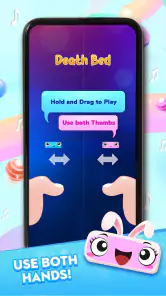
The first time I launched Duet Tiles - Rhythm Music Game, I was immediately drawn in by its vibrant graphics and catchy tunes. The premise is simple: tap the tiles in time with the music. But don’t let its simplicity fool you; this game will definitely test your reflexes and rhythm skills. The app offers a wide variety of songs, ranging from pop hits to classical masterpieces, ensuring there's something for every music lover out there.
Gameplay and Features
The gameplay is where Duet Tiles really shines. It’s not just about tapping tiles; it’s about doing so in perfect harmony with the music. Think of it as a dance-off for your fingers! As you progress, the levels get more challenging, with faster beats and more complex patterns. But that’s what makes it so engaging. You’ll find yourself saying, "Just one more song," and before you know it, hours have passed.
One of my favorite features is the multiplayer mode. It’s a blast to challenge friends and see who can keep up with the rhythm longest. Plus, the game regularly updates its song list, so there’s always something new to play.
For me, the best way to get more from that loop is to treat a run as listening practice for timing, not just a race to tap quickly. When a pattern gets busier, I focus on the pulse of the song and keep my hands relaxed; frantic tapping is more likely to throw off my timing than to help. A quiet place and a stable grip on the phone also make it easier to notice whether I’m following the music or merely reacting to motion on the screen.
The social appeal is a welcome change from playing alone, though I’d approach multiplayer as a friendly comparison rather than the main reason to install the game. It works best when everyone is ready to play and can hear the beat. If friends have different levels of rhythm-game experience, taking turns can be more fun than turning every round into a contest. Players who prefer solitary practice may get more value from focusing on their own consistency.
Visuals and Soundtrack
If you’re a sucker for good visuals, you’ll love what Duet Tiles has to offer. Each level is visually stunning, with tiles that light up and dance along with the beat. It’s like a mini light show right on your phone. The soundtrack is just as impressive, featuring high-quality tracks that make you feel like you’re in the front row of a concert.
The combination of bright movement and music gives the game a lively feel, but it also creates a trade-off: the screen is another source of information to process while I’m trying to listen. If visual effects pull your attention away from the beat, I’d concentrate on the timing cues that matter to the task instead of staring at every animation. Anyone sensitive to busy motion may find long sessions less comfortable, so trying a short play period first is sensible.
Song choice is personal, and a broad mix does not guarantee that every track will be a favorite. I’d use the songs I enjoy as a starting point, then explore beyond them when I want a different challenge. A familiar melody can make the rhythm easier to anticipate, while an unfamiliar one asks me to listen more carefully. That difference can be useful when deciding whether I want a relaxed run or a more demanding test of timing.
Cost, device fit, and practical expectations
The game is free to download, with in-app purchases listed from $1.19 to $48.99 per item. I’d start without spending and see whether the available experience holds my interest before considering any purchase. Those listed item prices span a wide range, so checking the specific item and its cost in the app matters more than assuming every purchase is small or necessary. I also wouldn’t treat spending as a shortcut to enjoying the rhythm itself.
Its age rating is Everyone 10+, and it is listed for devices running Android 7.0 or later. That gives Android users a clear baseline to check, but meeting a minimum requirement doesn’t guarantee identical responsiveness on every handset. Older or heavily loaded devices can behave differently from newer ones, so I’d close unnecessary apps if play feels less responsive and test again. The iOS experience should be checked against the requirements shown for the device and store being used.
In terms of performance, I’d expect the game to be most demanding on my attention rather than assume a particular level of battery or memory use. Rhythm timing is unforgiving when a phone is busy or the sound is hard to hear, so a steady setup matters more than chasing a technical benchmark. If the game becomes unresponsive, I’d exit and reopen it before repeating a difficult run; I wouldn’t count on an interrupted attempt being recoverable. The current version is 1.9.15, and AMANOTES PTE. LTD. has built an experience whose main test is whether its music and touch response feel enjoyable on your own device.
It has an average rating of 3.8 from around 2,800 ratings, and more than 10 million installs. I take that as a sign that plenty of players have tried it, not as a guarantee that every song or mechanic will suit me. The useful decision is still personal: if I enjoy responding to music with quick, focused taps, it is worth trying; if I want a calm listening app, a music-learning tool, or a rhythm game with a different style of challenge, I’d look elsewhere.
In conclusion, Duet Tiles - Rhythm Music Game is more than just a game; it's a full-on musical adventure. Whether you're a seasoned rhythm game veteran or a curious newbie, there's something here for everyone. It's the perfect way to unwind, challenge yourself, and enjoy some great tunes. So, put on your headphones, turn up the volume, and get ready to tap your way to musical glory!
My honest verdict is more measured: it’s a lively option when I want music to demand a little attention, and its short, repeatable rhythm challenge can fit neatly into a break. I’d recommend trying it if the tapping-and-listening loop sounds fun, while keeping expectations grounded about device-specific performance and whether the song selection matches your taste. If you prefer a passive soundtrack or a more technical music game, another kind of app will likely serve you better.
Duet Tiles - Rhythm Music Game Pros and Cons
Pros
- Engaging rhythm-based gameplay.
- Vast library of popular songs.
- User-friendly interface design.
- Regular updates with new content.
- Offline play available.
Cons
- Ads can be intrusive at times.
- In-app purchases are expensive.
- Limited free song selection.
- Occasional lag on older devices.
- Requires significant storage space.
Frequently Asked Questions
What is Duet Tiles - Rhythm Music Game?
Duet Tiles - Rhythm Music Game is an engaging and entertaining music-based game that challenges players to tap on tiles in sync with the rhythm of popular songs. With a sleek interface and a wide selection of music genres, it offers an immersive experience for music lovers and gamers alike. The game is available for both Android and iOS devices, providing hours of musical fun and rhythm challenges.
Is Duet Tiles - Rhythm Music Game free to play?
Yes, Duet Tiles - Rhythm Music Game is free to download and play. However, like many mobile games, it offers in-app purchases that can enhance the gaming experience. These purchases might include additional songs, ad-free gameplay, and other premium features. Players can enjoy the core game without spending money, but optional purchases are available for those who wish to expand their experience.
What are the main features of Duet Tiles - Rhythm Music Game?
Duet Tiles - Rhythm Music Game boasts several exciting features, including a variety of music genres to choose from, challenging levels that increase in difficulty, and a competitive leaderboard to track progress against other players. The game also offers visually appealing graphics and smooth animations, ensuring a seamless and enjoyable playing experience. Players can personalize their gameplay with different themes and settings.
Can I play Duet Tiles - Rhythm Music Game offline?
Duet Tiles - Rhythm Music Game requires an internet connection for downloading new songs and updates. However, once the songs are downloaded, players can enjoy them offline. This feature is particularly useful for those who want to enjoy the game on the go without worrying about mobile data usage. Remember to connect to the internet periodically to access new content and maintain the best gaming experience.
What devices are compatible with Duet Tiles - Rhythm Music Game?
Duet Tiles - Rhythm Music Game is compatible with a wide range of Android and iOS devices. It requires Android version 4.4 and up or iOS version 9.0 or later. The game is optimized to run smoothly on both smartphones and tablets, providing a versatile gaming experience across different device types. Ensure your device meets these requirements for optimal performance and an enjoyable gaming session.


