

Duck Life 6: Space
- Reviews
- 4.0
- Version
- 2023.10.10
- Installs
- 10,000+

Screenshots
 Analysis by Frivlyz
I tend to judge a casual sports game by how comfortably I can pick it up, understand what it wants from me, and return to it when I have a few spare minutes. Duck Life 6: Space has a playful premise, but its appeal is more specific than “cute ducks”: it combines raising a racer with short training activities and competitions. I found that mix easy to approach, especially when I wanted a light game rather than a demanding sports simulation.
Who will enjoy raising a space racer
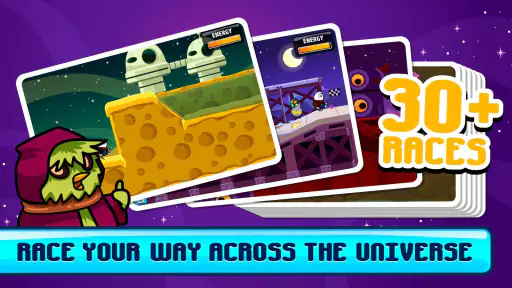
The central loop suits players who like watching a character improve through practice. Training gives the duck a purpose beyond simply looking different, while races give that preparation a clear payoff. I enjoy games where a small improvement feels connected to something I chose to do, and this setup makes it natural to alternate between practice and seeing how the duck performs.
That rhythm is also a useful way to play in short visits. If I have a brief break, I can focus on a training activity instead of needing to settle in for a long match. When I have more time, I can make the session about preparing for a race and adjusting my approach. The game’s structure is friendlier to stop-and-start play than a conventional sports title built around complete, extended matches.
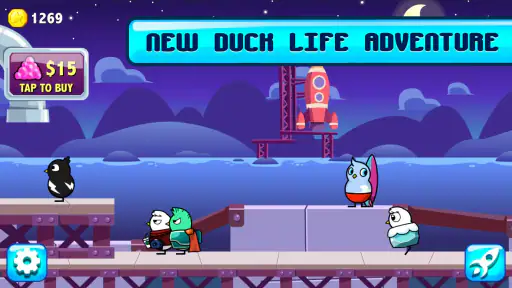
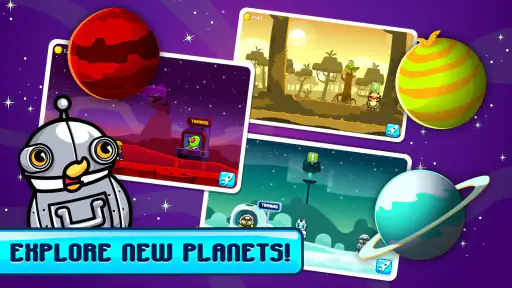
Its space setting gives the familiar duck-training idea a different backdrop, and the planet-to-planet journey provides a reason to keep moving forward. The changing environments help the progression feel like a trip rather than a stack of identical events. I would recommend it to younger players, casual gamers, and anyone who enjoys collecting, dressing up, and gradually developing a character more than mastering realistic sports rules.
Readable presentation and straightforward navigation
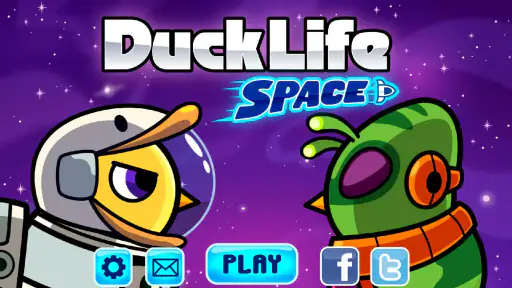
The bright, cartoon-like presentation makes the game’s tone clear right away. I found the visuals inviting rather than busy, and the playful setting helps distinguish it from sports games that lean on realistic stadiums, teams, or equipment. The basic premise is easy to grasp: develop a duck, take on challenges, and aim to become a stronger racer.
That straightforwardness is a strength for people who do not want a complicated setup before they can play. At the same time, a simple presentation does not automatically make every choice equally clear for every player. Someone who prefers detailed explanations, a highly structured tutorial, or a more serious sports interface may find the game’s light approach too spare. I would treat it as an approachable casual game, not as a coaching tool or a deep simulation.
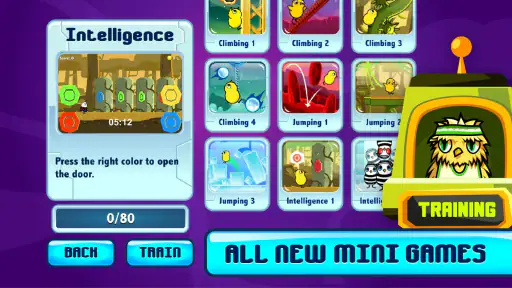
The small activities also change the kind of attention the game asks for. Rather than relying on a single long race to carry the experience, training breaks the routine into distinct tasks. That can make it easier to understand what a session is about, but it also means that players who dislike switching between mini-games may find the progression repetitive. I would try a few different activities before deciding whether the pattern clicks.
Gaming Stories You May Enjoy

Dancing Road Turns Short Breaks Into a Test of Rhythm and Timing

Super Stylist Makes Every Outfit a Test of Taste and Patience

Dominoes on Your Terms: Who Should Play and Who Should Pass

Pokémon GO Makes the Familiar World Feel New

Chess.com Turns Rematches Into Rivalries, but Community Has Its Costs

Archery Battle 3D Review: Sharp Aiming, Unclear Feedback
Playing with different abilities and in different settings
For motor comfort, the main practical question is whether a player enjoys brief, interactive challenges. A person who finds repeated quick input tiring may prefer to play in short bursts, pause between activities, or hand the device to someone else for a turn. I would not assume that the game is suitable for every motor ability just because it looks casual; the feel of its individual activities matters, and the best test is a short session at a comfortable pace.
Sensory preferences matter, too. The colorful art and game sounds contribute to the cheerful mood, but someone sensitive to bright visuals or repeated audio may find that style less relaxing than a quiet puzzle game. A sensible way to approach it is to try the opening activities in a calm setting and decide whether the presentation feels enjoyable or distracting. If a player prefers low-stimulation experiences, this may not be their first choice.
For a family, it can work as a shared game in which one person handles the training while another chooses how to develop the duck or watches the race. That makes it easier to turn a short play session into a small back-and-forth without needing everyone to learn a complex ruleset. The game is rated Everyone, which makes its intended audience broad, though individual comfort with the controls and sensory style still varies.
Progression, spending choices, and useful trade-offs
Training is most satisfying when I treat it as preparation rather than as a chore to rush through. If a race does not go as hoped, spending a little time practicing can make the next attempt feel earned. My practical tip is to notice which activities you actually enjoy and build your sessions around them, instead of trying to turn every spare minute into a grind. A game about raising a racer should stay playful; if practice starts feeling like work, taking a break is better than forcing it.
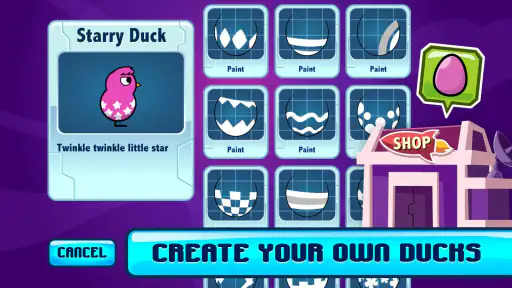
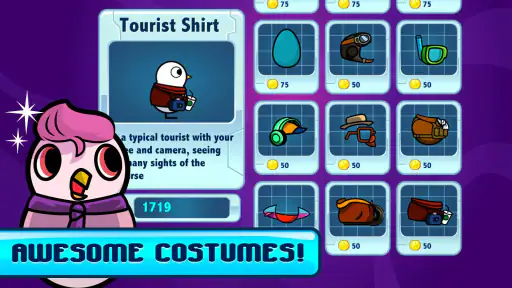
Customization adds another reason to care about the duck, but it serves a different purpose from training. Outfits and accessories are about personal style, while upgrades are tied to tackling tougher challenges. I would think of those as two separate kinds of reward: one makes the character feel like yours, and the other helps with progression. If you are mainly interested in winning, focus your attention on development; if you enjoy making a character distinctive, customization is part of the fun in its own right.
Because the game has a purchase price of $1.99, the decision is different from trying a free title with no upfront cost. I would consider whether I like the training-and-racing loop before buying, especially if I usually abandon games that repeat short activities. It has an average rating of 4.0 from around 500 ratings, alongside more than 100 written reviews, but those figures are only a broad signal: they cannot tell you whether the particular mini-game rhythm suits you.
How it compares with other sports games
Compared with a conventional sports game, this is much less about simulating a real sport and more about building a character for playful competition. It does not ask me to learn the intricacies of a team, a season, or realistic tactics; its focus is the personal progress of one duck. That makes it a better fit for a casual player who enjoys collecting and training than for someone seeking authentic sports strategy or online competition.
Against other pet-raising games, the races give the care-and-development loop a concrete goal. The duck is not just a character to decorate; training connects the raising element to performance. The trade-off is that anyone who wants open-ended pet interaction or a story-first adventure may find the competitive routine too central. I would choose a life-simulation game for more free-form caretaking, and a traditional racing game for more emphasis on driving skill. This sits between those options.
The developer is MAD.com, and the game first appeared on April 21, 2016. Its current version is 2023.10.10, with Android 5.1 as the minimum operating system requirement. It has more than 10,000 installs and costs $1.99. Those details help frame the purchase and device decision, but the more important question for me is whether the game’s particular blend of training, customization, and races is what I want from a sports game.
What to expect before starting
If you are wondering whether you need to know the series beforehand, I would not treat familiarity as a requirement. The core appeal is understandable on its own: raise a duck, develop its abilities, and take it through a space-themed racing journey. A returning fan may appreciate the familiar training idea with a new setting, while a newcomer can approach it as a self-contained casual game.
If you are deciding whether it works for a quick daily routine, I think it can, as long as you are happy to make progress in small pieces. For example, after school or during a quiet break, a player could spend a few minutes on a training activity, then return later for a race. That is a more realistic fit than expecting a short session to deliver the depth of a full sports season. The benefit is convenience; the compromise is that the game’s repeated activities may become noticeable if you play for long stretches.
Another useful question is whether the game is challenging enough for experienced players. Its simple, accessible premise is part of its charm, but players seeking a high-skill competitive ladder or detailed tactical control should look elsewhere. I see it as a light progression game with sporting goals, not a substitute for a serious racing or management title. It works best when the aim is relaxed improvement rather than proving mastery against other players.
It is also worth considering who will share the device. A young player who likes bright characters and clear goals may enjoy the duck’s progress, while an adult looking for realism may not. If someone in the household is sensitive to repeated sounds, prefers minimal visual stimulation, or finds rapid interactions uncomfortable, test the feel of the game together rather than assuming its friendly art guarantees a comfortable experience. That small check can prevent a purchase that looks right on the surface but does not suit the player.
There are limits to how broadly I would recommend it. Players who dislike repetition, want a quiet low-stimulation game, or expect a realistic sports experience are better served by another genre. Likewise, anyone who wants a deep narrative or open-ended care system should not buy it solely because the premise involves raising a pet. The most reliable reason to choose this one is the combination of short training tasks, visible character development, and races in a whimsical setting.
The Cosmic Duck Journey
First off, the storyline is pretty simple but engaging. You start with a humble duck and embark on a journey through different planets. Each planet offers unique challenges and environments, making the gameplay diverse and exciting. I was genuinely hooked on finding out what the next planet would bring. The space theme adds a fresh twist to the classic duck training formula, which kept me coming back for more.
Training Your Duck
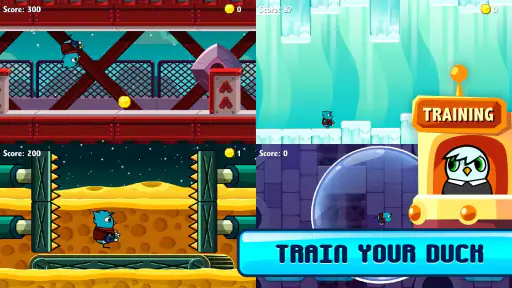
Training your duck is at the core of the game, and it’s as fun as ever. You’ve got a variety of mini-games designed to boost your duck’s skills, like running, flying, and swimming, but this time with a space-themed flair. The mini-games are simple yet addictive, and they require a bit of skill and strategy to master. I found myself spending hours trying to perfect my duck’s abilities. It’s a great way to pass the time!
Customization and Upgrades
One of the aspects I loved about Duck Life 6: Space is the level of customization available. You can personalize your duck with a range of quirky outfits and accessories, making it truly your own. Plus, as you progress, you earn coins that you can spend on upgrades. These upgrades are crucial as they help you tackle tougher challenges and compete with other ducks in space races. Customizing and upgrading became an obsession of mine – who doesn’t want the coolest duck in the galaxy?
Graphics and Sound
The graphics are colorful and charming, fitting perfectly with the playful theme of the game. Each planet has its own distinct look and feel, which kept things visually interesting. The sound effects and music are equally delightful, adding to the overall fun vibe of the game. I often found myself humming along with the catchy tunes as my duck dashed across the screen.
Overall, Duck Life 6: Space is a delightful game that offers a mix of simplicity and challenge. Whether you’re a fan of the series or a newcomer, there’s something here for everyone. The game’s engaging gameplay, combined with its charming graphics and sound, makes it a must-try. So, if you’re looking for a fun way to spend your free time, why not take a quack at conquering the cosmos with your very own duck?
Duck Life 6: Space Pros and Cons
Pros
- Engaging space-themed storyline.
- Intuitive controls for all ages.
- Varied mini-games for skill development.
- Customizable duck characters.
- Frequent updates with new content.
Cons
- Repetitive gameplay after a while.
- In-app purchases can be pricey.
- Requires constant internet connection.
- Some mini-games lack depth.
- Graphics may seem outdated to some.
Frequently Asked Questions
What is Duck Life 6: Space and how does it differ from previous versions?
Duck Life 6: Space is the latest installment in the popular Duck Life series, where players train their ducklings to become champions. This version introduces an exciting new space theme, allowing players to explore different planets and space environments. The game includes new challenges, obstacles, and training regimens compared to previous versions, providing a fresh and engaging experience for both new and returning players.
What are the main features of Duck Life 6: Space?
Duck Life 6: Space offers a variety of features that enhance the gameplay experience. Players can train their ducklings in different skills such as running, flying, swimming, and climbing. The game includes unique space-themed environments, customizable ducks, and a variety of mini-games and challenges. Additionally, it offers a multiplayer mode, allowing players to compete against others online, adding a competitive edge to the adventure.
Is Duck Life 6: Space suitable for children, and what age group is it appropriate for?
Yes, Duck Life 6: Space is suitable for children and is designed to be family-friendly. The game is appropriate for players aged 6 and up, as it involves simple controls and educational elements that help enhance strategic thinking and motor skills. However, parental guidance is suggested for younger players to ensure they fully understand the game mechanics and objectives.
Are there in-app purchases in Duck Life 6: Space, and are they necessary to progress in the game?
Duck Life 6: Space does include in-app purchases, which allow players to buy additional items, customizations, and power-ups. However, these purchases are not necessary to progress in the game. Players can advance through skillful gameplay and strategy without spending real money, but purchases can enhance the gaming experience for those who wish to explore additional features or progress faster.
What platforms is Duck Life 6: Space available on, and is the game free to download?
Duck Life 6: Space is available for both Android and iOS devices. The game is free to download, offering accessible entertainment for mobile gamers. While the game itself is free, it contains optional in-app purchases, as mentioned earlier, for players who wish to expand their gaming experience. The free version provides a comprehensive gameplay experience, ensuring enjoyment without any obligatory costs.


