

Drift Racer: Real Car Driving
- Reviews
- 4.7
- Version
- 1.0.7
- Installs
- 1,000,000+

Screenshots

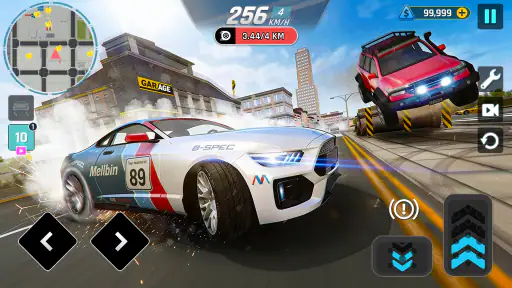
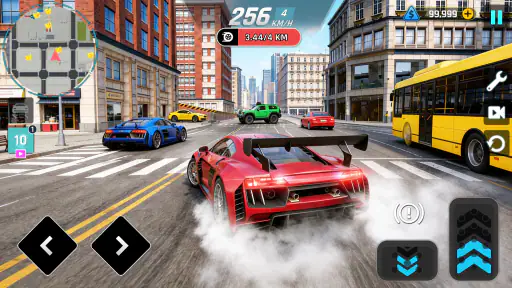
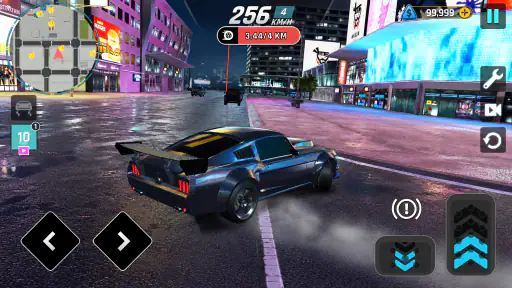


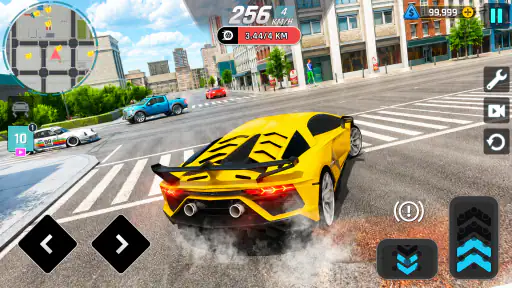

 Analysis by Frivlyz
I spent time with Drift Racer: Real Car Driving as a casual racing game for short sessions, and its appeal became clearest when I treated it as something that could live on a shared household device. It is easy to pick up, free to install, and built around the simple pleasure of controlling a car rather than learning a complicated management system. That makes it approachable, but it also means the experience depends heavily on what you expect from an open-world driving game.
The game comes from SKYVERTY COMPANY LIMITED and sits in the racing category. Its store presentation focuses on a limited open-world car-driving simulation, while the shorter description reduces the idea to drifting. That contrast is useful: I would approach it as a lightweight driving playground first and as a deep racing career game second. The average rating is 4.7 from around 1.8 thousand ratings, and it has passed one million installs, so there is clearly interest in this particular style of mobile driving.
How it feels on a shared phone or tablet
The most practical way I can imagine using this game is in a household where one phone or tablet is passed between people. One person can take a quick turn practicing slides, hand over the device, and let someone else try the same space without needing a long explanation. That short-session quality is more important than it may sound. A shared device often gets used between chores, during a break, or while waiting for another activity, and a driving game that can be opened for a brief experiment fits that rhythm better than a long campaign.
I also found that the drifting focus gives each player an immediate personal challenge. Instead of asking who can complete a large progression path, you can compare who can hold a cleaner line or recover better after losing control. I would not present that as a formal multiplayer feature; it is simply a useful way to make a solo driving game social when people are taking turns on the same screen.
That arrangement works best when everyone agrees on how the device is being used. If one person wants a quiet, focused attempt and another keeps interrupting to take over, the game will feel less enjoyable than it should. A simple household rule helps: decide whether the session is for experimenting, practicing, or taking turns. Because the game is centered on driving rather than a complicated set of menus, people can usually understand the basic appeal quickly, even if they have never played a simulation-style racer before.
For younger players, I would keep the first session supervised, not because the game is presented as unsuitable, but because shared devices create their own problems. A child may accidentally close the game, change a setting, or hand the phone to someone else without understanding whose session is active. Those are ordinary coordination issues rather than faults unique to this title, yet they affect whether the game feels convenient in a family setting.
Starting without turning setup into a chore
Drift Racer: Real Car Driving is free, which removes the first barrier for most households. I could try it without making a purchase decision before knowing whether the driving style suited me. That matters when several people share a device: one person may love drifting while another prefers structured races, and a free starting point makes that disagreement inexpensive.
Gaming Stories You May Enjoy

Dancing Road Turns Short Breaks Into a Test of Rhythm and Timing

Super Stylist Makes Every Outfit a Test of Taste and Patience

Dominoes on Your Terms: Who Should Play and Who Should Pass

Pokémon GO Makes the Familiar World Feel New

Chess.com Turns Rematches Into Rivalries, but Community Has Its Costs

Archery Battle 3D Review: Sharp Aiming, Unclear Feedback
The game is marked for Everyone, so its age context is broad and accessible. Still, an age label should not be treated as a complete household-use guide. Adults should make their own decision based on the player, the device, and the way the game will be used. In a shared setting, the more relevant question is often whether the child can follow the household’s rules for taking turns and handling the device.
The technical entry point is also fairly accommodating. The current version is 1.0.7, and the listed minimum operating system is Android 7.0. That gives owners of older Android phones a reason to consider trying it, although compatibility on paper does not guarantee the same smooth experience on every device. Older hardware may make driving feel less comfortable if performance is inconsistent, so I would test a short session before deciding whether it belongs on a busy family tablet.
One setup habit I recommend is to begin with the device held in the position that feels most stable, then avoid changing orientation halfway through a shared session. Even small changes in grip can make steering feel different, especially when a player is trying to control a drift. I would also start with a short practice run before handing the device to another person. This gives each player a chance to understand the controls instead of blaming the game for a mistake caused by unfamiliar handling.
Another useful boundary is to separate the game from other household tasks. If the same phone is used for messages, schoolwork, navigation, or work, I would not leave it with a child or another player without agreeing when it must be returned. This is not a special feature of the game; it is simply the difference between a personal gaming device and a shared tool. Drift Racer is easy to fit into spare moments, but that convenience can also encourage “one more attempt” when someone else needs the phone.
Making turn-taking work when the game is solo
The game is best understood as a solo driving experience that can support informal turn-taking. I would not choose it for a household specifically looking for built-in coordination, shared accounts, or organized competition. Instead, its value comes from how quickly another person can watch, try, and hand the device back. That is a modest kind of social play, but it can work well with siblings, friends, or parents who want to see what the game is like without committing to a long session.
For a fair comparison, I would agree on one simple goal before starting. Each player might attempt the same type of corner, focus on staying controlled, or simply explore for an equal amount of time. Without a shared goal, the person who enjoys drifting will naturally keep playing while someone who prefers conventional racing may feel there is nothing to measure. The game’s open driving idea is flexible, but that flexibility means the household has to provide its own structure.
This is one of the less obvious trade-offs. Freedom can make the game welcoming because you are not forced into a demanding sequence, yet it can also make a shared session feel vague. In a traditional race game, the finish line settles the result. Here, the fun may come from experimenting with movement, so the “winner” is less obvious unless players agree on what they are practicing.
I found that watching another player can be almost as useful as driving, particularly for beginners. A new player can see how someone else approaches a turn, how much correction is needed, and what happens when a drift goes too far. That makes the game suitable for casual coaching. The person holding the device should explain one adjustment at a time, though. Giving a beginner a list of steering instructions while they are already trying to control the car usually creates more confusion than progress.
For households with several people, I would keep sessions deliberately short. A compact turn reduces arguments and makes it easier for a younger player to feel included. It also avoids the common problem where the most experienced person dominates simply because they know how to recover from mistakes. The game is more enjoyable when practice, not just performance, is treated as part of the turn.
Who will enjoy the driving style
I think the strongest audience is made up of players who enjoy the feel of a car moving through an open environment and who like repeating a maneuver until it feels cleaner. The drifting emphasis gives the game a different mood from a standard point-to-point racer. You are not only thinking about speed; you are also thinking about balance, timing, and how to regain control after the car starts to slide.
That makes it a good fit for someone who wants a relaxed driving toy rather than a demanding competitive ladder. It is also approachable for a person who has not played many racing games, because the central idea is easy to understand: drive, experiment, and work on control. On a shared device, that accessibility helps because not everyone has to learn a large set of rules before taking a turn.
On the other hand, I would skip it if your main goal is a structured racing career with a strong sense of progression, carefully tuned competition, or a large collection of clearly differentiated events. The store summary promises a limited experience, and I think that wording sets the right expectation. This is not the game I would choose when I want a deep substitute for a console racing title. A more specialized racing game would be better for players who need precise competitive systems and a long-term sense of advancement.
I would also hesitate to recommend it to someone who dislikes repeating the same type of driving activity. Drifting is the defining attraction, so the experience may feel narrow if you want many unrelated racing modes. The freedom to practice can be satisfying, but it will not automatically provide variety for a player who depends on new objectives to stay interested.
What changes between adults, children, and guests
The Everyone rating makes the game easier to consider for mixed-age use, but trust still matters more than the label alone. With a child, I would explain that the game is for taking turns and that the phone remains a shared household item. With an adult guest, I would be more comfortable letting them explore independently, provided the device is not needed for something else. With a very young player, I would stay nearby at first so I could help with grip, steering, and returning the device.
There is also a difference between allowing someone to play and allowing them to manage the device. I would let a child drive while keeping responsibility for installing, updating, or changing anything outside the game. That boundary is especially sensible on a phone used for personal communication or work. The game itself may be simple to pick up, but the device around it can contain information that should not be casually passed around.
If several people use the same device, I would avoid assuming that every player has the same progress or preferences. A shared session should be treated as temporary unless the game clearly provides a separate way to preserve individual play. Rather than promising each person a personal record, I would use verbal goals or a household note if keeping track matters. This approach prevents disappointment when players discover that a shared device does not behave like separate personal profiles.
That is another practical trade-off: convenience comes from putting the game in one accessible place, while privacy and personal continuity usually improve when each player has a separate device or clearly separated account arrangement. I would choose the shared-device approach for occasional play, not for a household where several people want a serious individual racing history.
How it compares with familiar racing alternatives
Compared with an arcade racer built around immediate races, this game puts more attention on open driving and drifting. That can feel less pressured because you are not always chasing a countdown or another car. It can also feel less directed, especially if you prefer a clear sequence of events. The right choice depends on whether you want to practice movement or simply finish a race.
Compared with a full simulation racer, Drift Racer is easier to approach but less suitable for someone seeking a detailed driving study. The appeal is the accessible act of sliding through a turn, not the promise of recreating every part of real-world motorsport. I would choose this game for a quick experiment on a phone and a more specialized simulator when I wanted careful tuning, deeper vehicle behavior, or a serious training-like experience.
Compared with a large open-world driving game, its limited scope can actually be an advantage on a shared device. There is less pressure to invest a long evening before understanding the point. A player can try the central driving idea and decide quickly whether it is enjoyable. The cost of that simplicity is that people looking for a huge world full of activities may run out of reasons to continue sooner.
The most useful way to judge it is not by asking whether it replaces every other racing game. It does not. I would judge it by whether its focused drifting experience fits the moment: a short break, a quick demonstration to a friend, or a turn-taking session where everyone wants to try controlling the same kind of challenge.
Small habits that improve the experience
My first tip is to treat drifting as a control exercise rather than immediately chasing speed. Enter a turn with enough room to correct, observe how the car responds, and only then try to hold the slide longer. This approach makes failures informative. It is especially helpful when teaching a new player, because they can learn the relationship between steering and recovery without feeling that every mistake ruins a race.
My second tip is to use the same starting conditions for shared challenges. If one player explores while another tries to drift through a particular area, their results will not mean much. Pick one maneuver, give each person a similar amount of time, and judge control rather than luck. This creates a fairer household contest without pretending the game includes a formal tournament system.
My third tip is to stop a session when the device becomes warm, the controls feel tiring, or the player starts making the same mistake repeatedly. Short driving games invite repetition, but repetition stops being useful when attention drops. A break often helps more than immediately trying again. This is particularly important for children, who may continue simply because the game is available.
A fourth useful habit is to let the least experienced player go early instead of always making them watch the best driver first. Watching can teach, but it can also make a beginner feel that success is impossible. Letting them try, then offering one calm suggestion, creates a better shared experience. The game’s simple premise gives adults a natural opportunity to encourage practice without turning the session into a lesson.
My household verdict
After using it with a shared-device mindset, I see Drift Racer: Real Car Driving as a focused, approachable racing game rather than a complete replacement for every driving alternative. Its free entry, Everyone age rating, and drifting-centered play make it easy to introduce to different people in the same home. The rating of 4.7 and more than one million installs suggest that its basic appeal has reached a substantial audience, but those figures should not be mistaken for a guarantee that every racing fan will want the same kind of experience.
I would recommend it to a household that wants an uncomplicated car game for occasional turns, especially when players enjoy learning by experimenting. I would be more cautious for a family expecting separate profiles, formal competition, or a long progression structure. In that situation, a different racing game with clearer individual boundaries would be a better fit.
My final advice is to install it with modest expectations and decide what role it should play. If you want a quick drifting playground that several people can sample on one device, it makes sense. If you want a deep simulation, a carefully organized career, or a game designed around private personal progress, look elsewhere. The best reason to try it is its immediate, shared-session appeal—not the promise of a complete racing ecosystem.
For me, that is enough to make it worth recommending in the right home. Keep the sessions coordinated, make the device boundaries clear, and judge the game by the quality of its driving moments rather than by how much content it tries to cover. Used that way, this free racing title from SKYVERTY COMPANY LIMITED offers a friendly way to spend a few minutes practicing control, watching someone else improve, and enjoying a simple drift without turning the household device into a source of arguments.
Drift Racer: Real Car Driving Pros and Cons
Pros
- Responsive controls make drifting easy to learn.
- Wide range of cars offers varied driving styles.
- Short races suit quick gaming sessions.
- Smooth performance on many modern devices.
- Upgrades add meaningful progression over time.
Cons
- Frequent ads may interrupt the driving experience.
- Some cars and upgrades require considerable grinding.
- Handling can feel overly sensitive at higher speeds.
- Track variety may become repetitive after extended play.
- Offline features may be limited or inconsistent.
Frequently Asked Questions
What is Drift Racer: Real Car Driving?
Drift Racer: Real Car Driving is a mobile racing game focused on controlled slides, fast cornering, and car customization. After trying it, I found that its main appeal is the accessible drifting system rather than a highly realistic racing simulation. Players can drive through different tracks, improve their control, and compete for better times or scores while enjoying an arcade-style driving experience on Android or iOS devices.
Is Drift Racer: Real Car Driving suitable for beginners?
Yes, the game is generally approachable for beginners, although drifting smoothly takes some practice. The controls are designed for touchscreens, and new players can gradually learn how steering, acceleration, braking, and throttle control work together. At first, the car may feel difficult to manage during sharp turns, but a few races are usually enough to become familiar with the handling and improve consistency.
Does the game include car customization or upgrades?
Drift Racer: Real Car Driving includes progression elements that make improving your vehicle an important part of the experience. Depending on the available game version, players can unlock or modify cars and improve their performance for better acceleration, handling, or drifting control. Customization gives the game more depth than simply repeating races, although some upgrades may require considerable in-game progress or additional resources.
Can Drift Racer: Real Car Driving be played offline?
Some parts of Drift Racer: Real Car Driving may work without a continuous internet connection, particularly basic driving or single-player activities. However, availability can depend on the version installed, and online features, advertisements, cloud saves, updates, or purchases may require internet access. I recommend launching the game once while connected before traveling, so its required files and current content are properly loaded.
Is Drift Racer: Real Car Driving free to download and play?
Drift Racer: Real Car Driving is typically offered as a free download, allowing users to try the core driving experience without paying upfront. Like many mobile racing games, it may include advertisements, optional in-app purchases, or progression systems designed to encourage additional spending. Before downloading, check the Google Play Store or Apple App Store listing for the latest information about ads, purchases, permissions, and device compatibility.


