

Draw Puzzle: Tricky Brain Test
- Reviews
- 4.7
- Version
- 1.1.49
- Installs
- 10,000,000+

Screenshots
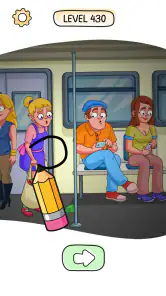
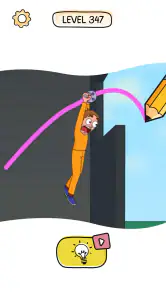
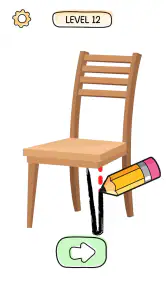
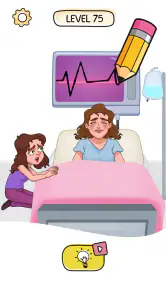
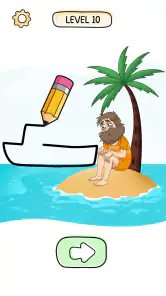
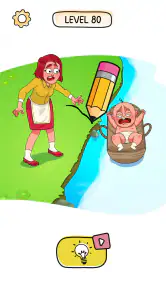
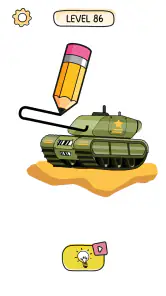
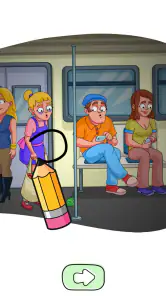
 Analysis by Frivlyz
I approach Draw Puzzle: Tricky Brain Test as a quick, hands-on wordless puzzle game: look at a scene, decide what seems incomplete, then draw the missing part. That simple action is the appeal. Instead of tapping through a list of answers, I have to turn an idea into a mark on the screen, and the game’s response tells me whether I understood the puzzle. It suits the brief moments when I want a small challenge without committing to a long story or a complicated set of rules.
Who will enjoy this kind of puzzle
I’d recommend it to people who like visual riddles and enjoy testing more than one interpretation of a scene. It can work well as a casual game between errands, during a quiet break, or when you want something that asks for a little thought but does not require learning a large control system. Because the central interaction is drawing, it may also appeal to players who find ordinary multiple-choice brain teasers too passive.
It is less suitable if you want a precise drawing tool, a competitive challenge, or a game built around long-term strategy. The point is to make a useful, simple mark rather than create polished artwork. If your favorite puzzles depend on carefully explained logic, a conventional riddle or number puzzle may feel more satisfying; here, part of the fun is figuring out what the scene expects you to add.
A small, practical way to approach a level
When a drawing does not solve a puzzle straight away, I find it helpful to pause and inspect the whole scene before adding more lines. Ask what outcome the picture seems to be asking for, then try the smallest mark that could make that outcome possible. This keeps attempts deliberate instead of turning the screen into a tangle of guesses. It is also a useful way to notice whether I have misunderstood the situation rather than simply drawn inaccurately.
That distinction matters: the challenge is not necessarily to reproduce an object in detail. A broad outline of what is missing can be a better starting point than trying to sketch something perfectly. If I get stuck, I switch perspectives and think about the scene’s practical problem—what needs support, connection, or completion?—rather than naming every visible object. That change of question can make a puzzle feel clearer without making the drawing more elaborate.
The Concept of Drawing Your Way Out
Imagine a game where your drawing skills are put to the test to solve puzzles. That's the core idea behind Draw Puzzle: Tricky Brain Test. The game presents you with scenarios where you must draw to complete the picture or solve a situation. Whether it's drawing a bridge for a character to cross or completing a half-drawn picture, each level offers a new challenge.
User Experience
The game interface is super friendly and straightforward. As soon as you open the app, you’re greeted with vibrant colors and an intuitive menu. You don’t have to wade through complex instructions; just dive right in! The levels start easy, letting you get the hang of things, but don't be fooled. As you progress, the puzzles get trickier, demanding more from your grey matter.
Gaming Stories You May Enjoy

Dancing Road Turns Short Breaks Into a Test of Rhythm and Timing

Super Stylist Makes Every Outfit a Test of Taste and Patience

Dominoes on Your Terms: Who Should Play and Who Should Pass

Pokémon GO Makes the Familiar World Feel New

Chess.com Turns Rematches Into Rivalries, but Community Has Its Costs

Archery Battle 3D Review: Sharp Aiming, Unclear Feedback
One thing that stands out is the responsiveness of the drawing mechanism. You won’t experience any lag, and the app accurately picks up even the slightest touch of your fingertip. It's almost like the app is reading your mind, waiting for you to make the next move.
Graphics and Sound
No game is complete without engaging graphics and sound. This app doesn’t disappoint in either department. The visuals are crisp, with a cartoonish charm that appeals to both young and adult players alike. The sound effects are quirky and add a layer of fun, making each puzzle-solving moment feel rewarding. It’s the little cheers and sounds that make you want to keep going, even when a level seems impossible.
The rhythm of a play session
The loop is easy to understand: study the scene, draw an idea, watch for the game’s response, and decide whether to move on or rethink your approach. That feedback gives each attempt a clear endpoint. When a solution works, the small celebratory response makes progress feel immediate; when it does not, I can reset my thinking and try a simpler interpretation. The pleasure is less about mastering a complicated control scheme and more about spotting the missing connection.
This makes the game naturally suited to short sessions, though its level-by-level structure can also tempt me to continue. A practical stopping point is the end of a solved puzzle: I can put the phone down without having to remember a long sequence of objectives. The trade-off is that “one more” can become a habit if I start chasing the next quick win, so I would treat it as a snack-sized game rather than something to open when I need to focus on a larger task.
What the drawing mechanic asks of you
It helps to think of each sketch as an answer, not a picture. I would avoid spending time on detail unless the puzzle clearly calls for it; a compact line or outline is easier to assess and easier to rethink. This is a particularly useful approach on a small phone screen, where a broad gesture is often more practical than careful artwork. If a plausible drawing fails, I would change the idea before repeating it with tiny adjustments.
There is a subtle trade-off in that simplicity. A drawing puzzle can feel inventive when the scene invites several possibilities, but it can also feel subjective if the intended answer is not the one I would naturally choose. In those moments, I would check what the character or object needs to do, rather than assume the answer must be the most realistic drawing. The game is at its best when that shift in perspective produces a satisfying “oh, of course” moment; it is less satisfying when I feel I am guessing what the level designer had in mind.
How it fits beside other word games
Compared with word searches, crosswords, or anagrams, this is a more visual and tactile kind of brain teaser. It does not ask me to recall vocabulary or build words from letters; it asks me to read a scene and express a solution with a quick sketch. That makes it a good alternative when I want a change from text-heavy puzzles, while a crossword or word game is the better choice if I specifically want language practice or a more methodical challenge.
It also differs from open-ended drawing apps: the drawing has a purpose, and the puzzle’s response helps me judge whether my idea fits. I would not choose it to make art or practice illustration, and players who want a large sandbox of creative tools may prefer a dedicated drawing app. Its appeal is the constraint: one scene, one small intervention, and a result to interpret.
Everyday use, with realistic expectations
Imagine waiting for a friend at a café with a few spare minutes. I can open a level, inspect the picture, try one deliberate mark, and either enjoy the solution or leave the game after that small win. It does not demand that I set aside an evening or remember a complex plot. For a younger player, the Everyone age rating makes it broadly accessible, though I would still judge whether the particular child enjoys visual trial and error rather than assuming every puzzle game will suit them.
It is also a reasonable pick for a short wind-down after work, provided I want light mental engagement rather than a calming, passive screen. A puzzle that resists my first idea can be mildly frustrating, so I would not reach for it when I am already impatient or looking for something completely effortless. The best moments come when I have enough attention to inspect the scene but do not need a deep, uninterrupted stretch of concentration.
Practical details before installing
Teos Oyun makes this free word game, which lowers the barrier to trying its drawing-based approach. It has a 4.7 average from around 87,000 ratings and has passed 10 million installs, so it has found a broad audience. The current version is 1.1.49, it was released on September 15, 2022, and it runs on Android 7.0 or later. Those details make it straightforward to check basic compatibility before downloading.
The game is rated Everyone, while optional in-app purchases range from $0.99 to $5.99 per item. I would go in expecting a free starting point rather than assuming every part of the experience has no purchase option. If you prefer to keep spending disabled on a shared device, it is sensible to review the device’s purchase controls before handing it to a child. That is a general precaution, not a reason to avoid the game: the main question is whether its short visual puzzles are the kind of challenge you enjoy.
Why You Should Try It
If you’re looking for a game that is both fun and educational, Draw Puzzle: Tricky Brain Test is a great pick. It stimulates your problem-solving skills while providing endless entertainment. Plus, it’s a great way to unwind and challenge yourself after a long day. You’ll find yourself saying, “Just one more level,” only to realize you’ve been playing for hours.
In conclusion, this app isn’t just about solving puzzles; it's about engaging your brain in a fun and dynamic way. Whether you're waiting for a friend or just chilling at home, this app is the perfect companion. So, why wait? Give your brain the workout it deserves with a dash of creativity!
My verdict is that the game works best when I want a quick, visual problem to solve and I am happy to experiment with a simple drawing. Its clearest strength is the direct link between my idea and the on-screen response; its main limitation is that a puzzle can feel arbitrary if my interpretation differs from the one the scene expects. If that balance sounds appealing, it is an easy casual game to try. If you would rather have precise wordplay, open-ended art, or a deeper system to master, I would pick a different kind of puzzle instead.
Draw Puzzle: Tricky Brain Test Pros and Cons
Pros
- Engaging and challenging brain puzzles.
- Easy-to-use drawing controls.
- Frequent updates with new levels.
- No internet connection required.
- Suitable for all age groups.
Cons
- Contains ads between levels.
- In-app purchases for hints.
- Limited hints without purchase.
- Some puzzles can be overly tricky.
- Graphics are simple
- not detailed.
Frequently Asked Questions
What is Draw Puzzle: Tricky Brain Test?
Draw Puzzle: Tricky Brain Test is an engaging puzzle game that challenges players to solve problems by drawing solutions directly on the screen. The game combines creativity and brain-teasing puzzles, offering a unique experience where players must think outside the box to progress through various levels. It's designed to be both fun and mentally stimulating, appealing to players of all ages.
How do you play Draw Puzzle: Tricky Brain Test?
Playing Draw Puzzle: Tricky Brain Test involves using your finger or stylus to draw lines or shapes that solve the given puzzle on each level. The game provides hints and requires players to use logic and creativity to complete challenges. Each level presents a different scenario that needs a unique drawing solution, making it a fun and innovative way to test your problem-solving skills.
Is Draw Puzzle: Tricky Brain Test free to download and play?
Yes, Draw Puzzle: Tricky Brain Test is free to download and play, but it does include optional in-app purchases. These purchases can enhance the gaming experience, offering additional hints or removing ads. While the base game is accessible without spending money, some players might choose to make purchases to advance more quickly or to enjoy an ad-free experience.
What are the system requirements for Draw Puzzle: Tricky Brain Test?
Draw Puzzle: Tricky Brain Test is available on both Android and iOS platforms. For Android users, a device running Android 5.0 or higher is recommended. iOS users should have a device running iOS 10.0 or later. The game is optimized for both smartphones and tablets, ensuring a smooth gaming experience across different devices.
Does Draw Puzzle: Tricky Brain Test require an internet connection?
No, Draw Puzzle: Tricky Brain Test does not require a constant internet connection to play. Players can enjoy the game offline once it is downloaded. However, an internet connection may be needed for certain features like in-app purchases or accessing updates. This makes it a great game for playing on the go, without worrying about connectivity issues.


