

Draw Action: Freestyle Fight
- Reviews
- 4.4
- Version
- 2.5.0
- Installs
- 10,000,000+

Screenshots
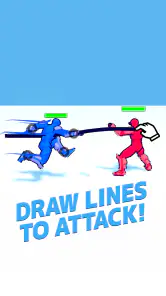
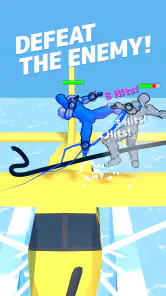
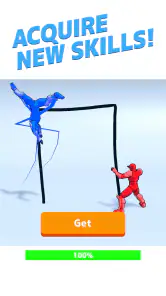
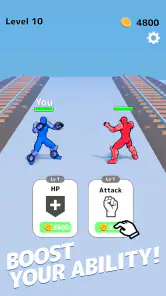
 Analysis by Frivlyz
My first useful piece of advice for Draw Action: Freestyle Fight is to treat each drawing as a practical instruction, not a chance to make the most elaborate sketch possible. The appeal is the link between a line you make and a move your fighter performs, so the best starting point is a gesture you can recognize and repeat. I’d begin with simple shapes, see how they play out, then adjust one thing at a time. That keeps the results easier to read than changing the whole design after every encounter.
A repeatable drawing routine beats guesswork
When I’m trying to understand a game built around drawing attacks, I focus on consistency before cleverness. Make a straightforward mark, watch what the character does, and remember the difference between a drawing that looks impressive and one that works reliably. If a move seems awkward, simplify it rather than adding more strokes. This is a useful habit for touchscreens in particular: a quick, clean gesture is easier to reproduce than a fussy line made while rushing.
That approach also makes short play sessions more satisfying. If I have a few minutes while waiting for a meal or taking a break, I can try one small adjustment and judge its effect without turning the session into a long experiment. The game’s central idea gives each attempt a clear purpose: sketch, observe, and refine. It is a more hands-on loop than selecting a standard attack from a menu, though it also means that the quality of a run depends partly on how comfortably you draw on your device.
What to check before settling into a rhythm
I’d spend the opening moments learning the game’s actual drawing response on the phone or tablet I plan to use. Finger size, screen space, and how steady your hand feels can change how easy a gesture is to make. If the game offers settings that affect sound or controls, check them early and choose what feels comfortable; I wouldn’t assume a particular option is available without seeing it in the installed version. A familiar, repeatable setup matters more than chasing an ideal configuration.
For a fair test, use the same basic drawing more than once before deciding it has failed. A single awkward attempt can come from rushing or misjudging the screen, not necessarily from a bad idea. I also recommend playing somewhere you can give the display your attention: the drawn-action concept is less enjoyable if you keep losing your place or making hurried marks. This is casual action, but it still rewards a little focus.
Where the drawing concept has limits
The freedom to sketch is the hook, but it naturally asks for experimentation. Players who want a traditional fighter with a large set of fixed inputs, precise character builds, or a competitive practice routine may find this a lighter and less controlled alternative. The game’s appeal is not that it replaces that kind of fighting game; it offers a different pleasure, letting you shape an attack instead of memorizing a conventional move list.
There is also a practical trade-off between creative expression and dependable input. A complicated drawing may feel satisfying to make, yet a simpler one can be easier to repeat when the action gets busy. I’d keep a mental note of gestures that are comfortable and effective, then vary them only when I have a reason. That small discipline makes the drawing feel less like random doodling and more like a personal toolkit, without taking away the playful spirit.
Gaming Stories You May Enjoy

Dancing Road Turns Short Breaks Into a Test of Rhythm and Timing

Super Stylist Makes Every Outfit a Test of Taste and Patience

Dominoes on Your Terms: Who Should Play and Who Should Pass

Pokémon GO Makes the Familiar World Feel New

Chess.com Turns Rematches Into Rivalries, but Community Has Its Costs

Archery Battle 3D Review: Sharp Aiming, Unclear Feedback
Unleash Your Inner Artist
You might wonder how drawing and fighting can go hand in hand. Well, in Draw Action: Freestyle Fight, you are the artist and the fighter. The game starts with you sketching your character’s moves, and yes, you read that right—you draw the moves! This unique feature lets you create a repertoire of attacks that are as wild or as sophisticated as you want them to be. It's a refreshing twist from the usual fighting games where you’re stuck with pre-set moves.
Gameplay That Keeps You Hooked
The gameplay is quite intuitive yet challenging. You sketch out various actions, and your character brings them to life in the arena. The controls are smooth and responsive, ensuring that your artworks translate seamlessly into the game. Whether you’re doodling a punch or a complex combo, the game respects your artistic integrity. Plus, the variety of opponents keeps the adrenaline pumping as you figure out how to outsmart each one with your crafty designs.
Visuals and Soundtrack
Let’s talk about the aesthetics for a moment. The graphics are crisp and vibrant, giving life to both your characters and the bustling arenas. It’s like watching your sketches leap off the canvas and into a dynamic world. The soundtrack, on the other hand, is an energetic backdrop that perfectly complements the frenetic nature of the game. Each beat seems to echo your heartbeat as you strategize your next move.
Why You Should Give It a Try
If you’re looking for something that breaks the mold of conventional fighting games, Draw Action: Freestyle Fight is worth a shot. It’s not just about winning battles; it’s about expressing yourself through art and strategy. The game encourages creativity, and every match feels personal because you’re the one designing the action. It’s a fun, engaging experience that challenges both your artistic and tactical skills.
As an action game from KAYAC Inc., it suits players who enjoy quick, experimental bouts more than those seeking the precision and depth of a conventional fighting-game roster. It is free to play, rated Everyone 10+, and its current version is 2.5.0; it runs on Android 6.0 or newer. The game was released on July 22, 2022, and its 4.4 average from around 89,000 ratings, alongside over 10 million installs, suggests that the simple draw-and-fight premise has found a sizeable audience. I’d still judge it by whether the gesture-based play feels good on your own screen, rather than by popularity alone.
A good fit for brief, hands-on breaks
A realistic use case is a short pause between errands: you open the game, try a few drawn moves, and put it away without needing to prepare for a long session. That makes it approachable if you want an action game with a creative input, rather than a story-heavy game that asks you to remember where you left off. It can also work as a playful alternative for someone who likes doodling but wants a clear response to each mark. The drawing is functional, not a blank canvas, so the fun comes from seeing a gesture become an attack.
I’d recommend it to curious players who enjoy trial and error, especially if they like inventing a move and then seeing whether it behaves as expected. It is less suitable for someone who dislikes drawing with a finger, has limited patience for repeating an input, or wants every outcome to follow a highly exact button command. If precision matters more to you than improvisation, a conventional action or fighting game will probably feel fairer and easier to master.
Small habits that make experiments useful
One non-obvious way to get more from the concept is to change only one part of a gesture between attempts. If you redraw an entirely different move each time, it is hard to tell whether the result came from the shape, your speed, or simply a steadier hand. Keeping the rest of your approach consistent gives you a clearer personal sense of what the game responds to. It is not a formal training mode; it is just a sensible way to make experimentation less random.
Another useful habit is to favor movements you can draw comfortably in the space available, rather than trying to copy an elaborate shape you would make on paper. A phone held in one hand is a different drawing surface from a large tablet resting on a desk. If you are playing on a smaller screen, short, decisive marks may be easier to repeat; on a larger display, you may have more room to make a broader gesture. The trade-off is straightforward: a more expressive line can feel personal, while a simpler line is often easier to produce consistently.
How it compares with other action games
Most mobile action games ask you to tap, hold, or swipe a known command, and many traditional fighters build their challenge around learning a fixed set of inputs. This game shifts some of that interaction into drawing. That makes it stand out when you want to improvise, but it is not automatically a deeper substitute for a fighter with tightly tuned move lists. Its advantage is the immediate creative connection between your hand and the attack; its cost is that your input may be less predictable than pressing a dedicated button.
That difference helps answer whether it is suitable for a younger player or a family device: the age rating is Everyone 10+, so I would use that as the guide when deciding who should play. It is also free, which lowers the barrier to trying the idea, though I would not treat “free” as a promise about every aspect of the experience. If you are deciding whether to keep it, the practical test is whether the drawing itself remains enjoyable after the first novelty wears off.
What mastery looks like here
For me, getting better would not mean producing the most artistic attack. It would mean finding a few gestures I can draw without hesitation, understanding when experimentation is worth the risk, and staying relaxed enough to make clear marks. The game’s premise rewards curiosity, but a repeatable personal approach gives that curiosity direction. If I wanted structured competitive practice or extensive control over a fighter, I would choose another kind of game; if I wanted a compact action experience where my own strokes shape the play, this is a more distinctive pick.
In conclusion, Draw Action: Freestyle Fight is a delightful blend of creativity and action. It’s a game that invites you to think outside the box, to play not just with skill but with imagination. So, if you're ready to paint your way to victory, grab your stylus and dive into the action-packed world of freestyle fighting!
Draw Action: Freestyle Fight Pros and Cons
Pros
- Intuitive controls for smooth gameplay
- Vibrant graphics enhance the experience
- Wide variety of characters to choose from
- Engaging storyline keeps players hooked
- Frequent updates with new content
Cons
- In-app purchases can be costly
- Occasional lag in multiplayer mode
- Limited offline features
- Tutorial lacks depth for beginners
- Ads can be intrusive during gameplay
This Game in Other Languages
Frequently Asked Questions
What is Draw Action: Freestyle Fight?
Draw Action: Freestyle Fight is an innovative mobile game that combines elements of action and creativity, allowing players to draw their own fighting moves and execute them in real-time battles. The game offers a unique experience by letting users design their own fight sequences, adding a personal touch to each confrontation.
Is Draw Action: Freestyle Fight free to play?
Yes, Draw Action: Freestyle Fight is free to download and play. However, like many mobile games, it offers in-app purchases. These purchases can enhance gameplay by providing additional content, customization options, or power-ups. Players can enjoy the core game without spending money, but optional purchases can enrich the experience.
What are the basic gameplay mechanics of Draw Action: Freestyle Fight?
In Draw Action: Freestyle Fight, players draw gestures on their screens to perform various fighting moves. Each gesture corresponds to a specific action or combo, allowing for a wide range of fighting styles. The game emphasizes creativity and strategy, requiring players to think on their feet and adapt their moves to counter opponents effectively.
Does Draw Action: Freestyle Fight support multiplayer mode?
Yes, Draw Action: Freestyle Fight includes a multiplayer mode where players can challenge friends or other players worldwide. The competitive nature of the multiplayer mode allows users to test their custom-drawn moves against others, adding a layer of excitement and unpredictability to the game.
What devices are compatible with Draw Action: Freestyle Fight?
Draw Action: Freestyle Fight is available on both Android and iOS platforms. It is designed to run smoothly on a wide range of devices, but for the best experience, it is recommended to play on devices with up-to-date operating systems and sufficient processing power. Always check the app store for specific compatibility requirements.


