

DOP 5: Delete One Part
- Reviews
- 4.6
- Version
- 1.1.20
- Installs
- 10,000,000+

Screenshots
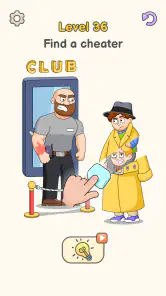
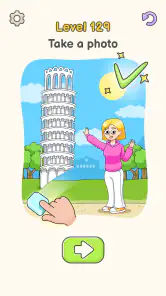
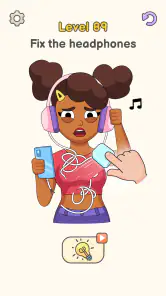
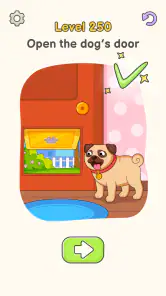
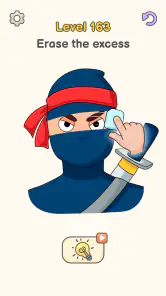

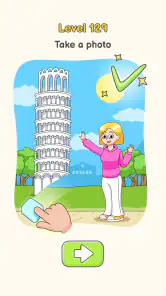
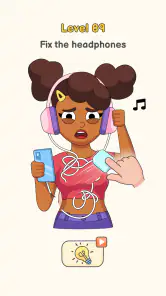
 Analysis by Frivlyz
I tend to judge a picture puzzle by one simple question: does the image give me enough to make a satisfying guess, while still leaving room for a surprise? DOP 5: Delete One Part aims for that balance. It is a casual puzzle game from SayGames Ltd, built around looking at an illustration and deciding which piece to erase. The idea is easy to grasp, but the pleasure comes from noticing what the scene is hinting at rather than swiping at random.
That makes it a different sort of brain break from a word puzzle or a traditional jigsaw. You do not need to remember rules, manage a board, or plan a long chain of moves before starting. I can open it when I have a spare moment, study one picture, and try a small visual deduction. The best fit is someone who enjoys playful riddles and does not mind that the answer can depend on interpreting a cartoon scene in an unexpected way.
What to expect from the puzzle format
The central interaction is deliberately direct: inspect the picture, choose an area, and erase it to test your idea. That simplicity lowers the barrier to entry, especially for someone who usually finds puzzle games too involved. At the same time, it means the challenge is less about mastering a complicated system and more about reading the image carefully. I get the most out of it when I pause to ask what the scene is trying to suggest before I touch the screen.
It helps to treat each level like a visual question, not a drawing task. Look for an odd detail, an apparent contradiction, or a part of the scene that seems to conceal the explanation. A useful habit is to scan the whole illustration first, then consider what might be hidden behind the most suspicious object. That small pause makes the solving feel more intentional and can stop repeated, unconsidered swipes from turning a clever puzzle into trial and error.
When it fits a real day
I can see this working well during a short wait: a few minutes before an appointment, a quiet moment on public transport, or a break between tasks. It asks for attention, but not the sustained concentration I would want for a long logic puzzle. The compact format also makes it easy to share a screen with someone nearby and compare guesses, which can be more fun than racing to finish. For a child or teen, it can prompt a quick conversation about what the picture might mean, though the game’s Teen age classification is worth keeping in mind when choosing for a younger player.
One practical trade-off is that a quick puzzle can also feel brief. If I want a long session with a developing story, a large world to explore, or a demanding sequence of linked problems, this is not the kind of game I would pick. Its appeal is the small, self-contained act of noticing and testing an idea. It works best as a pocket-sized change of pace, not as a replacement for a deeper puzzle game.
Gameplay that Keeps You Guessing
So, here's the deal. DOP 5: Delete One Part is all about using your fingertip as an eraser. Each level presents you with a seemingly simple image, and your job is to swipe away the right part to solve the puzzle. Sounds simple? Trust me, the complexity ramps up pretty quickly. It's like a blend of "spot the difference" and "hidden objects" with a twist. And what keeps you hooked is the sheer creativity behind each puzzle. Just when you think you've seen it all, the game throws a curveball that leaves you chuckling or gasping in surprise.
Gaming Stories You May Enjoy

Dancing Road Turns Short Breaks Into a Test of Rhythm and Timing

Super Stylist Makes Every Outfit a Test of Taste and Patience

Dominoes on Your Terms: Who Should Play and Who Should Pass

Pokémon GO Makes the Familiar World Feel New

Chess.com Turns Rematches Into Rivalries, but Community Has Its Costs

Archery Battle 3D Review: Sharp Aiming, Unclear Feedback
A Feast for the Eyes
Visually, the game is a treat. The graphics are vibrant and playful, reflecting the game's light-hearted nature. Each image is crafted with attention to detail, making the erasing process all the more satisfying. And it's not just about beauty; the artwork often holds the key to solving the puzzles, urging players to look beyond the obvious. The developers have done a brilliant job of ensuring that the visuals enhance the storytelling, making each level feel like a mini adventure.
Perfect for Quick Escapes
One of the things I adore about this game is its accessibility. Whether you're waiting for your coffee or taking a short break, DOP 5: Delete One Part fits perfectly into those little pockets of time. Each level is quick to complete but offers enough challenge to keep you engaged. It's the kind of game you can pick up anytime and feel instantly entertained, without the pressure of committing to long play sessions.
Moreover, the game is designed to make you think outside the box. With no penalties for mistakes, you're encouraged to experiment, swipe, and swipe again. It's a refreshing change from games that punish you for trying different approaches. Here, creativity is your best friend.
Choosing it over other puzzle games
Compared with a crossword, a number puzzle, or a classic tile-based brainteaser, this asks for a different skill: interpreting a single illustration. That is its clearest advantage when I want something visual and light. It is also a less suitable choice if I enjoy carefully proving a solution through formal rules, because the fun here depends on spotting the intended meaning in a drawing. For a player who likes observation but wants a more structured challenge, a logic-grid or number puzzle will likely be more rewarding.
It also sits apart from hidden-object games. Rather than scanning a busy scene for a list of items, I focus on one image and use erasing as the way to test what I think is concealed or out of place. That keeps the interaction brisk, but it offers less of the slow, exploratory searching that makes hidden-object games appealing. I would choose this when I want an immediate visual riddle, and a hidden-object title when I want to linger over a detailed scene.
Getting more from each attempt
When I get stuck, I try not to sweep across the entire picture. A broad swipe can make it harder to tell which clue mattered, while a small, deliberate mark lets me test one idea at a time. I also look at the relationships between objects rather than treating each detail alone: the puzzle may hinge on what a person is holding, what is behind an object, or which part of the scene seems inconsistent. This approach makes the solving feel less like guessing and more like reading a visual joke.
Because mistakes do not carry a penalty in the experience described here, experimenting is part of the appeal. Still, I find that unlimited casual testing can flatten a puzzle if I stop thinking and simply erase everything. For the most satisfying play, I make one hypothesis, try it, and then reconsider the image if it fails. That self-imposed rhythm preserves the little moment of discovery that the game is designed to deliver.
Who should pass, and why
I would recommend it to people who enjoy short, playful challenges, especially anyone who likes picture riddles more than rules-heavy strategy. It can also suit a shared break: one person points out a clue, another suggests what to erase, and the answer becomes a small collaborative puzzle. The free price makes it easy to try without paying upfront, and its 4.6 average from around 42,000 ratings, alongside more than 10 million installs, suggests it has found a broad audience. SayGames Ltd is the developer, and the game is listed for players aged Teen.
I would steer away if I wanted a serious test of deduction, a continuous campaign, or puzzles whose solutions can be derived through consistent formal logic. The image-based format can feel subjective when my interpretation differs from the one a level expects. That is not necessarily a flaw in a casual game, but it is the main reason I would not treat it as my only puzzle option. The game is free, but I would still approach it as a light diversion rather than assuming that its short levels will provide the depth of a paid, long-form puzzle experience.
Practical details and the commitment involved
The game was released on June 7, 2023, and its current version is 1.1.20; it requires Android 8.0 or later. It is categorized as a puzzle game, and the store short description calls it DOP 5. The age guidance is Teen, so I would check that classification before handing a device to a younger child. These details matter most when deciding whether it fits an existing phone and who in the household should play, rather than changing the basic appeal of the erasing puzzles.
Since it is free, there is no purchase decision before trying the central mechanic. The more useful question is whether this particular kind of visual reasoning suits you. If you enjoy guessing what a cartoon image is withholding, you can test that preference quickly; if you would rather solve a puzzle by following stable rules, a conventional logic or number game is a better match. Switching between those styles has little learning cost, but the mindset changes: here, I look for a visual clue and test an interpretation instead of building a solution step by step.
For an everyday example, I would open it while waiting for a coffee, solve a picture or two, and put the phone away when my order is ready. If I were playing with a friend, I would take turns proposing a small area to erase rather than letting one person swipe repeatedly. That keeps the focus on the clue and makes it easier to explain why a guess seems plausible. It is a simple way to make a solitary, quick game feel social without turning it into a competition.
One question people often have about this format is whether they need drawing skill. I do not think so: the task is about choosing where to erase, not making a picture of your own. Another is whether it works for a longer session. It can, if you enjoy a steady succession of brief visual challenges, but I would not choose it expecting a connected story or a major strategic arc. And for a younger player, I would use the Teen rating as the guide rather than assuming that colorful artwork automatically makes it suitable for every age.
There is also a small trade-off in how the hint is presented: because the illustration is both the puzzle and the clue, a level can feel obvious once solved but ambiguous beforehand. If that happens, I step back and inspect the whole scene instead of tapping faster. A short pause often reveals which detail the puzzle wants me to question. If it still feels arbitrary, I move on rather than spending a break trying to force a reading that the picture is not communicating clearly.
Final Thoughts
In a world filled with complex and often overwhelming games, DOP 5: Delete One Part is a breath of fresh air. It's simple yet challenging, funny yet thought-provoking. If you enjoy games that test your creativity and offer a unique experience every time you play, this is definitely worth a download. So grab your eraser and get ready to uncover the unexpected!
DOP 5: Delete One Part Pros and Cons
Pros
- Engaging and fun puzzles.
- Simple and intuitive interface.
- Regular updates with new levels.
- Suitable for all ages.
- Promotes problem-solving skills.
Cons
- Ads can be intrusive.
- Limited hints available.
- In-app purchases for extra hints.
- Some puzzles may feel repetitive.
- Requires internet connection.
This Game in Other Languages
Frequently Asked Questions
What is the main objective of DOP 5: Delete One Part?
DOP 5: Delete One Part is an engaging puzzle game where the main goal is to solve various levels by erasing parts of the drawing. Each level presents a unique challenge that requires players to think creatively and use their problem-solving skills to figure out which part of the drawing must be deleted to reveal the solution.
Is DOP 5: Delete One Part suitable for all age groups?
Yes, DOP 5: Delete One Part is designed to be family-friendly and is suitable for all age groups. The puzzles range in difficulty, providing entertainment and mental stimulation for both children and adults. The game encourages critical thinking and creativity, making it an excellent choice for educational purposes as well.
Does DOP 5: Delete One Part require an internet connection to play?
No, DOP 5: Delete One Part does not require an internet connection to play. You can enjoy the game offline, making it a perfect option for on-the-go entertainment. However, some features, such as accessing updates or leaderboards, may require internet connectivity.
Are there in-app purchases or ads in DOP 5: Delete One Part?
Yes, DOP 5: Delete One Part includes both in-app purchases and advertisements. Players can choose to purchase hints or additional content to enhance their gaming experience. The ads help support the free version of the game, but users have the option to remove them through in-app purchases if they prefer an ad-free experience.
What platforms is DOP 5: Delete One Part available on?
DOP 5: Delete One Part is available for download on both Android and iOS platforms. This wide availability ensures that users with different devices can enjoy the game. To download, simply visit the Google Play Store or the Apple App Store, and search for DOP 5: Delete One Part to begin your puzzle-solving adventure.


