

Dawncaster: Deckbuilding RPG
- Reviews
- 4.5
- Version
- 1.14.097
- Installs
- 100,000+

Screenshots


 Analysis by Frivlyz
When I approach Dawncaster: Deckbuilding RPG, I think less about a quick burst of action and more about whether I’m in the mood to weigh choices, learn from a rough battle, and try a different plan next time. That makes it appealing to players who enjoy thinking through a card game rather than simply collecting wins. It also means the first few sessions can feel demanding if you expect an RPG that guides you gently from one obvious move to the next.
Where new players can get stuck
The most common friction in a deckbuilding RPG is understanding why a promising-looking hand or card choice did not work as expected. I find it helps to slow down and treat each encounter as information: notice which choices seem useful together, and avoid changing several parts of your approach at once. That makes it easier to tell whether a loss came from a risky decision, a deck that lacks focus, or simply a difficult encounter.
This is not the sort of card game I would recommend to someone who wants every run to feel effortless. Strategy is part of the attraction, but it also asks for patience. If you enjoy learning a system by testing ideas, that friction can become satisfying; if you want a relaxed game that never asks you to rethink a plan, it may feel like work.
A sensible way to settle in
I would give the game a few uninterrupted sessions before deciding whether its card choices click for you. Rather than trying to make a deck cover every possible situation, pay attention to a smaller number of choices that support the way you prefer to play. That is a practical deckbuilding habit, not a promise that one particular strategy will always succeed.
It also helps to separate learning the rules from chasing a perfect result. When a run goes badly, think back to the decisions you made instead of immediately assuming the game or device has failed. The distinction matters: an unfamiliar interaction calls for more observation, while a genuine technical problem calls for ordinary app checks.
What to check when play is interrupted
If the game behaves unexpectedly, I would first close and reopen it, then check that the device has enough free storage and that its operating system meets the minimum requirement. Dawncaster’s current version is 1.14.097 and it requires Android 6.0 or later; keeping the app and device software current is a sensible first step when something goes wrong. These checks do not fix every issue, but they can rule out common setup trouble without risking a saved run.
If a purchase or download is involved, confirm that you are using the same store account used for that transaction before trying anything more drastic. I would avoid deleting the game as a first response, especially if I was unsure how progress is handled. A restart is a lower-risk check; reinstalling should come only after considering whether any local progress could be affected.
Gaming Stories You May Enjoy

Dancing Road Turns Short Breaks Into a Test of Rhythm and Timing

Super Stylist Makes Every Outfit a Test of Taste and Patience

Dominoes on Your Terms: Who Should Play and Who Should Pass

Pokémon GO Makes the Familiar World Feel New

Chess.com Turns Rematches Into Rivalries, but Community Has Its Costs

Archery Battle 3D Review: Sharp Aiming, Unclear Feedback
When the phone may be the real obstacle
Not every interruption points to a game fault. Low storage, an older operating system, a temporary store issue, or an unstable connection during a download can all get in the way before play even begins. If the trouble happens elsewhere on the device too, I would look at the phone’s general condition before blaming Dawncaster.
There is a practical trade-off in choosing a card RPG for a phone: it is convenient to pick up, but detailed decisions are easier when I can focus rather than squeeze in a distracted moment. I would save the more thoughtful runs for a calm break, not start one when I need to put the phone away at any second.
Getting to Know Dawncaster
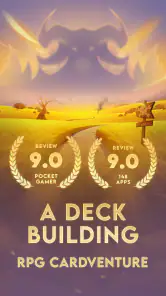
So, what’s the deal with Dawncaster: Deckbuilding RPG? Imagine a world where your strategic mind is your greatest weapon. This game is all about crafting the perfect deck, battling fearsome foes, and diving deep into an epic narrative. Available on both Android and iOS, Dawncaster is a game that promises to keep you on your toes.
The World and Story
From the moment you boot up the game, you’re greeted with a richly detailed world that’s both mysterious and magical. The storyline is gripping, with twists and turns that keep you guessing. I found myself genuinely invested in the characters and the world they inhabit. It's like being part of an epic fantasy novel, but you get to decide the outcome.
Gameplay Mechanics
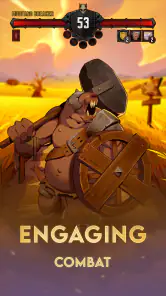
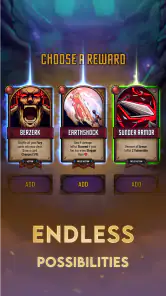
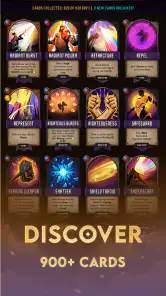
Now, let’s talk about gameplay. Deckbuilding is at the heart of Dawncaster. You’ll spend a considerable amount of time crafting and refining your deck, choosing from a plethora of cards, each with unique abilities. The battles are turn-based and require a keen sense of strategy. Every decision you make could be the difference between victory and defeat. It’s challenging, sure, but incredibly rewarding when you pull off a well-thought-out plan.
Why I Keep Coming Back
What makes Dawncaster stand out in a sea of mobile games is its replayability. No two playthroughs are ever the same, thanks to the varied card combinations and dynamic story paths. Plus, the developers are continually updating the game with new content, so there’s always something fresh to explore.
Another thing I love is the community. It’s always buzzing with players sharing tips, strategies, and fan art. There’s a sense of camaraderie that makes the game even more enjoyable. It’s not just a game; it’s a community of like-minded adventurers.
Making it fit into an ordinary day
A realistic way I’d use a game like this is during a quiet lunch break when I have enough time to concentrate, or at home when I can give a run proper attention. I would avoid beginning a demanding encounter just before a meeting or while waiting in a queue where I may need to stop without warning. The appeal is that a phone makes it available in spare moments; the catch is that strategic decisions are more enjoyable when those moments are not constantly interrupted.
Compared with a straightforward casual card game, this one asks for more planning and gives the decisions a broader RPG frame. Compared with a tabletop-style collectible card game, the draw is less about arranging a match with another person and more about shaping a deck for encounters and story progression. That difference is useful when choosing: I would pick Dawncaster for a solo, decision-heavy fantasy session, but choose a quick-match game if I mainly wanted brief competition or minimal commitment.
One habit that makes the learning curve feel more manageable is to give each run a simple purpose. I might focus on understanding a new card interaction, or test whether a particular group of choices works well together, rather than trying to build an answer to every possible threat. Afterward, I can remember one useful lesson instead of judging the whole attempt only by whether I won. This keeps experimentation from turning into random card selection.
Who will enjoy the price and pace
Wanderlost Interactive’s game is a paid card title, priced at $4.99, with in-app purchases listed from $5.49 to $15.99 per item. I would treat that as a reason to decide what kind of play I want before buying: the central question is whether I enjoy thoughtful deckbuilding and repeat runs, not whether I am looking for a free, disposable time-killer. Its Teen age rating is another useful point for families checking suitability, though a rating alone cannot replace a parent’s own judgement about a particular player.
The game has a 4.5 average from around 4,300 ratings, with roughly 1,000 written reviews and over 100,000 installs. Those figures suggest that it has found an audience, but they cannot tell me whether its pace suits me. I would put more weight on the match between my habits and its style: players who like card synergies, careful turns, and replaying a run with a different approach are the strongest fit. Someone who dislikes reading choices or prefers direct action should probably look elsewhere.
For a player deciding between this and another mobile RPG, the useful question is how much of the fun should come from the cards. Here, deck decisions are central rather than a side activity between story scenes. I like that focus because it gives each choice weight, but it is also the main reason I would not recommend it to a friend who wants a mostly hands-off narrative or fast, reflex-based combat. It is better to know that before paying than to expect a conventional action RPG.
Small checks before committing to a run
The game was released on March 10, 2021, and the current version is 1.14.097. For Android, the minimum operating system is 6.0. I would check the device requirement and available storage before downloading, particularly on an older phone, and make sure the store account is the one I intend to use for any purchase. These are simple checks, but they prevent avoidable confusion around installation and billing.
If a session is interrupted, I would first reopen the app and see whether the issue repeats before trying a reinstall. If it does, I would note what I was doing at the time and whether the problem appears only on this game or elsewhere on the phone. That distinction makes troubleshooting more sensible: a one-off interruption is different from a repeatable fault, and a device-wide issue is different from an app-specific one. I would not assume that deleting the app is harmless to progress unless I had checked how my progress is preserved.
Likewise, if a download or transaction seems stuck, I would check the relevant app store and account before changing game settings or attempting another purchase. Repeatedly tapping a purchase button is not a useful test and can make it harder to understand what happened. Taking a moment to verify the account and transaction status is the calmer route; if the trouble is with the store itself, reinstalling the game is unlikely to be the first thing I would try.
When another choice makes more sense
I would skip Dawncaster if I mainly wanted a game that can be understood in seconds, a competitive match against another player, or a story that carries me forward without asking me to plan around cards. It also may not suit someone who tends to abandon games after a difficult run, because learning through imperfect attempts is part of the appeal. In those cases, a simpler casual card game or a more direct RPG would be a better fit, even if it offers less room to refine a strategy.
On the other hand, I would recommend it to a friend who enjoys noticing how individual cards support one another and likes a fantasy story alongside tactical turns. The best way to judge that fit is not to chase an ideal build immediately. Pay attention to whether choosing, testing, and adjusting feels enjoyable in itself; if it does, the replayability has a real purpose rather than being a promise of endless content.
Final Thoughts
If you’re a fan of strategy games, RPGs, or just love a good story, Dawncaster: Deckbuilding RPG is definitely worth checking out. It’s a game that challenges your mind, immerses you in its world, and keeps you coming back for more. So, grab your phone, download the game, and start your adventure. Trust me, you won’t regret it.
My recommendation comes with one caveat: go in expecting a card-focused RPG that rewards attention, not a frictionless pastime for every spare minute. I enjoy the blend of turn-based battles, deck choices, and story because each run gives me a reason to think differently. At $4.99, I would buy it when that style is genuinely what I want; I would pass if I were only looking for quick action or a game that asks very little of me. For the right player, it is a thoughtful fantasy companion for focused breaks.
Dawncaster: Deckbuilding RPG Pros and Cons
Pros
- Engaging storyline with multiple endings.
- Variety of cards for diverse strategies.
- Challenging gameplay keeps you hooked.
- Regular updates with new content.
- Offline play mode is available.
Cons
- Steep learning curve for beginners.
- In-app purchases can be pricey.
- Limited character customization.
- Some bugs affect gameplay.
- Graphics could be more polished.
This Game in Other Languages
Frequently Asked Questions
What is Dawncaster: Deckbuilding RPG and how does it stand out in the genre?
Dawncaster: Deckbuilding RPG is a unique blend of strategic deck-building and classic RPG elements, designed for both Android and iOS. It stands out due to its intricate card mechanics, captivating storyline, and the ability to customize your hero's abilities through strategic card choices. The game offers a deep, immersive experience that appeals to both deck-building enthusiasts and RPG fans alike.
How do the deck-building mechanics work in Dawncaster?
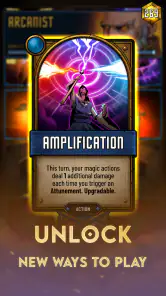
In Dawncaster, deck-building is central to gameplay. Players start with a basic deck and acquire new cards by completing quests, battling enemies, or purchasing them using in-game currency. The key to success lies in strategically building a deck that complements your hero's abilities and adapts to various challenges. Each card has unique effects, and combining them effectively is crucial for overcoming tougher opponents.
Are there any in-app purchases or ads in Dawncaster?
Dawncaster offers a premium gaming experience with no intrusive ads to disrupt gameplay. However, it does feature in-app purchases, allowing players to buy additional card packs or in-game currency to enhance their decks. These purchases are optional and not required to progress, ensuring a fair playing field for all users who choose to engage solely through gameplay.
What kind of graphics and sound can players expect from Dawncaster?
Dawncaster boasts high-quality graphics with detailed, hand-drawn art that brings the fantasy world to life. The visuals are accompanied by an atmospheric soundtrack and sound effects that enhance the immersive experience. The game is designed to run smoothly on both Android and iOS devices, providing an aesthetically pleasing and immersive experience for players.
Is Dawncaster suitable for casual players or is it more for hardcore gamers?
Dawncaster caters to a wide range of players, offering both casual and challenging gameplay. Beginners can enjoy exploring the game's storyline and mechanics at their own pace, while hardcore gamers can delve into its strategic depth and complex deck-building challenges. The game balances accessibility with depth, ensuring that players of all skill levels can find enjoyment.


