

Cultist Simulator
- Reviews
- 4.6
- Version
- 3.6.1
- Installs
- 100,000+

Screenshots
 Analysis by Frivlyz
Hey there, fellow gamers! Today, I'm diving into the mysterious world of Cultist Simulator, a game that has been capturing the imaginations of many with its unique blend of card-based mechanics and storytelling. If you're a fan of strategy games that require a bit of brainpower and a wild imagination, then you might want to stick around for this one.
Why the First Few Sessions Pull You In
My first sessions felt less like following a campaign and more like sorting through a strange desk where every object might matter. Cards appear to have practical uses, but they also hint at relationships and possibilities that are not explained outright. That uncertainty gives small choices weight: I was not simply selecting the strongest move, but trying to work out what the game might be asking me to notice.
That makes the opening especially appealing if you enjoy learning by testing ideas rather than reading a long tutorial. A short session can still leave you with a question to carry into the next one: what happens if I combine these clues, or give a different resource priority? I would avoid looking up every answer immediately. A little uncertainty is part of the pleasure, and solving one connection for yourself is more satisfying than following a recipe.
There is a practical caveat to that approach. Experimentation can also mean wasted time and a run that goes badly because you misunderstood a threat or mistimed an action. If you prefer clear objectives, generous hints, and a steady stream of obvious rewards, the early learning curve may feel more opaque than intriguing. I found it works best when I treat a failed attempt as information rather than as a personal failure.
Unraveling the Mysteries
At its core, Cultist Simulator is a game about discovery and experimentation. You start with nothing but a few cards and a dream, and it's up to you to piece together the story. The game doesn't hold your hand, which can be both thrilling and a bit daunting. Every card you play can lead to new opportunities or dire consequences, making each decision feel significant. It's like being handed a mysterious book with some pages missing; you need to fill in the gaps as you go.
Gameplay Mechanics
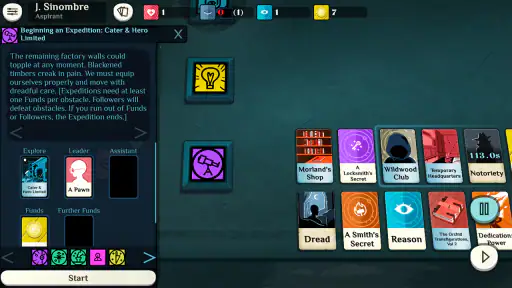
The mechanics of the game are quite simple, yet they offer a depth that's hard to find elsewhere. You play cards to perform actions, like studying, working, or dreaming. Over time, you gather resources, followers, and, of course, secrets. There's a real sense of progression as you slowly build your cult and unlock new possibilities. But be warned, the game can be unforgiving at times. You might find yourself struggling to balance your health, sanity, and the ever-ticking clock as you delve deeper into the mystery.
One thing I love about the gameplay is the sense of discovery. Every playthrough can be different, and the game encourages you to try new strategies. There's a sort of "aha!" moment when you finally piece together a new ritual or unlock a particularly challenging achievement. It's a game that rewards curiosity and persistence.
Gaming Stories You May Enjoy

Dancing Road Turns Short Breaks Into a Test of Rhythm and Timing

Super Stylist Makes Every Outfit a Test of Taste and Patience

Dominoes on Your Terms: Who Should Play and Who Should Pass

Pokémon GO Makes the Familiar World Feel New

Chess.com Turns Rematches Into Rivalries, but Community Has Its Costs

Archery Battle 3D Review: Sharp Aiming, Unclear Feedback
Making the Card Table Manageable
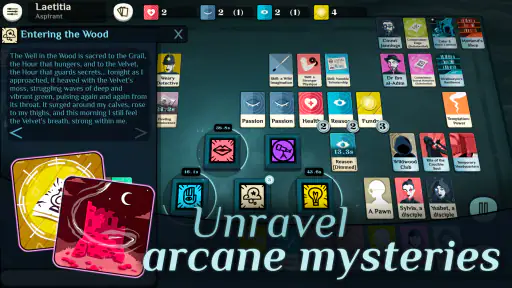
The deeper challenge is not just deciding what a card means; it is keeping track of several demands while actions and timers compete for attention. I found it useful to pause before committing to a sequence and ask which danger needs attention first. If a resource is protecting a run from an immediate threat, spending it on a tempting experiment can create trouble later. That simple check makes the game feel less arbitrary without turning it into a checklist.
Another helpful habit is to read the available card text carefully and observe what changes after an action resolves. When an outcome surprises you, remember the combination and the context rather than assuming the same card always behaves identically. This is a game where recording a brief personal note between sessions can save frustration: a reminder about a discovered interaction is more useful than trying to memorize every branch. I would not keep a full walkthrough beside me unless I wanted to trade discovery for efficiency.
For an everyday use case, I can see it fitting a quiet evening when I have time to focus and do not mind stopping mid-investigation. It is less suited to a distracted commute or a few seconds between notifications, because the important work is interpreting the board and remembering what I was testing. If I only have a short break, I would rather choose a card game with quick rounds and clearer closure. Here, a brief session can end with a new problem instead of a neat win.
How It Sits Beside Other Card Games
Compared with familiar deck-builders, this is not primarily about assembling an efficient combat deck and watching a run reward tight tactical play. Its cards act more like pieces in a narrative puzzle, and much of the satisfaction comes from figuring out their uses and consequences. That difference is the reason I would recommend it to someone who likes experimentation, but it is also why a player seeking brisk matches, direct competition, or a straightforward score chase may be happier with another card game.
It also asks for a different kind of patience than a story-driven adventure that guides you from scene to scene. The narrative here is something I infer through systems and outcomes, so I need to accept gaps and make my own connections. If I want a carefully directed plot with frequent exposition, that can feel distant. If I enjoy building a theory from fragments, the indirect storytelling is the point.
Visuals and Atmosphere
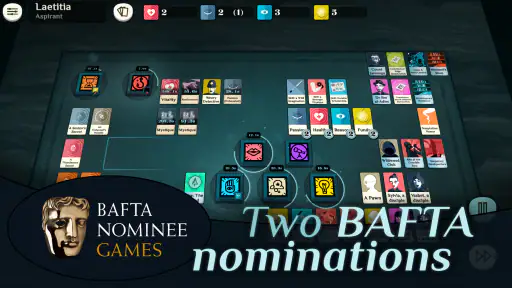
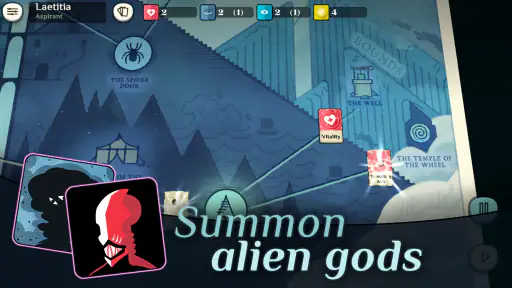
Visually, the game is a treat. The artwork is beautifully crafted, with a style that perfectly complements the game's eerie and mysterious tone. The music and sound effects add to the atmosphere, creating an immersive experience that pulls you into the world of cults and forbidden knowledge. It's the kind of game that makes you want to play with the lights off, just to soak in the ambiance.
The presentation supports the slow, deliberate mood rather than trying to make every moment loud or urgent. I would choose headphones and a calm setting when I want the atmosphere to land, but the game’s appeal does not depend on treating it like a long cinematic session. Its strongest sensory contribution is the way the art and sound make the cards feel like parts of one unsettling world. For players who mainly want bright effects and constant animation, that restrained approach may not be as compelling.
Does It Earn a Place Over Time?
Novelty carries the first stretch: every unfamiliar card invites a guess, and each discovery makes the world seem larger. Month to month, the value depends on whether I still enjoy the underlying routine of observing, planning, and testing. The game gives curious players reasons to revisit its systems, but it is not the kind of title I would keep opening out of habit when I no longer feel interested in solving its mysteries. Its lasting appeal comes from renewed curiosity, not a daily obligation.
That distinction matters for maintenance. There is no need to turn play into homework, and I would not recommend keeping a perfect record of every possibility. A few notes about a confusing interaction or a goal I want to test next time can make returning easier, while too much external planning risks flattening the surprise. When I have been away, I prefer to begin with one clear question rather than trying to remember an entire strategy at once.
Fatigue usually comes from the same qualities that make the game distinctive: slow discovery, opaque outcomes, and the cost of a mistake. If I have little patience for repeating an approach or rebuilding context after a break, the card table can start to feel like work. It is also possible to reach a point where I understand the pattern well enough that the mystery loses some force. I would take a break then, rather than push through sessions that feel like chores.
Final Thoughts
Overall, Cultist Simulator is a game that might not be for everyone, but if you're someone who enjoys a challenge and loves a good story, it's definitely worth a try. It's a game that invites you to make mistakes, learn from them, and try again. And believe me, you'll want to try again. There's always something new to discover, and that's what makes it so captivating.
As a paid card game from Playdigious, it costs $6.99, with in-app purchases listed from $1.99 to $6.99 per item. I would weigh that purchase against the kind of play I actually want: this is most appealing if I value an unusual, self-directed puzzle and expect to return when curiosity strikes. It has a 4.6 average from around 14,000 ratings, and more than 100,000 installs, so it has found an audience, but those figures do not change the personal fit question. The Teen rating is also worth keeping in mind when choosing a game for someone else.
The game was released on April 2, 2019, and its current version is 3.6.1; it supports Android 4.4 and later. Those details make it easier to check basic device fit before buying, while the version number alone is not a reason to expect a particular change in how it plays. My recommendation is simple: choose it when you want a moody, demanding card experience to explore at your own pace, and skip it if you need frequent guidance, quick self-contained rounds, or a low-friction game to play while distracted.
So, if you're ready to embrace the unknown and lead your own cult to glory (or ruin), give Cultist Simulator a shot. Just remember, in this game, knowledge is power, but sometimes, ignorance can be bliss.
Cultist Simulator Pros and Cons
Pros
- Unique narrative-driven gameplay experience
- Deep and engaging lore exploration
- Challenging strategic mechanics
- Regular updates with new content
- Immersive atmospheric soundtrack
Cons
- Steep learning curve for beginners
- Limited tutorial for complex mechanics
- Lacks cloud save functionality
- Occasional bugs and glitches
- Can be time-consuming to progress
Frequently Asked Questions
What is Cultist Simulator?
Cultist Simulator is a narrative-driven card game that immerses players into the mysterious world of cults and the occult. Players take on the role of a seeker after unholy mysteries, in a 1920s-themed setting. The game is known for its deep lore, unique mechanics, and the freedom it gives players to explore and experiment with different paths and strategies.
How does gameplay in Cultist Simulator work?
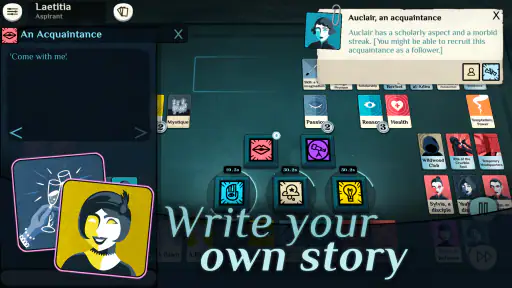
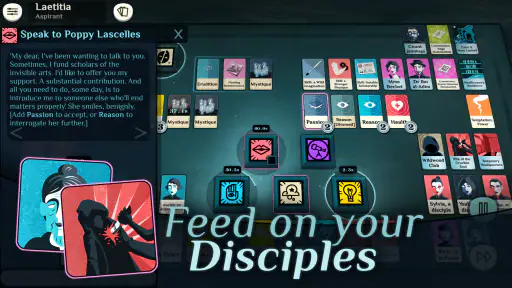
In Cultist Simulator, players use cards and action slots to navigate the story. Cards represent various resources, such as health, reason, and passion, as well as followers and tools. Players make decisions based on these cards, advancing the narrative. The game is designed to be open-ended and encourages exploration, with many paths and endings based on player choices.
Is Cultist Simulator suitable for casual gamers?
While Cultist Simulator offers a rich and immersive experience, it may not be ideal for casual gamers. The game requires strategic thinking, patience, and a willingness to explore its complex systems without much guidance. However, for players who enjoy deep narrative experiences and uncovering secrets, it can be highly rewarding.
Are there any in-app purchases in Cultist Simulator?
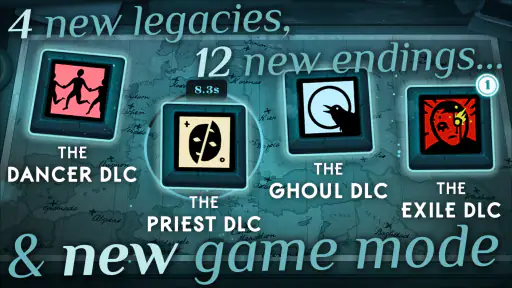
Cultist Simulator is a premium game with a one-time purchase cost. However, there are expansions available as in-app purchases that add new content and depth to the game. These expansions are optional and not necessary to enjoy the base game, but they offer additional stories and mechanics for players looking to expand their experience.
What platforms is Cultist Simulator available on?
Cultist Simulator is available on multiple platforms, including PC, iOS, and Android. This makes it accessible to a wide range of players who can enjoy the game on their preferred device. The mobile versions are optimized for touch controls, providing a seamless experience for players on the go.


