

Crossmath - Math Puzzle Games
- Reviews
- 4.8
- Version
- 3.11.2
- Installs
- 10,000,000+

Screenshots
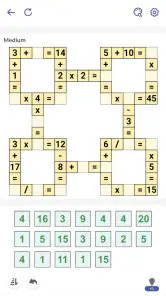
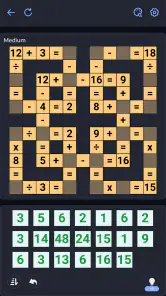
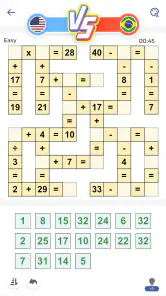
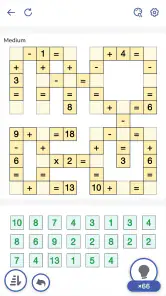
 Analysis by Frivlyz
On a shared phone or tablet, Crossmath - Math Puzzle Games makes a handy little challenge to pass around: one person can work through a puzzle, then hand the device to someone else to try the next one. I like that this turns a quiet moment at home into a low-pressure number game rather than a screen activity that needs everyone to follow the same story. It is a puzzle game from Guru Puzzle Game, and its appeal is clearest when players enjoy working things out at their own pace.
Sharing a device without sharing every habit
A shared device can make the game easy to try, but it is worth treating each person’s play as their own activity. If several people use the same tablet, agree on who is playing before starting and avoid assuming that one person’s progress or choices represent everyone else. I would also keep the device’s ordinary household rules in place: Crossmath does not replace them, and I would not assume it provides separate family profiles or parental controls.
For a relaxed turn-taking routine, set a simple boundary such as one puzzle each while waiting for dinner or during a short break. That keeps the game from becoming a competition over the device, and it gives each player room to think rather than having someone else call out answers. When a child and an adult take turns, the adult can offer a hint only after asking; doing the arithmetic for them removes the satisfying part of the puzzle.
What the number grid asks you to do
Crossmath - Math Puzzle Games is a brain-teasing app that brings a fresh twist to traditional arithmetic puzzles. Whether you're a math enthusiast or just looking for a fun way to sharpen your skills, this app promises to keep you engaged and entertained. Let's dive into what makes Crossmath stand out in the crowded world of puzzle games.
The Challenge of Crossmath
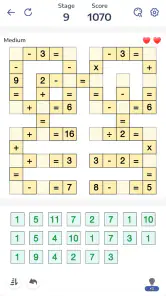
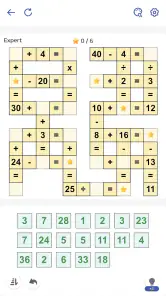
The core concept of Crossmath - Math Puzzle Games is simple yet incredibly challenging. The game presents you with a grid, similar to a crossword puzzle, but instead of words, you fill in numbers. Each row and column must add up to a specific target number, using basic arithmetic operations like addition, subtraction, multiplication, and division. Sounds easy, right? Well, as the levels progress, the complexity ramps up, testing your numerical prowess and logical thinking.
Engaging Gameplay
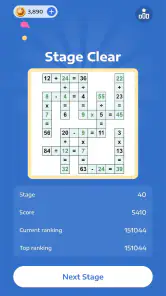
One of the standout features of Crossmath is its ability to keep players hooked. Each puzzle feels like a new adventure, and the satisfaction of completing a particularly tough one is immensely rewarding. The app offers various difficulty levels, making it accessible for both beginners and seasoned math wizards. Plus, there's an option to compete with friends, adding a social element to the mix.
Solving together, not just faster
Crossmath sits between a traditional crossword and a quick arithmetic drill: the grid gives number work a visible structure, while the operations demand more than simply recalling a times table. Compared with a word puzzle, there is less vocabulary to debate and more room to check a chain of calculations. Compared with a speed-based mental-math game, it is a better fit for players who like pausing to test an idea. If someone wants an open-ended logic puzzle with no arithmetic, though, a number grid may feel too constrained.
Gaming Stories You May Enjoy

Dancing Road Turns Short Breaks Into a Test of Rhythm and Timing

Super Stylist Makes Every Outfit a Test of Taste and Patience

Dominoes on Your Terms: Who Should Play and Who Should Pass

Pokémon GO Makes the Familiar World Feel New

Chess.com Turns Rematches Into Rivalries, but Community Has Its Costs

Archery Battle 3D Review: Sharp Aiming, Unclear Feedback
When two people share a puzzle, I find it more useful to explain the reasoning than to race. A practical approach is to look for a row or column with fewer plausible number choices, work through its operations, and then use that result to narrow intersecting lines. This cross-checking is the distinctive skill the format rewards: a calculation that seems reasonable in isolation still has to fit the rest of the grid. It also makes a good family activity for mixed confidence levels, because a less experienced player can contribute by checking a calculation or spotting a conflict.
Keeping turns fair and progress personal
The option to compete with friends can add a social nudge, but it will not suit every household. I would use it when everyone enjoys a friendly challenge, not as a way to judge who is best at math. Players who need more thinking time may prefer taking turns without a timer or score pressure. Since a shared device does not automatically create separate account boundaries, decide whose session it is before opening the game and avoid treating a shared screen as proof that everyone has an individual profile.
For a small everyday routine, one person can solve during a commute break or while waiting for an appointment, then let another household member take the next turn at home. The game’s puzzle format suits short pockets of attention better than an activity that requires coordinating a long session. I would not plan a family evening around it as though it were a full group board game: the main work is still individual calculation, so conversation and turn-taking need to come from the players.
Age, trust, and practical expectations
The game is rated Everyone, which makes its general content suitable for a broad audience, but that does not mean every child will find the arithmetic comfortable. A younger player may need help understanding the operations or checking a result, while an older child who already enjoys number puzzles may prefer to work independently. I would frame it as an optional brain teaser rather than homework or a guaranteed way to improve school performance; solving puzzles can provide practice, but it cannot replace teaching or explain every method.
It is free to download, with in-app purchases ranging from $0.99 to $10.99 per item. On a shared device, I would make sure the person responsible for purchases understands the device’s purchase settings before handing it to a child. That is a sensible general boundary, not a claim that the game includes a family lock or a special approval feature. The practical question is whether the free experience is enough for your household; anyone considering a purchase should check the item and its cost at the point of purchase rather than assume every option is necessary.
There is also a useful distinction between a game that is easy to pick up and one that is effortless for everyone. Basic arithmetic is familiar to many players, yet combining multiplication and division with crossing constraints can make a puzzle feel demanding. If a child gets frustrated, I would switch to a simpler difficulty if available or take a break instead of turning the session into a test. If the player dislikes arithmetic altogether, a picture-based puzzle or word game is likely a kinder choice.
Presentation, focus, and the small trade-offs
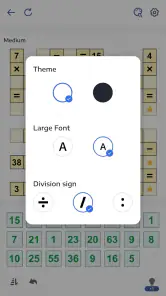
Visually, Crossmath is a treat. The clean, minimalist design ensures that players can focus entirely on solving puzzles without unnecessary distractions. The interface is intuitive, with smooth navigation and responsive controls, which enhances the overall user experience. The soothing background music and sound effects complement the gameplay perfectly, making it a relaxing yet stimulating activity.
That calm presentation is especially useful when I want a quiet puzzle rather than a loud, fast-paced game. Still, arithmetic itself can become mentally tiring, and the same grid-based task may feel repetitive if someone wants a changing story, characters, or a wide mix of puzzle mechanics. Before settling in for a longer stretch, I would check whether the current sound level suits the room and other people nearby; on a shared device, a quiet setting can make the game easier to fit into a household routine.
A practical solving tip is to avoid committing to the first answer that makes one line work. Check the crossing row or column before settling on a number, because a locally plausible calculation can create a dead end elsewhere. If you are playing with someone else, take turns explaining why a result fits both directions. That makes the game less about guessing and gives younger or less confident players a way to learn from the process without having every answer handed to them.
Crossmath is free, and the game is rated Everyone. It has a 4.8 average from around 628,000 ratings, with over 10 million installs, so it has found a large audience among people who enjoy this kind of puzzle. The current version is 3.11.2, and Android users need version 6.0 or later. It was released on March 7, 2023. Those details help set expectations about availability, but they do not change the main decision: this is a focused arithmetic game, not a broad collection of unrelated activities.
Who is most likely to enjoy it?
If you're someone who loves a good challenge and enjoys number games, Crossmath - Math Puzzle Games is definitely worth a try. It's not just about solving puzzles; it's about improving your mental math skills while having fun. The app is also a great educational tool for kids, as it encourages them to think critically and enhances their problem-solving abilities.
I would recommend it most to adults who like doing a small logic task between errands, students who want extra arithmetic practice without a worksheet, and families who can share turns without making speed the point. It is less suitable for someone looking for a completely hands-off relaxation game, a narrative adventure, or a puzzle that avoids calculation. It can also be a poor fit when a player feels anxious about math; in that case, a word or visual logic game may keep the mood lighter.
One fair expectation to keep is that a puzzle app can make practice more engaging, but enjoyment depends on the player’s relationship with numbers. Difficulty choices help make the game approachable, yet they cannot make arithmetic appealing to someone who strongly dislikes it. I would try a short session first and see whether the grid encourages curiosity or turns into a chore. If it does not click, there is no need to push through just because it is educational.
A sensible household verdict
In conclusion, Crossmath offers a unique blend of fun and education. It's a game that not only entertains but also enriches your mind. So, if you're ready to embark on a mathematical adventure, download Crossmath today and see how many puzzles you can conquer!
Happy puzzling!
For a household, I see it as a useful shared-device option when expectations stay modest: take turns, keep purchases under the usual adult oversight, and let each person choose whether to solve or simply watch. Its strongest point is the way intersecting arithmetic clues reward careful checking; its main limitation is equally clear, since the whole experience revolves around number work. If that sounds appealing, it is an easy game to try during a spare moment. If your household wants collaborative play with built-in profiles, a rich variety of activities, or a game that does not ask anyone to calculate, another kind of puzzle will be a better match.
Crossmath - Math Puzzle Games Pros and Cons
Pros
- Engaging math puzzles for all ages.
- Enhances arithmetic and logical skills.
- User-friendly interface and design.
- Offers daily challenges for practice.
- No internet connection required.
Cons
- Ads can be intrusive at times.
- Limited hints available per level.
- Difficulty spikes in later levels.
- Some puzzles are overly repetitive.
- In-app purchases for extra content.
Frequently Asked Questions
What is the main objective of Crossmath - Math Puzzle Games?
Crossmath - Math Puzzle Games is designed to challenge users' mathematical skills through a series of engaging puzzles. The main objective is to fill in the blank spaces with numbers to complete mathematical operations correctly. This not only helps users improve their arithmetic abilities but also enhances their problem-solving skills by encouraging them to think critically and strategically.
Is Crossmath suitable for all age groups?
Yes, Crossmath - Math Puzzle Games is suitable for a wide range of age groups, from young children to adults. The game offers varying levels of difficulty, making it accessible for beginners while still providing challenges for more advanced players. It's a great educational tool for kids to practice math while also serving as a fun brain workout for adults.
Can I play Crossmath offline?
Yes, one of the convenient features of Crossmath - Math Puzzle Games is that it can be played offline. This means you can enjoy solving puzzles and improving your math skills without needing an internet connection, making it perfect for traveling or situations where Wi-Fi is unavailable.
Are there in-app purchases in Crossmath?
Crossmath - Math Puzzle Games is free to download and play. However, it does offer in-app purchases for users who wish to enhance their gaming experience. These purchases can include additional hints, ad removal options, or special puzzle packs. It's important to manage these purchases, especially if children are playing the game.
How does Crossmath help improve my mathematical skills?
Crossmath - Math Puzzle Games helps improve mathematical skills by providing a fun and interactive way to practice arithmetic operations. The puzzles require players to think logically and use basic math operations such as addition, subtraction, multiplication, and division. By regularly engaging with these puzzles, users can enhance their calculation speed, accuracy, and overall numerical fluency.


