

Cooking World® Restaurant Game
- Reviews
- 4.7
- Version
- 1.19.2.1242
- Installs
- 5,000,000+

Screenshots







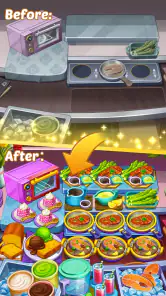
 Analysis by Frivlyz
I like cooking games best when they turn a familiar task into a small, satisfying puzzle: prepare the right things, keep several orders moving, and avoid letting a busy moment become a mess. That is the appeal I would look for in Cooking World® Restaurant Game. It is an arcade game from MAGIC SEVEN CO., LIMITED, built around restaurant cooking and quick decisions rather than a realistic kitchen simulation. The basic idea is easy to grasp, but the pressure of keeping up is what gives each session its shape.
It is free to start, rated Everyone, and listed for devices running Android 5.0 or later. The game has a 4.7 average from around 36,000 ratings and has passed 5 million installs, so it has clearly found an audience among casual cooking-game players. Those figures are useful context, but they do not tell you whether its pace will suit you. I would judge that by how much you enjoy short bursts of multitasking and whether you are comfortable with a game that asks you to repeat its central loop as you progress.
Why the restaurant rush is the main attraction
The strongest idea in the game is the pressure of cooking and serving while several things compete for your attention. Rather than treating each dish as a slow, detailed recipe, the game frames the kitchen as a sequence of quick choices: notice an order, prepare what is needed, and move on before the queue becomes harder to manage. That makes it a natural fit for arcade play. I can pick it up for a brief break without needing to study a complicated set of rules first.
That focus also sets expectations. This is not the app I would choose to learn practical cooking techniques, explore ingredient substitutions, or plan a real menu. Its kitchen is a game space, and the enjoyment comes from responding to demands efficiently. If you want a more contemplative cooking experience, a recipe app or a slower management game may be a better match. If you like tapping through a lively sequence of tasks, the restaurant setting gives the familiar time-management formula an appealing theme.
What the pace asks of you
The early stages are a chance to get comfortable with the controls and the rhythm, but the basic challenge is not simply tapping as fast as possible. I find it more useful to look at the whole screen, identify which order is likely to need attention next, and avoid letting one task distract me from everything else. That habit makes the activity feel more like prioritizing than button-mashing. When the kitchen gets busy, a quick glance before acting can be more valuable than rushing into the first visible action.
A practical way to play is to treat each level as a little workflow problem. Notice which actions can be handled in sequence, keep track of orders that are already underway, and reserve your attention for the parts most likely to hold up service. This does not require a complicated strategy guide; it is simply a better approach than reacting to every new prompt in isolation. The payoff is that success feels earned through awareness as well as speed.
Progress that gives repeat sessions a reason
Progression helps the central loop feel less static. As you move forward, new recipes and kitchen upgrades give you different things to work toward, so the game is not only asking you to repeat the same opening moments forever. I like that kind of structure in a casual title: a short session can still contribute to a longer sense of progress, while a longer session gives me time to settle into the changing demands.
Gaming Stories You May Enjoy

Dancing Road Turns Short Breaks Into a Test of Rhythm and Timing

Super Stylist Makes Every Outfit a Test of Taste and Patience

Dominoes on Your Terms: Who Should Play and Who Should Pass

Pokémon GO Makes the Familiar World Feel New

Chess.com Turns Rematches Into Rivalries, but Community Has Its Costs

Archery Battle 3D Review: Sharp Aiming, Unclear Feedback
There is a trade-off, though. Unlocks can make returning feel worthwhile, but they also mean that players who want a self-contained experience may find the repeated level-based routine less appealing over time. I would approach the game as something to enjoy in manageable sessions rather than as a campaign that needs to be rushed through. If a level becomes frustrating, taking a break is often a better choice than turning a quick pastime into a chore.
A useful fit for everyday breaks
The game makes most sense in the small gaps that show up in an ordinary day: while waiting for someone, taking a quiet break, or looking for something light to play before moving on to another task. A level-based cooking challenge is easier to dip into than a game that demands a long, uninterrupted commitment. I would still play somewhere I can give the screen my attention, because the fun depends on noticing orders and reacting; it is not ideal when I am trying to split focus between the game and something important.
For a realistic example, imagine having a few minutes before leaving home. I would open the game, try a level, and use the session to focus on the order flow rather than trying to make a long run of progress. If I have only a moment or I am likely to be interrupted, I would wait until later instead of starting while distracted. That small choice matters in a time-management game: interruptions can make a manageable rush feel unfair, even when the controls themselves are straightforward.
How it compares with other cooking games
Compared with slower restaurant-management games, this one puts more emphasis on immediate action. The appeal is not primarily designing a business at length; it is keeping a busy kitchen moving in the moment. Compared with simple tapping games, the restaurant theme gives those actions a clearer purpose: orders and dishes help make the screen feel like a working service rather than a sequence of unrelated taps. That middle ground is why I would recommend it to someone who wants more structure than a basic reflex game but less commitment than a deep simulation.
There are good reasons to choose an alternative. If you want open-ended planning, a detailed economy, or a calm experience where customers do not create a sense of urgency, a management-focused title is likely to suit you better. If you want to learn recipes, this is the wrong tool altogether. Cooking World is at its best when you enjoy the familiar arcade trade-off: quick decisions and a lively pace in exchange for less realism and less room to approach the kitchen however you like.
Spending and staying comfortable
The game is free to download, with in-app purchases listed from $0.99 to $155.99 per item. That range is broad enough that I would check each purchase carefully before confirming it, especially if a child uses the device. The Everyone age rating makes the game broadly accessible, but it does not remove the need for an adult to manage spending settings where appropriate. I would begin without buying anything and see whether the normal pace and progression are enjoyable first.
For me, the most sensible way to think about optional spending is as a personal convenience decision, not a requirement for enjoying the basic premise. A purchase is worth considering only if it solves a frustration you have actually encountered and you are happy with its cost. If you feel pushed to pay just to make ordinary play tolerable, pause and reconsider whether this is the right game for you. The price of individual items can vary substantially, so there is no good reason to treat a purchase as an automatic part of getting started.
Who will enjoy the kitchen most
I would point casual arcade fans toward this game if they like clear objectives, brisk sessions, and the satisfaction of handling several small demands at once. It may also work well for someone who enjoys cooking themes but does not need realism from them. Players who prefer planning over quick reactions, dislike repeated level-based challenges, or want a quiet game to play while barely looking at the screen should probably skip it or try a less hurried alternative.
It is also worth asking what kind of challenge you want. If you enjoy improving through attention and practice, the pressure can be motivating. If a timer-like rush quickly becomes stressful, the same design may feel more exhausting than fun. I would give it a short trial with that distinction in mind: do you finish a round wanting to try another, or are you relieved to put it down? That reaction is a better guide than the restaurant theme alone.
Getting more out of a session
One small improvement I would make to my own play is to avoid treating every order as equally urgent. Taking a moment to scan the kitchen before tapping helps me build a mental picture of what is already in progress and what needs action next. It is a simple technique, but it reduces frantic, unplanned tapping and makes the level easier to read. When I am learning a new stage, I focus on understanding its flow before worrying about finishing as quickly as possible.
I would also keep sessions short when I notice my decisions getting sloppy. Arcade cooking games can make repeated attempts tempting, but tired attention usually makes a busy screen feel more chaotic. A brief pause can help more than immediately replaying a level in frustration. This is especially useful if you are playing in a noisy place or between other tasks: choose a moment when you can focus, then stop when the game starts to feel like an obligation.
What to expect from the release
The current version is 1.19.2.1242, and the game was released on November 17, 2024. I mention that because version details can help when checking whether a device can run a title or when comparing what is installed on a phone. The minimum operating-system requirement is Android 5.0, which gives it a broad compatibility baseline for Android devices. As with any mobile game, the experience still depends on the device and the way you prefer to play, so I would make sure the screen is comfortable for quick interaction.
The developer is MAGIC SEVEN CO., LIMITED. The game’s visual presentation, lively kitchen framing, and straightforward arcade premise make its identity easy to understand, while the progression gives returning players something to work toward. I would not confuse polish or a strong rating with a guarantee that every player will enjoy the pace; the most important question remains whether multitasking under pressure is satisfying for you.
A considered recommendation
My recommendation is straightforward: try it if you want a colorful restaurant-themed arcade game that can fill short breaks with active, order-focused play. Go in expecting a quick-service challenge, not a cooking lesson or a detailed business simulator. The free entry makes it easy to see whether the rhythm suits you, while the purchase range is a good reason to keep spending deliberate rather than impulsive.
For me, the best reason to keep playing is the small improvement that comes from reading the kitchen more calmly. The game rewards paying attention to what is happening around the next tap, and that gives its simple premise a little more texture than frantic clicking alone. If you enjoy that balance of speed and awareness, Cooking World® Restaurant Game is an easy one to sample. If you would rather play at your own pace without juggling demands, a slower cooking or management game will probably be a happier choice.
Getting Started: A Feast for the Senses
The moment I launched the game, I was greeted by vibrant graphics and upbeat music that set the perfect ambiance for a virtual dining experience. The interface is user-friendly, guiding you seamlessly through the initial stages of setting up your restaurant. Trust me, even if you’re not tech-savvy, you’ll find it a breeze to navigate.
Gameplay: Cook, Serve, Repeat
Once you’ve got the hang of the controls, it’s time to roll up your sleeves and get cooking! The game offers a wide array of recipes, from simple scrambled eggs to elaborate sushi rolls. Each level ups the ante, challenging your time management and multitasking skills. I found myself frantically tapping the screen, trying to serve dishes before the customers lost their patience. It’s addictive, to say the least!
One thing I particularly loved is the game’s progression system. As you advance, you unlock new recipes and kitchen upgrades, keeping the gameplay fresh and engaging. Plus, the occasional mini-games and special events add a nice touch of variety.
Visuals and Design: Eye Candy Everywhere
The developers have done a stellar job with the visuals. The graphics are colorful and detailed, making every dish look mouthwateringly delicious. The characters are quirky and charming, adding a playful vibe to the game. I couldn’t help but smile at the little animations that bring the restaurant to life.
User Experience: Smooth Sailing
From a technical standpoint, the app runs smoothly without any noticeable lag or glitches. The loading times are minimal, which is a big plus for impatient gamers like me. The in-app purchases are there, but they’re not shoved in your face, allowing you to enjoy the game without feeling pressured to spend money.
Moreover, the game’s community aspect is worth mentioning. You can connect with friends, join cooking clubs, and participate in global tournaments. It adds a competitive edge that keeps you coming back for more.
Overall, I see the game as a fun pick for players who enjoy a cheerful setting and a demanding cooking loop. Its best moments come when I am focused on serving efficiently, while its urgency may not suit someone seeking a peaceful, unhurried experience. I’d give it a try for a short break, keep purchases intentional, and decide from the feel of the kitchen whether I want to return.
Cooking World® Restaurant Game Pros and Cons
Pros
- Intuitive gameplay mechanics.
- Wide variety of recipes.
- Engaging storyline.
- Regular updates.
- Multiplayer mode available.
Cons
- Contains in-app purchases.
- Requires internet connection.
- Ads can be intrusive.
- Limited offline features.
- High battery consumption.
This Game in Other Languages
Frequently Asked Questions
What is Cooking World® Restaurant Game?
Cooking World® Restaurant Game is a fast-paced time-management game where players can become a world-renowned chef by preparing a variety of dishes from different cuisines. The game allows players to build and upgrade their restaurants, manage resources, and complete challenging levels to advance their culinary journey.
Is Cooking World® Restaurant Game free to play?
Yes, Cooking World® Restaurant Game is free to download and play. However, it does offer in-app purchases that can enhance the gaming experience by providing additional resources, unlocking new levels, or offering premium items. Players can choose to play the game without making any purchases, but progress might be slower.
What devices are compatible with Cooking World® Restaurant Game?
Cooking World® Restaurant Game is available for both Android and iOS devices. It supports a wide range of smartphones and tablets, but it is recommended to have a device with updated software and sufficient storage to ensure smooth gameplay. Always check the app store for specific compatibility requirements before downloading.
How can I save my progress in Cooking World® Restaurant Game?
To save your progress in Cooking World® Restaurant Game, you can connect the game to your social media accounts or use cloud saving options if available. This feature allows you to sync your game progress across multiple devices and ensures that you won't lose your progress even if you switch devices or re-install the game.
Are there any multiplayer features in Cooking World® Restaurant Game?
While Cooking World® Restaurant Game primarily focuses on single-player gameplay, it may include some social features such as leaderboards or special events where players can compete or collaborate with friends. However, it does not offer traditional multiplayer modes where players can cook together in real-time.


