

Cooking Diary® Restaurant Game
- Reviews
- 4.6
- Version
- 2.49.0
- Installs
- 10,000,000+

Screenshots







 Analysis by Frivlyz
What makes a restaurant time-management game satisfying is not simply tapping quickly; it is learning how to keep several small tasks from colliding. That is the part I find most engaging in Cooking Diary® Restaurant Game. It puts the player in charge of a busy kitchen, where each order asks for attention and a short delay can throw off the rhythm. The appeal is in gradually getting better at that juggling act, rather than treating every level as a test of reflexes alone.
A kitchen built around keeping several orders moving
Cooking Diary is a free simulation game from Mytona, and its central loop is easy to understand: customers arrive, orders need to be prepared and served, and the pace becomes more demanding as you advance. That clear premise makes it approachable even if you have never played a cooking game before. I can see why it has attracted a broad audience: it has a 4.6 average from around 1.2 million ratings, while its Everyone age rating makes it suitable for a wide range of players.
The practical skill is prioritizing. Rather than tapping every item as soon as it appears, I pay attention to which parts of an order take the most coordination and try to keep the rest of the counter from becoming a distraction. When several customers are waiting, a calm sequence of actions works better than frantic tapping. That small change in approach makes the game feel less like a race and more like a manageable routine.
My most useful tip is to watch the whole queue, not just the customer currently at the front. A quick glance helps me spot orders that can be advanced while another dish is finishing. It also makes mistakes easier to catch before I serve the wrong combination. The game still rewards speed, but treating attention as a limited resource is what helps me stay consistent when the kitchen gets busier.
How the pace changes during an ordinary session
The opening is inviting, with colorful presentation and a story set in Tasty Hills, where the goal is to restore a family restaurant empire. The narrative gives the levels a sense of continuity, rather than making every kitchen feel like a disconnected challenge. I enjoy having that context, though the moment-to-moment pleasure comes from the orders themselves: learning the flow, reacting to new pressure, and seeing whether I can finish a rush without losing track.
That structure suits short play sessions. I might open the game while waiting for an appointment, complete a stretch of service, and stop once I have had my fill of rapid decisions. It is less suited to someone who wants a slow, hands-off simulation where customers can wait indefinitely. The time-management focus means attention matters, and interruptions can make a level feel harder than it would in a quiet moment.
As the pace picks up, I find it useful to make a small plan before tapping: identify what needs to be prepared, notice which orders are close to completion, and avoid switching focus without a reason. This is not a complicated strategy system; it is simply a way to reduce avoidable confusion. If I am playing while distracted, I am more likely to misread the flow, so I save the busiest stages for a time when I can give them a few minutes of focus.
Gaming Stories You May Enjoy

Dancing Road Turns Short Breaks Into a Test of Rhythm and Timing

Super Stylist Makes Every Outfit a Test of Taste and Patience

Dominoes on Your Terms: Who Should Play and Who Should Pass

Pokémon GO Makes the Familiar World Feel New

Chess.com Turns Rematches Into Rivalries, but Community Has Its Costs

Archery Battle 3D Review: Sharp Aiming, Unclear Feedback
Its scale is another sign that the format has lasting appeal: the game has passed 10 million installs and has about 48,000 written reviews. Those figures do not tell me whether every player will enjoy it, but they do reflect how familiar and accessible the basic loop is. The current version is 2.49.0, and it requires Android 8.0 or later on Android devices.
Why the restaurant details matter beyond the kitchen
Between service challenges, the game lets me decorate the restaurant and dress my character. These choices are not the same as mastering orders, but they offer a welcome change of pace after several rounds of concentrated tapping. I like being able to shape the look of my restaurant to suit my taste; I would not choose the game for deep interior-design tools, though, because the main attraction remains the kitchen routine.
Customization is most satisfying when I treat it as a reward or a creative pause, rather than expecting every choice to alter how a level plays. I can make the space feel more personal, then return to the task that defines the game. The same balance applies to cooking contests and the social side: they add variety, but players who only want a pure solo arcade challenge may not care about the community features.
Guilds and guild events make the game feel more social than a basic cook-and-serve title. Joining one can give a player a reason to return and compare progress with others, while friends can make competition more lively. I would approach these features as optional layers, not a requirement for enjoying the core loop. If I prefer to play privately, the restaurant challenges still make sense on their own; if I enjoy shared goals, the guild side provides another reason to check in.
A familiar format with its own balance
Compared with a slower restaurant builder, Cooking Diary puts more emphasis on real-time service and quick decisions. Compared with a bare-bones cooking arcade game, it adds a continuing story, character and restaurant customization, and community activities. That makes it a better fit for someone who likes switching between active rounds and lighter personal touches. A player seeking a detailed business simulator, where staffing, finances, and long-range operations are the main challenge, may be happier with a different kind of game.
It also differs from puzzle games that let me pause between moves. Here, the fun depends on handling a flow of orders under pressure, so I need to be ready to stay engaged while a round is underway. The trade-off is straightforward: the fast loop feels lively when I have a few uninterrupted minutes, but it can become tiring if I want a quiet game to play while doing something else.
There is a useful way to decide whether the pace suits you: try a few rounds when you are not rushed, then notice whether the escalating workload feels motivating or stressful. If I enjoy spotting patterns and refining my sequence, the challenge gives me a reason to keep playing. If I mainly want to relax without tracking a queue, the game’s central strength is also the reason I might choose something slower instead.
What spending changes, and what it does not
The game is free to download, with optional in-app purchases priced from $0.99 to $109.99 per item. Purchases can speed progress, but spending is not the same as learning the kitchen rhythm. I would first see how far patience and careful play take me, then decide whether an optional purchase solves a specific frustration. The highest-priced items are not a sensible starting point for someone who is still unsure whether the format suits them.
For a no-spend approach, I would focus on playing at a comfortable pace and avoid treating every delay as a reason to pay. The freemium structure can make progress feel less immediate if I want to move quickly, so that is the main trade-off to keep in mind. Someone who dislikes optional purchases in free games may prefer a paid title with a straightforward upfront cost; someone comfortable taking progress gradually can try this one without paying to begin.
Who will enjoy this kind of restaurant shift
I would recommend it to players who like quick, tactile challenges and enjoy improving through practice. It is especially suited to short breaks when I can focus on a handful of orders, and to people who like having decoration and social activities around the main gameplay. The storyline gives the progression a friendly frame, while the rushes supply the actual test.
I would skip it if I wanted a realistic restaurant-management sandbox, a completely unhurried cooking experience, or a game that demands no attention once a round starts. It may also be a poor match for someone who finds time pressure frustrating rather than energizing. Those are not flaws in the premise so much as clear consequences of centering the experience on serving a busy stream of customers.
For an everyday example, I might play a few levels during a quiet part of my commute or while waiting for food to arrive, but I would avoid starting a demanding run just before I need to leave. That simple timing choice makes the game easier to enjoy: short sessions fit naturally, while interruptions in the middle of a rush can break concentration. It is a small practical distinction, but one that helps set realistic expectations before installing.
Getting Started: First Impressions
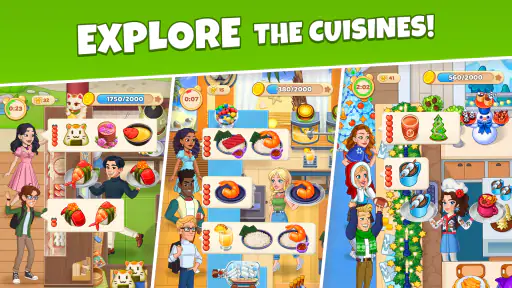
Right off the bat, Cooking Diary® greets you with vibrant graphics and a charming storyline. You’re thrust into the bustling culinary world of Tasty Hills, where your main task is to restore your family’s restaurant empire. It’s not just about cooking; it’s about crafting an experience that keeps customers coming back. The game does a fantastic job of blending storytelling with gameplay, and I found myself genuinely invested in the characters and their quirky backstories.
The Gameplay: More Than Just Cooking
At its core, this game is a time management challenge. You’ll be tasked with preparing and serving dishes to satisfy a stream of hungry customers. The controls are intuitive, making it easy to whip up everything from burgers to sushi. But don’t be fooled; as you progress, the pace picks up, and you’ll need to juggle multiple orders with precision.
Beyond the kitchen, there's a plethora of customization options. You can decorate your restaurant, dress your character, and even participate in cooking contests. This adds a personal touch that keeps things fresh and exciting. I found myself frequently tweaking my restaurant’s layout to match my mood.
Visuals and Sound: Feast for the Senses
The visuals in the game are top-notch. The colors are vibrant, and the animations are smooth, making the gameplay a feast for the eyes. Each dish looks deliciously detailed, and the characters are bursting with personality.
The audio complements the visuals perfectly. The upbeat music and sound effects add to the energetic vibe of the game, keeping you engaged and immersed. It’s the kind of game where you don’t mind leaving the sound on full blast.
Community and Social Features
What really sets this game apart is its community aspect. You can join guilds, compete with friends, and even collaborate in guild events. This social component adds an extra layer of fun, as you can share your progress and strategies with fellow players. It’s a great way to connect with others who share your passion for virtual cooking.
Monetization: What’s the Catch?
Like many freemium games, the game offers in-app purchases. While you can progress without spending money, purchasing gems can speed things up significantly. I appreciated that the game doesn’t aggressively push you to buy. With patience and strategy, you can enjoy all the content without breaking the bank.
Final Thoughts
All in all, Cooking Diary Restaurant Game is a delightful experience for anyone who loves cooking or time management games. It’s engaging, visually appealing, and packed with features that keep you coming back for more. Whether you’re a casual gamer or a culinary enthusiast, this app is sure to satisfy your craving for a fun and immersive gaming experience.
If you’re ready to don your virtual chef’s hat and embark on a culinary adventure, you can find the game on the App Store or Google Play. For me, its strongest appeal is the busy, hands-on rhythm of service, supported by customization and a story that give each session a little extra character.
Cooking Diary® Restaurant Game Pros and Cons
Pros
- Engaging storyline with vibrant characters.
- Frequent updates with new recipes.
- Customizable restaurant and chef avatars.
- Interactive and social gameplay features.
- Offline mode available for on-the-go fun.
Cons
- Requires in-app purchases for faster progress.
- Occasional lag during peak hours.
- Limited energy restricts playtime.
- Some ads can be intrusive.
- Complex recipes may overwhelm beginners.
This Game in Other Languages
Frequently Asked Questions
What is the main objective of Cooking Diary® Restaurant Game?
Cooking Diary® Restaurant Game is a time management and cooking simulation game where players step into the shoes of a budding chef and restaurant owner. The main objective is to prepare and serve a variety of dishes to customers within a set time limit, all while managing restaurant operations and expanding your culinary empire.
Is Cooking Diary® suitable for all age groups?
Cooking Diary® is designed to be family-friendly and suitable for players of all ages. Its colorful graphics, engaging gameplay, and simple controls make it accessible to younger players, while the increasing complexity of levels provides a challenge for older players. However, parental guidance is advised for in-app purchases.
Does Cooking Diary® require an internet connection to play?
Cooking Diary® primarily requires an internet connection to access all its features, including updates, events, and social interactions with friends. While some levels might be playable offline, the full experience is best enjoyed online to take advantage of the game’s community features and regular content updates.
Are there in-app purchases in Cooking Diary®?
Yes, Cooking Diary® includes in-app purchases that allow players to buy in-game currency and boosters. These purchases can enhance gameplay by speeding up progress or unlocking exclusive items, but they are entirely optional. Players can enjoy and progress in the game without making any purchases, although it may require more time and effort.
How often does Cooking Diary® receive updates?
Cooking Diary® receives frequent updates that introduce new levels, events, and seasonal content. The developers are active in adding fresh challenges and features to keep the gameplay exciting and engaging for players. Regular updates also include bug fixes and performance improvements to enhance the gaming experience.


