

Colorwood Sort Puzzle Game
- Reviews
- 4.5
- Version
- 4.1.18847
- Installs
- 10,000,000+

Screenshots



 Analysis by Frivlyz
When I want a quick puzzle that gives my attention something to do without demanding a long session, I’m drawn to color-sorting games. Colorwood Sort Puzzle Game is built around that simple appeal: arrange colored wooden blocks, think through the order, and enjoy the moment when a muddled arrangement becomes neat. It is a puzzle game from Burny Games, and its straightforward premise makes it easy to understand before deciding whether its increasingly involved challenges suit you.
What the purchase details mean in practice
The game is free to download, with optional in-app purchases listed from $0.99 to $99.99 per item. That range is worth noticing before you install, but it does not by itself tell me what any purchase contains or whether spending is needed to keep playing. I would treat paying as optional until I had seen an offer in context, checked its exact contents, and decided that it was worth the cost to me. If you are setting up a device for a child, it is sensible to review purchase controls on the device rather than assume that a free download means there can be no spending.
It is rated Everyone, so its stated age classification is broad. That can help when choosing a casual game for a shared device, although an age label is not a substitute for checking how a particular player responds to puzzle difficulty or optional purchases. The game has a 4.5 average from around 219,000 ratings, alongside roughly 3,800 written reviews. Those figures suggest that many players have tried it, but they cannot tell you whether its pacing, look, or purchase options will fit your preferences.
Sorting as a small, focused task
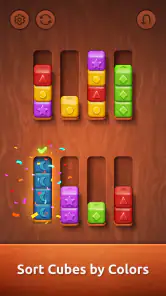
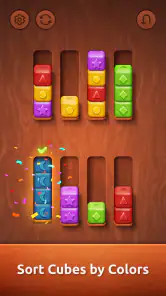
So, what’s the deal with Colorwood Sort Puzzle Game? At its core, it’s a sorting puzzle game that involves organizing colored wooden blocks into their respective tubes. Sounds simple, right? But here’s the twist: as you progress, the complexity increases, requiring more strategic thinking and planning.
The interface is super user-friendly, and the graphics are just beautiful. The wooden textures give a unique feel, almost like you can touch and feel the smoothness of the blocks. It’s visually pleasing and adds a certain warmth to the gameplay that digital games sometimes lack.
That clear visual setup is useful when I only have a short break: I can focus on the visible sorting problem rather than learn a complicated control scheme. A practical approach is to pause for a moment before moving a block and consider which placements preserve room to sort other colors later. The first move that looks tidy may not be the one that leaves the most options open. Thinking one or two steps ahead is a small habit that makes this kind of puzzle feel more deliberate, especially once a level asks for more planning.
Challenging Yet Relaxing
One of the things I appreciate about this game is its ability to strike a balance between being challenging and relaxing. The initial levels ease you in, allowing you to get the hang of the mechanics without feeling overwhelmed. As you advance, the puzzles get trickier, requiring more thought and strategy. However, the game never feels stressful. Instead, it encourages a calm mind and focused attention, making it perfect for unwinding after a long day.
Gaming Stories You May Enjoy

Dancing Road Turns Short Breaks Into a Test of Rhythm and Timing

Super Stylist Makes Every Outfit a Test of Taste and Patience

Dominoes on Your Terms: Who Should Play and Who Should Pass

Pokémon GO Makes the Familiar World Feel New

Chess.com Turns Rematches Into Rivalries, but Community Has Its Costs

Archery Battle 3D Review: Sharp Aiming, Unclear Feedback
That calm quality is best understood as a matter of pace, not a promise that every puzzle will be effortless. If I reach a level where I am no longer seeing a sensible next move, I would rather pause than tap randomly and make the arrangement harder to reason about. Returning with fresh attention can be more satisfying than pushing through while distracted. This makes the game a better fit for a quiet commute, a waiting room, or a short wind-down break than for someone seeking fast action or a constant stream of stimulation.
For an everyday example, imagine having a few minutes before a meeting starts. A color-sorting level gives you a defined task to focus on, and you can stop when the break ends instead of needing to follow a long story. The trade-off is that a puzzle can take more concentration than a passive time-filler. If you are likely to be interrupted repeatedly, it may be better to play when you can give the arrangement a little attention rather than trying to solve it amid constant distractions.
Hints, choices, and where patience helps
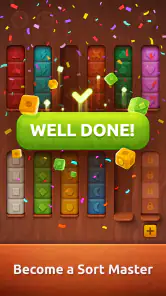
If you’re someone who enjoys puzzle games, then this one is definitely worth a try. It’s a great way to keep your brain engaged while also enjoying some downtime. Plus, the satisfaction of watching the blocks fall perfectly into place is immensely rewarding.
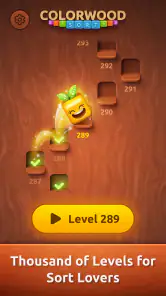
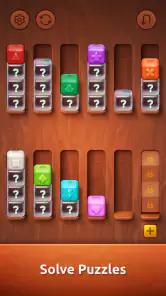
Additionally, the game offers a variety of levels, ensuring that you don’t get bored easily. There’s always a new challenge waiting to be tackled, which keeps things fresh and exciting. It also features a hint system for when you’re stuck, which I found to be quite handy.
I’d use a hint as a nudge when I have genuinely lost track of a useful sequence, rather than as the first response to a puzzle that merely looks untidy. Trying to identify the most constrained color or the move that opens space can help preserve the satisfaction of solving the level yourself. If a hint is offered, it is also worth checking what the game asks in return before using it; I would not assume that every hint has the same conditions. This is a useful distinction for players who prefer solving independently and for anyone keeping an eye on optional purchases.
Compared with familiar alternatives such as number puzzles or word games, this one is more visual and spatial: the challenge is to reason about colored pieces and their arrangement, not recall facts or calculate a result. That makes it approachable for people who like sorting and orderly patterns. On the other hand, someone who wants a story, broad creative freedom, or a very different puzzle mechanic may find a word game, a logic-grid puzzle, or a building game more rewarding. The appeal here depends on enjoying the act of arranging pieces and planning around the space available.
Progress without pressure—and the limits of that promise
As you advance, the puzzles ask for more thought, so I would not treat the early ease as a guarantee that every later session will be equally light. The rising challenge is part of the reason to continue, but it can also make a quick break feel less casual if I become determined to finish a tricky level. I find it helps to set my own stopping point: one puzzle, or a few minutes, rather than chasing an undefined amount of progress.
The hint option can ease a sticking point, but it does not remove the basic need to reason through the sorting problem. Players who dislike being slowed down by a puzzle or who want every session to feel immediately rewarding may prefer a simpler matching game. Likewise, if you enjoy deep strategy with elaborate systems, this focused format may feel too narrow. It is most convincing when its modest goal—working out a better order for the blocks—is exactly what you want.
There is a practical version of that choice for families and shared devices: the Everyone rating makes the game broadly accessible, while the purchase range means it is still sensible to consider who can authorize transactions. I would check the purchase prompt carefully instead of treating a displayed offer as a requirement. The free entry point gives you a way to try the core puzzle experience before choosing whether any optional item is relevant to you.
Who will enjoy it most
I would recommend trying it if you like calm, visual puzzles and want a game that is easy to pick up in short sessions. It can also suit someone who wants a low-key way to practise looking ahead: rather than moving pieces solely to make immediate progress, you learn to think about what each move leaves possible. That is a small but meaningful source of challenge, and it gives the sorting loop more purpose than simply matching colors at random.
I’d suggest skipping it if sorting puzzles already feel repetitive to you, if you want action or narrative, or if you would rather not encounter optional purchase prompts in a free game. It is also not the best match for a player who expects every level to be solved instantly. Knowing that the difficulty becomes more involved can help set expectations: the game’s relaxing style does not mean that planning stops mattering.
Worth a try if you enjoy orderly puzzles
Overall, the Colorwood Sort Puzzle Game has a lot going for it. From its visually appealing design to its engaging gameplay, it’s a game that checks a lot of boxes for me. Whether you’re a casual gamer or someone who thrives on solving puzzles, this game offers something for everyone. So, if you’re on the lookout for a new game to add to your collection, give this one a shot. You might just find it to be as enjoyable and addictive as I did!
It has reached over 10 million installs, and its current version is 4.1.18847, with Android support starting at version 5.1. Those details are useful if you are checking whether an older Android device can run it, but they do not change the central question: do you enjoy taking time to sort a visual puzzle? For me, the combination of a clear premise, gradually tougher levels, and a handy hint option makes it appealing when I want a contained mental break. I would go in for the puzzle itself, keep purchases deliberate, and choose another kind of game when I want more variety or a different kind of challenge.
Colorwood Sort Puzzle Game Pros and Cons
Pros
- Engaging and addictive gameplay
- Colorful and visually appealing graphics
- Easy to understand rules and mechanics
- Offers brain-teasing challenges
- Suitable for all ages
Cons
- Contains ads that can be intrusive
- Limited levels may reduce long-term play
- No multiplayer options available
- Requires internet for some features
- In-app purchases can be costly
Frequently Asked Questions
What is Colorwood Sort Puzzle Game about?
Colorwood Sort Puzzle Game is a fun and challenging puzzle game that involves sorting colorful wooden blocks into their respective containers. The objective is to strategically move and arrange these blocks to complete the levels. It combines elements of logic and strategy, making it a captivating game for puzzle enthusiasts who enjoy sharpening their problem-solving skills.
Is Colorwood Sort Puzzle Game suitable for all age groups?
Yes, Colorwood Sort Puzzle Game is designed to be suitable for players of all age groups. Its simple yet challenging gameplay mechanics make it accessible to both children and adults. The game offers various difficulty levels, ensuring that everyone, from beginners to experienced puzzle solvers, can enjoy the game and improve their skills progressively.
Does the game require an internet connection to play?
Colorwood Sort Puzzle Game can be played offline, making it a great option for those who do not have constant internet access. However, certain features such as leaderboard updates or in-app purchases might require an internet connection. Overall, the offline mode allows you to enjoy the game anywhere and anytime without worrying about connectivity.
Are there any in-app purchases in Colorwood Sort Puzzle Game?
Yes, Colorwood Sort Puzzle Game offers in-app purchases that allow players to enhance their gaming experience. These purchases may include additional levels, hints, or customization options. While the game is free to download and play, these optional purchases can provide extra content and support the developers in maintaining and updating the game.
How do the levels progress in Colorwood Sort Puzzle Game?
In Colorwood Sort Puzzle Game, levels progress in difficulty as you advance. Starting with simple sorting tasks, the challenges become more complex, requiring strategic planning and problem-solving skills. The gradual increase in difficulty ensures players remain engaged, and the diverse range of levels keeps the gameplay exciting and varied. This progression encourages continuous improvement and satisfaction as players overcome tougher puzzles.


