

Colorful Mathematics 2
- Reviews
- 0.0
- Version
- 1.3
- Installs
- 5+

Screenshots


 Analysis by Frivlyz
I like a math game best when its central action is clear enough to pick up quickly, but gives me a reason to think before I tap. Colorful Mathematics 2 is an educational game built around combining dice and moving onward through levels. That makes the basic appeal easy to understand: take a small number-based action, see what it leads to, and decide whether to try again. Its colorful presentation gives the idea a lighter feel than a worksheet, while the dice keep the activity grounded in numbers rather than turning it into a generic puzzle.
The game is made by Humbatov, costs $1.99, and is suitable for everyone. It was released on September 20, 2024, and its current version is 1.3. It has had over five installs, so I’d treat it as a very small, relatively untested release rather than a widely established classroom staple. That context matters: the concept may suit a curious player, but I wouldn’t buy it expecting the breadth or polish of a long-running learning platform. Its minimum operating system is Android 5.1, which makes it accessible to many older Android devices.
From a Dice Move to Another Attempt
I’ll focus on the small decision that makes this game’s loop more useful: pausing to predict what a dice combination will do before moving on. That simple habit can turn a quick turn into active arithmetic practice, and it sets up a closer look at how the game’s feedback shapes the rest of a session.
Starting with the action
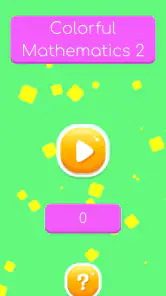
The first thing that caught my eye about Colorful Mathematics 2 was its vibrant interface. The app is splashed with colors that are both inviting and easy on the eyes. It’s designed to keep you hooked from the get-go, which is a big plus for an educational app. I mean, who said learning math has to be dull, right?
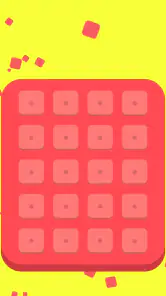
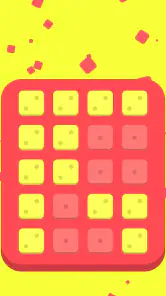
The first useful question is what “combine the dice” means for the player’s own arithmetic practice. The premise puts dice and number relationships at the center, so I’d approach a turn as a chance to pause and work out the combination before acting. That small habit can make a quick game more educational: say the numbers aloud, predict the result, then compare your reasoning with what the game shows. A parent or teacher can use the same routine by asking a child to explain the choice, rather than simply asking whether the move was right.
This is a better fit for brief, low-pressure practice than for a planned lesson with a specific curriculum target. If a learner is working on one particular skill, such as carrying in addition or multiplying fractions, a dedicated exercise app or a teacher’s worksheet will usually be more direct. Here, the attraction is the compact dice-based challenge and the invitation to progress, not a promise that every school topic will be covered.
How the feedback shapes a session
Diving into the app, I was greeted with a variety of levels and challenges. The app covers everything from basic arithmetic to more complex problems, and it does so in a way that's enjoyable. The games are structured in levels, which means you can start easy and gradually tackle more challenging problems as you improve.
Gaming Stories You May Enjoy

Dancing Road Turns Short Breaks Into a Test of Rhythm and Timing

Super Stylist Makes Every Outfit a Test of Taste and Patience

Dominoes on Your Terms: Who Should Play and Who Should Pass

Pokémon GO Makes the Familiar World Feel New

Chess.com Turns Rematches Into Rivalries, but Community Has Its Costs

Archery Battle 3D Review: Sharp Aiming, Unclear Feedback
One of the features I absolutely loved is the instant feedback system. Every time you solve a problem, the app tells you right away if you're on the right track or if you need to give it another go. This immediate feedback loop is fantastic for keeping learners engaged and motivated. Plus, it helps reinforce learning by letting you know where you need to improve.
That feedback is most useful when I treat a mistake as information rather than a reason to rush. After an incorrect attempt, it’s worth taking a beat to check which part of the calculation went wrong: the dice combination, the arithmetic, or an assumption about what the move calls for. Even if the game keeps the pace lively, that little self-check turns a response into practice. For a child who tends to guess, an adult can make the session more thoughtful by asking for the predicted answer before the next action.
A practical after-school routine might be a few minutes of play before homework, with the child explaining one move they found easy and one that made them stop to think. It offers a friendlier way to get started than opening a workbook cold, but I’d keep it as a warm-up rather than a substitute for homework or instruction. If the child is tired or frustrated, the same level-based challenge can feel like another task; a short session and a clear stopping point are more likely to keep the experience positive.
Progress, rewards, and the reason to return
What sets Colorful Mathematics 2 apart from other educational apps is its ability to blend learning with entertainment seamlessly. The app includes mini-games and puzzles that are not only educational but also a joy to play. The developers have done a stellar job at incorporating elements that make learning math less of a chore and more of a creative endeavor.
Moving through levels gives the play a simple sense of forward motion: solving a challenge is not only an answer check, but also part of getting further into the game. That kind of progression can be a useful reward for learners who respond better to a visible next step than to repeated drills. I’d use it to encourage a player to finish a small stretch of practice, not to turn every session into a race for advancement. The learning value comes from thinking through the numbers; progress is a nudge to keep going, not proof of mastery by itself.
Compared with flash-card apps, this approach gives a player more context for a calculation because the dice-combining action provides a concrete starting point. Compared with open-ended math games, the level structure offers a clearer sense of what to do next. The trade-off is that a player who wants a specific practice set, detailed explanations, or a broad classroom curriculum may be better served by a more specialized alternative. I’d choose this game for a light, game-shaped prompt to think about numbers, not as an all-purpose math tutor.
Making the game work for different players
Moreover, the app's adaptability is commendable. Whether you're a beginner or someone who wants to brush up on their math skills, this app caters to all levels. You can easily adjust the difficulty settings to match your learning pace, which I found to be quite user-friendly.
For an adult revisiting basic arithmetic, the useful move is to play actively rather than rely on speed: estimate the result first, then use the game’s response to check the calculation. For a younger learner, I’d sit nearby at first and let them do the number work themselves, stepping in with a prompt only when they get stuck. These approaches make the same simple activity serve different purposes without pretending that every player needs the same kind of practice.
There are also good reasons to skip it. Someone looking for a deep strategy game, a long story, or extensive lessons will likely want something else; the dice-and-level loop is deliberately narrower than those experiences. Likewise, if a learner needs step-by-step teaching after each error, a game that emphasizes immediate response may not replace a tutor or structured course. I’d also be cautious about buying it for a child who is already discouraged by math: bright colors can make an activity inviting, but they cannot remove the need to think through an answer.
Price, compatibility, and expectations
At $1.99, the purchase is a modest one, but I’d still make the decision based on the specific loop rather than the promise of “fun math” in general. The game has over five installs, which means there is little public adoption to use as reassurance. That doesn’t tell me whether the experience is good or bad; it does mean I’d keep expectations measured and consider whether the dice-and-progression idea genuinely appeals to the intended player. It is rated for everyone, and its Android 5.1 minimum requirement makes it an option for older compatible devices.
A few practical questions are worth settling before choosing it. Is it suitable for quick practice? The short, level-based concept makes it a natural candidate for a small break, though I’d stop when attention starts to fade instead of pushing for a long session. Is it a full math course? I wouldn’t rely on it that way; the game is best treated as supplementary number practice. Does it suit a parent and child playing together? Yes, especially if the adult asks the child to explain a combination and leaves the actual answer to them. Should an adult use it to refresh arithmetic? That can work too, provided the goal is light, active revision rather than formal instruction.
Final Thoughts
In a world where educational apps are a dime a dozen, Colorful Mathematics 2 really stands out. It’s a fantastic tool for anyone looking to improve their math skills while having a bit of fun. The app’s colorful design, engaging gameplay, and comprehensive features make it a must-have.
So, whether you're trying to make math more appealing to your kids or you're an adult looking to refresh your math knowledge, give Colorful Mathematics 2 a try. It's an investment in learning that doesn’t feel like work, and that’s what makes it so special.
My more measured recommendation is to see it as a small, focused practice game: make a move, check the result, and use the next level as a reason to return. That loop is the strongest argument for trying it, particularly when a learner needs a gentle way into arithmetic rather than another page of drills. Just keep the goal modest. If the player enjoys the dice-based decisions and benefits from pausing to explain them, the game can earn a place in a short routine; if they need detailed teaching or a much wider range of material, a dedicated learning tool is the better choice.
Colorful Mathematics 2 Pros and Cons
Pros
- Engaging visual learning tool.
- Improves math skills creatively.
- User-friendly interface.
- Variety of math challenges.
- Suitable for all ages.
Cons
- Limited free content.
- Ads interrupt gameplay.
- In-app purchases required.
- Needs constant internet.
- Some levels too easy.
Frequently Asked Questions
What is Colorful Mathematics 2 all about?
Colorful Mathematics 2 is an engaging educational app designed to make learning mathematics fun and interactive for users of all ages. It integrates colorful graphics and game-like elements to help users understand complex mathematical concepts, solve problems, and improve their arithmetic skills in a fun environment. Ideal for students and math enthusiasts, this app offers a wide range of mathematical challenges and activities that cater to various learning levels.
Is Colorful Mathematics 2 suitable for all age groups?
Yes, Colorful Mathematics 2 is designed to be suitable for users of all age groups, from young children to adults. The app offers various levels of difficulty, making it a versatile tool for both beginners and advanced learners. With its user-friendly interface and engaging content, it provides an enjoyable learning experience for preschoolers, students, and even adults looking to brush up on their math skills.
What features does Colorful Mathematics 2 offer to enhance learning?
Colorful Mathematics 2 offers a range of features to enhance learning, including interactive lessons, quizzes, and puzzles that cover various mathematical topics. The app includes progress tracking, which allows users and educators to monitor improvement over time. Additionally, its colorful visuals and engaging sound effects create a stimulating learning environment that keeps users motivated and interested in mastering mathematical concepts.
Does Colorful Mathematics 2 require an internet connection to use?
No, Colorful Mathematics 2 does not require an internet connection to use, which makes it highly convenient for users who wish to learn on-the-go or in environments without stable internet access. Once downloaded, the app's features and content can be accessed offline, allowing continuous learning without interruption.
Are there any in-app purchases in Colorful Mathematics 2?
Colorful Mathematics 2 offers some optional in-app purchases to enhance the learning experience. These purchases may include additional content packs, ad removal, or premium features that provide users with more in-depth learning tools and resources. However, the app also offers a substantial amount of free content, ensuring that all users have access to quality educational material without mandatory purchases.


