

Color Block: Jam Puzzle 3D
- Reviews
- 4.3
- Version
- 1.34.0
- Installs
- 500,000+

Screenshots


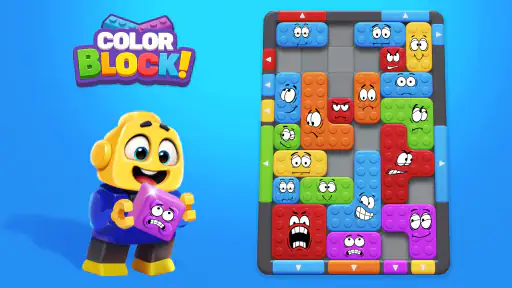
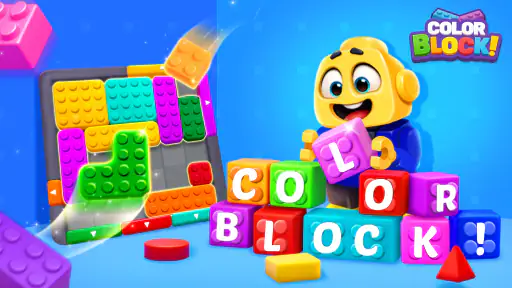
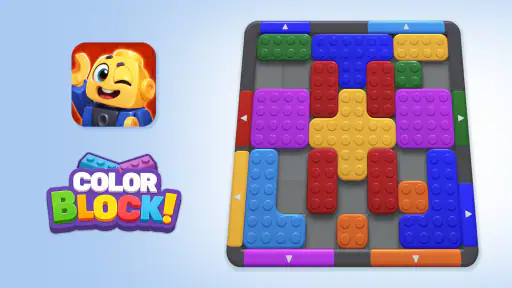
 Analysis by Frivlyz
I picked up Color Block: Jam Puzzle 3D expecting a quick color-sorting distraction, and that is exactly where it fits best. It is a casual puzzle game from Flare Star LLC built around sliding and matching colored blocks so the board can be cleared. The idea is easy to understand within moments, but the small decisions become more interesting when the playing area starts to feel crowded and one careless move leaves the useful pieces trapped behind the wrong ones.
What makes it worth discussing is not a complicated story or a large collection of modes. The appeal is the compact puzzle loop: look at the arrangement, identify the order in which blocks need to move, and make progress without creating a worse jam. I found it particularly suitable for short breaks because a single session does not require the same commitment as a longer strategy game. At the same time, anyone looking for deep character development, competitive matches, or a substantial narrative will probably find this too focused.
How it works when several people share a device
This is the kind of game that can work well on a household phone or tablet because it is immediately understandable to a new player. A person does not need a long explanation before trying a puzzle. I could hand the device to someone else, describe the basic aim, and let them learn through the next move. That makes it more approachable than many puzzle games that begin with several menus, currencies, or layered tutorials.
A realistic use case is a short wait in a kitchen, living room, or transport queue. One person can play while another watches, then pass the device over when a puzzle becomes difficult. The observer may notice a blocked route that the player has missed, so the game can become a small shared problem rather than a completely solitary activity. That is one of its quiet strengths: the board is visually readable enough for another person to follow along.
Still, shared play has an obvious boundary. The game is designed around individual touch decisions, not simultaneous participation. Passing the device back and forth can be enjoyable for a few rounds, but it is not a substitute for a multiplayer game. If your household wants direct competition, shared scores, or a turn-based system designed for two people, a dedicated multiplayer puzzle title will be a better fit.
I also recommend agreeing on who is using the device before starting a serious puzzle. The attraction of this format is that one move can change the whole position. A second player who taps out of curiosity may not understand the plan the first player was following. On a shared device, that is less a flaw in the game than a practical reason to treat each active puzzle as belonging to one person at a time.
What the first session feels like
The opening experience is pleasantly direct. The store short description calls it Color Block, while the fuller presentation explains the slide-and-match concept. In practice, the important part is that the visual goal is apparent: blocks need to be arranged and cleared through color-based decisions. I did not need to memorize a rulebook before the central action made sense.
Gaming Stories You May Enjoy

Dancing Road Turns Short Breaks Into a Test of Rhythm and Timing

Super Stylist Makes Every Outfit a Test of Taste and Patience

Dominoes on Your Terms: Who Should Play and Who Should Pass

Pokémon GO Makes the Familiar World Feel New

Chess.com Turns Rematches Into Rivalries, but Community Has Its Costs

Archery Battle 3D Review: Sharp Aiming, Unclear Feedback
The best way to approach an unfamiliar board is to pause before touching anything. I look for pieces that can move freely, then check whether moving one of them will open a route for another color. This is more reliable than chasing the first obvious match. A useful habit is to identify the pieces that are acting like gates. Clearing one may create several options, while moving an isolated block may accomplish very little.
That small planning step is where the game becomes more than a reflex toy. The controls may be simple, but the order of actions matters. I often found that the visually attractive move was not the practical one. A color that appears ready to clear can be better left in place if it is blocking access to a more important section of the board.
Setting expectations on a shared phone or tablet
Because this is a free game, it is easy to install casually and leave available for anyone in the household. The practical question is not whether the entry cost is high—it is free—but whether the device owner is comfortable with the way optional purchases are handled. The listed in-app purchase range runs from $1.99 to $99.99 per item, so I would not let a child use a shared device without the household’s normal purchase safeguards and an agreed rule about spending.
This is especially important when the game is treated as a harmless waiting-room activity. A child may understand the puzzle without understanding that a button connected to progress or convenience can have a real cost. I would explain the boundary before handing over the device: playing is allowed, but any purchase requires the owner’s permission. That simple conversation is more useful than assuming the age label answers every household question.
The game is marked Everyone, which matches its approachable puzzle premise. That does not automatically make it suitable for every child in every home. Parents and caregivers still need to consider how a particular child responds to repeated challenges, optional spending, and screen-time limits. For a younger player, I would start with supervised use, not because the puzzle itself is difficult to understand, but because shared-device habits are easier to establish at the beginning.
There is also a useful distinction between account ownership and device access. If several people use the same phone, each person should understand that their activity is taking place in the same household environment rather than inside a private, personal game space. I would avoid promising separate progress or separate settings unless the game visibly provides them. The safest arrangement is to treat the device’s current game state as shared and coordinate before making changes.
Coordination makes the simple puzzle more enjoyable
When I played alone, I tended to make decisions quickly. When someone else was watching, I explained why I was leaving a block untouched or why I was opening a particular route first. That explanation changed the experience. The game became a small exercise in sequencing, and the other person could contribute without needing to control every move.
A good household routine is to let one person be the active player and the other person be the spotter. The spotter can suggest a possible route, but the active player makes the final tap. This avoids the confusion that comes from two people giving instructions at once. It also keeps responsibility clear if a move turns out badly.
Another practical tip is to use difficult boards as discussion puzzles rather than immediately restarting. Before trying again, I ask what caused the jam. Was a useful passage closed too early? Was a movable color used before it had opened access to another block? That short review helps players improve their planning instead of relying on random experimentation.
This approach is particularly useful for children who are learning to slow down. The game does not need to be turned into a lesson, but it naturally rewards looking ahead. I would keep the tone light, because the moment it becomes a test of intelligence, a casual game can lose its appeal. The better goal is to show that trying a different order can solve a problem.
Where the game fits among casual puzzle alternatives
Compared with match-three games, this one puts more emphasis on movement order and clearing access than on rapidly forming combinations. A match-three player may be used to scanning for immediate patterns and creating chain reactions. Here, I found myself thinking more about what each move would expose or block. That makes the game a better choice for someone who likes spatial organization but does not want a timer-driven challenge.
Compared with classic tile-sliding puzzles, the color theme makes the objective friendlier at a glance. Traditional number or image tiles often ask the player to track a single final arrangement. This format feels more focused on removing congestion and making the next useful move available. If you prefer a fixed mathematical target, a traditional sliding puzzle may feel more precise. If you prefer a board that communicates through color and movement, this is the more inviting option.
It also differs from word puzzles because there is no vocabulary barrier. That helps when a household has players of different ages or language backgrounds. The trade-off is that the game offers less variety for someone who wants clues, trivia, or a changing subject matter. Its narrow focus is part of its charm, but also the reason it may become repetitive for players who need constant novelty.
For relaxation, I would choose this over a fast arcade game when I want to think without feeling rushed. For a social evening, however, I would choose a game built specifically around turns or direct cooperation. The best comparison is not that one type is universally better; it is that Color Block: Jam Puzzle 3D suits quiet coordination and short individual turns, while other casual games may be stronger for competition or variety.
Details that affect everyday use
The game is free to download and is listed for devices running Android 6.0 or later. That gives it a broad practical reach for people who keep an older compatible phone around the house. I would still check the device before planning to install it for a child or relative, especially if the phone is rarely updated or has limited storage available. Compatibility is useful, but a smooth shared-device experience also depends on the condition of the hardware.
The current version is 1.34.0. When a game is shared among several people, keeping the installed version current is worth treating as a household task rather than leaving it to chance. Updates can affect how an app behaves, and different family members may assume the game is ready to use at any time. I would update it when convenient, then let everyone know if the interface or available options look different afterward.
The game has an average rating of 4.3 from around 16 thousand ratings, and it has passed 500 thousand installs. Those figures suggest that the concept has found a substantial audience, but they should not replace personal judgment. A popular casual puzzle can still be wrong for someone who dislikes repeating board-based tasks, and a less adventurous player may enjoy it precisely because it avoids complicated systems.
One of my more useful habits was to avoid treating every open space as an invitation to move immediately. I first separate the board mentally into pieces that are accessible now and pieces that will become accessible later. That distinction prevents wasted moves and makes the puzzle easier to explain to another player. It is a small technique, but it changes the game from tapping at colors to managing a sequence.
I also found it helpful to stop after a failed attempt instead of making several hurried moves in frustration. On a shared device, this matters because frustration can quickly turn into blaming the previous player. A short pause keeps the game casual and makes it easier to restart with a new plan. This is one of those practical lessons that does not appear in a store summary but improves the experience considerably.
Who should play it, and who should skip it
I would recommend it to people who enjoy visual sorting, light spatial planning, and puzzles that can be picked up without preparation. It is a good candidate for a personal break, a family tablet used in turns, or a quiet activity for someone who prefers thinking over rapid reactions. The Everyone age label also makes it easier to consider for mixed-age households, provided spending and device boundaries are handled by the adults responsible for the device.
I would be more cautious about recommending it to someone who wants a long-term competitive system. There is no reason to choose a compact color-block puzzle when your main motivation is online rivalry, detailed rankings, or a strong social network inside the game. Likewise, players who need a story, characters, or a large sense of progression may quickly reach the limits of this format.
It may also be a poor choice for a household that cannot agree on purchase rules. The free entry point is convenient, but the presence of optional items means the owner should configure the device responsibly and make expectations clear. I would not describe the game as a problem for that reason; I would describe it as an app that deserves the same spending conversation as other free games.
For younger children, I would introduce it in short sessions and watch how they react when a board does not resolve immediately. Some will enjoy trying different arrangements, while others may tap repeatedly and become upset. The game can support patient problem-solving, but it cannot replace an adult’s judgment about whether the child is ready for that kind of challenge.
My household verdict
After spending time with it, I see Color Block: Jam Puzzle 3D as a focused casual game rather than an all-purpose entertainment app. Its strongest quality is the clarity of its central idea: colored blocks, limited space, and a need to choose the right order. That clarity makes it easy to share, easy to explain, and easy to fit into a short break.
My recommendation comes with a simple condition: treat the game as a shared activity with clear boundaries, not as an automatically private or purchase-free space just because the puzzle is suitable for Everyone. On a family device, decide who is playing, who can approve purchases, and whether the current board belongs to one person before passing it around. Those small rules prevent most of the friction I can imagine in everyday use.
The game is at its best when I slow down enough to read the board, discuss a difficult position, and enjoy the satisfaction of opening a route that initially looked blocked. It is less convincing for players who want social competition, narrative depth, or a constantly changing set of activities. For the right audience, though, the narrow design is a benefit rather than a weakness.
My final view is positive but measured. Flare Star LLC has made a straightforward color-block puzzle that earns its place as a quick, approachable option on Android devices running Android 6.0 or later. I would install it for a household looking for an easy game to pass between people, as long as everyone understands the device and spending boundaries. If that sounds like your situation, this is a pleasant little puzzle to keep available for the moments when you want a calm challenge without a large commitment.
Color Block: Jam Puzzle 3D Pros and Cons
Pros
- Simple drag-and-match controls are easy to learn.
- Bright 3D visuals make the board easy to read.
- Short levels work well for quick gaming sessions.
- Increasing difficulty keeps the puzzles engaging.
- Offline play is useful when you have no connection.
Cons
- Some levels may feel repetitive after extended play.
- Ads can interrupt the experience between puzzle stages.
- Later puzzles may rely more on trial and error.
- Limited gameplay variety may reduce long-term appeal.
- Extra hints or retries may require in-app purchases.
This Game in Other Languages
Frequently Asked Questions
What is Color Block: Jam Puzzle 3D, and how is it played?
Color Block: Jam Puzzle 3D is a casual puzzle game focused on clearing colorful blocks from compact three-dimensional boards. You generally need to tap, move, or match pieces in the correct order so they can leave the board without becoming blocked by surrounding shapes. The early levels are simple, but later stages require planning, spatial awareness, and careful attention to the available moves.
Is Color Block: Jam Puzzle 3D free to download and play?
The game can generally be downloaded and played for free, although it may include optional in-app purchases. These purchases can provide hints, extra moves, boosters, or other conveniences, depending on the version available in your region. You do not normally need to pay to begin playing, but progress may involve advertisements or occasional purchase offers during the experience.
Does the game require an internet connection?
Many puzzle levels can usually be played without a constant internet connection, which makes Color Block: Jam Puzzle 3D suitable for short sessions while traveling or when mobile data is unavailable. However, some features may depend on connectivity, including advertisements, purchases, cloud-related services, updates, events, or rewards. For the most reliable experience, open the game online after installation and keep it updated.
Are there advertisements or optional purchases in the game?
Yes, players should expect advertising and optional purchase elements in a free-to-play puzzle game such as Color Block: Jam Puzzle 3D. Ads may appear between levels or be offered in exchange for hints, bonuses, or additional attempts. The game can still be enjoyed without spending money, but users who want fewer interruptions or faster assistance may encounter paid upgrade options.
Is Color Block: Jam Puzzle 3D suitable for children and casual players?
Color Block: Jam Puzzle 3D is designed to be easy to understand, with colorful visuals, straightforward controls, and short levels that appeal to casual players. It can also help younger users practice planning and visual problem-solving. Parents should nevertheless review the store rating, advertising content, privacy information, and in-app purchase settings before allowing children to play, particularly on shared devices.


