

Codenames
- Reviews
- 4.8
- Version
- 1.52.3562
- Installs
- 10,000+

Screenshots



 Analysis by Frivlyz
When a word clue sends a team in three directions at once, the problem may not be the app at all: that uncertainty is the heart of Codenames. I enjoy it most when everyone is willing to explain their reasoning, laugh at a risky guess, and accept that a clever clue can still be misunderstood. It is a social puzzle first, not a quiet solo brainteaser, so the experience depends as much on the people playing as on the words on screen.
Where a new group can get stuck
The biggest hurdle is understanding what each person is meant to know. The spymaster works from the hidden identities, while the operatives see the word choices and have to infer which belong to their team. If players start discussing the hidden information aloud or offer clues outside the agreed rules, the round can become confusing quickly. I’d take a moment before starting to make sure everyone understands their role and that the spymaster is the only person giving the clue.
Group size matters, too. The game’s team format is built around having at least four players, so it is not the best fit when you want a quick one-person puzzle or a casual two-player distraction. With a larger group, make sure everyone can follow the discussion and take part; otherwise, the most confident voices can end up making every decision. I find it more enjoyable when the team briefly hears each person’s interpretation before settling on a guess.
Simple checks before game night
Before inviting friends, check that the app is available on the device you plan to use and that it runs on your operating system. The current version is 1.52.3562, and the minimum OS is 8.0. Since the game is designed around a group, it also helps to decide in advance how everyone will join and communicate. A quick test with the people who will play can prevent a last-minute scramble and gives newcomers room to ask how turns work.
The game costs $4.99, which makes sense if you expect to bring it out for repeated group sessions, but it is a harder sell if you rarely have a full team together. The age rating is Everyone, so it can suit a mixed-age gathering, though younger players may need help with unfamiliar words or with weighing several possible meanings. I’d choose clues that draw on vocabulary the whole group shares rather than references only a few people know.
Getting Started with Codenames
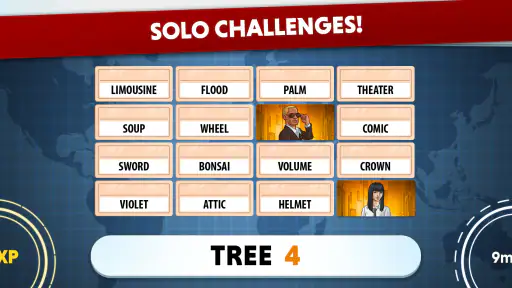
So, what’s the scoop with Codenames? Well, it’s all about word association and teamwork. You’ll need at least four players to get the ball rolling, as you split into two teams. Each team has a spymaster and field operatives. The spymaster knows the secret identities of 25 agents on the board, represented by random words. The operatives, on the other hand, can only see those words and must guess which ones belong to their team based on one-word clues given by the spymaster. Sounds intriguing, right?
Diving Into Gameplay
Once you’ve got your team assembled, it’s time to immerse yourself in the game. One of the things I love about Codenames is how it challenges your brain. The spymaster has to think carefully about which clue to give without accidentally leading their team to guess the opposing team’s words—or worse, the assassin word that ends the game immediately! It’s a clever balancing act between being too vague and too obvious, and it’s incredibly satisfying when your team deciphers your hints correctly.
Gaming Stories You May Enjoy

Dancing Road Turns Short Breaks Into a Test of Rhythm and Timing

Super Stylist Makes Every Outfit a Test of Taste and Patience

Dominoes on Your Terms: Who Should Play and Who Should Pass

Pokémon GO Makes the Familiar World Feel New

Chess.com Turns Rematches Into Rivalries, but Community Has Its Costs

Archery Battle 3D Review: Sharp Aiming, Unclear Feedback
On the flip side, as an operative, you’ll find yourself analyzing every possible angle of the clue given. Is "apple" referring to "fruit," "red," or maybe even "Eve"? The discussions that ensue can be hilarious and highlight just how differently we all think. It’s a fantastic way to get to know how your friends’ minds work, and it adds a layer of depth to the game that’s hard to find elsewhere.
Making the most of a session
A useful habit for the spymaster is to think not only about the intended connection but also about the most tempting wrong connection. If a clue could point to a rival word or the dangerous assassin, a more modest clue may be wiser than an ambitious one. As an operative, I try to say what I think the clue links to before the team commits; hearing the reasoning can reveal a shared association, but it can also expose when one person is leaning on a private joke or obscure reference.
This is also why I would not rush the discussion just to make a round feel faster. A short pause to compare interpretations often prevents a confident but poorly understood guess. On the other hand, if the group is circling the same clue without learning anything new, it helps to agree on a decision and move on. That balance keeps the game lively without turning every word into a debate that lasts longer than the fun warrants.
Recovering when the session goes off track
If a player loses track of whose turn it is or what a clue was meant to cover, stop and restate the current situation in plain language before guessing. I find it better to clarify the team’s understanding than to let uncertainty snowball into arguments about what was already said. If the group is interrupted, take a moment to recap the clue and the words everyone is considering; that is usually enough to get the conversation moving again.
For a remote get-together, agree on one place for discussion before the first turn. Side conversations can be fun, but they make it harder for the whole team to hear the same clue and follow the reasoning. If the app or a device behaves unexpectedly, check the basic things first: whether the app is open and responsive, whether the device has a stable connection for the way you are playing, and whether everyone is still looking at the same game. These checks are more useful than immediately assuming the puzzle itself has gone wrong.
When the app is not the cause
Some friction comes from the group rather than the software. Players may have very different vocabularies, or one person may interpret a word through a personal memory that nobody else shares. That is not necessarily a flaw: the surprise is part of the appeal. But if the group repeatedly gets stuck on references that only one player understands, the spymaster can choose broader associations and the team can agree to favor shared meanings over clever private links.
Compared with a crossword or a typical solo word puzzle, this is much less about finding one objectively correct answer in silence. Compared with party word games that reward quick jokes, it asks for cooperative deduction and careful communication. That makes it a strong choice for friends or family who enjoy talking through a problem, but a weaker one for someone who wants uninterrupted individual play, a very short session, or a game that does not depend on assembling a team.
Why Codenames Stands Out
Beyond its clever gameplay, Codenames is a great app because of its accessibility. You don’t need any special equipment or setup—just your smartphone or tablet. Plus, the app is designed with a user-friendly interface that makes it easy for anyone to jump in and start playing without a steep learning curve. Whether you’re a seasoned gamer or a newbie, you’ll find navigating through the app a breeze.
Moreover, the app captures the essence of the original board game beautifully. The visuals are crisp, the colors vibrant, and it retains that classic feel which fans of the board game will appreciate. You can play with friends online, making it perfect for those who might be miles apart but still want to enjoy game night together.
For a practical example, I can see it working well during a relaxed evening when friends are already chatting and want an activity that gives everyone something to contribute. A spymaster can make a clue, the team can debate its possible meanings, and even a wrong guess gives the group something to laugh about. It is less suited to a brief wait in a queue, where there may not be enough time or people to settle into team play. If you want a solo diversion, a conventional word-search or crossword is a more natural alternative; if your group enjoys collaborative guessing, this offers a different kind of challenge.
The game is published by CGE digital and has an average rating of 4.8 from around 1.6 thousand ratings, with over 10 thousand installs. Those figures suggest that plenty of players have found an audience for its mix of vocabulary and teamwork, but they do not change the central question for me: will you have a group that enjoys discussing clues? If yes, the format has a lot to offer; if not, the app’s main strength is difficult to experience.
Who I’d recommend it to
I’d recommend this puzzle game to people who like explaining how they think, not just announcing an answer. It can be especially enjoyable for a family or friend group that wants a shared activity without a complicated rules lesson. The strongest sessions, in my experience, come when players are comfortable disagreeing without treating a wrong guess as a personal failure. That atmosphere lets the humor and strategy work together.
I would skip it if you mostly play alone, dislike group discussion, or need a game that works equally well with only a couple of people. It is also not an ideal pick for a group that gets frustrated whenever an ambiguous clue produces different interpretations. In those situations, a solo puzzle or a simpler party game may be a better match than trying to make this one fit.
Final Thoughts
All in all, Codenames is a must-try for anyone who enjoys strategic games that test your wordplay skills and creativity. It’s engaging, fun, and offers endless replay value as no two games are ever the same. So gather your friends, fire up the app, and see who among you has the sharpest wit. Trust me, once you start playing, you won't want to stop!
My recommendation comes with one clear condition: choose it for the people and conversation as much as for the puzzle. At $4.99, it is easiest to justify when you expect to play with a regular group, and its Everyone rating makes it approachable for mixed-age company when clues are chosen thoughtfully. If that sounds like your kind of game night, I think it is well worth considering; if you want a private, quick-play word challenge, I’d pick something designed for solo play instead.
Codenames Pros and Cons
Pros
- Engaging word game for all ages
- Enhances vocabulary and thinking skills
- Simple rules easy to learn
- Fosters teamwork and communication
- Quick setup and short playtime
Cons
- Limited replayability over time
- Requires at least four players
- May not suit solo players
- Can be challenging for younger kids
- Relies heavily on language skills
This Game in Other Languages
Frequently Asked Questions
What is the objective of Codenames?
Codenames is a word-based party game where players split into two teams. Each team has a 'spymaster' who gives one-word clues to help their teammates guess the words associated with their team's color on the grid. The objective is to guess all your team's words before the opposing team does, without guessing the 'assassin' word, which results in an instant loss.
How many players can play Codenames at a time?
Codenames is best played with at least four players, as it requires two teams. However, it can accommodate more players by having larger teams. The game can be adapted for two or three players with modified rules, but the standard setup is designed for a minimum of four, providing the best experience.
Is Codenames suitable for children?
Codenames is generally suitable for older children and teenagers, as it involves strategic thinking and word association skills. The game is recommended for ages 14 and up due to its complexity, but younger players can enjoy it with adult supervision or in a simplified format, making it a great family game with minor adjustments.
Can Codenames be played online or on mobile devices?
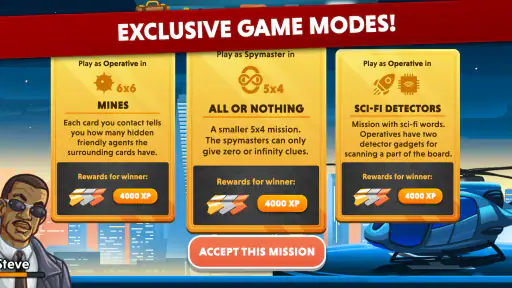
Yes, Codenames is available to play online and as a mobile app. The digital versions allow players to connect remotely, making it accessible for friends and family who are not physically in the same location. Additionally, the app often includes features like timer options and different game modes to enhance the experience.
What are the main challenges players face in Codenames?
The main challenges in Codenames include coming up with effective one-word clues that relate to multiple words on the grid, avoiding words that belong to the opposing team, and steering clear of the 'assassin' word. Players must also navigate the challenge of interpreting clues under pressure, which adds an exciting strategic element to the game.


