

ClubGG Poker
- Reviews
- 3.2
- Version
- 26.05.0229
- Installs
- 500,000+

Screenshots

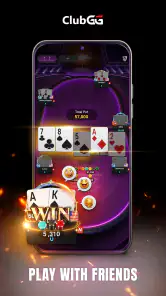




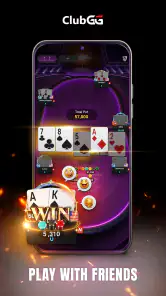

 Analysis by Frivlyz
ClubGG Poker is the kind of card game I open when I want poker to feel social rather than solitary. Its store summary is “Play with Friends!”, and that idea is important to understanding the app: this is not presented as a broad casino collection or a heavily decorated adventure. It is a focused poker experience from NSUS Ltd, built around sitting down with other people and playing hands together.
My first impression was that the app makes more sense when approached as a private social table than as a traditional poker training tool. The familiar card-game setting does most of the work. You are not asked to learn a fictional universe, follow a story, or manage a complicated character. Instead, the mood comes from the table itself, the anticipation between hands, and the small decisions that make a poker session feel personal.
The game is free to install, which makes trying it straightforward, but it includes optional purchases ranging from $0.99 to $999.99 per item. That wide range is something I would take seriously before spending anything. I would treat the free download as a way to see whether the social format suits me, not as an invitation to buy immediately. The Teen content rating also makes it better suited to older players than to children.
How the table creates its own sense of place
ClubGG Poker does not need an elaborate fantasy setting to establish an identity. Its setting is the poker room: the table, the cards, the timing of each decision, and the presence of other players. That gives the game a practical kind of atmosphere. It feels less like entering a large virtual world and more like joining a familiar room where the rules are already understood.
I like that this focus keeps the visual language tied to the mechanics. Cards are not decorative objects competing for attention; they are the information I need to read quickly. The table acts as a calm frame for the hand, while the changing card layout creates the drama. In a good poker app, clarity matters more than visual spectacle, because a flashy interface can make a simple decision harder to read.
The restrained setting also affects pacing. There is no story sequence forcing me forward and no campaign structure asking me to complete unrelated tasks. A session can be short or extended depending on the group and the flow of the table. That flexibility is useful in everyday life. I can imagine opening the game during a relaxed evening, joining friends for a few hands, and stopping without feeling that I have abandoned a larger mission.
At the same time, this narrow focus means the experience depends heavily on whether I actually want poker. Someone looking for a card game with deck-building, collectible progression, puzzles, or a strong single-player campaign may find the presentation too plain. ClubGG Poker’s setting works because it supports the table; it is not trying to replace the table with spectacle.
Gaming Stories You May Enjoy

Dancing Road Turns Short Breaks Into a Test of Rhythm and Timing

Super Stylist Makes Every Outfit a Test of Taste and Patience

Dominoes on Your Terms: Who Should Play and Who Should Pass

Pokémon GO Makes the Familiar World Feel New

Chess.com Turns Rematches Into Rivalries, but Community Has Its Costs

Archery Battle 3D Review: Sharp Aiming, Unclear Feedback
A social room rather than a solo challenge
The most useful way to think about the app is as a shared activity. Poker becomes more interesting when the people around the table create uncertainty, surprise, and conversation. That social layer gives the game a different mood from playing against a predictable computer opponent. Even when the interface is quiet, the presence of other players makes each decision feel less mechanical.
This is also where the app can be more rewarding than a standard offline card game. A conventional poker app may be excellent for practicing rules or filling a few minutes, but it often lacks the feeling of sitting down with a group. ClubGG Poker is aimed more directly at that shared experience. If my friends are already using the same platform, the app has an immediate reason to exist on my phone.
There is a trade-off, though. A social poker game is only as lively as the table I join. If the people I want to play with are unavailable, the central appeal becomes weaker. I would not choose this as my first poker download if my main goal were quiet solo practice. For that purpose, a dedicated offline or training-focused alternative may be more useful.
Sound, pauses, and the rhythm of a hand
In poker, sound does not need to behave like a film soundtrack. The important rhythm comes from action and hesitation: cards appear, players decide, and the table moves forward. ClubGG Poker’s mood is therefore connected to the spaces between decisions. The game benefits when the interface lets me concentrate on the hand instead of constantly demanding attention with unrelated effects.
I found that this kind of pacing makes the app suitable for casual group sessions. A hand has a natural beginning and end, so I can judge whether I have time to play another one. That is different from games built around long missions or real-time action, where leaving at the wrong moment can be disruptive. Here, the structure of poker gives the session a built-in rhythm.
The pauses can also expose one of the app’s limitations. Poker is not always fast. A table with cautious players can feel measured, while a group that already knows each other may move more quickly. That is not necessarily a flaw in the software, but it does mean the experience varies with the table. Anyone expecting constant action may find the deliberate pace slow.
My practical advice is to choose the moment carefully. This is a better fit for a break, a relaxed evening, or a planned game with friends than for a quick burst of stimulation while distracted. If I am multitasking, I am more likely to miss an important decision or lose track of the hand. The app rewards attention in small doses rather than frantic tapping.
Why the quiet presentation helps the mechanics
The strongest atmosphere comes from the way the presentation leaves room for judgment. Poker depends on reading the current situation, remembering what has happened, and deciding how much confidence to place in a hand. A busy visual style would work against that. The table-centered approach keeps the emotional tension in the choices themselves.
One useful habit is to treat every hand as a complete little scene. I try to notice the opening situation, watch how the table changes, and decide whether I am playing because the cards justify it or because I simply want to stay involved. That distinction is easy to lose in a social game, especially when friends are waiting. The app’s steady rhythm makes it possible to build that discipline without turning the session into formal study.
Another practical point is to separate entertainment from spending. Because the game is free to start and offers in-app purchases, I would decide on a personal limit before joining a longer session. The social atmosphere can make buying feel like part of the excitement, but a friendly table should not pressure me into spending beyond what I intended. Keeping that boundary protects the relaxed mood the game is trying to create.
Where the poker mechanics fit best
ClubGG Poker makes the most sense for players who already understand the basic flow of poker or who want to learn through repeated social play. The familiar card format is approachable, but the meaningful challenge comes from decisions rather than from unlocking a complicated system. I can focus on timing, risk, and reading the table instead of learning a large collection of unrelated rules.
That focus is a strength when I want a direct experience. Many card games add deck construction, special abilities, fantasy economies, or elaborate progression. Those systems can be enjoyable, but they also change the reason for playing. Here, the core appeal remains the hand in front of me and the people taking part. The result feels closer to a digital poker gathering than to a collectible card game.
It is also a weakness for players who need constant progression. If I want new cards to collect, a campaign to finish, or a character to improve, this is probably not the right choice. A competitive collectible card game would offer more long-term customization, while a puzzle card game would provide more structured solo goals. ClubGG Poker is strongest when the social table itself is the content.
A realistic everyday scenario would be a small group of friends arranging an informal game after work. One person opens the app, others join, and the group plays for a while without setting up physical cards or finding a table. The convenience is the main advantage: the shared activity can happen even when everyone is in a different place. The downside is that the session still depends on everyone being willing to pay attention and follow the same pace.
Small decisions that improve the experience
I would approach the app with a few simple routines. First, I would use the early hands to understand the table’s tempo instead of chasing every opportunity. Some groups play cautiously, while others create a faster, more aggressive rhythm. Adjusting to that style is more useful than assuming every table will feel the same.
Second, I would avoid confusing social pressure with a good reason to continue. When friends are involved, folding can feel less entertaining than staying in, but protecting the quality of the session matters more than forcing action. A poker app is at its best when the group can enjoy the decisions, including the quiet ones.
Third, I would keep the app for intentional sessions rather than leaving it open as background entertainment. The card table rewards observation. If I am watching a video, answering messages, or rushing between tasks, I am not really getting the experience ClubGG Poker is designed to provide.
These habits also answer an important question about suitability: is it beginner-friendly? I would say it can be approachable for someone who knows the basic poker rules, especially if friends are available to explain decisions. It is less suitable as a completely guided introduction for a person who has never played and wants extensive lessons. In that case, a poker tutorial app may be a better first step before joining a social table.
Everyday usability and what to expect before installing
The game supports Android devices running version 6.0 or later, and its current version is 26.05.0229. That makes the compatibility requirement relatively accessible for many Android users, although I would still check the device before planning a group session. A social game works best when everyone can get in without last-minute setup problems.
Its listing shows over 500 thousand installs, with an average rating of 3.2 from around 2.6 thousand ratings and 242 written reviews. I read that overall response as mixed rather than alarming. It suggests that the app has found a real audience, while also reminding me that the experience may not satisfy every player. The social format, table pace, and expectations around purchases can all influence how someone judges it.
The developer is NSUS Ltd, and the app was released on October 22, 2020. Those details place it as an established product rather than a brand-new experiment. I would still judge it by how well it fits my current needs: a release date alone does not make a poker app better, and an established install base does not guarantee that every table will feel active or enjoyable.
The Teen rating is another reason I would be selective about who I recommend it to. I would not present it as a children’s card game. Adults and older teens who understand the social and spending context are the more appropriate audience, particularly because optional purchases can reach a very high per-item amount. Free access is useful, but it should not be confused with a completely cost-free experience.
One question many players have is whether this replaces a physical poker night. In my view, it replaces the logistics, not the whole feeling. It removes the need for cards, chips, and a shared room, which is valuable when friends are apart. Physical play still has richer face-to-face conversation and body language. The app is best seen as a convenient digital meeting point, not a perfect imitation of sitting around the same table.
Who should choose it, and who should skip it
I would recommend ClubGG Poker to someone who wants a focused poker app for playing with friends, prefers social interaction over solo progression, and is comfortable with a measured card-game pace. It is especially appealing when the people I want to play with are already interested in the same format. The free entry makes it easy to test that shared routine before deciding whether it belongs in regular rotation.
I would skip it if my priority is a deep single-player career, a tutorial-heavy learning path, or a card game with imaginative world-building. I would also be cautious if I am easily tempted by optional purchases or if I want a game that can be enjoyed while barely paying attention. Those needs point toward a different kind of card app.
Compared with a standard offline poker game, ClubGG Poker offers more social presence but less control over the pace and mood. Compared with a collectible card game, it offers a cleaner focus on poker decisions but far less deck customization. Compared with playing in person, it offers convenience and distance-friendly access while losing some of the warmth of a shared physical space. Those trade-offs define the app more clearly than any feature list.
My final view of the table’s atmosphere
ClubGG Poker works when its simple setting, quiet presentation, and deliberate rhythm all point toward the same goal: making a poker hand feel like a shared moment. I appreciate that the game does not need a large fictional world to create mood. The cards, the pauses, and the uncertainty between decisions provide enough atmosphere when the table is active.
Its limitations are equally clear. The experience depends on the quality of the social session, and it will not satisfy players who want a rich solo campaign or a constantly changing collection system. The in-app purchase range also means I would approach spending carefully, especially because the relaxed group setting can make optional purchases feel more casual than they really are.
My recommendation is therefore specific rather than universal: try it if you want a free-to-start, social poker table and have friends who will actually play with you. Give it a fair test during a planned session, pay attention to how the pace feels, and decide in advance whether you want to spend anything. The best reason to install it is the people at the table, not the promise of endless progression.
For me, that makes ClubGG Poker a focused choice in the card category. It is not trying to be every kind of card game, and that narrow identity is both its appeal and its boundary. When the group is right, the understated art direction and steady rhythm let the mechanics carry the mood. When the group is missing, a solo poker alternative may be the better companion.
ClubGG Poker Pros and Cons
Pros
- Official platform with a recognizable poker brand and community.
- Supports popular poker formats for different playing preferences.
- Convenient mobile access for playing on the go.
- Includes social features that help connect players.
- Regular events can add variety beyond standard cash games.
Cons
- Availability and features may vary by country or region.
- Real-money play can involve deposits
- fees
- and withdrawal limits.
- The app may require a stable connection for uninterrupted games.
- Poker outcomes depend heavily on chance and player skill.
- Some tables or events may have limited activity at certain times.
Frequently Asked Questions
What is ClubGG Poker, and how does it work?
ClubGG Poker is a mobile poker platform focused on private clubs, home-game communities, and organized poker groups. After installing the app, players can join clubs through invitations or club information provided by an administrator, then participate in available cash games or tournaments. The exact games, schedules, buy-ins, and rules depend on each individual club rather than being identical for every user.
Is ClubGG Poker real-money gambling, and is it available in my country?
ClubGG Poker may provide access to games involving real-money balances, depending on the club, region, and local regulations. Availability and permitted features can differ significantly by country, so users should check the official terms and applicable gambling laws before registering or depositing funds. The app itself does not guarantee that real-money play is legal or accessible in every location.
How do I join a ClubGG Poker club?
ClubGG Poker is generally built around invitation-based or community-managed clubs. You may need a club ID, invitation link, referral information, or approval from an administrator before you can play. Some clubs may apply their own requirements, such as identity verification, minimum deposits, specific schedules, or membership rules. Contact the club manager directly if access details are unclear.
What poker games and features are available in ClubGG Poker?
The games available in ClubGG Poker depend on the club you join and the tables or tournaments it chooses to host. Users may find different poker formats, private tables, scheduled events, leaderboards, player statistics, chat functions, and club announcements. Because the selection is community-controlled, the experience can vary considerably between clubs, including game limits, entry fees, and playing times.
Is ClubGG Poker safe to use, and what should I check before depositing money?
The app can provide useful account and club-management features, but safety also depends on the specific club administrator and payment arrangements involved. Before depositing, verify the club’s reputation, withdrawal policy, fees, identity requirements, customer-support process, and responsible-gambling safeguards. Never share your password or payment details casually, and avoid clubs that promise guaranteed profits or pressure you to deposit quickly.


