

Classic Words With Friends
- Reviews
- 3.8
- Version
- 38.01.01
- Installs
- 50,000,000+

Screenshots



 Analysis by Frivlyz
I like word games best when they make me think without demanding a whole free evening, and that is the appeal I see in Classic Words With Friends. It turns familiar crossword-style tile play into a friendly contest, with room to take a turn, put the phone down, and return when it suits me. The mood is light and social rather than dramatic: the board, the letters, and the slow back-and-forth are the point. If you enjoy searching for a better word while wondering what your opponent might play next, this is an easy game to settle into.
It is a free word game from Zynga, released on February 14, 2011, and it remains a substantial community choice, with more than 50 million installs and an average rating of 3.8 from around 1.7 million ratings. Its Everyone age rating makes it suitable for a broad audience. The current version is 38.01.01, and the game requires Android 6.0 or later. I would still treat the in-app purchase range, from $0.99 to $149.99 per item, as a reason to check purchase options before handing a device to a child; free to install does not mean every optional purchase is free.
Settling into the board
When I first downloaded Classic Words With Friends, I was immediately struck by its user-friendly interface. The setup process was smooth, and within minutes, I was ready to start my first game. The app offers a tutorial for new players, which I found really helpful in understanding the rules and tricks of the game. For anyone who has played a crossword-tile game before, the basic idea feels familiar, while the tutorial helps newcomers avoid spending their first turns guessing at how the board works.
Our Stories on Classic Words With Friends
Moto Rider: The Thrill of Speed and Strategy in Mobile Racing
NewsDominoes: Bridging Tradition and Modern Mobile Culture
NewsMastering Antistress – Unlock the Full Potential of Relaxation Toys
NewsDancing Road Turns Short Breaks Into a Test of Rhythm and Timing
NewsSuper Stylist Makes Every Outfit a Test of Taste and Patience
NewsDominoes on Your Terms: Who Should Play and Who Should Pass
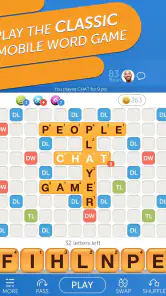
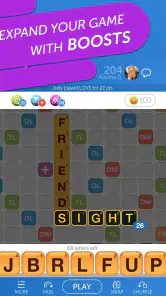
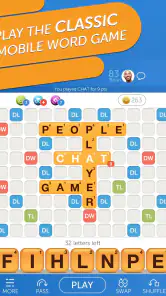
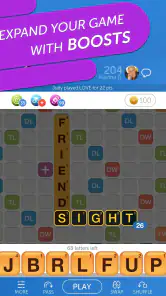
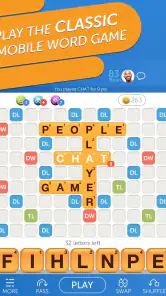
NewsThe board gives the game its visual language. Bright colors make the playing area easy to read, and the letters remain the focus rather than a detailed setting or animated spectacle. That restraint suits the activity: I can scan my rack, look for open spaces, and weigh a move without having to follow a busy scene. It is not a game I would choose for elaborate art direction, but the clean presentation helps me concentrate on the small decisions that make each turn satisfying.
Gameplay that fits real schedules
The gameplay itself is where the app truly shines. You can challenge your friends or get matched with random opponents. I love how the game allows you to play at your own pace. If you're busy, you can make a move and come back later when you have more time. This flexibility is perfect for those of us juggling busy schedules. It also changes the feel of competition: rather than needing both players to be present at once, a match can become a quiet thread that continues between other parts of the day.
A realistic routine might be to open a game during a coffee break, study the letters for a minute, place one considered word, then leave the next decision for later. I find that this works better than treating every turn as a timed test. The pause gives me room to notice a stronger placement or spot a useful opening, although it can also mean a match does not move along at the pace I want. If I am in the mood for a quick burst of play with a definite finish, a short single-player word puzzle may be a better fit than a turn-based match.
For a more useful rack, I try not to spend every turn chasing the biggest score I can see. A modest word that keeps useful letters together can leave me better options on my next turn, while a flashy play may open a premium space for the other player. I also look beyond the word itself: where it touches existing letters and what spaces it exposes can matter as much as its length. That sort of board awareness is a satisfying layer for regular players, but it can feel fussy if all I want is a casual vocabulary exercise.
Gaming Stories You May Enjoy

Pokémon GO Makes the Familiar World Feel New

Chess.com Turns Rematches Into Rivalries, but Community Has Its Costs

Archery Battle 3D Review: Sharp Aiming, Unclear Feedback

Should You Switch to Geometry Dash Meltdown? A Test of Timing and Patience

Fidget Toys Trading・Pop It 3D: What Happens When the Game Stumbles

NBA LIVE Mobile Makes the Season the Main Event
Conversation, sound, and the pace of a match
One feature I particularly enjoyed is the chat function. It adds a personal touch to the game, allowing you to engage in friendly banter with your opponent. Trust me, nothing beats the thrill of outsmarting your friend with a well-placed seven-letter word! The social side is strongest when I already know the person on the other end: a close score can turn a routine move into an ongoing joke or a small family rivalry. Against a stranger, I can simply focus on the board instead of feeling obliged to chat.
The game’s mood comes less from a fictional world than from the familiar ritual of a shared board. There is no elaborate setting I need to learn; the changing pattern of letters and open spaces provides the progression. The pacing follows that same understated approach. A move brings a brief moment of decision, then the game leaves space for the other player. I find that calm rhythm pleasant when I want a low-pressure connection, but it does not supply the urgency or dramatic build of a fast arcade game.
Sound is not the reason I return to this kind of game. The lasting feedback comes from seeing a word fit, comparing the score, and thinking through the next rack. I often prefer to play word games in quiet surroundings or while doing something else, so a presentation that keeps attention on the board is welcome. If you want a game driven by a memorable soundtrack, voice acting, or a strong sense of place, this is not where I would look; the appeal is in language and interaction, not audio spectacle.
Small tools, strategy, and the trade-offs
The design of the app is sleek and modern, with bright colors that make the game board pop. Navigating through the app is a breeze, thanks to its intuitive design. Additionally, the game provides a dictionary feature, which is a lifesaver when you're stuck trying to form words from a jumble of letters. I use a dictionary lookup most thoughtfully after a move or when I am learning, rather than turning every uncertain rack into a series of checks. That way it supports vocabulary building without replacing the pleasure of finding a word myself.
Another exciting feature is the ability to track your performance over time. The app keeps a record of your wins and losses, allowing you to see how you improve. It's incredibly satisfying to watch your skill level increase with each game. I would use that record as a broad reflection of how matches are going, not as a complete measure of word knowledge: results can vary with opponents and the letters available, and one streak does not tell the whole story.
Compared with a solo crossword or a compact daily word puzzle, this game puts more weight on an opponent’s choices and the shared board. That makes it a stronger pick when I want an ongoing connection with a friend, but less convenient when I want a self-contained challenge that ends immediately. Compared with playing a physical tile game around a table, it removes the need to be in the same room and handle the pieces, while losing some of the face-to-face conversation. The best alternative depends on what I want that day: companionship, a quick solo solve, or an in-person game night.
One practical way to keep a match enjoyable is to set expectations with a friend before starting. If one of you checks in often and the other plays only occasionally, the uneven pace can make a good game feel stalled. I also find it helpful to keep more than one match going only if I genuinely enjoy switching between boards; otherwise, remembering which letters belong to which position can become mental clutter. These are small choices, but they help the game fit around a routine rather than turning it into another obligation.
Who will enjoy this kind of wordplay?
I would recommend it to people who like crossword-style strategy, want a casual way to stay in touch, or enjoy learning how different players approach the same board. Newcomers can use the tutorial to get comfortable, while experienced word-game fans have room to refine placement and rack management. It is particularly well suited to friends or relatives who do not share the same schedule, since each person can take a turn when convenient instead of arranging a live session.
I would skip it if I wanted a fast, guaranteed finish, a rich narrative, or a purely private puzzle with no opponent involved. It may also frustrate anyone who dislikes waiting between turns or who finds competitive scoring takes the fun out of vocabulary play. The social features are an option, not a requirement for enjoying the board, but players who want a completely solitary experience may be happier with a dedicated solo word puzzle.
People often wonder whether they need to be an expert to start. I do not think so: the tutorial gives beginners a way in, and a match can be approached one move at a time. If the question is whether it works for short breaks, the answer is yes in the sense that a turn can be brief, though the overall match may continue well beyond that break. And if you are deciding whether to spend money, installation is free, but optional in-app purchases are available; I would play first and only consider a purchase if it offers something I genuinely want.
My verdict on the atmosphere
Overall, Classic Words With Friends is a fantastic way to enjoy classic wordplay with a modern twist. Whether you're a seasoned wordsmith or a newbie looking to improve your vocabulary, this app has something to offer. It's a great way to connect with friends, challenge your brain, and have fun all at the same time. So, if you haven't already, give it a try. You might just find yourself hooked!
What keeps me interested is the balance between a simple-looking board and the decisions hidden inside each turn. The colors and uncluttered presentation make the game easy to return to, while the opponent, chat, dictionary, and record of results give a match more texture than a one-off anagram. Its main trade-off is equally clear: a relaxed pace and social structure are rewarding only if I am comfortable with a game that unfolds over time. For me, it works best as a friendly habit rather than an intense contest, and that is exactly the kind of word game I would recommend to someone who wants a thoughtful pause in an ordinary day.
Classic Words With Friends Pros and Cons
Pros
- Engaging word puzzles
- Multiplayer mode is fun
- Offline play available
- User-friendly interface
- Regular updates
Cons
- Ads can be intrusive
- Limited features offline
- In-app purchases required
- Occasional lag issues
- High battery usage
Frequently Asked Questions
What is Classic Words With Friends and how does it work?
Classic Words With Friends is a popular word game that allows you to play against friends or random opponents by forming words on a digital board. The game is similar to Scrabble and involves strategic placement of tiles to maximize your score. You can play it online or offline, making it a versatile option for word game enthusiasts.
Can I play Classic Words With Friends without an internet connection?
Yes, one of the great features of Classic Words With Friends is its offline mode. You can play against the computer without needing an internet connection, which is perfect for when you're traveling or in areas with limited connectivity. This allows you to practice and improve your skills anytime, anywhere.
Are there any in-app purchases in Classic Words With Friends?
Classic Words With Friends does offer in-app purchases. These can include additional features, ad-free experiences, or special tile sets. While the game is free to play, these purchases can enhance your gaming experience. However, they are entirely optional and the core game remains accessible without spending any money.
How does Classic Words With Friends handle cheating or unfair play?
The game has mechanisms in place to detect and prevent cheating. Players can report suspicious behavior, and the system may flag accounts that appear to be using unauthorized aids. Fair play is encouraged to ensure a fun and competitive environment, and the game regularly updates its algorithms to tackle new cheating methods.
What languages are supported in Classic Words With Friends?
Classic Words With Friends supports multiple languages, making it accessible to a global audience. This includes English, Spanish, French, German, and more. Players can select their preferred language from the settings menu, which makes it easier to play with friends from different linguistic backgrounds or practice a new language.


