

Clank!
- Reviews
- 4.8
- Version
- 1.2.1
- Installs
- 1,000+

Screenshots
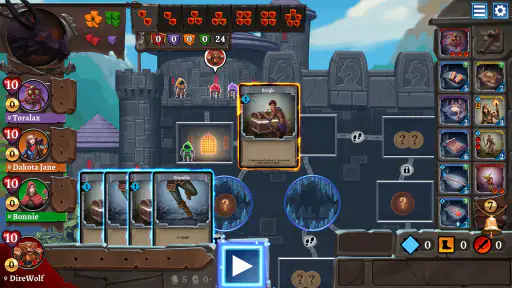
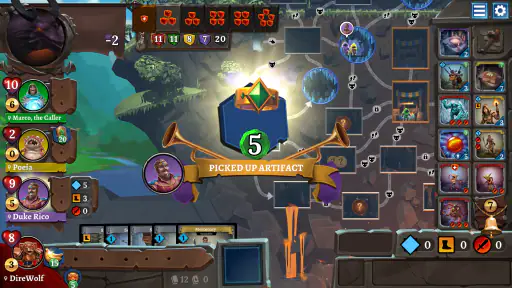
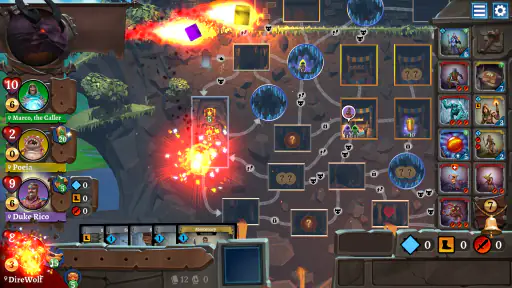
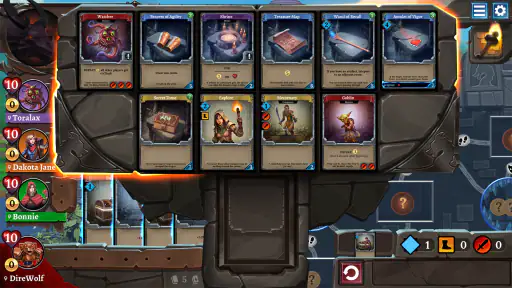
 Analysis by Frivlyz
I like the central tension in Clank!: every step toward treasure can make the dragon’s lair more dangerous. That push and pull gives this board game adaptation a clear identity. Instead of treating deck-building as a simple race to collect the strongest cards, I have to weigh what a new card lets me do against the noise and risk involved in going deeper. It feels best when I’m making a plan but still leaving room to change it.
Why the deck-building matters
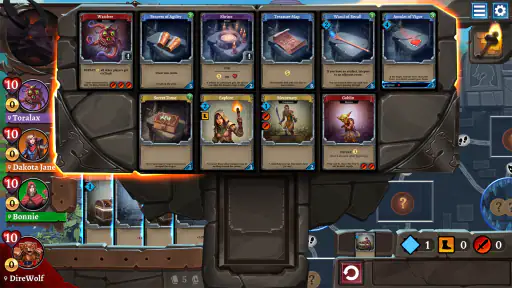
In many mobile board games, the main pleasure is choosing a move from a set of options. Here, the deck itself changes those options over time. I begin with basic cards, then build toward a style that suits my priorities: gaining useful abilities, reaching for valuable finds, or keeping an eye on a safe route back. That makes each purchase a small commitment rather than an automatic upgrade.
The useful habit is to ask what a card will help me do on the next few turns, not just whether it looks powerful in isolation. A card that supports a route I’m unlikely to take may be less valuable than a modest option that fits my current position. I also try not to confuse progress with safety. Getting farther into the lair can feel productive, but a successful run depends on being able to leave, too.
That decision-making is the game’s strongest appeal for me. The dragon threat gives the deck-building a consequence beyond efficiency: noisy play can make a risky situation worse. I’m not simply tuning a machine until it runs smoothly. I’m deciding when the reward is worth making myself more vulnerable, and that keeps even familiar choices tense.
Unpacking the Gameplay
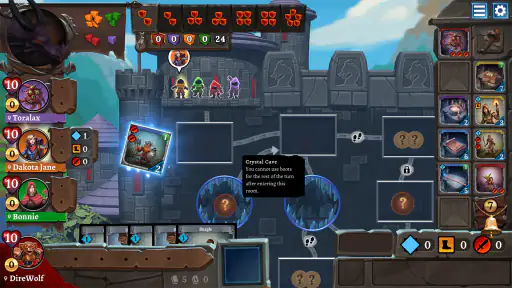
Alright, let's jump straight into what makes this game tick. Clank! is not your run-of-the-mill mobile game; it's a deck-building adventure that challenges you to sneak your way through a dragon's lair. The concept is simple yet engaging: collect treasures, avoid making noise (or clanking), and escape before the dragon gets you. The thrill of strategizing your moves while trying to outsmart opponents adds a layer of complexity that keeps you glued to your screen.
How a session asks you to think
The practical rhythm is to look at the cards available, connect them to the position you’re in, and decide whether to keep pursuing a prize or start thinking about the return trip. That makes a short stretch of play feel like a sequence of meaningful checks: what can I afford to do now, what risk am I accepting, and will this choice leave me a sensible way forward? It’s a good fit for someone who enjoys planning but doesn’t want every turn to be a long calculation.
For a useful everyday example, imagine opening the game while waiting for a friend at a café. I’d treat that as a chance to focus on a complete, deliberate session rather than repeatedly tapping through turns while distracted. The key decisions are linked: a card choice affects what I can attempt, and an ambitious move may change how urgently I need to escape. If I only have a moment, I’d rather pause before starting than rush into a run whose choices I can’t give proper attention.
Gaming Stories You May Enjoy

Dancing Road Turns Short Breaks Into a Test of Rhythm and Timing

Super Stylist Makes Every Outfit a Test of Taste and Patience

Dominoes on Your Terms: Who Should Play and Who Should Pass

Pokémon GO Makes the Familiar World Feel New

Chess.com Turns Rematches Into Rivalries, but Community Has Its Costs

Archery Battle 3D Review: Sharp Aiming, Unclear Feedback
That also answers a practical question: is this a light game to dip into without thinking? It is approachable in concept, but I wouldn’t call the decisions mindless. The basic goal is easy to grasp, while judging risk takes attention. I’d recommend it for a commute or a quiet break when you can concentrate, not as background entertainment while handling something else.
Aesthetics and User Experience
Visually, the game is a treat. The developers have done a fantastic job of bringing the board game feel to the digital realm. The graphics are vibrant and the animations are smooth, making each session visually appealing. The interface is user-friendly, which means you won't spend ages trying to figure out how things work. Plus, the tutorial is quite helpful for newbies, which is always a plus in my book.
The tutorial matters because the first challenge is not memorizing every possibility; it’s understanding the connection between building a deck, making noise, and getting out with a worthwhile result. I’d take time to follow it instead of skipping ahead, then pay attention to how the game presents the consequences of a risky choice. Learning that relationship early makes later turns feel like decisions rather than surprises.
As a digital adaptation, it also has a different convenience profile from a physical board game. I don’t need to arrange pieces or keep track of every moving part by hand, so it’s easier to start playing alone with a phone or tablet. The trade-off is that the screen can make a shared board state feel less immediate than sitting around a table. If your favorite part of board gaming is chatting across the table and reading everyone’s reactions, a physical game night may suit you better.
Game Mechanics
One of the standout features of Clank! is its deck-building mechanic. You start with a basic deck and gradually acquire new cards that expand your abilities. The strategic depth of deciding which cards to add to your deck or when to push your luck adds an addictive quality to the game. The balance between risk and reward is finely tuned, ensuring that each playthrough feels fresh and exciting.
One non-obvious trade-off with any deck-building strategy is that a deck can become less useful if I collect cards without a purpose. More options are not automatically better: I want choices that work together and support the kind of run I’m attempting. I find it helpful to make a loose plan, then revise it when the board situation changes rather than stubbornly chasing an early idea.
That flexibility is also why I wouldn’t approach every game as a puzzle with one correct route. The point is to react to what is happening and decide whether the next reward justifies the danger. When I’m behind, taking a larger risk can be tempting, but a bold move is only worthwhile if it still gives me a plausible path to safety. Knowing when to stop reaching is part of the skill.
Sound and Music
Let’s not forget about the sound design! The game features a delightful soundtrack that complements its adventurous theme. The clanking sounds when you make noise are a constant reminder of the lurking danger, adding to the overall tension. It's these little touches that elevate the gaming experience.
Sound is more than decoration here because the noise cue reinforces the consequences of a decision. I’d keep audio on the first time through so the theme and feedback can help the rules sink in. If I’m playing somewhere quiet or need to keep my phone unobtrusive, I’d lower or mute it; the strategic question still comes from the choices on screen, so I don’t need to treat sound as essential to every session.
Choosing the right way to play
Compared with a simple digital board game, this one asks for more attention to how the deck develops and how far to push into danger. Compared with a sprawling strategy game, its appeal is more immediate: the dragon-and-treasure premise gives me a clear goal without asking me to learn a huge catalogue of systems first. If you want a calm, low-stakes game where every turn feels safe, this is not the best match. If you enjoy making a plan under pressure, the tension is the point.
People who already enjoy deck-building will likely recognize the pleasure of shaping a collection over time, but the lair gives those choices a distinct risk-and-retreat context. If you usually prefer direct competition with little uncertainty, that added tension may frustrate you. I’d also choose a different game if what I want most is a passive story or a quick reflex challenge; the appeal here is thoughtful turn-by-turn judgment, not speed or a scripted narrative.
Who gets the most from it
I’d point this toward board-game fans who want a strategy session that works on a mobile screen, especially people who enjoy deciding when to take a chance and when to protect a lead. The Everyone age rating makes it broadly accessible, but younger or brand-new players may still benefit from taking the tutorial slowly and talking through the risk choices with someone more experienced. The easy-to-follow premise helps, while the decisions reward patience.
The game comes from Dire Wolf Digital, a developer with a clear fit for tabletop-style play. It is a paid game at $10.99, so I’d think of it as a purchase for someone likely to return to it, not a free distraction to sample casually. Its 4.8 average from around 300 ratings is encouraging, and more than 1,000 installs show that it has found a smaller audience than mass-market mobile games. That scale may suit players seeking a focused board-game adaptation, but it doesn’t tell me whether its particular tension will match your taste.
On compatibility, the minimum operating system is version 10, and the current release is version 1.2.1. It was released on October 4, 2024. I’d check that your device meets the system requirement before buying, then consider whether you prefer a paid, focused game over the many casual alternatives built around very short bursts. The price makes the decision more deliberate, but it also helps frame what I’d expect: a game to return to for its strategic loop, rather than a stream of unrelated mini-challenges.
Replayability and Social Features
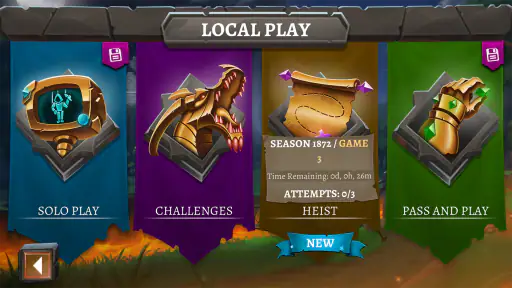
Now, if you're wondering about replay value, let me assure you, it's there. With varying strategies to explore and the thrill of beating your previous scores, you'll find yourself coming back for more. The game also includes multiplayer features, allowing you to challenge friends or random opponents online, which adds a competitive edge.
That multiplayer option changes the best use case. Playing with friends gives the decisions a social context, while random opponents make it possible to seek competition without arranging a group yourself. I’d choose a familiar opponent when I want a relaxed session and try an unfamiliar one when I’m in the mood to test my choices against someone whose habits I don’t know. Either way, the tension comes from balancing my own ambition with the danger in the lair, not simply from accumulating cards.
It’s worth being clear about what replayability means here. I return because different card choices and different levels of risk can make a run feel distinct, not because I expect an endless stream of unrelated modes. If you need constant novelty, a broader collection of casual games may keep you entertained longer. If you like improving your judgment and trying a different approach, the same core structure can remain satisfying.
My practical advice is to decide what kind of session you want before you start: a cautious run focused on getting out safely, or a bolder attempt to claim more before retreating. That simple intention helps me evaluate choices without pretending there is one perfect strategy. It also makes it easier to learn from a result: I can tell whether a risk paid off or whether I waited too long to turn back.
In conclusion, Clank! is a gem for fans of strategic games. Its combination of deck-building mechanics and stealth elements offers a refreshing take on mobile gaming. Whether you're a seasoned player or new to the genre, there's something here for everyone. So, if you're ready to test your wits and sneak past that dragon, give this game a try. Just remember, every move counts, so tread carefully, my friends!
Clank! Pros and Cons
Pros
- Intuitive user interface for easy navigation.
- High-quality graphics enhance user experience.
- Regular updates with new features and bug fixes.
- Low battery consumption during use.
- Supports multiple languages for wider accessibility.
Cons
- Limited free features; many require in-app purchases.
- Occasional minor glitches during gameplay.
- Requires a stable internet connection to function.
- Some users report slow loading times.
- Customer support response can be slow at times.
This Game in Other Languages
Frequently Asked Questions
What is Clank! and what type of game is it?
Clank! is a deck-building adventure game that combines elements of strategy and exploration. Players must stealthily navigate through a dungeon, collecting valuable artifacts and avoiding the dragon. The objective is to gather as much treasure as possible while minimizing noise, as the dragon becomes more aggressive with each clank you make. The game is praised for its engaging mechanics and replayability.
Is Clank! available on both Android and iOS platforms?
Yes, Clank! is available for both Android and iOS devices. It offers a seamless gaming experience across both platforms, allowing players to enjoy the game on their preferred device. The app is optimized for mobile play, ensuring smooth performance and intuitive controls, whether you're playing on a smartphone or tablet.
Does Clank! require an internet connection to play?
Clank! can be played offline, making it a great option for gaming on the go without worrying about internet connectivity. However, some features like leaderboards or cloud saves might require an internet connection. It's advisable to check specific app settings for any online requirements to fully utilize all of the game's features.
What are the in-app purchases available in Clank!?
Clank! offers various in-app purchases that enhance the gaming experience, such as expansion packs and special character unlocks. These purchases are optional and designed to add more depth and variety to the game. Players can enjoy the core game without spending extra money, but those looking for additional content can explore these options.
Is Clank! suitable for children, and what is the recommended age rating?
Clank! is suitable for players aged 10 and up, making it a family-friendly game that combines strategy and fun. The game's content is appropriate for children, with no violence or mature themes. It's a great choice for family game nights, promoting interactive play and strategic thinking among younger audiences.


