

Children's doctor : dentist
- Reviews
- 3.6
- Version
- 1.5.3
- Installs
- 100,000,000+

Screenshots
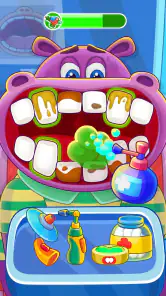

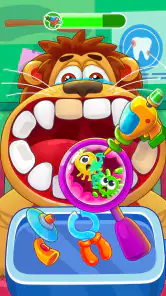
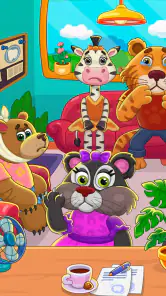
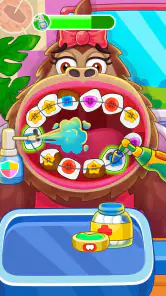
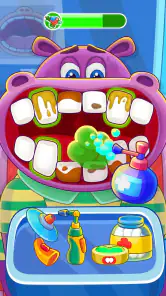

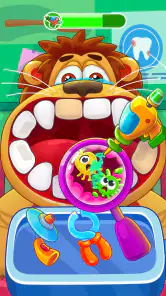
 Analysis by Frivlyz
My first impression of Children's Doctor: Dentist is that it gives young children a simple way to play through a visit to a dental clinic, rather than just watch someone else do it. That hands-on angle is its strongest idea: a child can explore the tools and procedures at their own pace, which may make an unfamiliar appointment feel less mysterious. I’d treat it as a playful conversation starter, though, not as a substitute for a real dentist’s advice or a promise that a child’s anxiety will disappear.
Why the first few sessions can work
The game is a role-playing title from YovoGames, and its premise is easy to understand as soon as a child starts: choose a patient and help with their teeth. Cleaning, filling cavities, and extracting teeth give the play a clear sense of purpose. That immediate, practical loop is a better fit for a young player than a game that begins with long instructions, complicated menus, or a story they have to follow before they can do anything.
In the first few sessions, the appeal is partly imaginative. Children get to be the person holding the instruments, making choices, and helping a character. The colorful presentation and animated patients give the work a friendly tone, while the dental setting supplies a theme parents can connect to everyday life. For a child who likes pretend play, that combination can be more engaging than a general puzzle app because there is a recognizable role to inhabit.
Our Stories on Children's doctor : dentist
How 'Children's Doctor: Dentist' Combines Fun and Learning
NewsHead Ball 2 Turns Rivalry Into a Daily Mobile Ritual
NewsDominoes on Your Terms: Who Should Play and Who Should Pass
NewsCat Runner: Decorate Home - A Unique Blend of Speed and Style
NewsHow Hero Wars: Alliance Masters Mobile Gaming Strategy
NewsDancing Road Turns Short Breaks Into a Test of Rhythm and Timing
NewsI’d introduce it before a routine appointment, not in the car on the way there as a last-minute fix. Sitting together for a short play session gives a parent room to ask what the child thinks each tool does and to explain that a real dentist will guide them. The game can help put words and images around the subject, but the adult’s calm explanation matters more than the screen. If the child becomes unsettled by the procedures, there is no need to push through; switch to another activity and keep the conversation reassuring.
What the pretend clinic teaches—and what it doesn’t
The useful educational angle is familiarity. A child sees that dental care involves examining and treating teeth, rather than encountering the idea only when sitting in a real clinic. That can make the appointment easier to talk about at home. It may also prompt practical questions about brushing or why a dentist looks at teeth, which gives a parent a chance to reinforce routines in ordinary language.
Still, I would be careful about calling the experience dental instruction. The game is built around pretend treatment, not a personal hygiene plan, a clinical explanation, or guidance for an actual toothache. A child may remember the dramatic actions more readily than the everyday habits that protect teeth. I’d use the play as a lead-in to brushing together or reading a child-friendly book, and make clear that real dental care is handled by a trained professional.
There is also a useful distinction between letting a child explore and asking them to make decisions about real health. Choosing a treatment for an animated patient is part of the game’s role-play; it does not equip a child to diagnose a problem. Parents can keep that boundary simple: the game is pretend, and a dentist decides what a real mouth needs. That framing lets children enjoy the make-believe without treating the procedures as a guide to copy.
Gaming Stories You May Enjoy

Super Stylist Makes Every Outfit a Test of Taste and Patience

Pokémon GO Makes the Familiar World Feel New

Chess.com Turns Rematches Into Rivalries, but Community Has Its Costs

Archery Battle 3D Review: Sharp Aiming, Unclear Feedback

Should You Switch to Geometry Dash Meltdown? A Test of Timing and Patience

Fidget Toys Trading・Pop It 3D: What Happens When the Game Stumbles
How it holds up beyond the novelty
I’d judge this game by what happens after a child has learned the clinic routine, not just by the curiosity it sparks in the first sitting. Its narrow focus can make it a useful, occasional companion to conversations about dental visits, but the same repetition may limit how often a child chooses it on their own. That distinction helps set realistic expectations before deciding whether it deserves a regular place in the family’s app rotation.
Month-to-month value depends on the child
At first, the choice of patients and the sequence of procedures can make the clinic feel like a small world to explore. Over time, however, this is a focused game rather than a broad collection of activities. Its lasting value will depend on whether a child enjoys repeating a familiar kind of role-play. A child who likes caring for characters may return to it; one who quickly wants new settings, challenges, or stories may lose interest once the basic dental routine feels familiar.
That makes it best as an occasional option, not an app I’d expect to carry a child’s entertainment every day for months. It can fit into a short, supervised screen break or a pretend-play rotation alongside toys, drawing, and books. If a child has already spent several sessions treating patients and is no longer curious, there is little reason to keep prompting them to play. The game has done its job as a brief source of imaginative play and a conversation opener.
Compared with many children’s role-playing games, its subject is unusually specific. A broad doctor game may offer more kinds of patients or treatments, while a general animal-care game can provide a wider range of nurturing scenarios. Those alternatives may be better for a child who wants variety. This title is more relevant when the particular goal is to make dental visits less abstract, or when a child is already drawn to medical pretend play and wants a clinic focused on teeth.
A practical way to judge its repeat value is to notice what the child does after closing it. If they talk about the characters, play dentist with toys, or ask a useful question about their own appointment, the session has sparked something beyond tapping through animations. If they only want to repeat the same actions and become frustrated when asked to stop, it may work better in shorter turns with a clear transition to the next activity. That observation is more useful than trying to make the game serve as a permanent habit.
Small choices that make play more useful
I’d let the child lead the first session and avoid turning every action into a quiz. When they choose a patient or tool, a gentle question such as “What do you think we’re helping with?” invites them to explain their thinking without making the activity feel like a lesson. On another day, a parent can connect the pretend clinic to a real routine by brushing alongside the child after play. Keeping those conversations brief helps preserve the game’s playful feel.
It can also help to stop at a natural pause rather than waiting until a child is tired or frustrated. Because the central activity is a sequence of treatments, a young player may want to finish helping a patient before moving on. Agreeing on one patient or one short turn beforehand gives the child a clear endpoint and makes screen transitions less abrupt. This is a simple household tactic, not a feature of the game, but it can make a focused app easier to fit into family routines.
Parents should also decide whether the subject suits the child before handing over the device. Some children are curious about medical tools; others may find tooth procedures unsettling, even when they are animated. Watching together at first lets an adult see the child’s reaction and explain any confusing moment. If the child is already worried about an appointment, the game may be a gentle starting point for conversation, but it could also draw attention to procedures they would rather not think about. The child’s response is the best guide.
Cost, access, and everyday fit
The game is free to download and is rated for Everyone, so it is positioned for a broad family audience. It includes optional in-app purchases ranging from $2.49 to $24.99 per item, which is worth keeping in mind if a child can use the device without supervision. I’d review purchase settings on the device and explain that tapping around a game does not mean every paid option is part of the free experience. That small bit of preparation can prevent an otherwise simple play session from turning into a spending surprise.
Its broad reach is reflected in more than 100 million installs, alongside a 3.6 average rating from around 170,000 ratings and about 2,500 written reviews. Those figures suggest that many families have tried it, but they do not tell me whether it will suit a particular child. The key question is less whether it is popular and more whether the child enjoys this specific kind of repetitive, hands-on pretend care.
For device compatibility, the current version is 1.5.3 and it requires Android 5.1 or later. It was released on August 9, 2017, so it is not a new arrival, and I would approach it as an established, focused children’s game rather than expect a fresh stream of novelty. If a family is comparing it with a newer, broader role-playing app, the choice comes down to the dental theme: that focus is precisely its advantage for appointment-related play, but also the reason it may feel limited as an everyday all-purpose game.
Where the routine can wear thin
The same narrow focus that makes the game easy to understand can also limit its staying power. Once a child has seen the main kinds of treatment and knows how the clinic routine works, repeated play may feel predictable. That is not necessarily a flaw for a short session; repetition can be comfortable for younger children. But anyone looking for a deep progression system, a long narrative, or a steady supply of very different activities should choose another kind of game.
There is a further trade-off in using playful procedures to prepare for a real appointment. The game makes the child the active helper, while at a real visit the dentist leads and the child may need to sit still and follow instructions. That difference is important. I would avoid promising that the real appointment will look exactly like the game, and instead explain that the game is one way to become familiar with a clinic setting. Honest expectations are more reassuring than a one-to-one comparison that the actual visit may not meet.
As with any child-focused app, the parent still has a little work to do: check purchase controls, choose an appropriate time, and decide whether the content is comfortable for the child. It is not a hands-off solution to dental fear, and it will not replace conversation, regular brushing, or professional care. Those limits are manageable if the game is treated as one small activity rather than the whole plan.
My recommendation for the right family
I’d recommend giving it a try if your child enjoys pretend doctor play, is curious about teeth, or could use a gentle way to talk about a dental appointment. It is especially suited to a parent and child playing together briefly, with the adult adding context and keeping the difference between pretend treatment and real care clear. A child who likes repeating familiar actions may get more out of it than one who needs a new challenge every time they open a game.
I’d skip it if your child is distressed by dental imagery, if you need a detailed educational tool, or if you want a game with a wide variety of activities that can sustain interest for a long stretch. In those cases, a calm conversation with a dentist, a storybook, or a broader pretend-play game may be a better fit. I also wouldn’t use it as a reward that pressures a worried child to tolerate treatment; that can make the appointment feel like a test rather than a supported experience.
Have you ever had a kid who dreaded going to the dentist? Well, it seems like the creators of Children's Doctor: Dentist had this exact scenario in mind when designing this app. Trust me, this game is more than just a virtual dental clinic – it’s a fun and educational experience that can help kids overcome their fear of dentists.
A Dive into the Gameplay
The gameplay is straightforward, making it accessible for young kids. They begin by choosing a patient, each with different dental issues. It’s quite fascinating to see the level of detail involved. From cleaning teeth, filling cavities, to even extracting a tooth – this game covers it all!
The interface is vibrant and user-friendly. The animations are colorful and engaging, keeping the little players hooked. I particularly loved the way the game introduces different dental tools and explains their use subtly through gameplay. It’s like learning without realizing you're learning!
The Educational Twist
One of the standout features of this app is its educational value. Not only does it teach the importance of dental hygiene, but it also familiarizes children with common dental procedures in a non-threatening manner. The game gently dispels the fear of the unknown by letting kids explore what goes on in a dentist's office.
Additionally, the app encourages problem-solving and decision-making. Kids need to decide the best treatment for their patients and perform procedures with a steady hand. It’s an excellent way to develop their critical thinking skills, all while having fun!
Final Thoughts
Overall, Children's Doctor: Dentist is a fantastic app for kids. It’s not just a game; it’s an educational tool that makes learning about dental health fun and engaging. Whether it’s to prepare kids for their first dental visit or simply to keep them entertained, this app hits the mark on all fronts.
If you’re looking for a way to make your child’s screen time more productive, give this app a shot. It’s sure to leave a smile on their face – and yours too!
Children's doctor : dentist Pros and Cons
Pros
- Engaging gameplay for kids.
- Educational content about dental care.
- Colorful and friendly graphics.
- Simple controls easy for children.
- Encourages healthy habits in children.
Cons
- Limited levels can get repetitive.
- In-app purchases may be needed.
- Ads can interrupt gameplay.
- Requires internet for full features.
- Not challenging for older kids.
This Game in Other Languages
Frequently Asked Questions
What is the main objective of Children's Doctor: Dentist?
Children's Doctor: Dentist is designed to introduce children to the dental profession in a fun and interactive way. The app allows kids to role-play as a dentist, treating patients with various dental issues. It's an educational tool aimed at reducing the fear of dental visits by familiarizing kids with dental procedures through engaging gameplay.
Is Children's Doctor: Dentist suitable for all age groups?
While Children's Doctor: Dentist is primarily targeted at children aged 3 to 8, it can be enjoyed by older kids as well. The app is designed to be intuitive and easy to use, making it accessible for young users. However, parents should review the app to ensure it aligns with their child's interests and developmental stage.
Does Children's Doctor: Dentist have educational value?
Yes, Children's Doctor: Dentist has significant educational value. It helps children understand basic dental hygiene and procedures, encouraging them to develop healthy dental habits. The app also aims to reduce anxiety around dental visits by making the experience fun and informative, thus promoting better oral health through interactive learning.
Are there any in-app purchases or ads in Children's Doctor: Dentist?
Children's Doctor: Dentist may include in-app purchases and advertisements. It's important for parents to review the app settings and discuss with their children the aspects of in-app purchases. Parental controls can be activated to prevent unintended purchases and ensure a safe gaming experience for kids.
Is Children's Doctor: Dentist available on both Android and iOS platforms?
Children's Doctor: Dentist is available for download on both Android and iOS platforms. Users can find the app on Google Play Store for Android devices and the Apple App Store for iOS devices. Ensure your device meets the minimum system requirements for a smooth gaming experience.


