

Charades & Headbands: Guess Up
- Reviews
- 4.4
- Version
- 4.2.12
- Installs
- 5,000,000+

Screenshots





 Analysis by Frivlyz
Have you ever been at a party and things start to get a little dull? Well, let me introduce you to Charades & Headbands: Guess Up, the app that’s about to become your go-to for bringing back the fun! I recently gave it a whirl, and I’ve got to say, it’s a total game-changer.
That enthusiasm comes with a qualification: this is a word game whose best feature is the people around the phone, not a deep system of rules or strategy. When everyone is willing to mime, guess, and laugh at a few bad clues, it gives a group an easy shared activity. If your friends would rather take turns quietly playing on their own screens, the format is much less compelling.
Unleashing the Fun Factor
So, what’s the deal with Charades & Headbands: Guess Up? Essentially, it takes the classic game of charades and gives it a digital twist. You don’t need a deck of cards or any props, just your phone and a good sense of humor. The app is available on both Android and iOS, so no one's left out of the fun.
That phone-centered setup is a practical advantage, but it also shapes the experience. The person holding the device has the answer in view while the rest of the group supplies clues, so the game works best when players can gather close enough to see and hear one another. I would not choose it for a noisy room where people are spread across separate tables; the clues can get lost, and the person guessing may feel out of the loop. A small circle with a clear view of the player is a better fit.
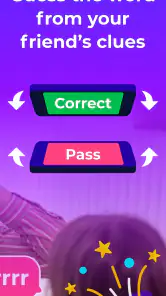
Once you download it, you’re greeted with a sleek interface that’s super easy to navigate. You pick a category, hold the phone up to your forehead, and let the guessing begin. Your friends act out the word on the screen without saying it, and you have to guess what it is. Sounds simple, right? But trust me, the laughter and ridiculous antics that ensue are anything but ordinary!
The forehead position is more than a cute gimmick: it keeps the guesser focused on the people giving clues instead of peeking at the answer. I’d set the phone up before explaining the rules, then have one person demonstrate a round so newcomers can see how the group communicates. It also helps to agree on a simple boundary before starting: clues should be acted out rather than spoken, and guesses should come one at a time when the room gets excited. That tiny bit of coordination makes the game feel less chaotic without making it formal.
A realistic use is the gap after dinner when guests are still at the table but nobody wants to start a long board game. One person can bring out the phone, choose a category that most people understand, and invite the group into a quick round. If the first category lands well, keep going; if it does not, switch the mood rather than trying to force everyone to enjoy the same subject. This is a useful way to make a casual gathering feel more participatory, especially when the guests do not all know one another well.
Gaming Stories You May Enjoy

Dancing Road Turns Short Breaks Into a Test of Rhythm and Timing

Super Stylist Makes Every Outfit a Test of Taste and Patience

Dominoes on Your Terms: Who Should Play and Who Should Pass

Pokémon GO Makes the Familiar World Feel New

Chess.com Turns Rematches Into Rivalries, but Community Has Its Costs

Archery Battle 3D Review: Sharp Aiming, Unclear Feedback
Variety is the Spice of Life
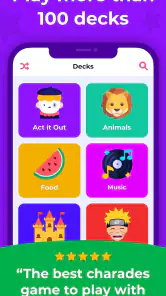
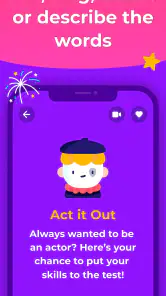
One of the things I love about this app is the sheer variety of categories. Whether you’re into movies, animals, or even if you want to test your knowledge of celebrities, there’s something for everyone. The app frequently updates its categories, so you’re always in for a surprise. And if you're feeling a bit competitive, there’s a timer to keep everyone on their toes.
Category choice is where I’d put a little thought, rather than simply picking whatever looks entertaining. A group with children and adults may find familiar, visible subjects easier to act out than references that depend on knowing a particular film or celebrity. For a mixed-age gathering, begin with a broad topic and use a more specialized one only if the group is asking for a challenge. The timer can add pace, but it can also make a shy player freeze; there is no shame in treating it as a fun nudge rather than the point of the game.
Another cool feature is the ability to create custom decks. Got inside jokes or specific themes in mind? You can tailor the game to fit your group’s vibe perfectly. This level of customization is a huge plus, especially for themed parties or gatherings.
Custom decks are most useful when they make the clues more meaningful to the people playing. For a birthday or reunion, familiar names, shared memories, or recurring jokes can prompt lively reactions that a generic word might not. The trade-off is that a deck full of private references can leave a new guest watching instead of joining in. I’d mix a handful of group-specific entries with more widely understood prompts, so the personal touches reward regulars without making newcomers feel tested.
There is also a practical difference between a custom deck and an off-the-shelf category: the group has to supply the fun of choosing what belongs in it. That makes customization a good option when somebody has time to prepare, but not necessarily the best choice when everyone is ready to play immediately. For an unplanned get-together, picking a ready-made category is simpler. For a birthday gathering where the group shares a history, the preparation can be worth it because the clues can feel tailored to that occasion.
Compared with a physical charades set, the phone approach avoids carrying cards and makes it easy to change the kind of prompt. A paper deck can still be preferable if you want something that does not depend on passing around a phone or looking at a screen. Compared with word games played individually, this one asks more from the whole room: players have to perform and pay attention, rather than simply tap answers. That shared effort is its appeal, but also the reason it will not suit every group.
Perfect for Any Occasion
Whether it’s a family gathering, a night in with friends, or even a team-building exercise at work, this app suits any occasion. The best part? It’s a great icebreaker. I’ve lost count of how many times it’s turned awkward silences into laughter-filled rooms. Plus, it’s suitable for all ages, making it a versatile addition to any social setting.
For work, I’d keep the mood light and the categories accessible, and I’d make participation an invitation rather than a demand. A game that gets people moving can loosen up a group, but someone who dislikes acting in front of colleagues may find the same setup uncomfortable. The same judgment applies at family events: the Everyone content rating makes it broadly suitable, yet individual comfort and familiarity still matter. Let people guess, act, or sit out a turn without turning the activity into a test of enthusiasm.
It is also worth thinking about group size. In a very small group, each person’s turn comes around quickly, which can keep the pace lively but gives less room for anyone who wants to watch before participating. With a larger gathering, people can split into groups or take turns as a crowd, though side conversations may make clues harder to follow. I find it works best when one person informally keeps the group focused and makes sure the phone is passed to the next guesser without a long pause.
For a family game night, I’d use it as a short change of pace between activities instead of assuming it has to carry the whole evening. Children may enjoy the physical acting, while adults can help keep turns moving and explain a clue if a younger player is unfamiliar with it. If the ages and interests vary widely, choosing a broadly recognizable category is more considerate than making every round depend on adult pop culture. That approach gives the game a better chance of including the people who would otherwise be left watching.
And let’s not forget the convenience factor. Gone are the days of losing cards or needing extra space for board games. With Charades & Headbands: Guess Up, all you need is your phone and a willingness to have fun. It’s perfect for those spontaneous moments when you just want to play something light-hearted and engaging.
The convenience does not mean the phone disappears from the activity. It remains the shared source of prompts, so players need to be comfortable taking turns with one device and keeping it safely in hand while acting and guessing. If your group is wary of using a phone during a social evening, a traditional charades game with slips of paper can be a better choice. If the phone is already part of the gathering, though, having the prompts ready is easier than writing them out or searching for materials.
People deciding whether to try it may also wonder whether it costs anything to start. The game is free to download, with optional in-app purchases priced from $1.99 to $49.99 per item. I’d treat the free entry point as a reason to see whether the group enjoys the format, not as a promise that every available item is included without payment. Since the central test is whether your friends like acting out and guessing words, there is little value in spending before you know that this style suits them.
For device compatibility, the current version is 4.2.12, and the minimum operating system is 7.0. Cosmicode is the developer. The game first appeared on December 13, 2016, and its long-running presence is reflected in more than five million installs. It has a 4.4 average from around 29,000 ratings, alongside 212 written reviews. Those figures suggest that many people have tried it, but I would still judge it by your own group: a popular party game cannot make a quiet or reluctant gathering suddenly enjoy performing.
The strongest reason to keep it available is that it needs little preparation once people are ready to play. The main friction is social rather than technical: a participant has to be willing to take the spotlight, and the group needs enough space and attention to make clues work. That distinction matters. If the person organizing an evening wants a structured activity that draws in every guest automatically, this is not a guarantee; if they want a simple prompt for shared silliness, it has a clearer role.
I would skip this game if your group prefers calm, individual puzzles, if people do not enjoy miming in front of others, or if the gathering is too loud for clear clues. A trivia game may be better for guests who want to show what they know without performing; a board game may be the better pick when people want longer turns and more strategy. Charades & Headbands: Guess Up is at its best when the goal is not to win through deep planning but to give the room a reason to react together.
One useful way to avoid a false start is to name the activity plainly before opening it: it involves acting clues out, not just guessing from a list. Then choose a category suited to the guests, demonstrate one turn, and let the first round be a low-pressure trial. If people start shouting guesses and inventing increasingly dramatic gestures, you have found your audience. If they hesitate, switch to another activity instead of insisting that everyone must take a turn.
The game is a word title, but its real value is social and physical. The clues are only the starting point; the memorable part is often how a person chooses to communicate an answer with gestures, or how a familiar word becomes funny when acted out. That makes it a stronger fit for people who enjoy expressive group play than for anyone looking for a large collection of solo challenges. It is worth approaching it with that expectation rather than expecting a conventional word puzzle.
For a spontaneous round, I’d keep the setup simple: make sure everyone can see the guesser, choose a category most of the group recognizes, and let turns move at a comfortable pace. For a planned party, custom decks can give the activity a personal angle, but I would avoid filling them only with references that a few people understand. In either case, the goal is to help people participate, not to catch someone out for missing an obscure clue.
In conclusion, Charades & Headbands: Guess Up is not just an app; it’s a ticket to endless laughter and memorable moments. Whether you’re a charades veteran or a newbie, this app makes sure everyone has a blast. So next time you’re planning a get-together, make sure this app is part of the lineup. Trust me, you won't regret it!
My recommendation is strongest for friends and families who want a quick, active word game and are happy to laugh at imperfect acting as much as successful guesses. It is less convincing as a main event for a group that wants quiet play, a guaranteed equal role for every guest, or a more strategic challenge. I’d keep it in mind for an informal evening, a family gathering, or a short break between other activities, and choose the categories with the people in the room in mind. When the group is willing to join in, it is an easy way to turn a phone into a shared game rather than another reason for everyone to look down at a screen.
Charades & Headbands: Guess Up Pros and Cons
Pros
- Engaging game modes for all ages
- User-friendly interface
- Regular updates with new content
- Multiplayer option enhances fun
- Offline mode available
Cons
- Ads can be intrusive
- Limited free content
- In-app purchases for full access
- Some categories are repetitive
- Occasional bugs and glitches
This Game in Other Languages
Frequently Asked Questions
What is Charades & Headbands: Guess Up and how does it work?
Charades & Headbands: Guess Up is an interactive party game app that brings the classic charades game to your mobile device. Players take turns holding the phone to their forehead while others provide clues to guess the word displayed on the screen. The app offers various categories and difficulty levels, making it suitable for all ages. It's a perfect game to enjoy with friends and family during gatherings.
Is Charades & Headbands: Guess Up free to download and use?
Charades & Headbands: Guess Up is available for free download on both Android and iOS platforms. However, it may offer in-app purchases to unlock additional categories or features. While the basic version is free, these optional purchases can enhance the gaming experience by providing more content and options for players.
What are the main features of Charades & Headbands: Guess Up?
The app includes a variety of features such as multiple game categories, adjustable time limits, and different difficulty levels to cater to players of all ages and skill sets. Additionally, it supports multiplayer mode, allowing users to play with friends and family. The user-friendly interface and vibrant graphics add to the fun and interactive experience.
Can I play Charades & Headbands: Guess Up offline?
Yes, Charades & Headbands: Guess Up can be played offline, making it a convenient choice for situations without internet access. This feature allows users to enjoy the game anywhere, anytime, without worrying about connectivity issues. However, some features, like downloading new categories, may require an internet connection.
Are there any ads in Charades & Headbands: Guess Up?
As a free app, Charades & Headbands: Guess Up may include ads to support its development and maintenance. These ads can appear between rounds or at the start of the game. While ads are generally unobtrusive, users have the option to remove them through in-app purchases, providing an ad-free gaming experience.


