

CatDog World: After Humans
- Reviews
- 4.4
- Version
- 1.7.17.1787373186
- Installs
- 1,000,000+

Screenshots

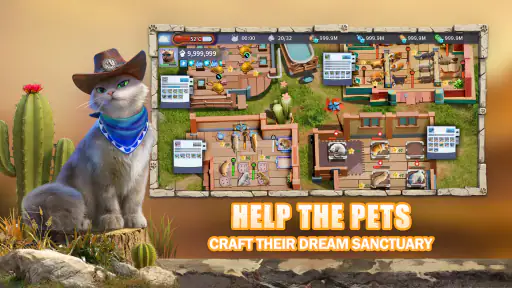
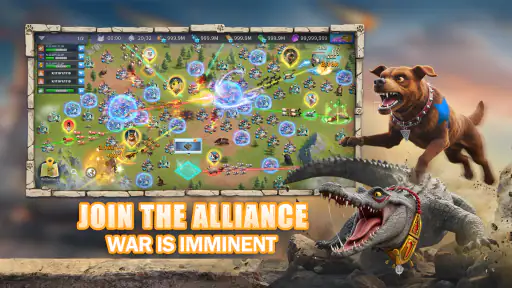
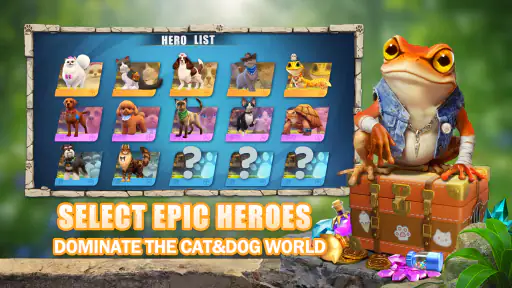


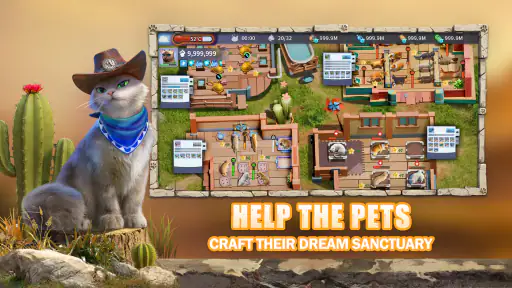

 Analysis by Frivlyz
I went into CatDog World: After Humans expecting a light strategy game built around its unusual animal-focused setting, but I found a more deliberate experience than the short store description suggests. The game comes from StarFortune, is free to download, and places you in a world where the main appeal is not simply collecting things or tapping through a linear adventure. Its central idea is choosing how to move forward when every decision affects what you can pursue next.
That makes it a good fit for players who enjoy planning, gradual progress, and the feeling of building toward a larger goal. It is less suitable if you want a fast, purely action-driven game that rewards reflexes above all else. After spending time with it, my impression is that the strongest part is the way it encourages me to think a few moves ahead, while the weakest part is that progress can feel slower when I am looking for immediate results.
Planning your route instead of chasing every reward
The strategy category is a useful description, but it does not fully explain why the game holds my attention. The setting gives the decisions a clear sense of purpose: I am not just completing disconnected tasks, I am trying to advance through a world filled with discoveries and opportunities. The promise of hidden treasures is important because it creates temptation. I often have to decide whether to follow the safer, more predictable route or spend time investigating something that might offer a better payoff.
That choice is where the game becomes more interesting than a simple casual diversion. A player who treats every reward as equally important can easily lose sight of the larger objective. I found it more effective to decide what kind of progress mattered in the current session. Sometimes that meant focusing on steady advancement rather than chasing a potentially more valuable discovery. At other times, taking a detour made sense because the possible gain could improve the next stage of my plan.
This is one of the first useful habits I would recommend to a new player: do not spend every available resource as soon as it appears. Keep enough flexibility to respond to the next opportunity. In a strategy game, the value of a reward is not only what it gives immediately; it is also whether it leaves you in a stronger position for the decision that follows. CatDog World: After Humans rewards that mindset more than impatient, one-step-at-a-time play.
The game also works well in short sessions because I can set a modest goal before starting. I might play simply to make progress toward a particular objective, explore a promising direction, or use what I have gathered more efficiently. That makes it easier to stop without feeling that I have abandoned a complicated campaign. At the same time, the broader structure gives me a reason to return when I have more time.
Why the setting matters to the strategy
The animal-centered world is not just a decorative change from the usual fantasy or military strategy setting. It gives the game a lighter personality and makes the idea of rebuilding or advancing after humanity feel approachable rather than grim. I found that tone helpful because it keeps the experience inviting even when progress requires patience.
Gaming Stories You May Enjoy

Dancing Road Turns Short Breaks Into a Test of Rhythm and Timing

Super Stylist Makes Every Outfit a Test of Taste and Patience

Dominoes on Your Terms: Who Should Play and Who Should Pass

Pokémon GO Makes the Familiar World Feel New

Chess.com Turns Rematches Into Rivalries, but Community Has Its Costs

Archery Battle 3D Review: Sharp Aiming, Unclear Feedback
It also changes how I read the game’s objectives. I am more willing to experiment when the presentation feels playful, but the underlying decisions still deserve attention. That contrast is a strength. The game can attract someone who would normally avoid serious strategy titles, then gradually introduce the value of planning without burying the player under a complicated interface.
Compared with a typical puzzle game, the choices here feel less isolated. A puzzle usually asks me to solve one clearly defined problem, while this game encourages me to think about the consequences of a decision across a longer sequence of progress. Compared with a large, traditional strategy game, it is easier to approach and less intimidating. The trade-off is that players looking for highly detailed simulation or a huge number of visible systems may find the experience more streamlined.
When taking a chance makes sense
Risk is most enjoyable when it is understandable. I do not want a surprise to erase careful planning without giving me a way to learn from it. In this game, I found the best approach was to treat uncertain opportunities as part of a broader plan rather than as automatic choices. If I had enough room to recover, a risky move could be worthwhile. If I was already relying on a narrow chain of progress, protecting what I had usually made more sense.
A practical example is a short evening session after work. I may only have enough time to make one meaningful push. In that situation, I would avoid spending everything on a speculative objective unless the possible benefit clearly supports my longer-term direction. A safer action that leaves me prepared for the next session can be more valuable than a dramatic gamble that produces an exciting but temporary result.
This is also where the free-to-play structure deserves a careful look. The game costs nothing to start, which makes it easy to try, but optional purchases range from $0.99 to $99.99 per item. I would advise new players to decide early whether they want to experience the game at a natural pace or spend to accelerate parts of the journey. That is not a criticism by itself; it is a planning issue. Players who are comfortable with gradual progress can treat purchases as unnecessary, while anyone who dislikes the possibility of spending pressure should approach the game more cautiously.
My strongest recommendation is to play long enough to understand the ordinary rhythm before buying anything. That gives you a clearer idea of whether the game’s pacing suits you. Spending immediately can remove the chance to learn which rewards actually matter to your style. In a strategy game, understanding your priorities is often more useful than owning more options.
Learning from setbacks and changing direction
Adaptation is a major part of the experience. A plan that looks efficient at the beginning may become less attractive after circumstances change, so I try not to become emotionally attached to my first idea. The game is more enjoyable when I treat a setback as information. If a route takes too long, a reward is less useful than expected, or my resources become awkwardly distributed, I adjust instead of repeating the same action out of habit.
That approach gives the game more depth than a fixed checklist. I am not merely asking, “What can I complete now?” I am asking, “What does this choice allow me to do later?” The difference sounds small, but it changes how I play. I pay more attention to flexibility, timing, and whether a decision closes off better alternatives.
One non-obvious tactic is to separate experimentation from commitment. When I am unsure about a direction, I prefer to test it with a limited investment rather than immediately building my whole plan around it. This reduces the cost of being wrong and makes it easier to switch when a better opportunity appears. It is a useful habit for anyone who tends to spend resources quickly because the game rewards keeping options open.
Another helpful habit is to review what worked after a session. I do not need a detailed spreadsheet. A quick mental note is enough: which choice created momentum, which one consumed more time than expected, and which reward improved my next decision? That small review makes future sessions more intentional and helps prevent the feeling that progress is random.
The game is not necessarily ideal for players who want every outcome to be immediately obvious. Some people prefer strategy titles with explicit explanations, highly visible statistics, or a very clear optimal route. CatDog World: After Humans is better suited to players who enjoy interpreting situations and learning through repeated decisions. If you want a game that tells you exactly what to do at every step, this may feel less satisfying.
How the game grows beyond the first sessions
The long-term appeal comes from the gradual improvement of judgment. Early on, I was mainly concerned with understanding what the game expected from me. Later, I became more selective. I started thinking about the order of actions, the value of waiting, and whether a short-term reward would actually support my wider goal. That shift from reacting to planning is what gives the game its strategic identity.
It is also why the game can appeal to different kinds of players. A newcomer can enjoy the accessible theme and straightforward sense of discovery, while a more experienced strategy player can focus on efficiency and trade-offs. The same situation can be approached casually or analyzed carefully. I appreciate that flexibility because it lets the game fit different moods without requiring me to learn an intimidating system before having fun.
Still, the depth has limits. Players who expect a large competitive environment, complex diplomacy, or the constant pressure of a traditional strategy campaign may want a more specialized alternative. This game is closer to a focused, approachable strategy journey than to a full-scale management simulation. Its strength is the balance between accessibility and planning, not an attempt to overwhelm the player with endless layers.
The progression also benefits from setting personal goals. Instead of measuring success only by how quickly I advance, I can decide to improve the way I manage risk, make fewer wasteful choices, or explore more deliberately. This gives repeated sessions a purpose even when I am not chasing a specific milestone. It is a simple way to keep the game from becoming a routine of tapping through familiar actions.
Who should install it and who should skip it
I would recommend CatDog World: After Humans to someone who wants a free strategy game with a friendly presentation and room for thoughtful decisions. It is especially appealing if you like discovering a path gradually, weighing immediate rewards against future possibilities, and returning for short but purposeful sessions. The animal setting makes it less severe than many strategy games, while the planning gives it more substance than a purely decorative casual title.
It is also a sensible choice for players who are new to strategy games. The theme lowers the barrier to entry, and the game gives you space to learn through practice. You do not need to approach it like a competitive expert from the first session. I found that curiosity and patience were more valuable than trying to play perfectly.
I would skip it if you need constant action, instant rewards, or a completely predictable progression path. I would also look elsewhere if you strongly dislike free-to-play games with optional purchases, particularly when the available items can cost as much as $99.99. Even if you never buy anything, knowing your own tolerance for that model matters.
Device compatibility is reasonably broad: the game requires Android 7.0 or later. It has reached over 1 million installs, carries an Everyone age rating, and currently sits at a 4.4 average from around 12 thousand ratings. Those figures suggest that it has found a substantial audience, but I would still judge it by your preferred pace rather than popularity alone. The current version is 1.7.17.1787373186, so checking that your device meets the operating-system requirement before installing is a sensible first step.
My verdict after weighing the trade-offs
CatDog World: After Humans works because it asks me to make meaningful choices without presenting itself as a heavy, intimidating strategy simulator. I enjoy the tension between following a reliable plan and investigating something less certain. I also like that the playful world makes experimentation feel natural, while the underlying decisions reward patience and a longer view.
Its biggest limitation is pacing. Players who want every session to deliver a dramatic breakthrough may find the gradual structure frustrating. The optional purchase range is another consideration, especially for anyone who prefers a completely pressure-free progression model. These are not small details, but they are easy to evaluate honestly: try the free experience, learn the rhythm, and decide whether the pace feels rewarding before spending.
My final recommendation is positive, with the right expectations. Treat it as a thoughtful strategy game about choices, timing, and adapting your plan, not as a nonstop action title. Keep some resources in reserve, test uncertain directions before committing fully, and measure progress by the quality of your decisions as well as the rewards you collect. For me, that approach turns a charming premise into a game with enough strategic texture to keep coming back.
CatDog World: After Humans Pros and Cons
Pros
- Creative post-apocalyptic setting centered on cats and dogs
- Mixes exploration
- survival
- and resource management for variety
- Animal-focused story offers a charming alternative to typical survival games
- Discovering new areas keeps progression engaging
- Suitable for players who enjoy slower
- thoughtful gameplay
Cons
- Some systems may feel unfamiliar or take time to learn
- Progress can become repetitive during longer play sessions
- Limited appeal for players seeking fast-paced action
- Resource management may occasionally interrupt exploration
- Performance can vary on older mobile devices
This Game in Other Languages
Frequently Asked Questions
What is CatDog World: After Humans about?
CatDog World: After Humans is an adventure and simulation game set in a world where people have mysteriously disappeared. You explore abandoned locations, gather useful resources, complete tasks, and interact with a society of cats and dogs. The game combines exploration, light survival elements, character progression, and story-driven discoveries, creating a relaxed but curious post-human setting.
How does the gameplay work in CatDog World: After Humans?
The main gameplay loop involves exploring different areas, collecting materials, meeting animal characters, and completing missions that gradually reveal more about the world. You may need to manage resources, upgrade abilities or equipment, and decide how to approach certain objectives. It is not designed as an extremely demanding survival game, so it remains accessible while still offering enough progression to keep exploration rewarding.
Is CatDog World: After Humans free to download and play?
CatDog World: After Humans may be available as a free download, but availability, pricing, advertisements, and optional in-app purchases can depend on the platform and region. Before installing, check the official Google Play Store or Apple App Store listing for the current details. It is also worth reviewing the purchase settings if children will be playing, since optional content may be offered during gameplay.
Can CatDog World: After Humans be played offline?
Some parts of CatDog World: After Humans may work without a continuous internet connection, particularly basic exploration and previously downloaded content. However, online access can still be required for the initial installation, updates, account features, advertisements, cloud saving, or certain events. If you plan to play while traveling, test the game in offline mode first rather than assuming every feature will remain available.
Is CatDog World: After Humans suitable for children and casual players?
The game is generally approachable for casual players because its animal-focused setting and exploration-based mechanics are easier to understand than a complex role-playing or survival system. Nevertheless, parents should review the store rating, privacy information, advertising, and in-app purchase options before allowing children to play. Some missions or post-apocalyptic themes may also be more suitable for older children depending on their sensitivity.


