

Catan Classic
- Reviews
- 2.6
- Version
- 4.8.3
- Installs
- 500,000+

Screenshots




 Analysis by Frivlyz
As an avid board game enthusiast, I couldn’t resist the allure of trying out Catan Classic on my device. If you’ve ever been captivated by the strategic depth and competitive spirit of the original Settlers of Catan board game, then you’re in for a treat with this digital adaptation. Let me walk you through my experience of exploring the app.
How the pace feels between turns
The appeal of a digital board game is partly practical: it takes less effort to get a match ready than unpacking a physical set, sorting pieces, and explaining the layout. Here, a game begins with a few taps, and the familiar board gives me a clear focus right away. That makes it a reasonable choice when I have a stretch of free time and want a complete strategic session rather than a quick game that ends in a minute.
I would not treat it as a reliable filler for every short break, though. Catan asks me to follow dice results, consider what resources I need, evaluate trades, and plan where to expand. Even when the interface keeps the board in view, the thinking between actions is part of the experience. If I am likely to be interrupted, I would rather wait until I can give the match proper attention than rush decisions and lose track of the plan.
The underlying turns have a useful rhythm: the dice create a shared moment of uncertainty, then players decide what to build or whether to negotiate. That alternation keeps the game from feeling like a series of disconnected menu choices. A newcomer should expect to spend some early turns learning which resources are holding up a plan, not simply tapping whichever build option looks available. Once that clicks, the pace feels more deliberate and satisfying.
Getting Started: A Seamless Transition
Upon launching Catan Classic, I was immediately greeted with a sleek interface that mirrors the board game’s iconic design. The app was quite intuitive, making it easy even for first-timers to jump right into the action. Setting up a game took only a few taps, and I was soon engrossed in the familiar hexagonal world of resource trading and settlement building.
Gameplay: Strategy at Your Fingertips
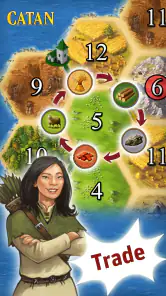
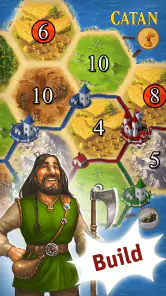
The gameplay retains the core mechanics of the original board game, with players vying to build the most prosperous settlements. The use of dice rolls to determine resource allocation adds a layer of unpredictability, keeping each session fresh and engaging. Whether it’s trading sheep for wood or strategically placing roads, every decision counts, and it’s all the more thrilling when the stakes are digital.
One useful habit is to think in terms of what a position can produce over several turns, instead of judging a settlement only by its immediate payoff. The dice are unpredictable, so a plan that relies on one narrow resource can leave me waiting. When I weigh a trade, I try to ask whether it moves a concrete build forward or merely feels like activity. That small pause helps avoid giving away something valuable just because I want to make a deal.
Gaming Stories You May Enjoy

Dancing Road Turns Short Breaks Into a Test of Rhythm and Timing

Super Stylist Makes Every Outfit a Test of Taste and Patience

Dominoes on Your Terms: Who Should Play and Who Should Pass

Pokémon GO Makes the Familiar World Feel New

Chess.com Turns Rematches Into Rivalries, but Community Has Its Costs

Archery Battle 3D Review: Sharp Aiming, Unclear Feedback
There is also a social trade-off in moving from a table to a screen. A physical group can read hesitation, joke over a negotiation, and discuss the board together; a digital match is more convenient, but the screen cannot reproduce that whole room dynamic. For a family member or friend who already knows the rules, remote play can still make it easier to share a game when meeting in person is inconvenient. For people learning from scratch, playing beside an experienced person may be more comfortable than trying to infer every strategic idea from the app.
What really impressed me was the AI opponents, who provide a challenging experience even for seasoned players. They’re cunning and can sometimes outsmart you in the most unexpected ways. But don’t worry, if you prefer human interaction, the app also offers a multiplayer mode. You can connect with friends or family, making it a perfect way to enjoy a game night from afar.
Choosing the right kind of match
If I want to practise thinking ahead without coordinating schedules, playing against computer opponents is the more convenient route. It lets me focus on how resource availability and board position affect each decision, rather than waiting for another person to be free. Multiplayer suits a different mood: the pleasure is in negotiating with people I know and reacting to their choices. I would pick it when the group is already comfortable with Catan’s basic flow, since familiarity makes the interaction smoother.
That distinction also helps set expectations about the app’s audience. It is a natural fit for people who already enjoy the physical game and want a portable way to play, or for curious newcomers who like patient, turn-based strategy. It is less suited to someone looking for a casual game that demands little thought, or for a group whose main reason to play is the face-to-face conversation around a table. If the social ritual matters more than convenience, the tabletop version remains the better choice.
A realistic use case is a quiet evening when a friend is in another place and both of us have enough time to finish a match. I can settle in, check how the board is developing, and make trades with a particular build in mind instead of trying to squeeze the session between unrelated tasks. For a very short wait, I would choose something lighter; for a planned game night when nobody can gather around the same table, this digital format makes more sense.
For anyone comparing it with other board games on a phone, the key difference is how much the experience depends on negotiation and long-term positioning. A quick puzzle or luck-focused game is easier to dip into and put down. Catan offers more room to adapt, but it also asks me to keep several priorities in mind at once. That makes it rewarding for someone who likes making a plan and revising it, while less appealing if they want instant rounds with minimal decisions.
Graphics and Sound: Bringing the Board to Life
The developers have done a stellar job in bringing the visuals of Catan to life. The graphics are crisp, and the animations add a dynamic feel to the static board game experience. The ambient sounds and subtle background music enhance the immersive feel without being too distracting, letting you focus on your strategy.
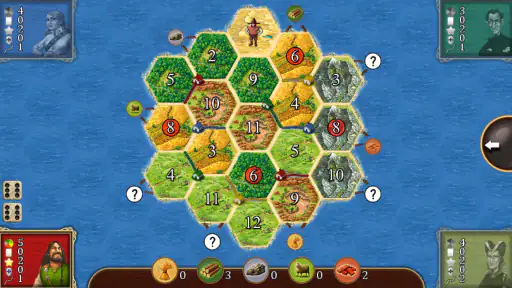
For a board game, visual clarity matters more than spectacle. I want to be able to read the board, notice where an opponent is expanding, and keep my own options straight without treating every turn as a search through menus. The familiar hex layout helps preserve the connection to the tabletop game, while the animation and sound give feedback to actions that would otherwise be represented by moving physical pieces. If I prefer a quieter session, the sound is an easy part of the experience to treat as optional rather than the reason to play.
Reliability and the moments that test it
A calm opening is not the only time I judge a board-game app. The more demanding moments come later, when several players have developed the board and each turn involves a choice about trading, building, or changing plans. That is when it matters that I can follow the game state and understand what happened after a decision. The straightforward board presentation is a strength here: the strategy remains the centre of attention rather than being buried under visual effects.
I would still make a practical distinction between a game that feels simple to start and one that is ideal for every circumstance. Catan is a long-form activity by the standards of quick mobile diversions, and a phone call, travel interruption, or low battery can be more disruptive than a slow animation. I prefer to begin when I can stay with the match. If I am interrupted, I would first check the current board and turn carefully before making another move, rather than assuming I remember every resource and trade from before.
The game has been around since its release on July 1, 2011, and its current version is 4.8.3. USM develops this paid board game, which costs $4.99 and has optional in-app purchases priced from $2.49 to $9.99 per item. It is rated for Everyone, has 500K+ installs, and carries an average rating of 2.6 from 28K ratings, alongside 4K written reviews. I would treat that rating as a reason to read current player feedback before buying, not as a substitute for deciding whether Catan’s measured, negotiation-heavy style suits me.
Device expectations and the value decision
The listed minimum operating-system requirement is 5.0, which gives a useful compatibility checkpoint before purchase. Since this is a board game rather than a graphics-heavy action title, I would not choose it expecting demanding visual effects; the important test on my own device is whether the board is comfortable to read and turns are easy to manage. Screen size can shape that experience: a larger display may make it easier to take in the whole layout, while on a smaller phone I would pay attention to whether the details remain legible during a busy match.
The upfront price changes who should try it. At $4.99, this is not the same decision as installing a free casual game just to see what happens, and optional purchases mean I would check the purchase details carefully before spending beyond the base price. I would recommend it most readily to someone who already knows they enjoy Catan or who expects to return to this kind of strategic match. If I only want to experiment with board games, a free alternative or a physical game borrowed from a friend is a lower-commitment way to find out whether the style fits.
One helpful way to make an early session more informative is to focus on a single skill rather than trying to win by instinct: notice which resources repeatedly slow down your plans, then consider how your starting position and trades affect that bottleneck. In a later match, try to make each exchange serve a specific next step. These habits do not remove the luck of the dice, but they make it easier to tell whether a loss came from an unlucky sequence or from a plan that depended too heavily on one outcome.
Final Thoughts: A Must-Have for Catan Fans
In conclusion, Catan Classic is a faithful and enjoyable digital rendition of the beloved board game. It’s perfect for both seasoned Catan veterans and newcomers alike. The app captures the essence of the original while providing the convenience of playing anywhere, anytime. If you’re a fan of strategic board games, this app is definitely worth a spot on your device.
For me, the strongest reason to choose it is not that a screen improves the board game, but that it makes a familiar style of match easier to start when the group cannot meet in person. Its trade-offs are just as clear: the game needs attention, the social feel differs from a table, and the paid entry makes sense only if I expect to play. New players can enjoy the accessible setup, but they should be ready for a learning curve in resource planning and negotiation rather than expecting every decision to be obvious.
So, what are you waiting for? Roll the dice, trade wisely, and build your empire in Catan Classic. You won’t regret it!
Catan Classic Pros and Cons
Pros
- Engaging gameplay with strategic depth.
- Great adaptation of the board game.
- User-friendly interface and controls.
- Offline play mode available.
- Regular updates enhance features.
Cons
- Limited multiplayer features.
- In-app purchases can be pricey.
- Occasional connectivity issues.
- Lack of tutorial for beginners.
- Graphics could be more modern.
Frequently Asked Questions
What is Catan Classic and how does it work?
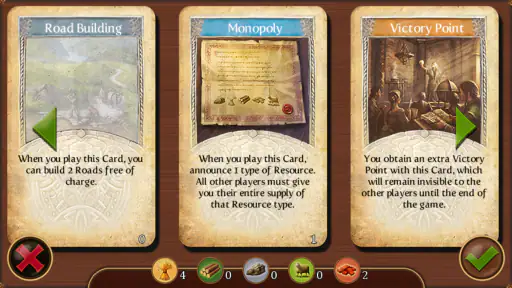
Catan Classic is a digital adaptation of the popular board game Settlers of Catan. In this game, players build settlements, roads, and cities using resources like wood, brick, sheep, grain, and ore. The goal is to accumulate victory points through strategic expansion and trade. The digital version offers single-player modes, as well as online multiplayer options, allowing users to play against friends or AI opponents.
Can I play Catan Classic offline?
Yes, Catan Classic offers an offline mode where you can play against AI opponents. This is especially useful when you don't have an internet connection but still want to enjoy the game. The offline mode retains all the core gameplay elements of the online version, enabling you to strategize and enjoy the game at your own pace.
Does Catan Classic support cross-platform play?
Catan Classic does not support cross-platform play. This means that players using different operating systems, such as iOS and Android, cannot play together. However, users can still enjoy multiplayer games with others on the same platform, making it a great choice for friends and family who use similar devices.
What are the key differences between Catan Classic and Catan Universe?
Catan Classic is a standalone app focusing on the original board game experience, while Catan Universe offers a broader range of Catan experiences, including expansions and different gameplay modes. Catan Universe also supports cross-platform multiplayer and has a more social, interactive element. However, some users prefer Catan Classic for its simplicity and straightforward gameplay, which closely mimics the original board game.
Is there a tutorial for beginners in Catan Classic?
Yes, Catan Classic includes a detailed tutorial designed to help new players understand the game's mechanics and strategies. The tutorial walks players through the basics of resource management, trading, and building, ensuring that even those unfamiliar with the board game can quickly get up to speed and enjoy the digital version.


