

Castlevania: SotN
- Reviews
- 3.6
- Version
- 1.0.3
- Installs
- 100,000+

Screenshots
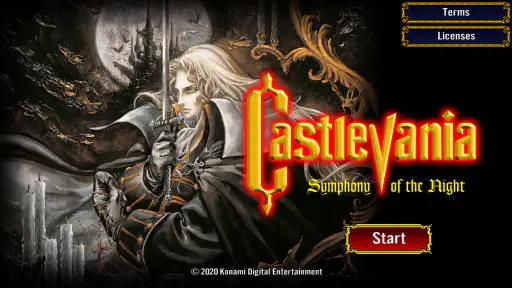
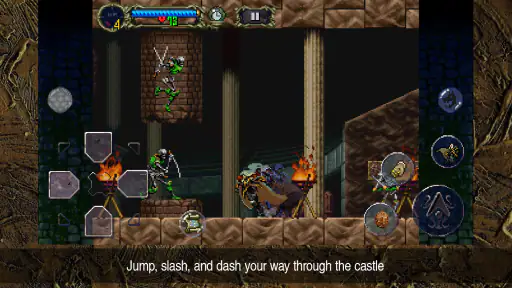
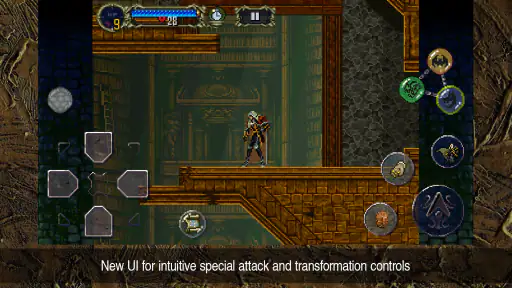
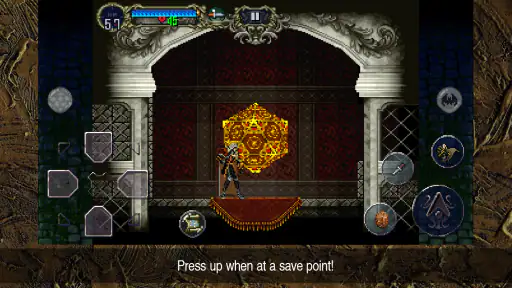
 Analysis by Frivlyz
When I want an action game that rewards curiosity more than rushing, I reach for Castlevania: SotN. Its castle is the main reason I keep playing: rooms connect in ways that encourage me to remember landmarks, test routes, and return when I’m better equipped. That makes it a different kind of mobile break from a quick, self-contained action game. I can make progress in a short session, but the larger pleasure comes from gradually understanding the place.
A good fit for a particular kind of player
KONAMI’s mobile game is an action adventure built around Alucard’s exploration of Dracula’s castle. It suits players who enjoy learning a map, fighting through repeated encounters, and finding their own route through a large space. If you like games where a locked path or a suspicious-looking corner gives you a reason to come back later, this has more to offer than a straightforward sequence of stages.
I’d be more cautious about recommending it to someone who wants a simple, uninterrupted story or a game that explains every objective immediately. The castle can feel confusing when several paths are open and I can’t recall which one I meant to investigate. That uncertainty is part of the appeal for me, but it can also turn a short play session into aimless wandering if I start without a clear next step.
My baseline routine for making progress
I get more out of a visit when I choose one small goal before I start: explore the next unexplored stretch, revisit a route I previously couldn’t pass, or focus on getting through a troublesome combat section. I also try to remember a recognizable room or passage as a mental anchor. It is a simple habit, but it makes the castle feel easier to navigate and keeps me from retracing the same ground without a purpose.
For a realistic everyday session, imagine having a little time before heading out or settling down for the evening. I would pick one reachable route, play until I find a new connection or reach a tough obstacle, then stop with that next destination in mind. The game does not need to be treated as a race. Ending at a clear landmark makes it easier to resume later, especially when the larger map has started to blur together.
Mobile controls and settings to check
The on-screen buttons feel responsive in my experience, and the layout gives me room to see the action. Still, a touchscreen is not the same as a physical controller. During a fight, quick movement and attacks can demand more deliberate thumb placement than I would need on a console. I recommend giving the controls a calm first test rather than judging them in the middle of a difficult encounter. That small adjustment period can help reveal whether the touch layout suits your hands.
Before settling into a longer run, I would check the available control and display options on the device and make sure the setup feels comfortable. I wouldn’t assume a particular configuration is best for everyone: screen size, grip, and personal preference all affect how easy it is to reach the buttons. If a layout feels awkward, changing how you hold the phone or taking a short break may help more than trying to play faster.
Gaming Stories You May Enjoy

Dancing Road Turns Short Breaks Into a Test of Rhythm and Timing

Super Stylist Makes Every Outfit a Test of Taste and Patience

Dominoes on Your Terms: Who Should Play and Who Should Pass

Pokémon GO Makes the Familiar World Feel New

Chess.com Turns Rematches Into Rivalries, but Community Has Its Costs

Archery Battle 3D Review: Sharp Aiming, Unclear Feedback
Small habits that save time
One useful pattern is to separate exploration from deliberate backtracking. When I’m exploring, I pay attention to branches and note mentally which ones I could not fully pursue. On a later pass, I choose one of those leads rather than wandering through every familiar room again. This is not a hidden feature or a shortcut; it is a way of making the game’s interconnected layout easier to manage.
I also try not to interpret a difficult enemy as proof that I must force my way through immediately. If a fight is costing too much time, I can step away, explore another accessible route, and return with a fresher approach. That decision keeps frustration from taking over and fits the game’s exploratory rhythm. In a mobile setting, where a session might end at any moment, choosing a nearby objective instead of insisting on one stubborn encounter is especially practical.
The soundtrack and gothic atmosphere add a lot, but they also shape when I want to play. With sound on, the music helps each area feel distinct and makes exploration more absorbing. If I’m playing somewhere I need to stay quiet, the game is still playable, but I lose some of the mood that makes its corridors memorable. I treat sound as part of the experience rather than background decoration, and choose a quieter or more focused moment when I want to appreciate it.
Unveiling the Night
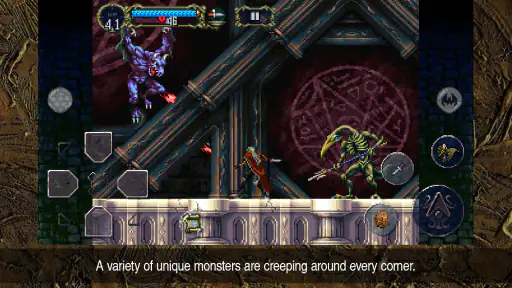
Let’s start with the basics. Castlevania: Symphony of the Night is a side-scrolling action-adventure game that originally hit the scenes back in the ‘90s. It’s not just a game; it’s an experience. The Android and iOS versions manage to capture all the charm of the original while introducing smoother mechanics that cater to the touch-screen era. The graphics remain true to their roots, maintaining that nostalgic pixelated style, but with a crispness that today’s screens demand.
Gameplay and Controls
Jumping into the gameplay, it’s all about exploration and combat. You play as Alucard, Dracula’s son, on a mission to thwart his father’s nefarious plans. The controls on mobile are surprisingly intuitive. I was a bit skeptical at first—after all, how often do classic console games transition smoothly to mobile? But, the developers have done a commendable job. The on-screen buttons are responsive, and the layout doesn’t clutter the action. It’s easy to get lost in the game for hours, battling monsters and uncovering secrets hidden within the castle’s depths.
That mix of fighting and searching is why I would compare it with other action games carefully. A stage-based brawler is often easier to dip into when I want a clear start and finish; this is better when I want a world to learn over time. On the other hand, someone who prefers constant forward motion may find the backtracking less satisfying than a linear action game. The right comparison depends on whether discovering routes is a pleasure or a chore for you.
The mobile version is a paid game, priced at $2.99, rather than a free download built around repeated purchases. I find that a straightforward one-time price easier to assess than a game whose value depends on ongoing spending. It still asks for a real commitment of time: the cost is only one part of the decision, and the slower pleasure of exploration is what determines whether it feels worthwhile.
Soundtrack and Atmosphere
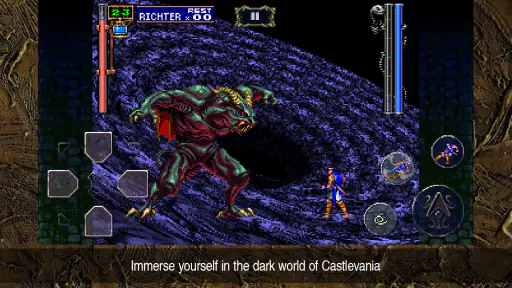
Let’s talk about the sound for a moment. The soundtrack is as iconic as ever. Each piece of music sets the scene perfectly, pulling you deeper into the game’s gothic atmosphere. Whether you’re in a tense battle or exploring the eerie corridors, the sound design enhances every moment, making the gameplay an immersive experience.
The presentation also explains why I would not treat this simply as a convenient way to fill every spare minute. Its old-school visual style is deliberate, and the mood builds through repeated time spent in the castle rather than through constant spectacle. Players who need realistic graphics or frequent prompts may not connect with it. I think its lasting appeal comes from the combination of a distinctive atmosphere and the satisfaction of gradually making sense of its spaces.
Why It’s Worth Your Time
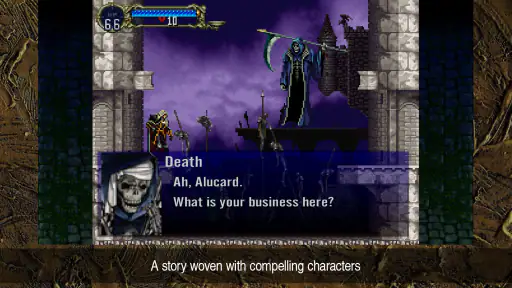
Whether you’re a long-time fan of the series or a newcomer, Castlevania: SotN offers something for everyone. It’s a game that respects its heritage while embracing the conveniences of modern gaming. The storyline is rich and engaging, with enough twists to keep you hooked until the very end.
There are useful practical details to weigh before buying. It is rated Teen, and its current version is 1.0.3; the stated minimum operating-system requirement is Android 4.4. The game was released on March 3, 2020, and has an average rating of 3.6 from around 27,000 ratings, alongside about 2,300 reviews and over 100,000 installs. Those figures offer context, not a guarantee that the controls or pacing will suit you. I would use the rating as a prompt to read recent player feedback for your device, then judge the game by the kind of play it offers.
One question I’d ask before downloading is whether the mobile format fits how I actually play. If I mostly play with one hand while distracted, precise combat and navigating a complex castle may feel like work. If I can give the screen my attention, even in shorter sessions, the structure is easier to enjoy. Another consideration is device compatibility: the minimum Android requirement is 4.4, while the touch layout itself is a matter of comfort, so checking both the operating-system requirement and how the buttons feel is sensible.
As an action game from KONAMI, it has a strong identity, but it is not the right pick for every action fan. I’d choose a more linear game when I want a clear sequence of encounters and little route planning. I’d choose this one when I want exploration to matter as much as combat and enjoy revisiting places with a better sense of direction. That distinction is more helpful than expecting every classic game to work equally well on a phone.
My main reservation is that the very freedom I enjoy can make progress hard to track. If I forget what I was pursuing, the castle can feel like a maze rather than an invitation. Keeping a simple mental note of the next landmark, stopping after a meaningful discovery, and returning to difficult fights later are modest habits, but they make the experience more approachable without changing what the game is.
In conclusion, if you’re looking for a game that combines nostalgia with the convenience of mobile play, this should be on your download list. It’s a testament to how classic games can be revitalized for new audiences without losing their soul. So, grab your device, download the game, and prepare to lose yourself in the hauntingly beautiful world of Castlevania.
My recommendation is strongest for players who enjoy patient exploration, memorable music, and combat tied to a world they gradually learn. I would skip it if I wanted a quick, guided action game or found touch controls uncomfortable after trying them. For everyone else, a practical approach is to start with a reachable goal, keep track of a landmark, and let the castle’s detours be part of the fun. That is when this mobile version works best for me: not as a rushed substitute for a console session, but as a substantial adventure I can return to at my own pace.
Castlevania: SotN Pros and Cons
Pros
- Rich storyline with immersive gameplay.
- Stunning graphics for a retro game.
- Wide variety of weapons and items.
- Engaging exploration and level design.
- Smooth controls for touch devices.
Cons
- Limited save points can be frustrating.
- Some areas may feel repetitive.
- Occasional difficulty spikes.
- No multiplayer mode available.
- In-app purchases can be intrusive.
Frequently Asked Questions
What is Castlevania: Symphony of the Night and how is it played?
Castlevania: Symphony of the Night is a classic action-adventure game that blends elements of exploration and combat. Players control Alucard, a vampire exploring Dracula's castle to stop the resurrection of his father. It’s known for its open-ended gameplay, allowing players to revisit areas with new abilities, enhancing their exploration and discovery experience.
Is Castlevania: Symphony of the Night available on both Android and iOS?
Yes, Castlevania: Symphony of the Night is available for download on both Android and iOS platforms. Users can find the game on the Google Play Store for Android devices and the Apple App Store for iOS devices. It offers the same classic gameplay experience optimized for mobile devices.
What are the system requirements for playing Castlevania: Symphony of the Night on mobile?
To play Castlevania: Symphony of the Night on your mobile device, ensure you have at least Android 4.4 or iOS 9.0. The game requires a minimum of 2GB of RAM and around 700MB of free storage space. Having a compatible and updated device ensures smoother gameplay and better performance.
Does Castlevania: Symphony of the Night support any additional features on mobile?
Yes, the mobile version of Castlevania: Symphony of the Night supports several enhancements, including an on-screen gamepad, achievements, and cloud save features. These additions aim to provide a more immersive and user-friendly experience, allowing players to save their progress and switch devices without losing data.
Is there any multiplayer mode or online features in Castlevania: Symphony of the Night?
No, Castlevania: Symphony of the Night is primarily a single-player experience and does not feature a multiplayer mode or online components. The game focuses on delivering a rich solo adventure with its engaging storyline, atmospheric exploration, and challenging battles against various enemies and bosses.


