

Candy Crush Friends Saga
- Reviews
- 4.7
- Version
- 5.5.2.0
- Installs
- 50,000,000+

Screenshots
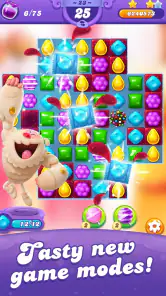

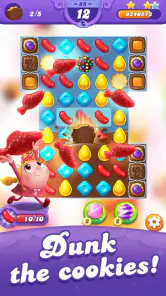
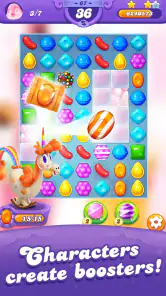
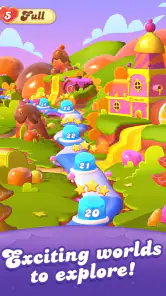
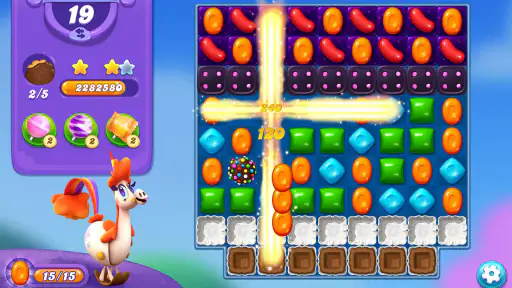
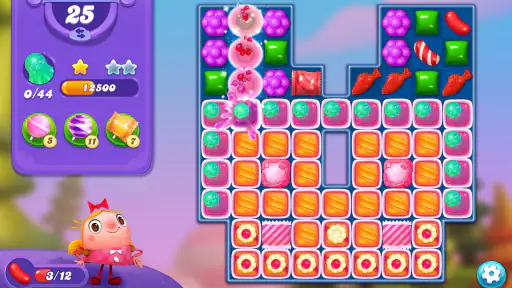
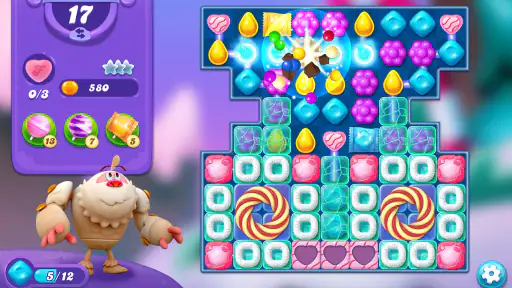
 Analysis by Frivlyz
Some mobile puzzles entertain me for a few minutes and disappear from my routine almost immediately. Candy Crush Friends Saga has a stronger first impression because it makes the familiar matching format feel lively without asking me to learn a complicated rule set. I can open it during a short break, understand the board quickly, and still have enough variety in the objectives to avoid feeling like I am repeating one identical move forever.
That easy entry is the main reason I can recommend it to casual players. It is a free game from King, aimed at Everyone, and it runs on devices using Android 6.0 or later. The presentation is bright, friendly, and deliberately sweet, but the real test is whether the game remains enjoyable after the novelty fades. My view is that it can earn a regular place on a phone, although only if the player is comfortable with a gradual progression model and occasional pressure to spend.
Why the first week feels so inviting
The opening sessions are particularly accessible. The basic idea is immediately recognizable: arrange matching candies, clear the board, and work toward the objective shown for that level. That familiarity matters because I never feel lost when I return after a few days away. At the same time, the game adds goals such as dunking a cookie or collecting characters, so the board is not always asking me to chase the same kind of score.
I like that distinction for short play sessions. If I have a few minutes while waiting for an appointment, I can attempt a level without preparing for a long campaign. A successful move often creates a satisfying chain reaction, and the colorful effects make progress easy to read. When a level goes badly, the cause is usually visible: I used a useful combination too early, ignored a blocked area, or focused on clearing candies instead of the actual objective.
The character element also gives the early experience more personality than a plain match-three board. Friends can contribute special effects, which encourages me to think about when a helpful ability will have the greatest impact rather than activating everything immediately. That creates one of the game’s less obvious lessons: a powerful move is not always the best move if it removes the setup needed for the final objective.
During my first week, I found the strongest rhythm came from treating each level as a small puzzle rather than as a race. Before making the first move, I check where the target items are, which areas are difficult to reach, and whether the board offers an opportunity to build a larger combination. This simple pause reduces wasted attempts and makes the game feel more thoughtful than its cheerful appearance suggests.
The game’s scale also contributes to the initial appeal. It has passed fifty million installs, and its average rating is 4.7 from around two million ratings. Those figures do not guarantee that every player will enjoy the same design choices, but they do reflect how broadly the accessible format has connected with mobile users. I can understand that reach: the controls are simple enough for an occasional player, while the objectives provide enough friction to keep a more attentive player involved.
Gaming Stories You May Enjoy

Dancing Road Turns Short Breaks Into a Test of Rhythm and Timing

Super Stylist Makes Every Outfit a Test of Taste and Patience

Dominoes on Your Terms: Who Should Play and Who Should Pass

Pokémon GO Makes the Familiar World Feel New

Chess.com Turns Rematches Into Rivalries, but Community Has Its Costs

Archery Battle 3D Review: Sharp Aiming, Unclear Feedback
Still, the first week is the easiest part to enjoy. Early progress feels generous, and the colorful rewards arrive often enough to maintain momentum. The more important question is what happens once the player stops discovering new elements and starts managing a familiar routine.
Small decisions that improve the experience
One useful habit is to avoid making the first obvious match automatically. I look for moves that change the shape of the board and create room near the objective. This is especially helpful when a level asks me to move or collect something positioned away from the most active area. Clearing random candies may produce attractive effects, but it can leave the important section untouched.
I also try to preserve special combinations until I know how they will affect the board. Combining effects can solve a difficult section quickly, but using one at the wrong moment may remove a path I still need. That trade-off gives the game more depth than a simple search for the biggest immediate match.
Another practical approach is to stop after a frustrating run instead of repeatedly replaying the same level without changing strategy. A short break often helps me notice that I was prioritizing points over the stated goal. This is a small maintenance habit, but it prevents the game from turning a casual pause into an irritating cycle.
What keeps it useful from month to month
After the initial excitement settles, the game’s value depends on whether its structure suits the way I use my phone. For me, it works best as a flexible background activity rather than a central hobby. I can play one level while having coffee, return later, and pick up the same general style of challenge without needing to remember a complex story or control scheme.
The changing objectives are important here. Matching candies alone would become predictable, but collecting friends, working toward a cookie-related goal, and dealing with different board layouts give each attempt a slightly different priority. The underlying controls remain familiar, yet my decision-making changes according to the task. That is enough variation for repeated short sessions, even though it may not satisfy someone looking for a deep strategy game.
A realistic everyday use case is a commute with inconsistent free time. I might have only one uninterrupted minute at one point and several minutes later. This game fits that pattern better than a title that requires a long match or a carefully saved checkpoint. I can make progress in small pieces, and the casual format does not punish me for treating it as an occasional distraction.
It is also suitable for players who enjoy visual feedback and gentle collection goals. The friendly cast gives progression a more personal face, while the candy theme keeps the atmosphere light. I would suggest it to someone who wants a polished puzzle game that feels welcoming rather than austere.
However, the same structure limits its long-term appeal for certain players. If I want a game where every session develops a permanent strategy, builds a character, or offers a large amount of control over tactics, this is not the strongest choice. Its pleasure comes from solving the next board and improving my immediate decisions, not from constructing a complicated long-term plan.
The game was released on October 10, 2018, and its current version is 5.5.2.0. That long presence helps explain why it feels like an established casual title rather than a short-lived experiment. For a new player, the important point is not its age but its continued suitability for quick puzzle sessions. It has enough familiarity to be comfortable, while the level-based format makes returning straightforward.
How it compares with familiar alternatives
Compared with a basic match-three game, this one offers more personality through its friends and varied objectives. A minimalist alternative may feel calmer and less distracting, especially for someone who wants pure board solving without character presentation. I prefer this game when I want the puzzle to feel animated and rewarding, but I would choose the simpler option when visual effects or collection elements start to feel like clutter.
Compared with a strategy-focused mobile game, the learning curve is much gentler. I do not need to study a large system before enjoying a round. The trade-off is that the decisions are narrower. There is room for planning combinations and prioritizing objectives, but not the same breadth of choices I would expect from a tactical title.
Compared with an endless arcade game, the level structure gives me clearer stopping points. I can finish a challenge and put the phone away without feeling that I abandoned a run. That makes it particularly convenient for short breaks. On the other hand, players who enjoy chasing one continuous high score may find the separate objectives less compelling.
Where the monthly routine becomes work
The main maintenance burden is not technical complexity; it is emotional and financial discipline. The game is free to play, but optional in-app purchases range from $0.99 to $99.99 per item. I can enjoy the core puzzle experience without paying, yet difficult levels and limited attempts can make paid help feel tempting. For me, the healthiest approach is to decide in advance whether I am willing to spend and then treat that decision as fixed, rather than making a purchase in response to frustration.
This matters because a casual game can quietly become less casual when I start measuring every failed attempt as lost progress. If I am playing for relaxation, repeating a level is acceptable only while the challenge remains interesting. Once I am replaying mainly because I feel pushed to overcome a barrier, the entertainment value drops.
I also need to manage notifications and play frequency according to my own habits. A game designed around short returns can become distracting if I let it interrupt work, meals, or conversations. I recommend keeping sessions intentional: open it when I actually want a puzzle, finish a reasonable stopping point, and close it instead of continuing automatically.
Another maintenance issue is remembering the objective before moving. The boards can look so inviting that I start matching whatever is easiest. That works on some levels but wastes attempts on others. A ten-second inspection at the beginning is one of the best ways to reduce unnecessary retries and keep the game from feeling unfair.
Players should also be realistic about the difference between convenience and progress. A booster or purchase may help with an immediate obstacle, but it does not replace learning the board’s priorities. If I use assistance every time a level becomes uncomfortable, I lose the small satisfaction that makes the puzzle worthwhile in the first place.
Who should make room for it, and who should skip it
I think it deserves a place on the phone of someone who enjoys colorful puzzles, has irregular free time, and likes objectives that change from level to level. It is especially approachable for a player who does not want complicated controls or a heavy story. The Everyone rating also makes its tone broadly accessible, although every household should still make its own decisions about screen time and purchases.
I would be more cautious recommending it to someone who dislikes free-to-play progression, becomes frustrated by repeated attempts, or wants a complete experience without optional spending pressure. It is also a poor match for players who need deep strategic systems, competitive multiplayer, or a quiet visual design. In those cases, a premium puzzle game or a more deliberate strategy title may provide better lasting value.
The game is available at no upfront cost, which makes trying it easy. That is a genuine strength, but it also means the player should evaluate the experience based on the full routine, not just the first few levels. The right question is whether the free sessions remain enjoyable when progress slows and whether the player can ignore purchases without feeling disadvantaged.
What causes fatigue after the novelty fades
Repetition is the largest risk. The candy theme, cheerful effects, and familiar matching actions are pleasant at first, but they cannot carry the entire experience forever. Once I have seen enough variations of the same basic interaction, I need the objectives and board layouts to keep my attention. When they do, the game remains a comfortable habit; when they do not, it starts to feel like a task performed for the sake of moving forward.
Difficulty can create a second kind of fatigue. A hard level is satisfying when I can identify a better approach and eventually solve it. It is less satisfying when the result seems dominated by an awkward starting layout or by the need for a fortunate sequence. I accept some unpredictability in a casual puzzle, but I want my decisions to remain meaningful.
The reward loop can also become less exciting over time. Early progress feels visible because every new step seems significant. Later, simply advancing may not provide the same emotional lift, so I need to play for the puzzle itself rather than for the expectation of constant celebration. This is why I recommend taking breaks instead of forcing a daily routine.
There is a useful distinction between a game that has become boring and one that has become familiar. Familiarity is not automatically a weakness. I can return to this title precisely because I know how it feels and what kind of attention it requires. But if I no longer enjoy planning a move, checking an objective, or experimenting with a combination, then the game has stopped earning my time, regardless of how much progress I have already made.
The developer, King, has built a recognizable casual puzzle identity here, and that consistency is both a strength and a boundary. I know what kind of experience I am opening, which reduces friction. I also know that it will not suddenly transform into a deep role-playing adventure or a radically different puzzle format. Players should choose it for its polished familiarity, not for dramatic reinvention.
My long-term verdict
After the first-week sparkle wears off, I still find value in Candy Crush Friends Saga, but I use it selectively. Its strongest quality is convenience: the rules are approachable, the sessions are easy to start and stop, and the changing objectives give the matching formula enough character to remain pleasant. The friends and special effects add a layer of timing and planning that is easy to miss if I simply chase the quickest match.
Its weaknesses are equally clear. The free-to-play structure can test patience, the repeated format may eventually feel routine, and difficult levels can encourage unhelpful spending or endless retries. None of those issues makes the game a bad choice, but they do mean that lasting enjoyment depends on boundaries. I get more from it when I play for a few purposeful minutes rather than treating progress as an obligation.
For a friend asking whether to install it, my answer would be yes if they want a friendly casual puzzle for commutes, waiting rooms, or brief evening breaks. I would explain that the free entry is generous enough to try, while optional purchases require self-control. I would also recommend inspecting each board before moving, saving strong combinations for the real objective, and taking a break when a level stops feeling like a puzzle and starts feeling like a demand.
In the end, this is not a game I would keep open all day, and it does not replace a richer strategy title for me. It does, however, earn recurring space as a dependable short-session game. The lasting value comes from the combination of recognizable matching, varied goals, and a welcoming presentation—not from endless novelty. If that modest role is what you want from a mobile game, it remains an easy recommendation.
Candy Crush Friends Saga Pros and Cons
Pros
- Colorful graphics and lively animations make every level feel engaging.
- New characters and costumes add variety to the familiar match-three formula.
- Helpful boosters can make difficult boards more manageable.
- Levels are easy to start
- making it suitable for short gaming sessions.
- Regular events and challenges provide extra goals beyond the main map.
Cons
- Lives regenerate slowly
- which can interrupt longer play sessions.
- Some later levels depend heavily on luck rather than careful planning.
- Boosters and extra moves can become tempting in challenging stages.
- The large number of levels may feel repetitive over time.
- Frequent events and rewards can make the interface feel cluttered.
This Game in Other Languages
Frequently Asked Questions
What is Candy Crush Friends Saga?
Candy Crush Friends Saga is a match-three puzzle game from King that combines colorful candy matching with character-based abilities and story-driven levels. Players swap candies to create matches, special combinations, and powerful boosters while helping familiar Candy Crush characters complete objectives. It is designed for casual play, but later stages become considerably more challenging and may require careful planning.
Is Candy Crush Friends Saga free to download and play?
Yes, Candy Crush Friends Saga can be downloaded and played for free on supported Android and iOS devices. However, it includes optional in-app purchases for items such as extra lives, boosters, gold bars, and other helpful resources. You can progress without spending money, although waiting for lives to refill and repeating difficult levels may be necessary during longer play sessions.
Does Candy Crush Friends Saga require an internet connection?
The game may allow some gameplay when you are offline, depending on the device, installed version, and available features. An internet connection is generally needed for downloading updates, synchronizing progress, accessing events, viewing advertisements, making purchases, and using certain online features. Connecting regularly is recommended so your progress and rewards can be saved correctly.
Are there advertisements or in-app purchases in the game?
Candy Crush Friends Saga contains optional in-app purchases and may display advertisements or offer promotional rewards, depending on your platform, account, and current game events. Purchases can provide boosters, extra moves, lives, or currency, but they are not strictly required to play. Parents should review device purchase settings because children may be tempted by limited-time offers.
Is Candy Crush Friends Saga suitable for children?
Candy Crush Friends Saga is generally easy to understand and suitable for casual players, including older children, because its gameplay is based on colorful puzzles rather than violence. Nevertheless, the game includes advertisements, social or online features, timed events, and optional purchases. Parents should check the age rating in their region and enable purchase restrictions before allowing younger children to play.


